



Edwardian Ruby Jewellery
Edwardian ruby jewellery brings together vibrant red stones and bright diamonds set in gold and platinum.
Edwardian Ruby Jewellery
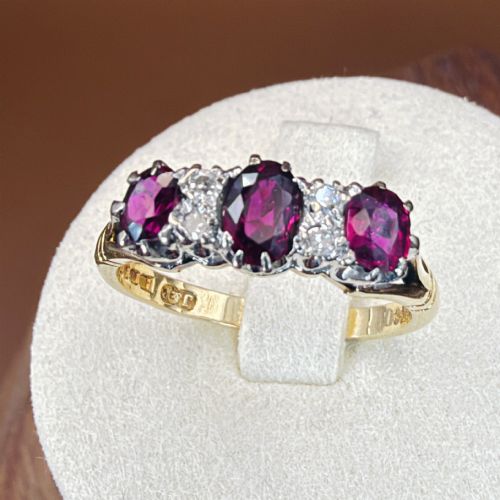
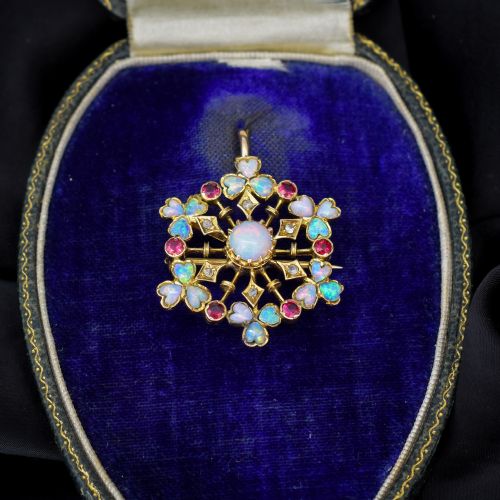
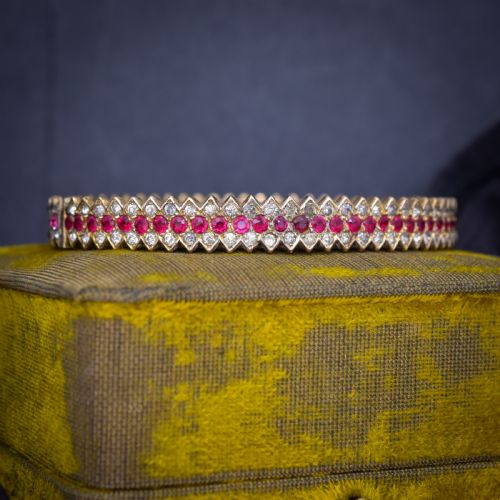
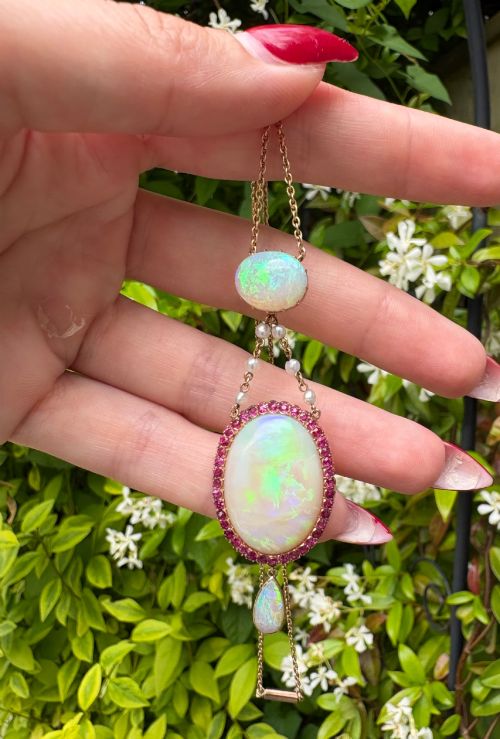
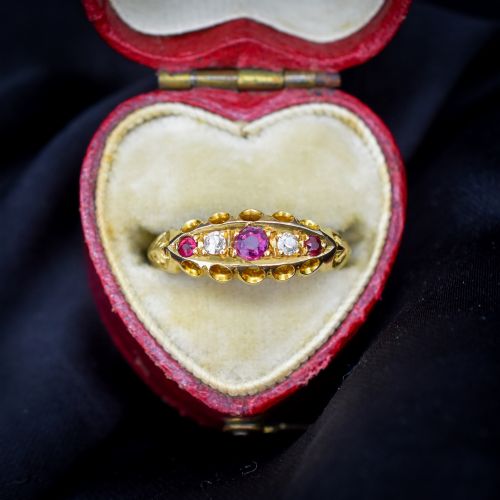
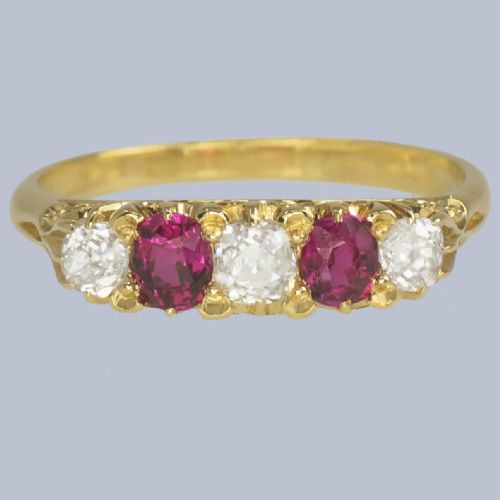
Edwardian ruby jewellery encompasses rings, brooches, necklaces, bangles and pendants created during the early twentieth century. Pieces from this period frequently pair rubies with diamonds, pearls or opals in balanced, delicate arrangements.
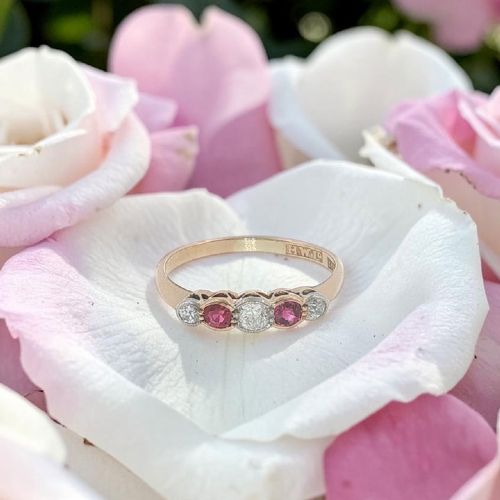
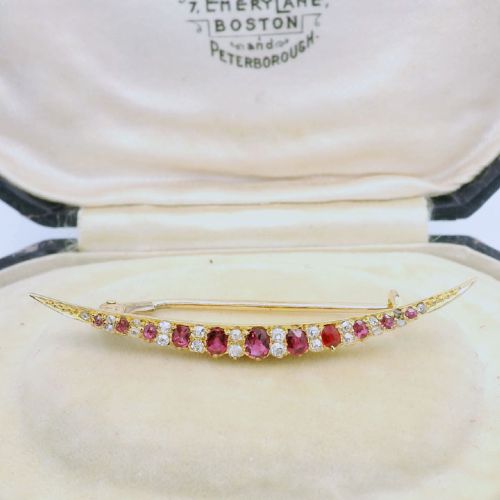
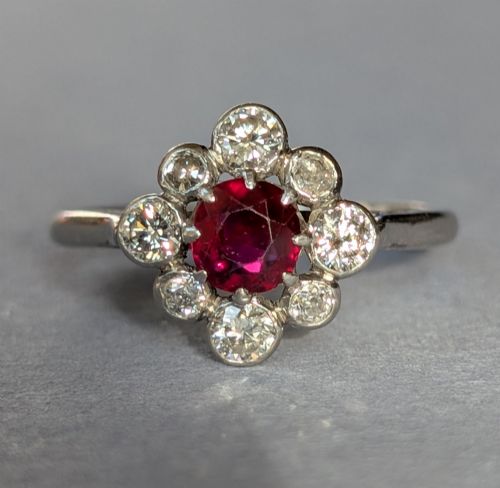
The items most commonly encountered on this page include cluster rings, band rings, crescent brooches and bar brooches. Settings utilise yellow gold, white gold, 15ct gold and platinum to frame the stones.
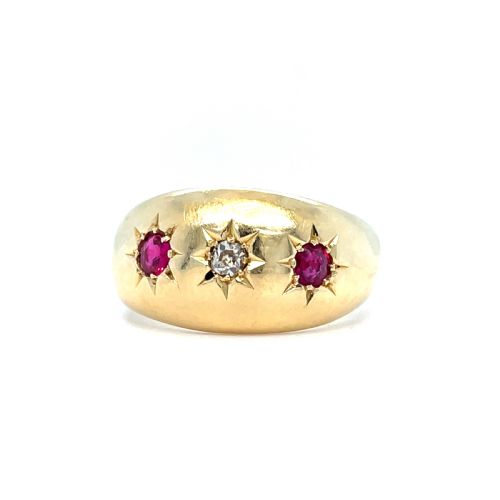
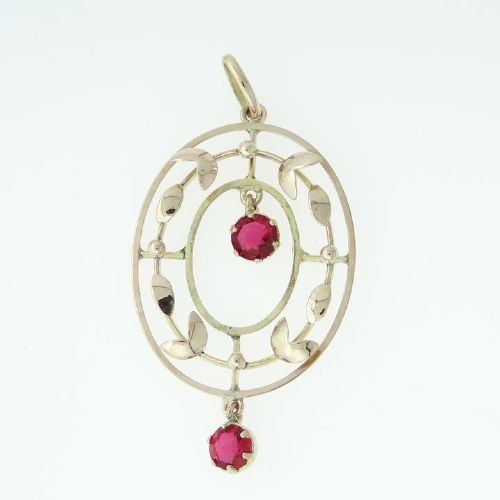
While the material palette centres on the Edwardian era, related examples span from the Victorian period through the Art Deco era. Starburst motifs, boat rings and floral designs recur across these forms.
Materials and Techniques
Goldsmiths and jewellers utilised 9ct, 15ct and 18ct gold alongside platinum to fabricate these items. Platinum gained popularity for its strength, allowing delicate settings for diamonds and rubies without heavy metal bulk.
Stones were shaped as old cut diamonds and rubies, often arranged in clusters, starbursts or trilogy formations. Techniques included grain setting and bezel setting to secure the gemstones within gold and platinum mounts.
Current listings feature items incorporating 18ct gold, platinum, and rubies across rings and brooches dating from the Edwardian period to the Art Deco era.
Distinctions in Quality
Quality rests upon the harmony of the design and the integration of the materials. Pieces featuring platinum combined with high-carat gold and well-matched gemstones display superior craftsmanship.
The precision of stone placement and the delicacy of the metalwork distinguish finer items from simpler production. Gemmological reports often accompany pieces with significant stones to document their origins.
The Edwardian Ruby Jewellery Glossary
- Edwardian
- A stylistic and historical period spanning the reign of King Edward VII, noted for light, airy jewellery designs. Platinum frequently supports delicate stone arrangements from this era.
- Cluster ring
- A ring design featuring a central gemstone surrounded by a border of smaller stones, commonly rubies and diamonds. This arrangement maximises visual impact and light reflection.
- Boat ring
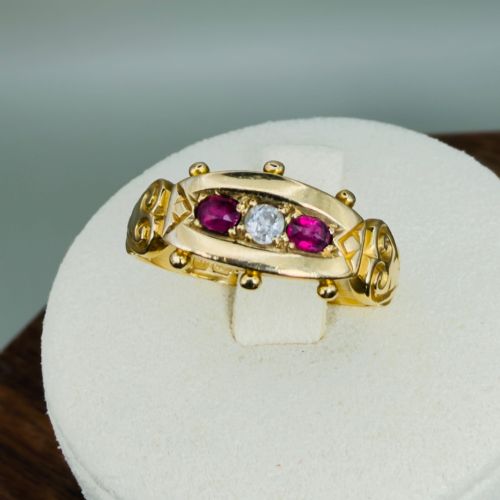
- A ring style with a curved, tapering setting resembling the hull of a boat, typically holding three stones. This form was widespread during the Edwardian period.
- Old cut
- A diamond cutting style preceding modern brilliant cuts, characterised by a smaller table and larger facets. These cuts produce a softer, candlelit sparkle.
- Trilogy ring
- A ring set with three stones, often representing past, present and future. Rubies and diamonds frequently alternate in these configurations.
Edwardian Ruby Jewellery: Frequently Asked Questions
What periods do these pieces date from?
The inventory spans the Edwardian era, Victorian period, and Art Deco years.
Most items align with the early twentieth century and the years around nineteen ten.
What metals were used in this jewellery?
Maker workshops utilised nine carat, fifteen carat and eighteen carat gold alongside platinum.
Yellow gold and white gold also appear across rings and brooches.
What gemstone combinations are common?
Rubies appear alongside diamonds, pearls, opals and garnets in various configurations.
Cluster rings and starburst brooches frequently pair red rubies with white diamonds.
How do I care for antique ruby jewellery?
Store pieces individually in soft pouches to prevent metal and stone contact.
Clean gently with warm soapy water and a soft brush, avoiding harsh chemical cleaners.