


Edwardian Ruby and Diamond
Edwardian ruby and diamond jewellery combines brilliant red stones and sparkling gems in rings, brooches and pendants shaped by early twentieth-century design.
Edwardian Ruby and Diamond
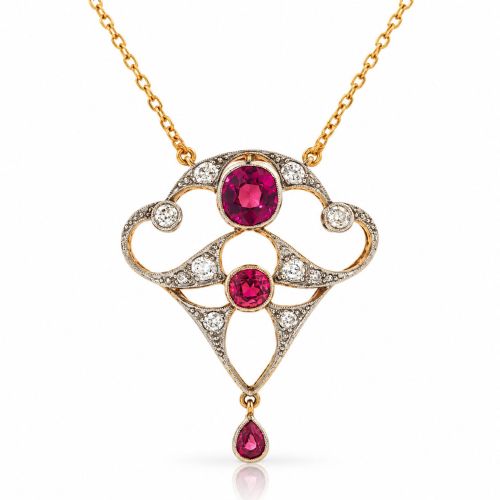
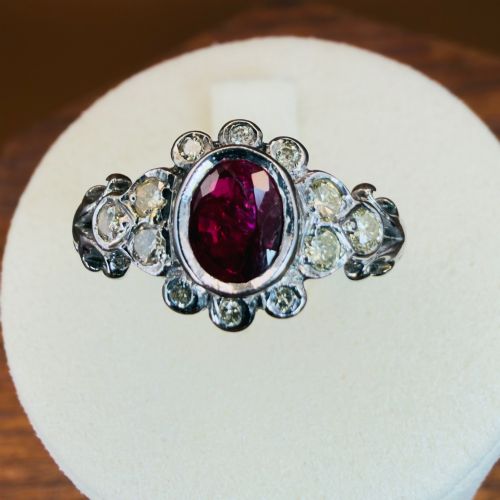
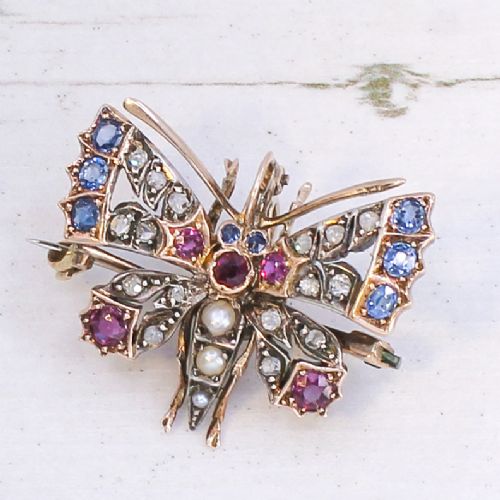
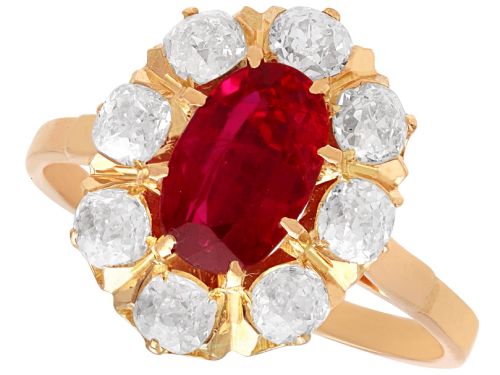
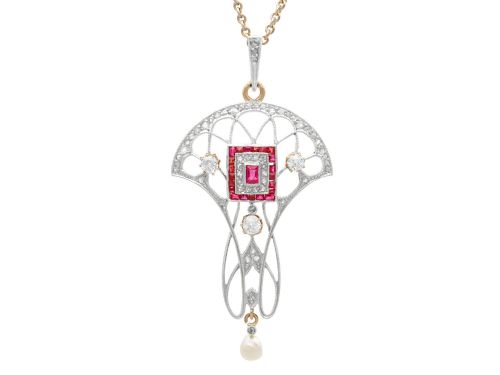
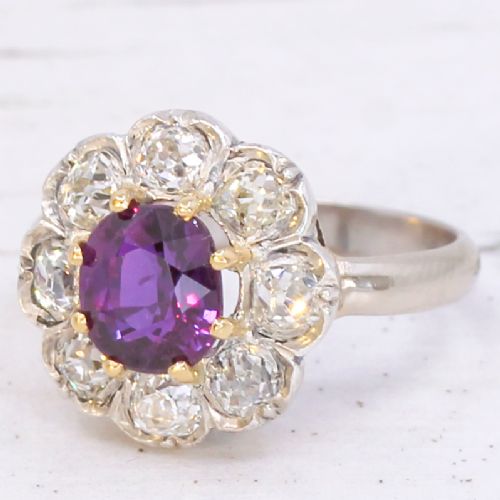
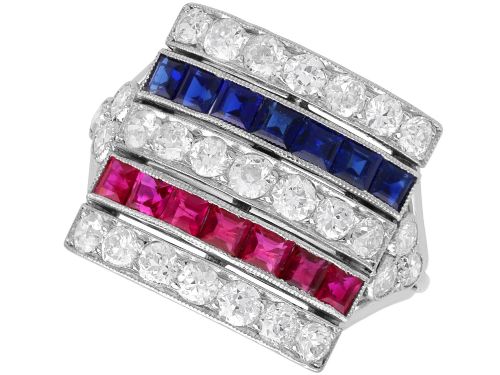
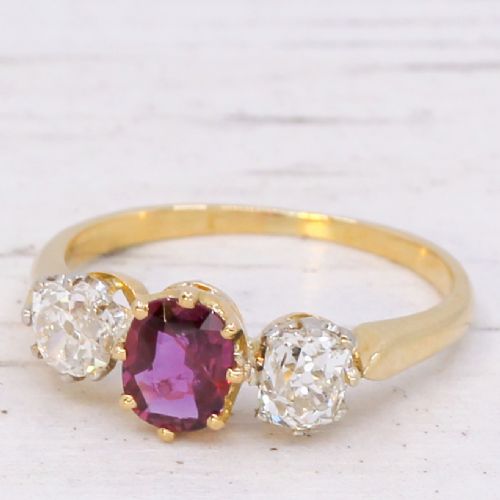
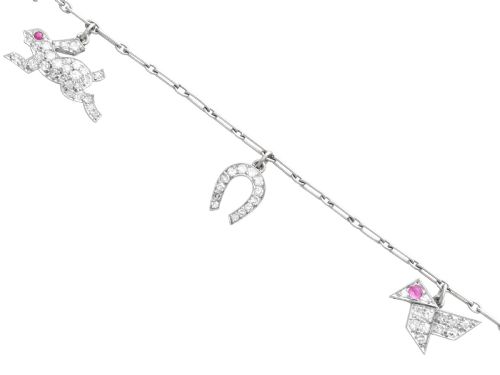
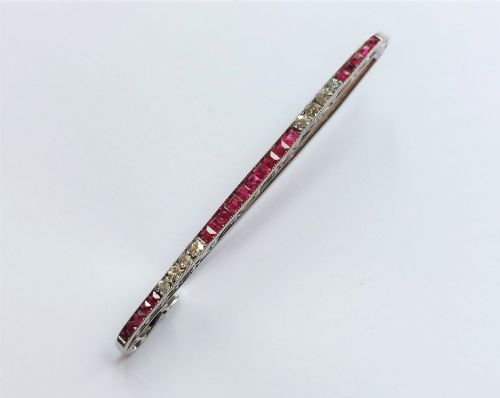
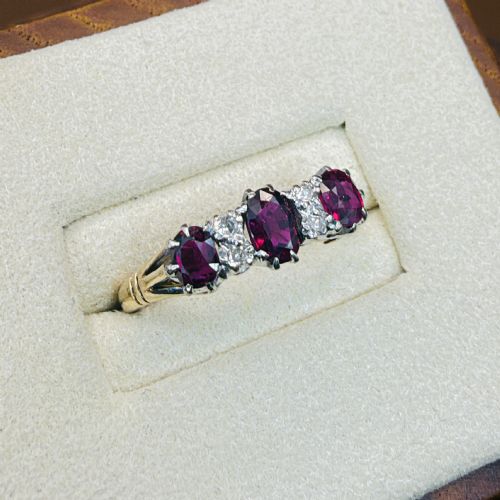
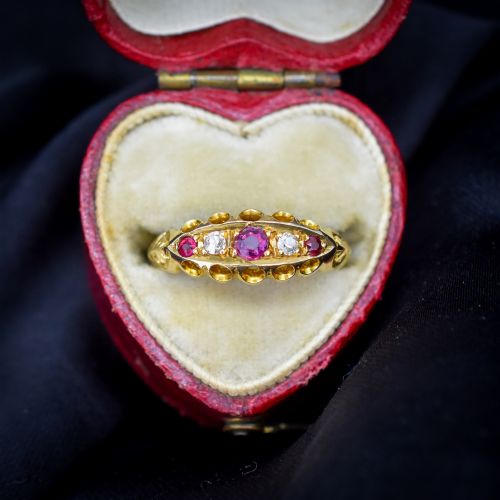
Edwardian ruby and diamond pieces span rings, brooches, pendants, bracelets and bangles created during the early twentieth century and surrounding decades. The most common form on this page is the cluster ring, alongside trilogy settings, bar brooches and multi-stone bands.
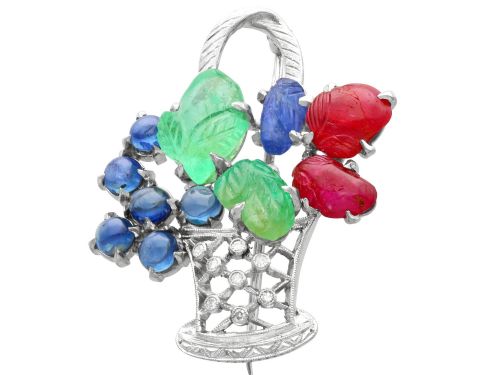
The materials recorded across these items include ruby, diamond, 18ct gold, platinum, silver, sapphire and yellow gold. Pieces range from delicate floral motifs and boat settings to intricate bow pendants and geometric Art Deco layouts.
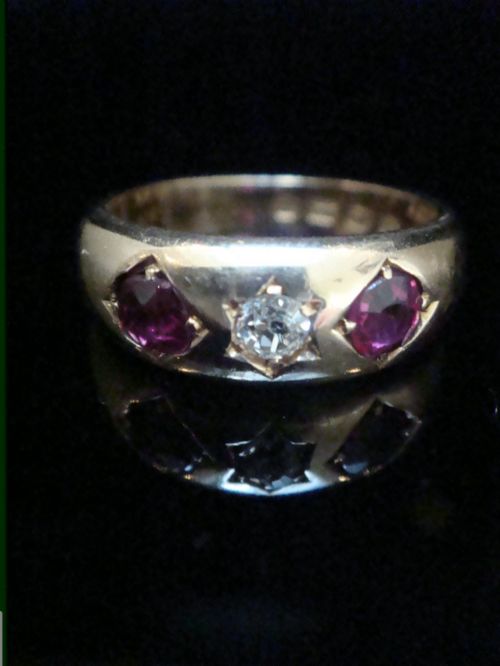
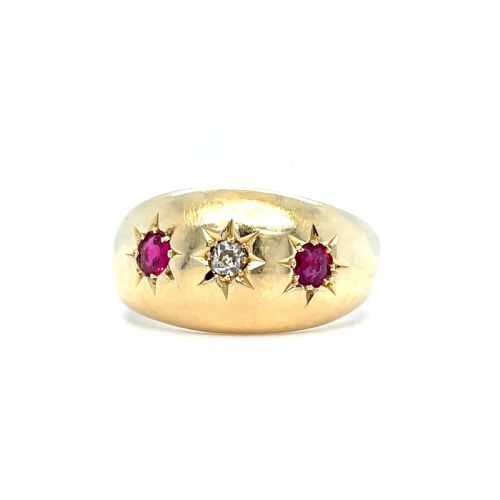
While many examples date from the Edwardian period itself, listings also incorporate Victorian, Art Deco and later twentieth-century iterations. Buyers encounter both delicate platinum work and heavier yellow gold bands set with old cut diamonds and rich red rubies.
Materials and construction
Goldsmiths set rubies and diamonds into combinations of platinum, 18ct yellow gold, white gold and rose gold, often pairing silver with gold in earlier pieces. Platinum emerged strongly during this era, allowing for fine, lace-like claw settings and millegrain edges that secured stones without heavy metal surrounds.
Gemstones commonly appear as old mine cuts, old European cuts or rose cuts alongside unheated rubies shaped into clusters, starbursts, bows and trilogy layouts. Jewellers utilised hollow or solid shank construction for rings and pin mechanisms with safety catches for brooches.
Edwardian Ruby and Diamond Retail Price Guide 2026
Typical asking prices for edwardian ruby and diamond among the pieces listed under this phrase on Sellingantiques today, from the lower quarter to the upper quarter. They describe what is for sale here now, not the wider market.
A metal bicycle and a wriggling serpent join the cluster rings, proving that antique jewellers loved a whimsical motif as much as a tidy diamond halo.
Assessing quality
Quality rests upon the matching and depth of colour in the rubies alongside the cut, clarity and brilliance of the accompanying diamonds. Finer examples display balanced proportions where the metalwork enhances rather than overpowers the gemstones.
The precision of hand-cut settings, the crispness of millegrain decoration and the structural integrity of the gold or platinum band define the standard of execution. Pieces accompanied by gemmological reports offering details on stone origin and treatment carry distinct documentary depth.
The Edwardian Ruby and Diamond Glossary
- Millegrain
- A decorative technique involving a row of tiny raised metal beads along the edge of a setting. It softens the transition between metal and stone.
- Old Cut
- A diamond cut executed by hand before modern machinery standardised facets. These stones typically feature smaller tables and higher crowns.
- Trilogy Ring
- A ring featuring three main stones symbolising past, present and future. In this selection they pair a central ruby or diamond with flanking gems.
- Boat Ring
- A convex, navette-shaped ring setting resembling the hull of a boat. It allows multiple stones to sit horizontally across the finger.
- Cluster Ring
- A central gemstone surrounded by a perimeter of smaller stones. This layout maximises visual impact and light reflection.
Edwardian Ruby and Diamond: Frequently Asked Questions
How do I care for antique ruby and diamond jewellery?
Caring for antique ruby and diamond pieces requires gentle handling due to their age and delicate settings. Clean them using warm water, mild soap and a soft brush, avoiding harsh chemical dips or ultrasonic cleaners that might damage softer stones or old mountings.
Store each piece separately in a lined box to prevent metal and diamonds from scratching softer rubies or gold. Regular checks by a jeweller ensure the claw settings remain secure.
Are these rubies treated?
Some rubies in antique jewellery have undergone traditional thermal treatments to improve colour and clarity, while others remain unheated. Listings often specify if a gemmological report is present to confirm the stone's origin and treatment status.
Unheated rubies of significant size are particularly sought after by collectors. Testing reports provide definitive scientific data regarding the stone's natural characteristics.
What is the difference between Edwardian and Art Deco styles?
Edwardian jewellery relies on delicate platinum lacework, floral motifs, bows and graceful curves designed to appear light and airy. The focus rests on high-craftsmanship metal manipulation paired with softer feminine themes.
Art Deco style shifts towards bold geometric lines, symmetry, strong colour contrasts and streamlined abstraction. While both styles frequently use rubies and diamonds, Art Deco arrangements look more architectural and rigid.