


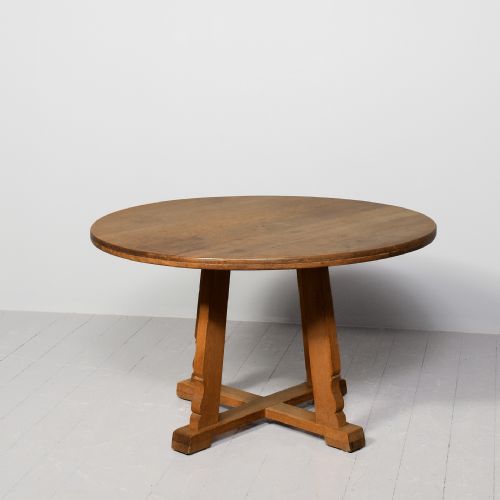


Edwardian Round Dining Table
These edwardian round dining table pieces offer clever versatility for intimate meals and compact spaces.
Edwardian Round Dining Table
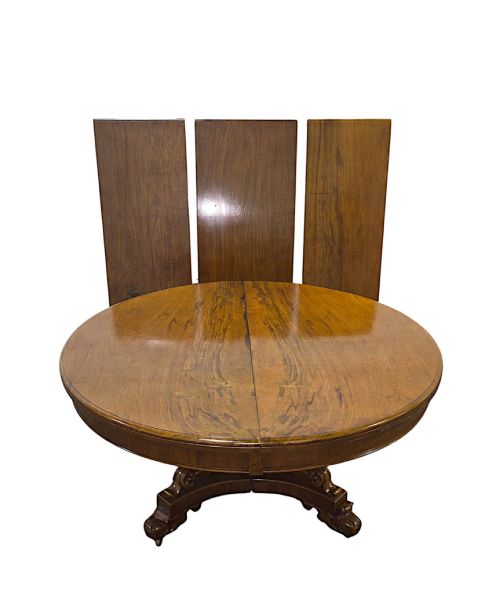
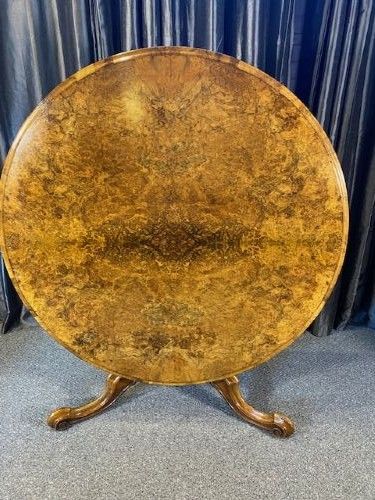
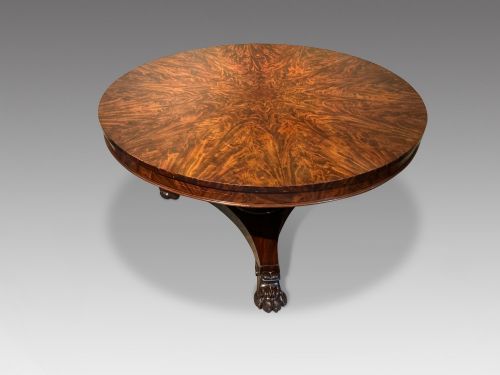
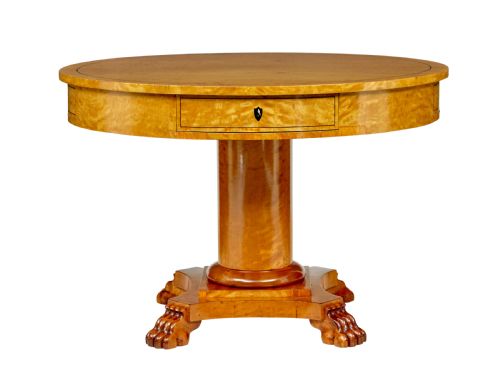
When you search for an edwardian round dining table, you find circular dining pieces and versatile centre tables designed to suit daily dining and smaller rooms. The selection includes extending formats with leaves, drop-leaf designs, and tilt-top breakfast tables from various periods.
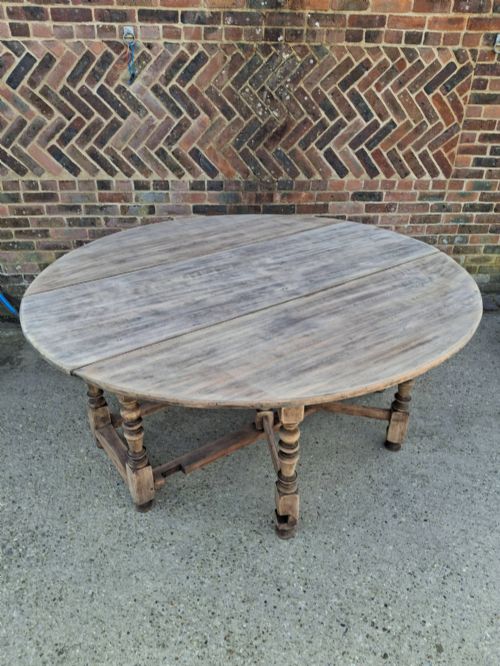
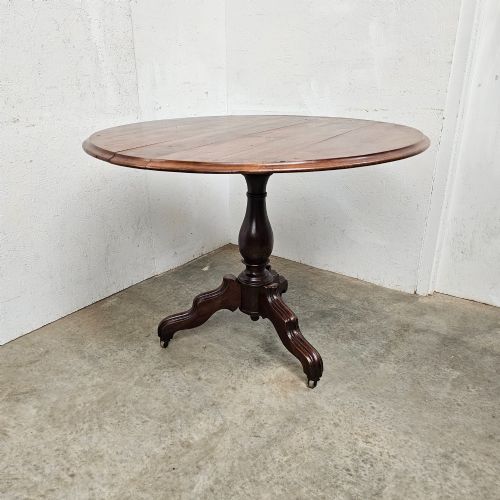
You will encounter mahogany, oak, satinwood, and walnut timbers, often shaped into circular or segmented tops. Many examples incorporate gateleg mechanisms or tripod bases to support flexible domestic arrangements.
How they were made
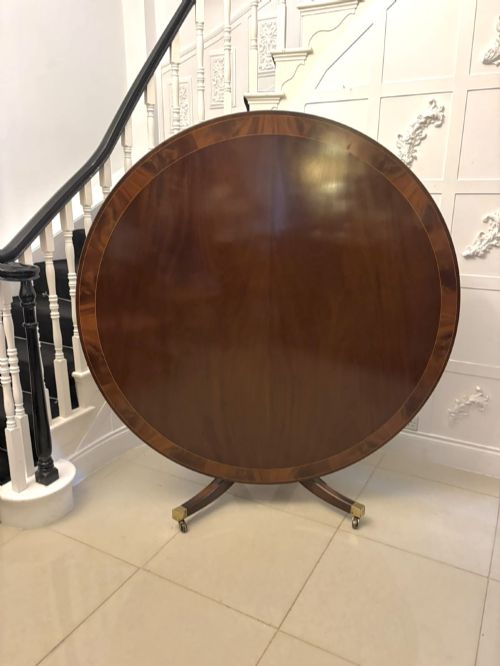
Cabinetmakers utilised solid and veneered hardwoods like mahogany, oak, walnut, and satinwood, frequently highlighting figured grains through careful polishing. Flame mahogany and rosewood appear in decorative borders and crossbanded details.
Structural versatility relied on clever engineering such as gateleg frames, drop-leaf hinges, and tripod pedestals. Marquetry inlay and turned legs, including barley twists, added decorative definition to the structural framework.
Edwardian Round Dining Table Retail Price Guide 2026
Typical asking prices for edwardian round dining table among the pieces listed under this phrase on Sellingantiques today, from the lower quarter to the upper quarter. They describe what is for sale here now, not the wider market.
The listings span the nineteenth and early twentieth centuries, featuring oak, mahogany, walnut, and satinwood across dining and centre table formats.
What varies in quality
The distinction between ordinary and superior pieces rests on the choice of timber and the precision of the cabinetwork. Finer examples display carefully matched veneers, crisp inlay, and stable extending mechanisms that operate smoothly.
Proportion and structural integrity define the overall success of a piece. Better tables maintain balance whether closed for daily use or extended for guests, utilising robust joints and seasoned woods.
The Edwardian Round Dining Table Glossary
- Crossbanded
- A border of veneer applied perpendicularly to the grain of the main surface. This technique frames the top and creates a neat visual boundary.
- Tilt-top
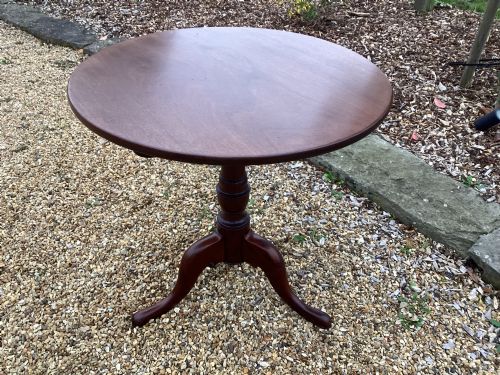
- A tabletop hinged to a central pillar so it can be tipped vertically when not in use. It allowed tables to be stored against walls in smaller rooms.
- Gateleg
- A table with hinged legs that swing out to support drop leaves. This mechanism provides sturdy support while allowing the table to fold flat.
- Marquetry
- Decorative patterns formed by fitting together small pieces of veneer. Craftsmen used various coloured woods to create intricate floral or geometric designs.
- Tripod
- A base featuring three supporting legs radiating from a central pillar. It offers stable floor contact on uneven historic surfaces.
Edwardian Round Dining Table: Frequently Asked Questions
How do I seat six people?
Many circular tables incorporate extending leaves or gateleg actions that expand the top. Look for mechanisms that pull apart smoothly in the centre.
Ensure you check the clearance beneath the apron so diners have adequate legroom when seated around the extended shape.
Are tilt-top tables stable?
Traditional tripod bases distribute weight evenly across three points. The catch mechanism locks the top securely in place horizontally for dining.
When lowered, a well-made tilt-top remains rigid and functions just as reliably as a fixed pedestal table.
How do I care for polished wood?
Protect the surface from direct heat and moisture by using mats and coasters. Regular dusting with a soft, dry cloth preserves the lustre of the polish.
Apply a traditional wax periodically to nourish the timber and maintain the natural depth of the grain.
What is a centre table?
A centre table is finished on all sides to stand freely in the middle of a room rather than against a wall. They served multiple domestic purposes from display to intimate dining.
Their versatile proportions make them useful additions to modern living spaces where furniture placement is flexible.