




Edwardian Roll Top Cabinet
An edwardian roll top cabinet brings practical pigeonholes and sliding timber shutters together to keep correspondence orderly.
Edwardian Roll Top Cabinet
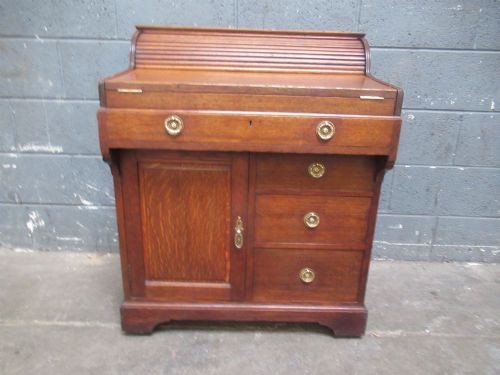
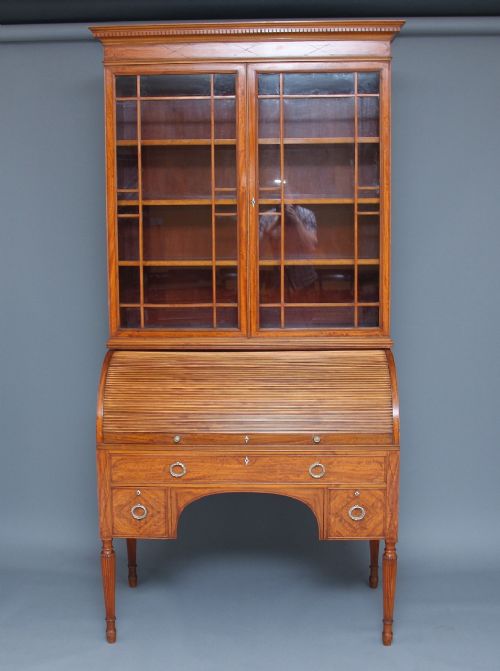
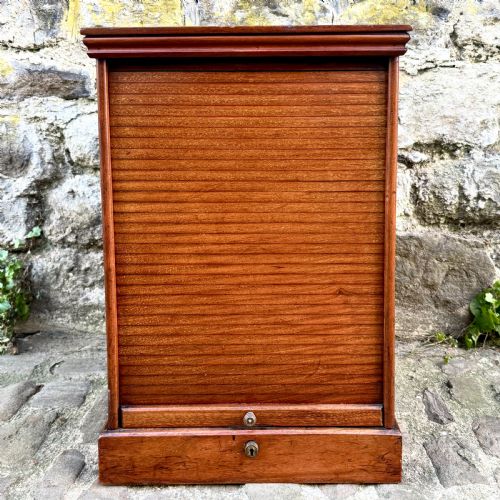
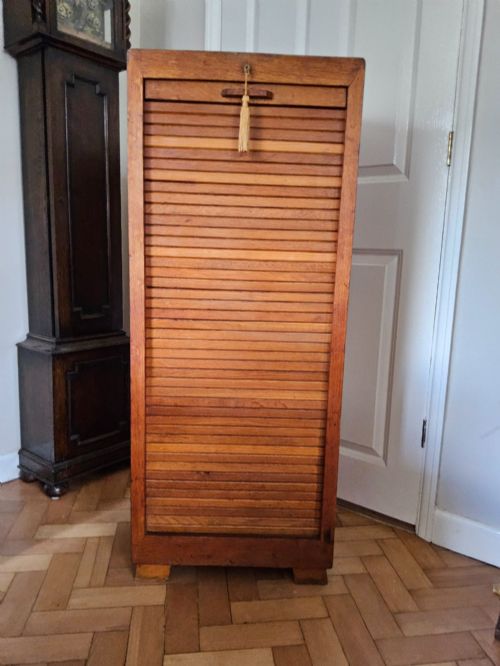
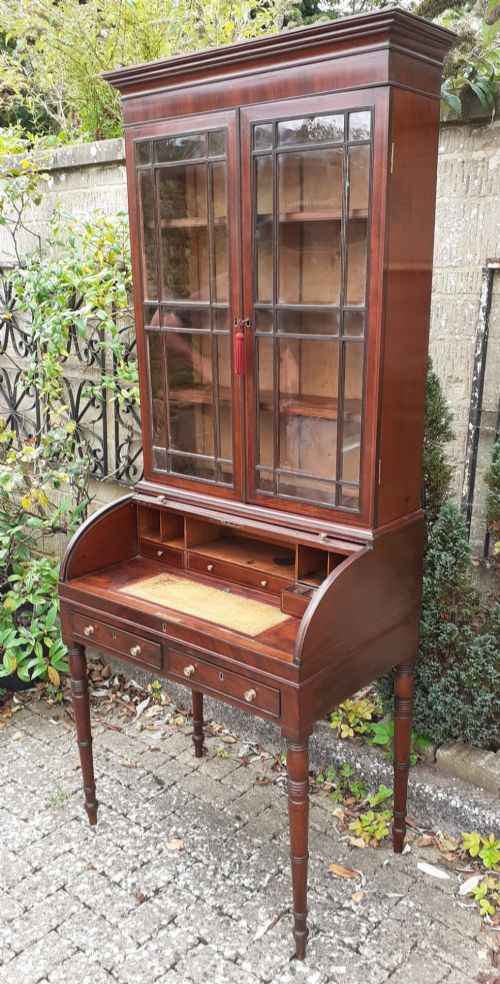
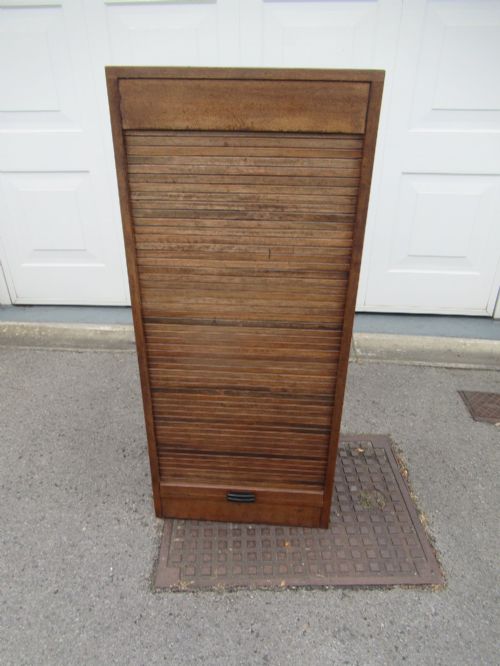
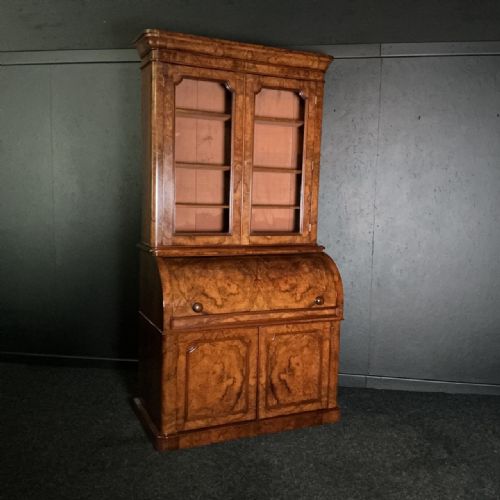
An edwardian roll top cabinet brings together the mechanical slatted shutter of a tambour and the fitted interior of a writing desk or stationery holder. Pieces answering this description on this page span compact oak stationery chests, mahogany bureau bookcases, and large solid oak desks with curved wooden shutters.
The materials used across these forms lean heavily towards oak and mahogany, often enhanced by satinwood or rosewood veneers and fitted with brass handles. Buyers searching for an edwardian roll top cabinet will encounter items ranging from late nineteenth century predecessors to pieces produced around nineteen thirty.
Many examples incorporate adjustable shelves, internal pigeonholes, and pull-out writing surfaces alongside the characteristic slatted roll top mechanism. These functional compartments distinguish the form from standard bookcases and provide secure storage for papers and correspondence.
Construction and materials
Cabinet makers constructed the flexible tambour shutters of an edwardian roll top cabinet by gluing narrow strips of timber onto a strong canvas or fabric backing. This assembly allows the curved wooden curtain to slide smoothly within concealed grooves around the back of the carcass.
Primary timbers such as oak and mahogany form the sturdy structural frames, while finer woods like satinwood and rosewood appear in decorative veneers and crossbanding. Brass hardware, including hinges, handles, and small locking mechanisms, completes the construction of these fitted writing pieces.
Edwardian Roll Top Cabinet Retail Price Guide 2026
Typical asking prices for edwardian roll top cabinet among the pieces listed under this phrase on Sellingantiques today, from the lower quarter to the upper quarter. They describe what is for sale here now, not the wider market.
Pieces span the late nineteenth century through the Edwardian era up to nineteen thirty.
Distinctions in manufacture
The smoothness of the mechanical roll top action separates finer pieces from those with stiff or misaligned slats. A well-constructed tambour shutter glides effortlessly within its tracks without binding or sagging.
Internal complexity and the quality of secondary timbers also mark the distinction between standard production items and superior cabinet work. Pieces featuring intricate pigeonhole arrangements, adjustable shelving, and solid oak or mahogany construction sit at the upper end of the range.
Edwards & Roberts·Tudor & Burrey
The Edwardian Roll Top Cabinet Glossary
- Tambour
- A flexible shutter made from narrow strips of wood glued to a canvas backing. This mechanism allows a curved door to slide around a track and conceal the interior pigeonholes.
- Cylinder
- A solid rounded wooden lid that rotates upwards into the body of a desk or bookcase. It differs from a slatted tambour by operating as a single curved panel.
- Stationery cabinet
- A small desktop or table-standing box designed to hold writing paper, envelopes, and inkwells. These often incorporate internal vertical dividers and drop-front writing slopes.
- Bureau bookcase
- A dual-purpose piece combining a lower writing desk with an upper shelving section enclosed by glass or wooden doors. The writing surface often drops down or slides forward beneath a roll top or cylinder lid.
Edwardian Roll Top Cabinet: Frequently Asked Questions
What is an edwardian roll top cabinet?
An edwardian roll top cabinet is a compact desk or storage piece featuring a slatted wooden shutter that pulls down to conceal pigeonholes and drawers.
These items were designed for domestic studies and offices to keep writing materials and correspondence neatly organised out of sight.
How does the tambour mechanism work?
The tambour consists of narrow wooden slats fastened to a strong canvas backing that bends smoothly around tracks inside the cabinet.
When pushed upwards or sideways, the flexible curtain disappears into the body of the furniture to open the workspace.
Where were these cabinets used?
They were primarily placed in Edwardian libraries, studies, and drawing rooms as practical writing desks and stationery tidies.
Their enclosed storage made them suitable for managing household accounts and personal correspondence in main living areas.
How do I care for the sliding shutter?
Keep the wooden tracks clean and free from dust so the slatted curtain glides without catching on the frame.
A light application of appropriate furniture wax helps maintain the smooth movement of the timber slats.