



Edwardian River Scene
An edwardian river scene captures tranquil British waterways through oil and watercolour, bringing atmospheric pastoral charm directly to your interior walls.
Edwardian River Scene
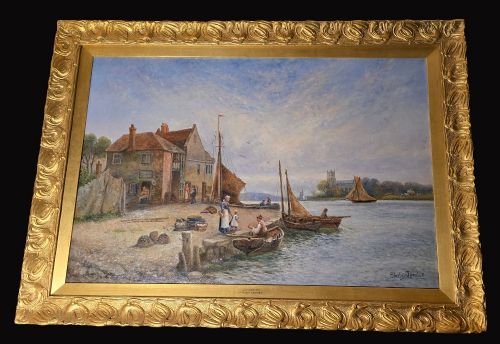
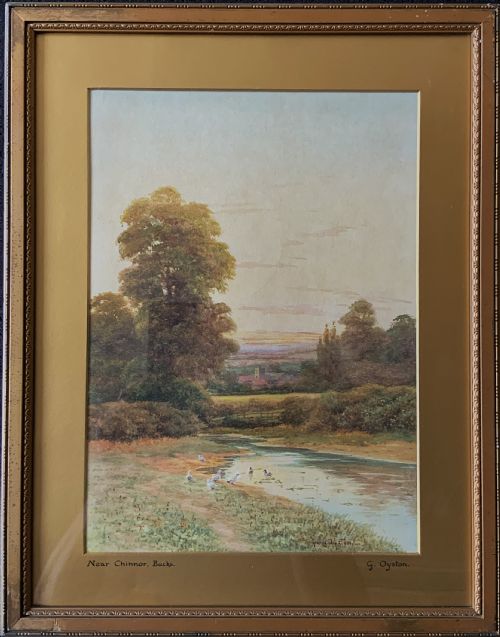
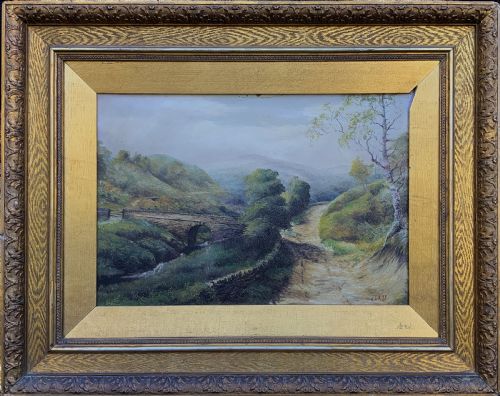
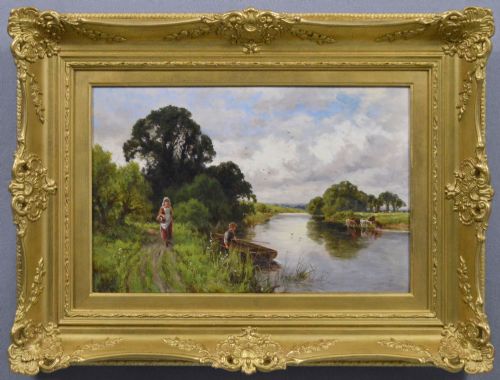
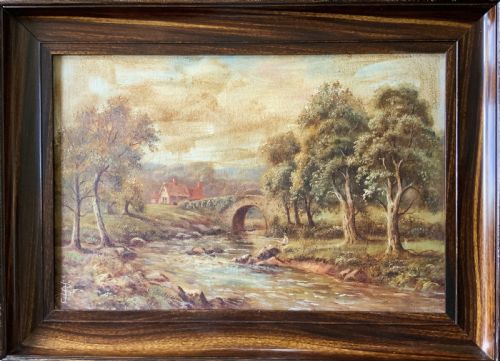
An edwardian river scene depicts British waterways, rural streams, and tidal reaches created during the late nineteenth and early twentieth centuries. These artworks capture pastoral life, fishing spots, and bustling urban rivers like the Thames through the lens of Edwardian Pastoral, British Impressionism, and Post-Impressionism.
The selections available here rely predominantly on framed paintings and watercolours executed on canvas, paper, or board. Collectors encounter everything from quiet Welsh landscapes to maritime views framed in giltwood.
Most compositions date from the 1890s through to the 1930s, reflecting the artistic preoccupation with natural light and rural tranquility during a period of rapid industrial change.
Distinctions in Quality
Quality rests in the artist's ability to render light and movement naturally across water and sky, moving beyond formulaic studio formulas to capture genuine topographical atmosphere. Finer works demonstrate confident brushwork and precise handling of reflection, shadow, and aerial perspective.
The preservation of the original medium also dictates worth; works that retain stable pigments without excessive fading, alongside well-preserved giltwood framing, maintain superior visual presence.
Edwardian River Scene Retail Price Guide 2026
Typical asking prices for edwardian river scene among the pieces listed under this phrase on Sellingantiques today, from the lower quarter to the upper quarter. They describe what is for sale here now, not the wider market.
Several artists clearly enjoyed painting cows by rivers as much as the water itself, populating the banks with surprisingly attentive cattle.
George Oyston·Henry H Parker·Sydney Yates Johnson·Edward Henry Eugene Fletcher·William Langley·Thomas Pyne
The Edwardian River Scene Glossary
- Watercolour
- A painting method in which the paints are made of pigments suspended in a water-based solution. It is traditionally applied to paper to produce translucent, luminous washes of colour.
- Oil on canvas
- A traditional painting technique utilising pigments bound in a drying oil, applied to stretched fabric. This method permits rich texture, blending, and deep tonal variations.
- Giltwood
- Wood that has been treated with a thin layer of gold leaf or gilt powder. It is commonly found shaping the decorative frames enclosing period paintings.
- British Impressionism
- An artistic movement focusing on everyday subject matter and the transient effects of light. Practitioners adopted looser brushwork influenced by continental techniques while retaining distinct local character.
Edwardian River Scene: Frequently Asked Questions
What periods do these paintings cover?
These works primarily span the late nineteenth century through to the 1930s, encompassing the Victorian era, the Edwardian period, and early twentieth-century British art. Artists working within these decades recorded both pastoral retreats and industrial waterways.
While the stylistic labels shift from Victorian Pastoral to British Impressionism, the overarching focus remains the faithful representation of British rivers, streams, and coastal pools.
How should I hang a watercolour painting?
Watercolours require careful placement away from direct, strong sunlight to prevent the fugitive pigments from fading over time. Glazing with protective glass helps shield the delicate paper and paint from atmospheric pollutants.
Ensure the hanging wall remains free from dampness, as moisture can damage both the paper support and the internal mount.
Are these paintings signed by the artist?
Many of the works carry the original signature or monogram of the painter, either within the composition or inscribed on the reverse. Some historical pieces remain indistinctly signed or attributed to a specific British school based on stylistic evidence.
Documentation often relies on contemporary exhibition records, stylistic comparison, and period framing to confirm authorship.
What subjects typically appear in these scenes?
Common subjects include rural Welsh streams, Thameside villages with figures fishing, bustling London marine views, and cattle watering by riverbanks. Artists frequently depicted daily rural life alongside identifiable landmarks like Windsor Castle or St Paul's Cathedral.
The inclusion of barges, bridges, and local flora roots each composition firmly in the British topographical tradition of the era.