


Edwardian Plaque Ring
An edwardian plaque ring is a flat, intricate finger ornament that delivers maximum geometric sparkle, prized for its delicate metalwork.
Edwardian Plaque Ring
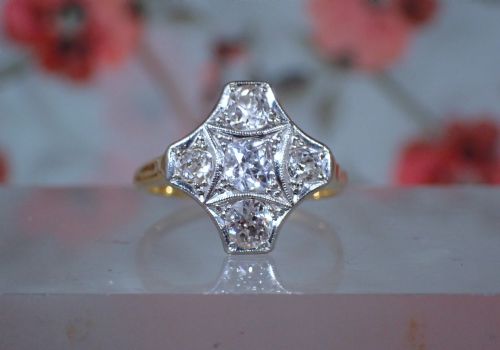
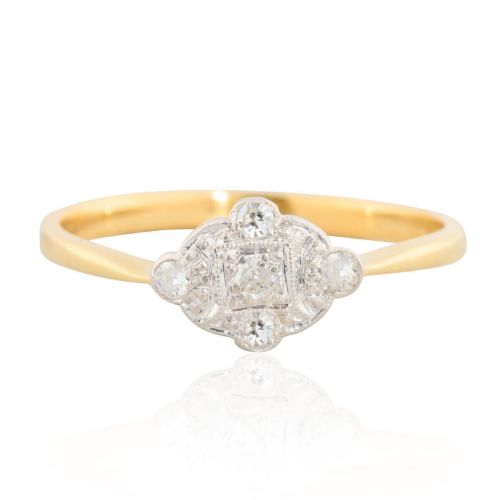
An edwardian plaque ring presents a flat or gently domed face of precious metal, pierced and set with stones to form a geometric or floral panel upon the finger. These jewels span the Edwardian era into the Art Deco period, alongside later interpretations from mid century decades.
The most common examples encountered here combine platinum and gold, often pairing diamonds with sapphires or rubies. Forms range from rectangular panels to navette and elongated cluster shapes.
Makers of these rings utilised varied motifs, balancing nineteenth century inheritance with twentieth century modernism. The resulting pieces function as distinct finger panels designed to catch the light across a broad surface.
How they were made
Goldsmiths built these jewels using platinum and gold, frequently mounting diamonds in platinum over yellow or white gold bases to heighten the brilliance of the stones. Techniques involved meticulous piercing of the metal sheet to create lace like openwork patterns known as ajouré work.
Gemstones including diamonds, sapphires, rubies, and onyx were cut in old cut, rose cut, or french cut styles and pavé set into the metal surface. This dense setting method placed small stones close together with minimal visible metal holding them in place.
Several rings incorporate checkerboard patterns of sapphires and diamonds, ensuring the finger doubles as a miniature gaming board.
What varies in quality
The refinement of the piercing work dictates the artistic success of the panel, separating rigid stampings from fluid, hand pierced creations. Superior pieces exhibit precise symmetry and delicate millegrain edges that remain crisp under magnification.
Stone selection and matching determine the overall harmony of the face, where uniform colour in sapphires or rubies and well proportioned old cut diamonds elevate the piece. The integration of the gallery and band shows the builder's commitment to structural longevity alongside surface grace.
The Edwardian Plaque Ring Glossary
- Plaque ring
- A ring featuring a flat or low profile decorative panel that sits squarely on top of the finger. These panels display intricate stone settings and metal piercing.
- Millegrain
- A decorative technique involving a row of tiny raised metal beads along the edge of a setting. This softens the metal outline and adds texture.
- Navette
- A boat shaped form with pointed ends, used for elongated ring panels. The shape flatters the hand by following the length of the finger.
- Pavé
- A setting style where numerous small stones are placed close together and secured by tiny beads of metal. The surface appears paved with gems.
- Old cut
- A diamond cut predating the modern brilliant cut, characterised by a smaller table, higher crown, and open culet. These stones exhibit a softer candlelight sparkle.
Edwardian Plaque Ring: Frequently Asked Questions
What is an edwardian plaque ring?
An edwardian plaque ring is a flat, patterned jewel designed to cover the finger with geometric or floral stone settings.
These pieces use platinum and gold to create lightweight yet expansive decorative faces.
How do I date an edwardian plaque ring?
Dating relies on stylistic clues, metal combinations, and the specific cuts of the diamonds and coloured stones.
Edwardian examples often feature softer garland motifs, while later pieces adopt sharper Art Deco geometry.
How were these rings worn originally?
They functioned as dress or cocktail rings, worn to display fashion awareness and evening elegance.
The flat profile prevented the jewel from snagging on delicate fabrics of the period.
Are these rings suitable for daily wear?
Daily wear requires care due to the delicate openwork metal and fine millegrain edges.
Owners should remove them during heavy physical tasks to protect the intricate platinum settings.