

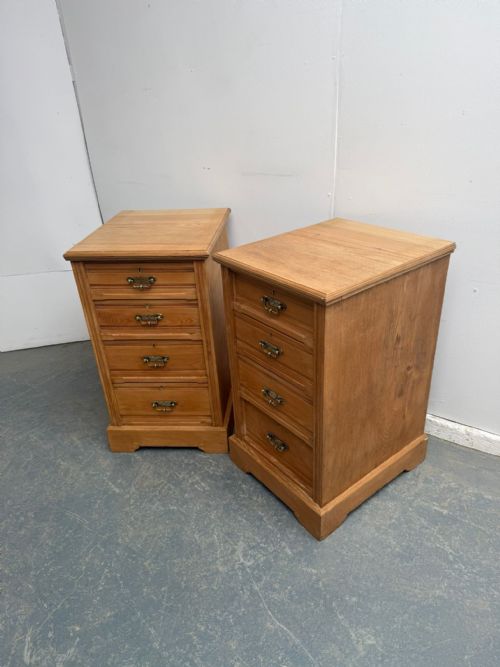
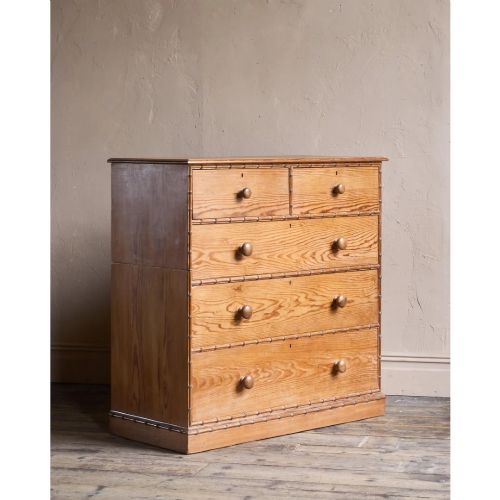
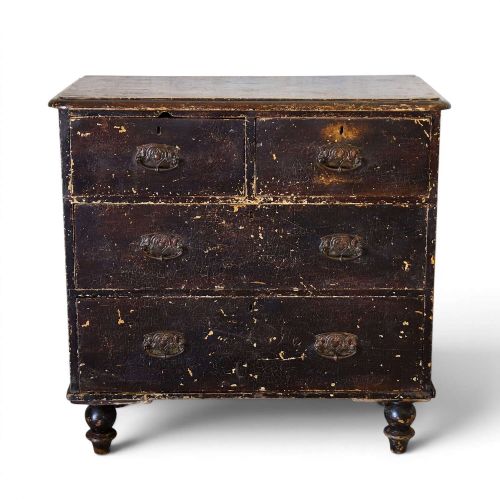

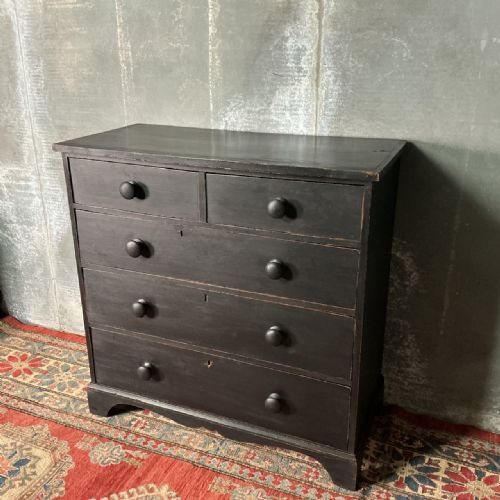
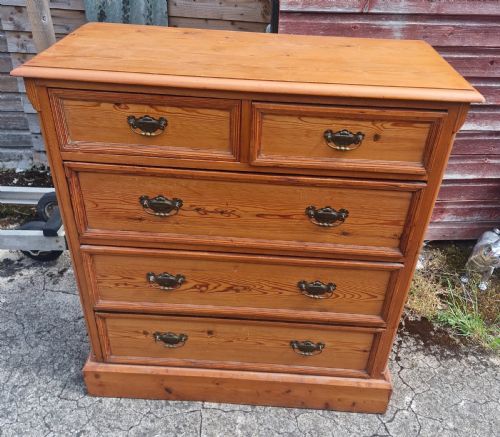

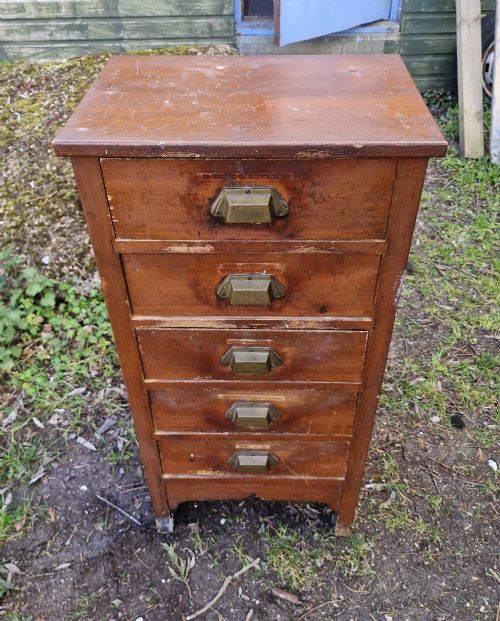


Edwardian Pine Chest Drawers
An edwardian pine chest drawers offers practical storage constructed in resilient timber, combining everyday domestic utility with period character.
Edwardian Pine Chest Drawers
When searching for an edwardian pine chest drawers, buyers encounter functional storage pieces originating primarily from the Victorian and Edwardian eras, alongside related items in pitch pine and ash. The most frequently met form is the straightforward domestic chest of drawers, often constructed in plain or painted pine.
Beyond standard bedroom pieces, the selection includes specialised storage forms such as collectors cabinets, filing cabinets, dressing tables, and tall banks of drawers. These utilitarian items demonstrate the versatility of pine and pitch pine in domestic and commercial contexts spanning the nineteenth and early twentieth centuries.
Materials and construction
Pieces rely heavily on pine and pitch pine as primary timbers, occasionally complemented by ash, deal, and brass hardware. Surfaces frequently show original finishes including wax, brown scumble paint, and stain.
Construction techniques span standard domestic cabinet making and robust industrial utility work. Joinery supports functional multi-drawer configurations, ranging from simple bedroom chests to twenty-four drawer banks and specialised campaign units.
Edwardian Pine Chest Drawers Retail Price Guide 2026
Typical asking prices for edwardian pine chest drawers among the pieces listed under this phrase on Sellingantiques today, from the lower quarter to the upper quarter. They describe what is for sale here now, not the wider market.
One remarkably persistent watchmaker kept nine narrow drawers waiting quietly for tiny spare parts.
Gradations in quality
Quality differentiates by the intactness of original painted surfaces, such as scumble glazes and early paint layers, compared to stripped timber. Finer examples retain period brass handles and specific functional forms like pharmacy or collectors cabinets.
The sophistication of the timber selection also divides the range, distinguishing standard deal and painted pine from figured pitch pine and ash. Structural integrity and untouched original condition command greater distinction among surviving pieces.
Howard and Sons·J.T.Crockett
The Edwardian Pine Chest Drawers Glossary
- Scumble paint
- A decorative glaze technique applied over a base coat to imitate finer wood grains or create mottled patterns. It appears frequently on period pine furniture.
- Pitch pine
- A dense, resinous softwood with pronounced grain patterns. Makers utilised it for durable cabinets, plan chests, and commercial furniture.
- Wellington chest
- A tall, narrow chest of drawers secured by a hinged vertical locking side bar. This locking mechanism fastens all drawers simultaneously.
- Collectors cabinet
- A multi-drawer cabinet designed to organise specimens, insects, or small objects. These units often feature numerous shallow drawers.
- Deal
- A general historical term for softwood timber, particularly pine or fir. It served widely in utilitarian and secondary furniture construction.
Edwardian Pine Chest Drawers: Frequently Asked Questions
What defines an edwardian pine chest drawers?
An edwardian pine chest drawers is a practical storage item produced during the early twentieth century using softwood timber. These pieces typically provide multiple drawers for domestic organisation.
Designs range from simple bedroom chests to painted variations and utilitarian workshop storage. The use of pine gives them a robust yet accessible character suited to traditional interiors.
How do I care for waxed pine furniture?
Waxed pine surfaces require occasional nourishment with traditional beeswax to maintain the timber's lustre and protect the grain. Avoid placing these pieces in direct sunlight or near heat sources to prevent timber movement.
Cleaning should involve a soft, dry cloth rather than harsh liquid polishes. Gentle upkeep preserves original patination and wax finishes built up over decades.
Were these chests always painted?
Original finishes vary considerably across surviving pieces. Many items retain their early paint layers, scumble glazes, or plain waxed pine surfaces from the period of manufacture.
Paint was frequently applied for decoration or protection in domestic and institutional settings. Subsequent stripping has left some examples in bare wood.
How do I distinguish Edwardian from Victorian pine?
Distinguishing between these adjacent periods involves observing construction details, handle styles, and overall proportions. Victorian pieces often display heavier proportions and deeper mouldings.
Edwardian items frequently lean towards lighter construction and simpler lines, though overlap in regional workshop traditions remains common. Original hardware and finish types help anchor pieces to specific decades.