

Edwardian Pearl Necklace Drop
An edwardian pearl necklace drop suspends delicate stones from fine chains, capturing the refined lightness characteristic of early twentieth-century jewellery.
Edwardian Pearl Necklace Drop
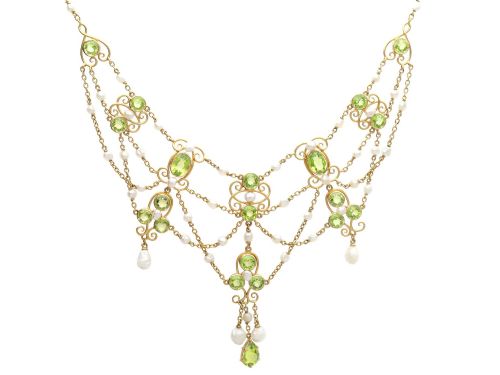
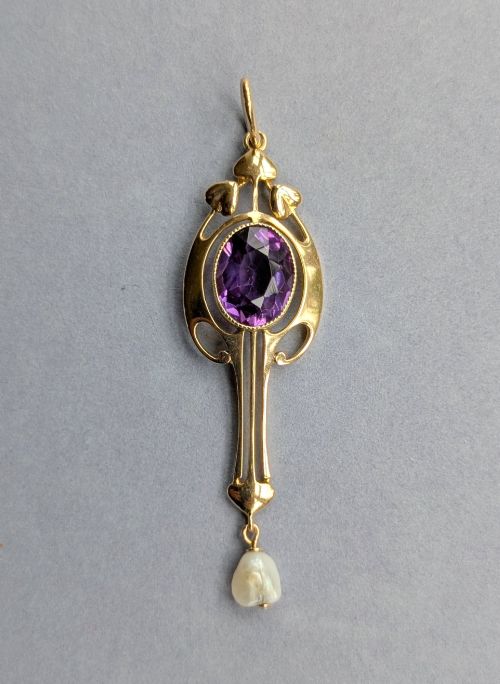
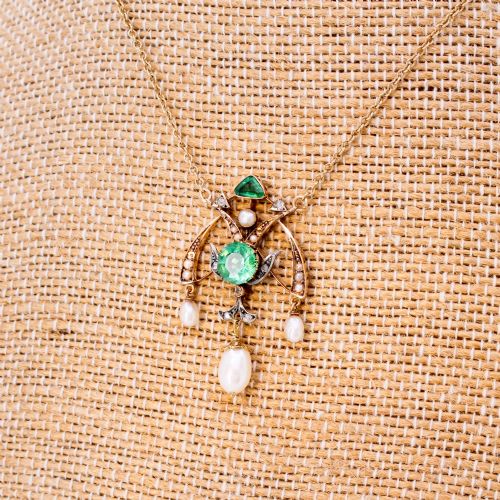
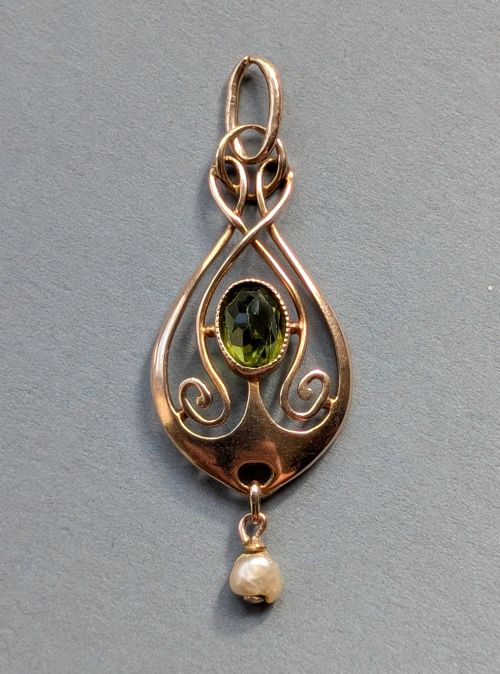
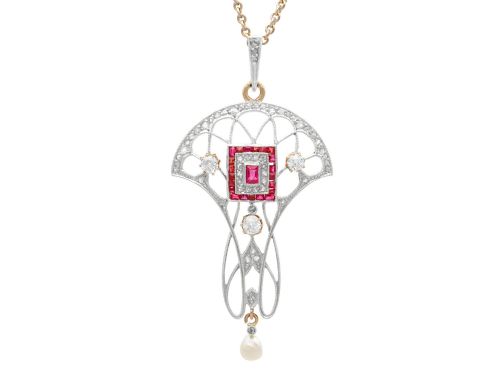
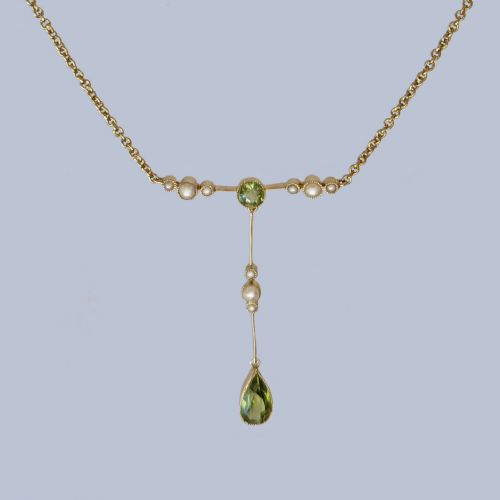
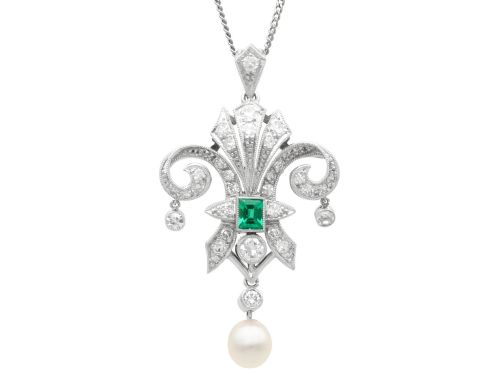
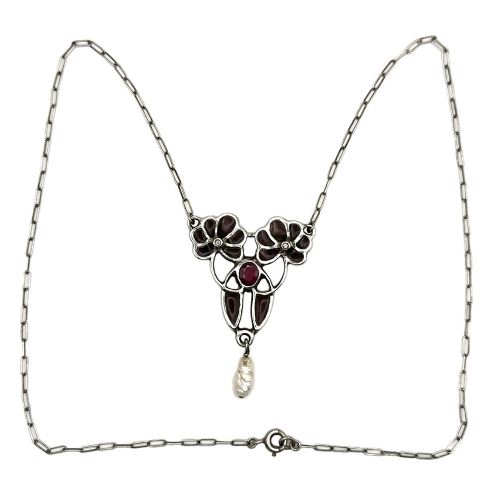
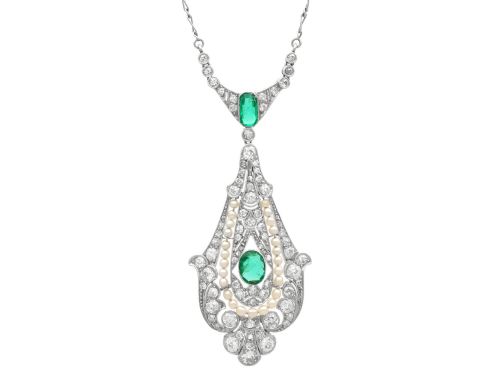
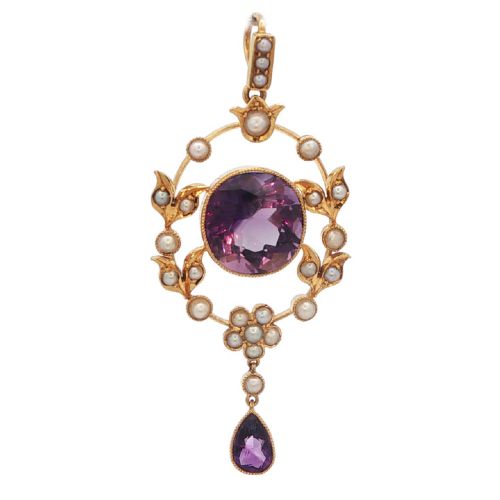
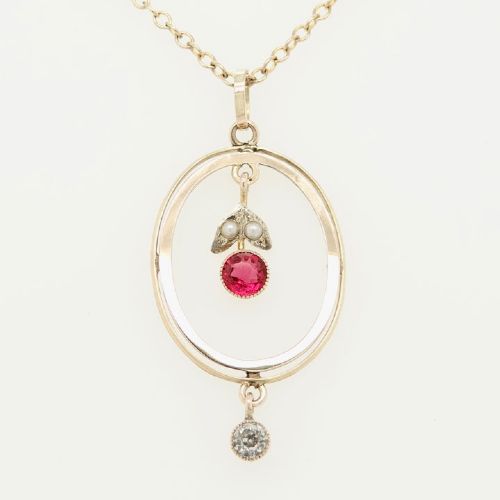
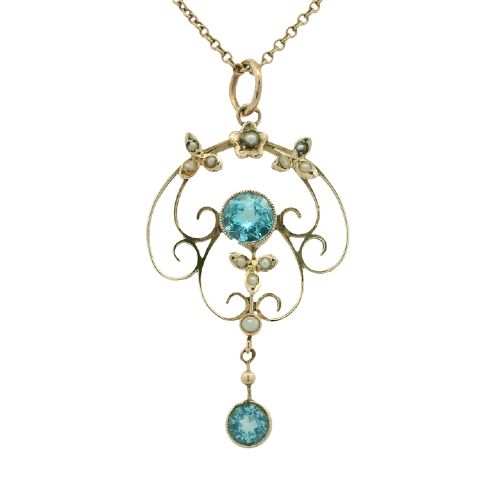
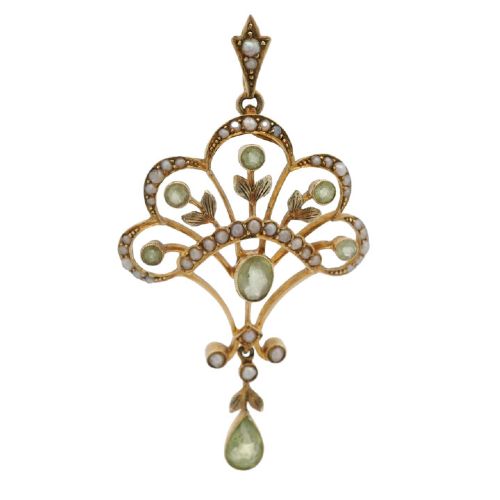
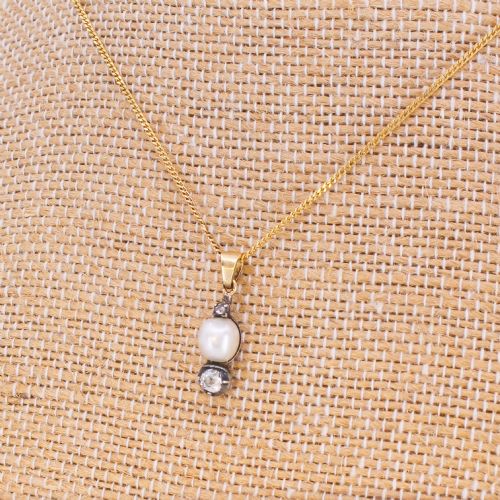
An edwardian pearl necklace drop combines luminous pearls with central gemstones like amethyst, peridot, or aquamarine, often suspended in an openwork pendant frame. The prevalent form is the lavalier or negligé necklace, where asymmetrical or paired drops hang gracefully below the collarbone.
Most examples originate from the Edwardian era, though the selection spans late Victorian periods into the nineteen-twenties, incorporating Art Nouveau and Arts and Crafts aesthetics. These pieces typically manifest as delicate pendants integrated into fine gold or silver chains.
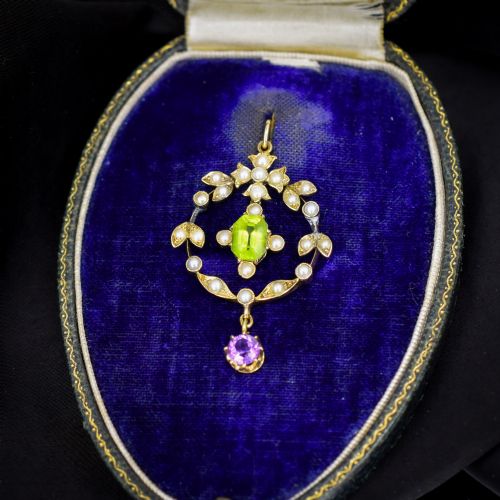
Makers utilised characteristic motifs of the period, including flowing plant tendrils, symmetrical garlands, and geometric drops. The combination of seed pearls with vibrant coloured stones defines the visual identity of these items.
Materials and Construction
Goldsmiths worked primarily in nine-carat and fifteen-carat yellow and rose gold, occasionally mounting diamonds and pearls in platinum or silver settings. Seed pearls were meticulously drilled and secured on tiny pins or wired by hand into delicate clusters and borders.
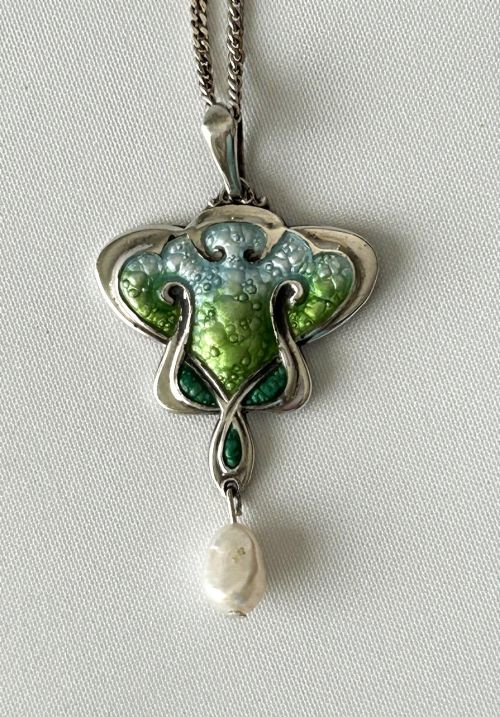
Techniques such as plique-à-jour and cold enamel appear alongside traditional prong and bezel settings to hold coloured gemstones securely within intricate openwork frames. Chains were fabricated by hand from fine wire links, matched carefully to the weight of the pendant drop.
Edwardian Pearl Necklace Drop Retail Price Guide 2026
Typical asking prices for edwardian pearl necklace drop among the pieces listed under this phrase on Sellingantiques today, from the lower quarter to the upper quarter. They describe what is for sale here now, not the wider market.
Gold purity standards on these items include nine-carat, fifteen-carat, and eighteen-carat variations alongside platinum and silver.
Judging Quality
Quality rests upon the precision of the metalwork and the uniformity of the seed pearls employed in the design. Superior pieces display intricate hand- pierced frames with secure, flush settings that hold every pearl and gemstone firmly without excess solder.
The choice and cut of the accompanying stones dictate the distinction between standard production and exceptional examples. Better items feature well-matched, vibrant peridots, amethysts, or aquamarines possessing clean saturation and lively internal light reflection.
S. Blanckensee & Son·Archibald Knox·Liberty & Co·Murrle Bennett·Hamilton & Co
The Edwardian Pearl Necklace Drop Glossary
- Lavalier
- A pendant necklace featuring one or more suspended drops hanging below the main cluster. This style gained immense popularity during the Edwardian period.
- Seed Pearl
- A tiny, naturally small pearl, often less than two millimetres in diameter. These were widely utilised in clusters and borders on Edwardian jewellery.
- Plique-a-Jour
- An enamelling technique where enamel is applied to open cells without a backing, resembling miniature stained glass. It is frequently seen on Art Nouveau pieces.
- Neglige Necklace
- A necklace design featuring two unequal drops suspended from a central motif or directly from the chain. They accentuate the neckline with a delicate asymmetrical appearance.
- Suffragette
- A descriptor for jewellery incorporating green, white, and violet stones, symbolising the women's suffrage movement. Amethyst, peridot, and seed pearls form the classic colour combination.
Edwardian Pearl Necklace Drop: Frequently Asked Questions
What is a lavalier pendant?
A lavalier pendant is a lightweight necklace featuring a central decorative element with one or more stones dangling loosely below it. This drop construction creates movement and a distinct vertical line.
Originating in popularity during the early twentieth century, these pieces were designed to be worn against high collars or evening necklines. They showcase the characteristic lightness and fluid metalwork of the period.
How do I care for seed pearls?
Seed pearls are organic gems that require gentle handling because they are sensitive to chemicals, perfumes, cosmetics, and household acids. Wipe them gently with a soft cloth after wearing to remove residues.
Store them away from harder metals to prevent scratching, and avoid immersing antique threaded pieces in liquid cleaning solutions. Professional restringing may be necessary periodically if the original silk cord weakens.
Are these necklaces made of solid gold?
The listings predominantly feature items fabricated from nine-carat or fifteen-carat yellow and rose gold. Some pieces incorporate silver or platinum, particularly for setting diamonds or white stones.
Assay marks, hallmarks, and professional testing help determine the exact gold purity of the mount. Makers often stamped the reverse of the pendant frame or the clasp area with the carat designation.
How do I identify an Edwardian piece?
Edwardian jewellery is distinguished by its use of platinum settings, delicate millegrain edges, and pastel gemstones like peridot, aquamarine, and amethyst paired with seed pearls. The aesthetic favours airy openwork, garlands, and ribbon motifs over heavier Victorian styles.
Construction methods such as hand-fabricated wirework and specific clasp types also point toward the nineteen-hundreds. Comparing hallmarks and stylistic nuances helps separate these pieces from later Art Deco designs.