




Edwardian Parquetry Desk
An edwardian parquetry desk brings geometric woodcraft into the study, offering a working surface defined by precise veneer patterns.
Edwardian Parquetry Desk
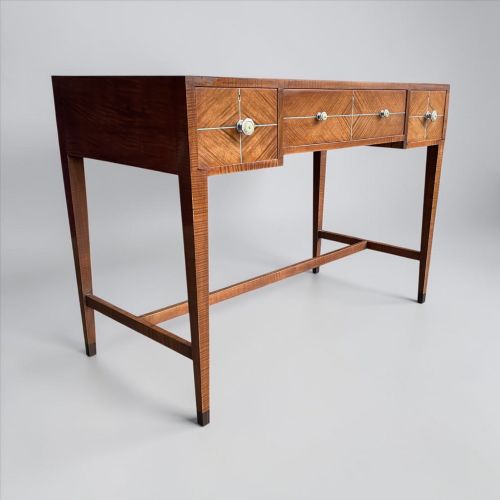
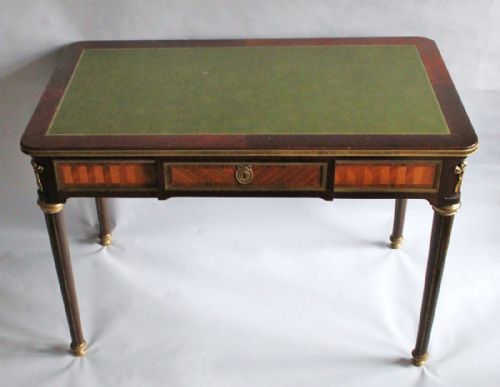
When you search for an edwardian parquetry desk, you are looking at writing furniture decorated with small geometric pieces of wood arranged to form decorative patterns. The selection on this page encompasses related writing tables, bonheur du jour forms, and dressing tables that employ similar surface decoration across various periods.
The pieces appearing here draw on styles ranging from Victorian and Regency through to Edwardian and Arts and Crafts eras. Makers utilised timbers such as rosewood, walnut, satinwood, and mahogany to create these patterned surfaces.
While the search specifies an edwardian parquetry desk, buyers frequently encounter related desk forms and writing tables sharing timber veneer construction and period craftsmanship. Each example demonstrates how workshops applied geometric wood patterns to functional furniture.
How they were made
Craftsmen built these pieces using timber veneers applied to a foundational wood structure, cutting small geometric pieces of rosewood, walnut, boxwood, and satinwood to form parquetry patterns. This technique allowed makers to create complex visual designs across flat surfaces like desk tops and writing slopes.
Workshops integrated brass mounts, glass components, and internal compartments into desks and dressing tables to enhance both utility and appearance. The combination of varied hardwoods provided contrast within the geometric compositions.
Edwardian Parquetry Desk Retail Price Guide 2026
Typical asking prices for edwardian parquetry desk among the pieces listed under this phrase on Sellingantiques today, from the lower quarter to the upper quarter. They describe what is for sale here now, not the wider market.
The listings on this site include pieces from the Victorian, Edwardian, and Regency periods, constructed from rosewood, walnut, satinwood, and mahogany.
What varies in quality
The distinction between standard and superior examples lies in the precision of the parquetry work and the choice of timbers used in the veneer. Finer pieces demonstrate exact alignment in the geometric wood pieces and employ desirable hardwoods like rosewood and satinwood.
Construction methods and the integration of secondary materials, such as brass hardware or fitted internal compartments, indicate the tier of the workshop that produced the desk. Greater attention to the harmony of the timber grain separates ordinary items from exceptional ones.
Maples·Howard & Sons
The Edwardian Parquetry Desk Glossary
- Parquetry
- Geometric mosaic of wood pieces used for surface decoration. This technique forms the patterned designs seen on desk tops and cabinet fronts.
- Veneer
- Thin slices of fine timber applied to a base wood structure. It allows makers to display decorative grain and parquetry patterns economically.
- Bonheur du jour
- A small light lady's writing desk featuring a tiered superstructure with shelves and drawers above the main writing surface. These pieces often incorporate fine timbers and decorative details.
- Satinwood
- A hard, yellowish timber with a lustrous grain utilised in high-end cabinet making. It provides a bright contrast in parquetry designs.
- Tunbridge Ware
- Woodworking specialty featuring minute mosaic tiles created from naturally coloured woods to form pictorial or geometric scenes. It appears on smaller table boxes from the Victorian period.
Edwardian Parquetry Desk: Frequently Asked Questions
What is an edwardian parquetry desk?
An edwardian parquetry desk is a writing table featuring geometric wood veneer patterns across its surfaces. These pieces utilise various timbers to create decorative geometric motifs.
Such furniture serves as both a functional writing space and an example of period cabinet making.
How do I identify parquetry?
Parquetry consists of small, precisely cut pieces of wood fitted together to form geometric designs. It differs from marquetry, which forms pictorial or floral shapes.
Makers used contrasting timbers like boxwood, walnut, and rosewood to accentuate the geometric pattern.
What woods were used?
Makers utilised rosewood, walnut, satinwood, mahogany, and boxwood for these pieces. These timbers provided the colour variation necessary for geometric parquetry designs.
Secondary woods formed the internal carcase and structural elements of the desks and tables.
How do I care for a veneered desk?
Protect veneered surfaces from direct sunlight and stable humidity to prevent the timber from drying and lifting. Regular dusting with a soft, dry cloth preserves the polished finish.
Avoid placing damp items or excessive heat directly onto the parquetry surface.