

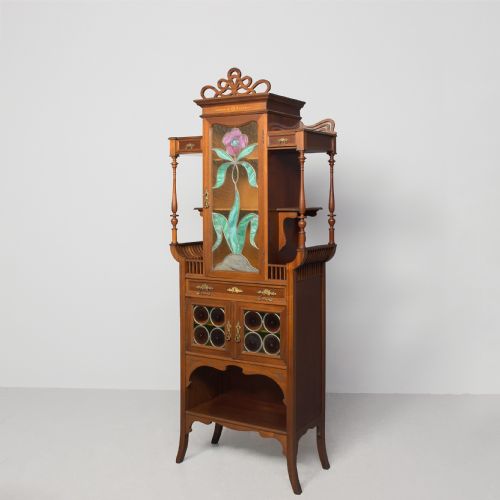
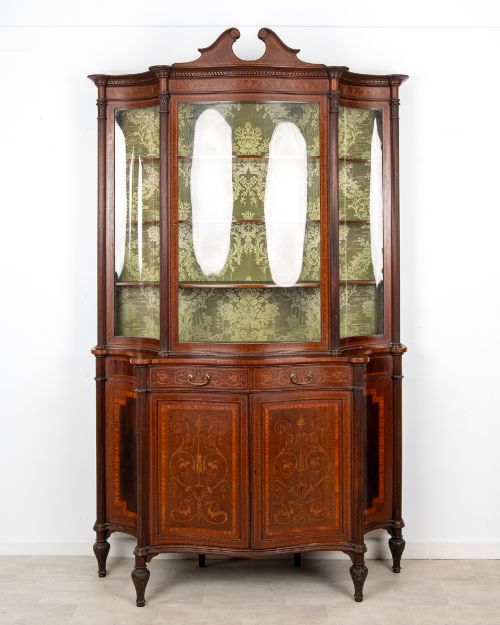
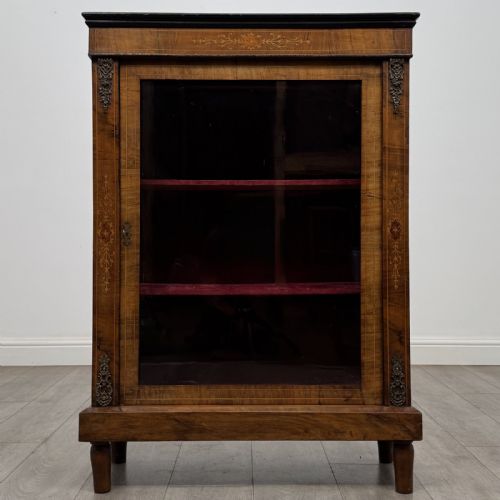
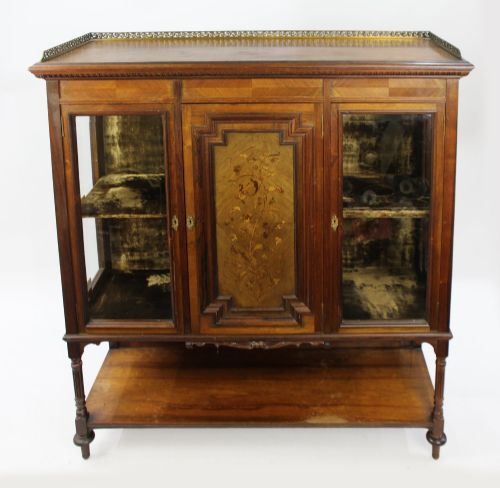




Edwardian Parlour Cupboard
An Edwardian parlour cupboard brings refined timberwork and glass-fronted display into the reception room.
Edwardian Parlour Cupboard
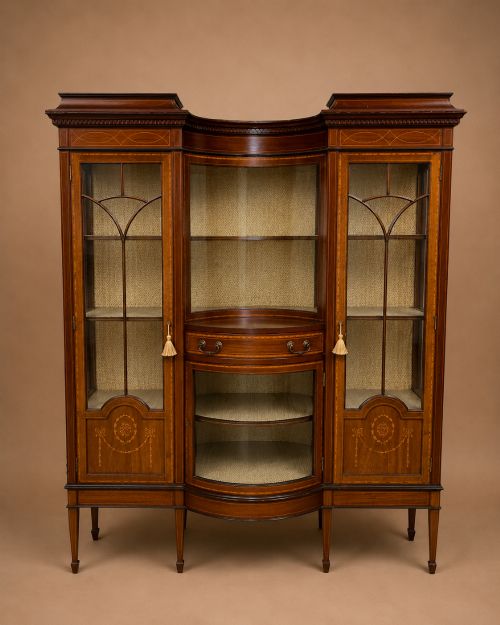
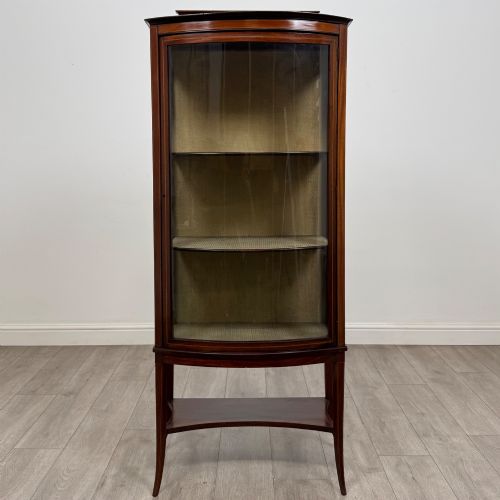
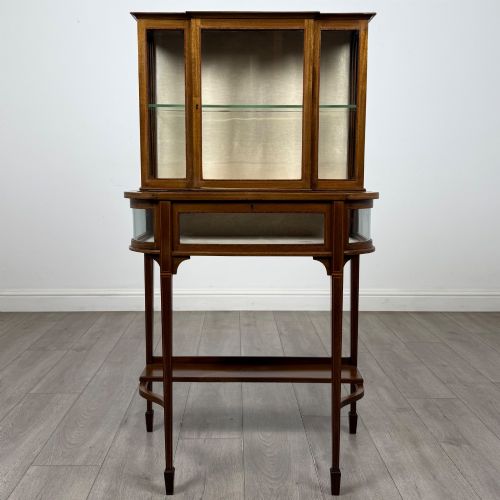
An edwardian parlour cupboard encompasses display cabinets, side cabinets, and credenzas found in reception rooms. These pieces serve to exhibit china and glassware while providing enclosed storage beneath.
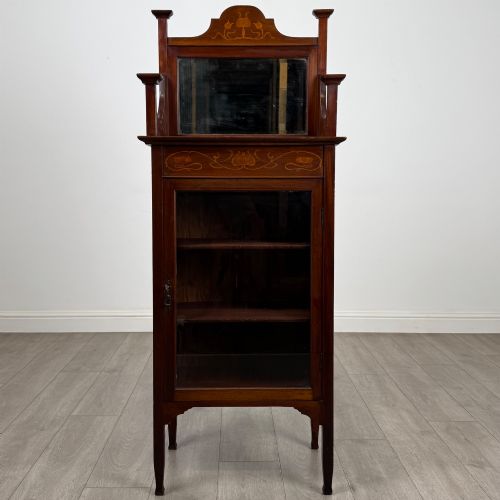
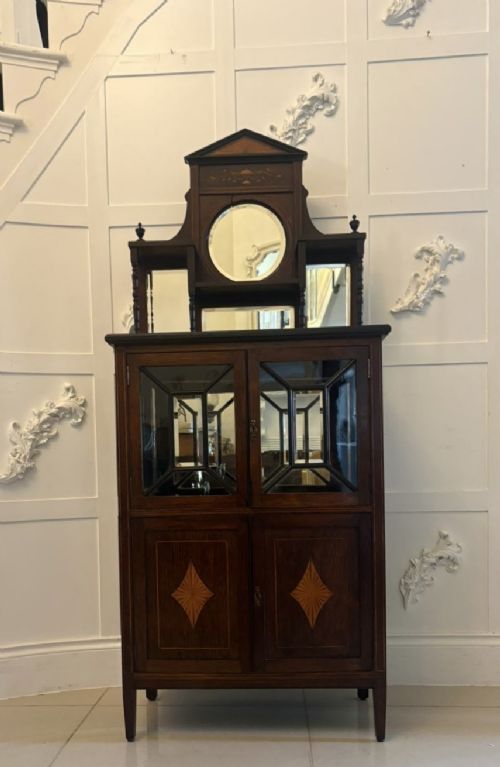
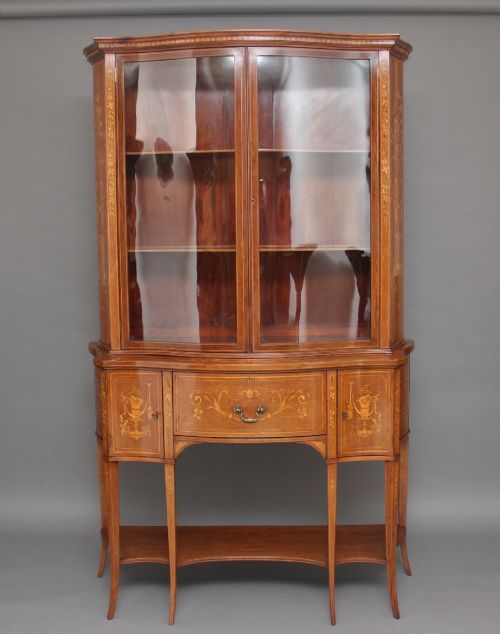
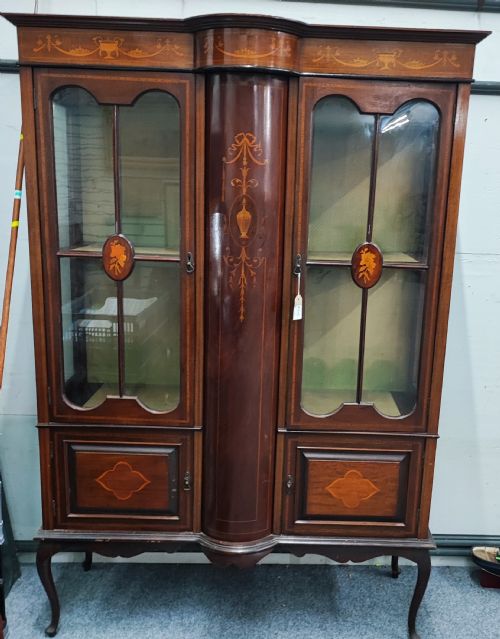
The most common version met on this page is the edwardian display cabinet in mahogany. Many examples incorporate glass doors, mirror backs, and delicate wood inlay.
Makers and designers of the period drew upon earlier Georgian vocabularies, producing revival styles alongside contemporary Art Nouveau forms.
Materials and construction
Cabinets rely primarily on mahogany, rosewood, satinwood, walnut, and kingwood as foundational timbers. Cabinetmakers applied lighter wood inlay to create contrasting borders and decorative motifs across the primary surfaces.
Glazing bars hold the glass panes within display doors, while brass hardware secures closures and hinges. Mirror glass frequently forms the interior back panel to reflect light through the displayed objects.
Edwardian Parlour Cupboard Retail Price Guide 2026
Typical asking prices for edwardian parlour cupboard among the pieces listed under this phrase on Sellingantiques today, from the lower quarter to the upper quarter. They describe what is for sale here now, not the wider market.
Listings feature items spanning the 19th century and the Edwardian period, incorporating materials like brass, mirror, and fabric.
Judging quality in parlour cupboards
Finer examples distinguish themselves through the precision of their marquetry and wood inlay work. The choice of primary timbers, such as figured mahogany or rosewood, separates standard production from superior pieces.
Construction detail in the joinery and the selection of secondary woods indicate the workshop standards. The incorporation of elements like mirror backs and quality brass fittings elevates the standing of a cabinet.
Shapland and Petter·Edwards and Roberts
The Edwardian Parlour Cupboard Glossary
- Marquetry
- Decorative veneer patterns applied to furniture surfaces to form pictures or geometric designs. This technique utilises contrasting wood types to create pictorial detail.
- Credenza
- A sideboard or display unit originating as a side table for serving food. In later periods, it evolved into a formal cabinet with glass doors.
- Satinwood
- A durable hardwood yielding a yellowish timber with a lustrous sheen. Cabinetmakers utilised it extensively for contrasting inlay and banding.
- Art Nouveau
- A design movement characterised by organic, sinuous lines and floral motifs. This style influenced cabinet decoration around the turn of the twentieth century.
- Sheraton Revival
- A late nineteenth and early twentieth century return to the neoclassical furniture designs of Thomas Sheraton. Pieces feature symmetrical geometry and delicate inlay.
Edwardian Parlour Cupboard: Frequently Asked Questions
What is an edwardian parlour cupboard used for?
These cabinets were designed to display porcelain, silver, and glassware in the formal rooms of a house. The upper glass sections protected delicate items from dust while keeping them visible to guests.
Lower cupboards and drawers provided concealed storage for table linen, documents, or household sundries. They combined utility with the presentation of household status.
How do I identify an edwardian piece?
Edwardian furniture often displays lighter proportions than heavy Victorian pieces. Look for characteristic details such as satinwood inlay, tapered legs, and subtle neoclassical or Sheraton revival motifs.
Construction methods also help, as machinery became more common in workshops by 1900. Timber choices shifted towards brighter mahogany, walnut, and rosewood.
Where should I place a display cabinet?
These cabinets suit reception rooms, dining spaces, or hallways where natural light can strike the glass panels. Positioning them away from direct sunlight protects the timber veneers and interior fabrics from fading.
Ensure the floor is level so the doors hang true and the glass remains under no structural stress. Adequate clearance allows doors to open fully for arranging contents.
What is the difference between a credenza and a display cabinet?
A credenza traditionally refers to a low sideboard or cabinet originating from continental dining rooms. They often feature a combination of central cupboards and flanking curved glass compartments.
Display cabinets, by contrast, prioritise vertical height and glass panels on all sides to showcase objects from multiple angles. Both forms belong to the broader category of parlour furniture.