




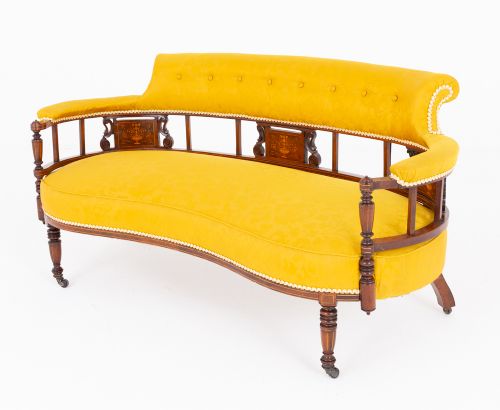


Edwardian Parlor Settee
An Edwardian parlor settee brings refined mahogany and delicate inlay into a sitting room, offering compact seating rooted in turn-of-the-century design.
Edwardian Parlor Settee
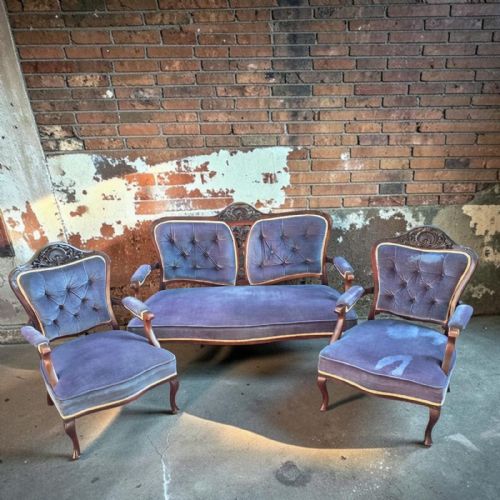
When searching for an edwardian parlor settee, buyers encounter sophisticated wooden seating designed for formal reception rooms during the early twentieth century and late nineteenth century. These pieces function as decorative twin-seater sofas, salon settees, and components of larger parlour suites.
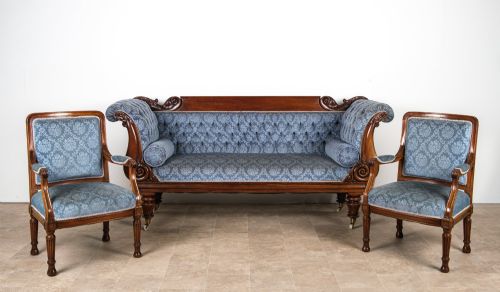
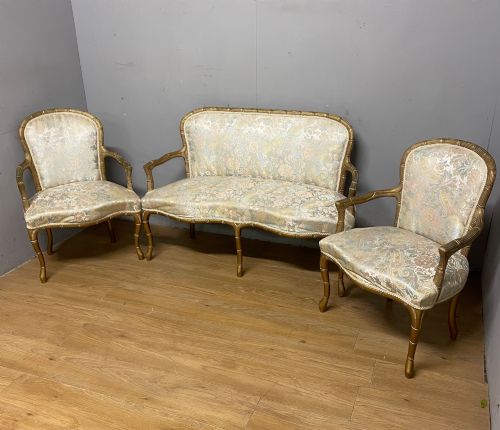
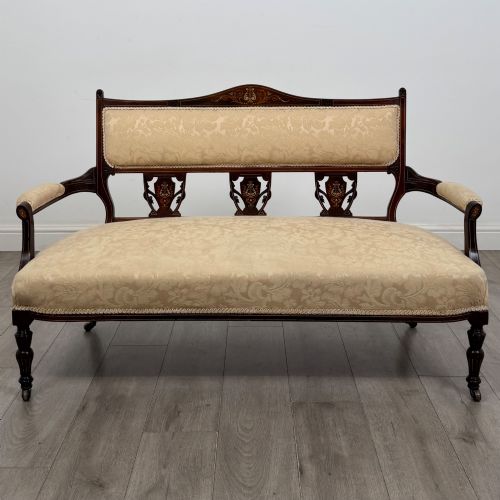
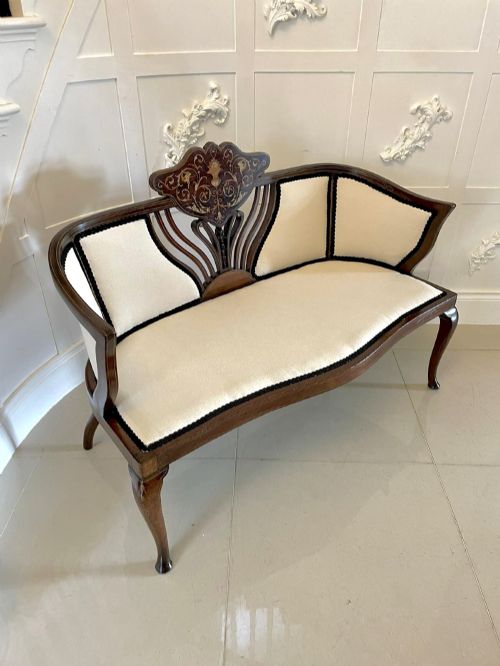
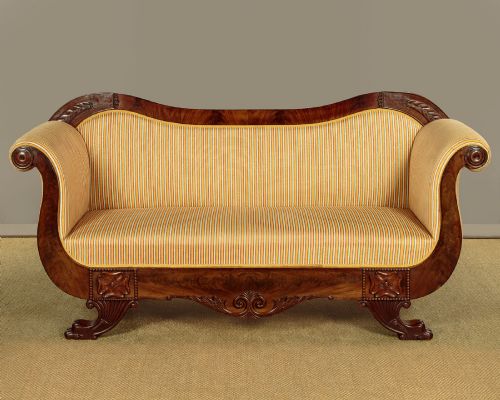
The most common version met on this page is the Edwardian inlaid mahogany settee, frequently constructed around 1900 with satinwood, boxwood, or bone inlay. Alongside these formal designs, related Victorian, late Victorian, Regency, and Arts and Crafts pieces appear in oak, walnut, and rosewood.
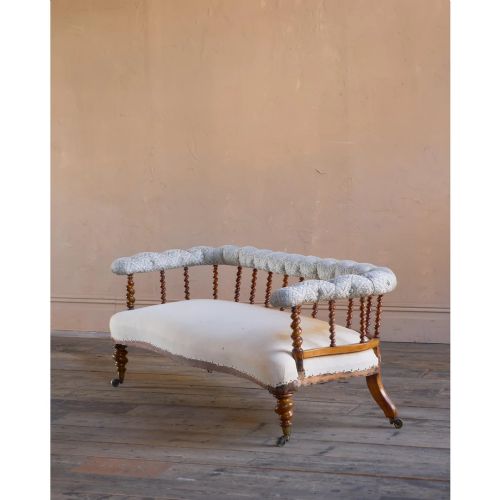
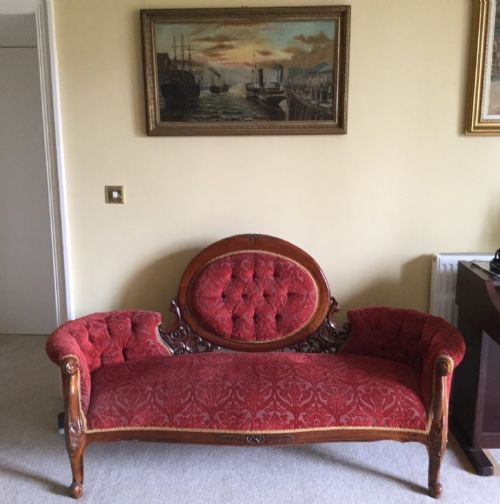
Makers and makers' styles range from standard workshop productions to pieces associated with known cabinetmakers such as C. Hindley & Sons and Maple and Co. Forms vary from spindle back salon sofas and double ended couches to upholstered cameo double seats.
What varies in quality
The distinction between standard examples and the finest pieces lies in the precision of the cabinetwork and the subtlety of the contrasting inlay. Crisp carved details on mahogany and walnut frames elevate a piece above simpler commercial production.
Proportion and structural integrity define the upper tier of the range, particularly in how well the frame supports the sprung base and upholstery. The integration of delicate satinwood or bone inlay without distortion distinguishes superior salon furniture.
Edwardian Parlor Settee Retail Price Guide 2026
Typical asking prices for edwardian parlor settee among the pieces listed under this phrase on Sellingantiques today, from the lower quarter to the upper quarter. They describe what is for sale here now, not the wider market.
Listings span the Victorian, Edwardian, and Regency periods, utilising mahogany, satinwood, walnut, oak, and rosewood alongside brass and inlay.
C. Hindley & Sons·Maple and Co
The Edwardian Parlor Settee Glossary
- Edwardian
- A stylistic period spanning the reign of King Edward VII, characterised by lighter furniture forms and neoclassical revival motifs. Pieces from this era often feature mahogany frames with delicate stringing and inlay.
- Inlay
- A decorative technique where contrasting woods, brass, or bone are inserted into depressions within the primary wood surface. Satinwood and boxwood are frequently utilised for this purpose on parlor seating.
- Parlour suite
- A coordinated set of seating furniture comprising a settee and matching armchairs designed for a formal reception room. These suites share identical wood types, inlay patterns, and upholstery styles.
- Settee
- A medium-sized upholstered wooden seat with a back and arms, built to accommodate two or more people. They appear in various formats including double ended sofas and salon settees.
- Salon sofa
- A formal seating piece intended for a drawing room or entertaining space rather than daily family lounging. These typically exhibit lighter frames and more ornamental carving than standard domestic sofas.
Edwardian Parlor Settee: Frequently Asked Questions
What is an edwardian parlor settee?
An edwardian parlor settee is a formal two-seater sofa produced around the turn of the twentieth century, typically featuring a mahogany frame with decorative inlay.
These pieces were designed for entertaining in reception rooms and drawing rooms, combining refined woodwork with upholstered seating.
How were they used historically?
Historically, these settees served as formal seating in parlours and reception rooms where guests were received and social gatherings took place.
They functioned primarily as decorative focal points that also provided comfortable seating during parlor conversations and musical evenings.
How do I care for the wood and fabric?
Preserving the wood involves keeping the mahogany or rosewood away from direct sunlight and sudden temperature changes to protect the delicate inlay. Regular dusting with a soft cloth maintains the finish without harsh chemical polishes.
Upholstery care requires gentle vacuuming and prompt attention to spills, depending on whether the fabric is velvet, brocade, or standard upholstery material.
How do I tell Edwardian pieces apart from Victorian ones?
Edwardian furniture generally exhibits lighter proportions, brighter mahogany tones, and refined neoclassical inlay patterns such as satinwood stringing. The overall aesthetic leans towards airiness and delicate elegance.
Victorian pieces tend to be heavier in construction, often featuring darker woods, deeper carvings, and more robust structural turning reflecting earlier nineteenth-century tastes.