


Edwardian Optical Instrument
These pieces of edwardian optical instrument combine brass, glass, and mahogany to bring precision engineering into domestic and scientific life.
Edwardian Optical Instrument
An edwardian optical instrument spans brass magnifying glasses, opera glasses, microscopes, and military periscopes made during the late nineteenth and early twentieth centuries. These objects reflect a period when portable lenses and precision brasswork served both scientific inquiry and social entertainment.
Visitors to this page frequently encounter opera glasses finished in mother of pearl and leather, alongside sturdy brass library telescopes and scientific examination sets. Each item demonstrates the practical application of optical glass housed in durable metal and polished timber cases.
How they were made
Maker workshops turned solid brass components on lathes, threading barrels and mounting glass lenses with exact mechanical tolerances. Cabinets and stands utilised mahogany and burr yew wood, shaped and polished to house delicate instruments safely.
Coverings of stitched leather and shimmering mother of pearl plates were applied by hand to the bodies of opera glasses and binoculars. Engraved scales and maker signatures were stamped or scribed directly into the metal surfaces.
Materials across these listings include glass, brass, mother of pearl, mahogany, velvet, leather, sterling silver, and burr yew.
What varies in quality
Quality rests upon the clarity and ground precision of the glass lenses, alongside the weight and rigidity of the brass mountings. Finer instruments retain smooth focusing mechanisms and crisp, clear optics without distortion.
The choice of exterior materials also marks the division between standard utility items and luxury pieces. Burr yew wood cabinets, sterling silver mountings, and flawless mother of pearl insets denote superior manufacture.
Casartelli Manchester·R & J Beck Ltd·Ross London·Iris Paris·Swift & Son·Broadhurst & Co
The Edwardian Optical Instrument Glossary
- Loupe
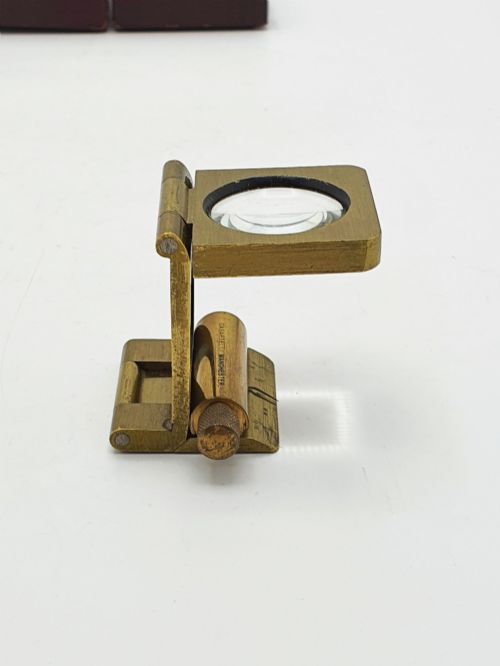
- A small magnifying glass used to examine fine details. These often feature folding brass frames or measuring scales for textile inspection.
- Stereoscope
- A device used for viewing a stereoscopic pair of images, creating a three-dimensional visual effect. They frequently appear in burr yew wood.
- Periscope
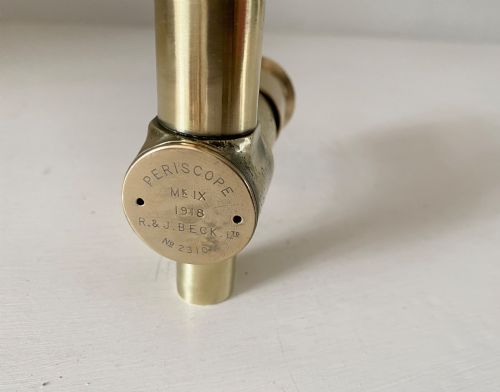
- An optical instrument utilising prisms and lenses to see over obstacles. Military examples from the First World War bear specific maker marks and issue numbers.
- Binoculars
- Two telescopes mounted side-by-side for distance viewing. Opera glass variants often incorporate decorative mother of pearl finishes.
Edwardian Optical Instrument: Frequently Asked Questions
How do I clean brass and glass safely?
Use a soft microfiber cloth to remove dust from the glass lenses without applying abrasive cleaners that might damage the surface coatings. Wipe brass gently with a dry cloth to preserve its natural aged patina.
Avoid chemical polishes on engraved markings or maker signatures, as these substances can wear away the fine detailing permanently.
Can I still use these instruments today?
Many of these items remain fully functional for viewing objects at a distance or examining small details closely. Telescopes and magnifying glasses operate much as they did a century ago.
Some scientific pieces serve better as decorative desk accessories or study display items due to the evolution of modern optical technology.
How do I distinguish Edwardian from Victorian pieces?
Victorian instruments often feature heavier, highly ornate brass casting and darker wood tones. Edwardian designs lean toward sleeker lines and lighter mahogany or brass construction.
Overlap in styles remains common around the turn of the twentieth century, making maker marks and registration dates the most reliable indicators.
What is a linen tester loupe?
A linen tester is a small folding magnifier originally designed for textile merchants to count threads within a specific square inch of fabric. They feature an integrated measuring scale at the base.
These pieces fold flat into compact brass frames, making them pocket-sized tools for field work and desk inspections.