


Edwardian Oil Burner
Edwardian oil burner pieces bring warm period illumination into a room through brass stands and tinted glass shades.
Edwardian Oil Burner
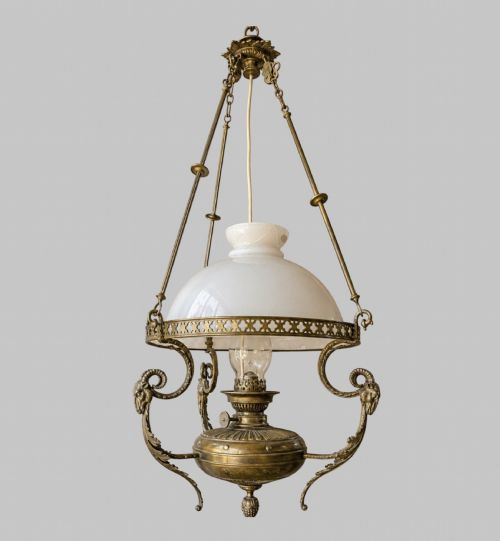
When searching for an edwardian oil burner, buyers encounter lighting fixtures that span the late nineteenth century into the early decades of the twentieth century. These objects function primarily as oil lamps, table lamps, and hanging paraffin lights designed for domestic illumination before widespread electrification.
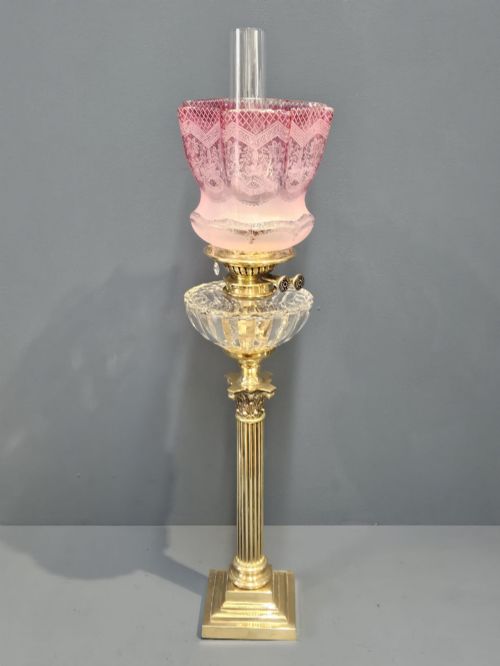
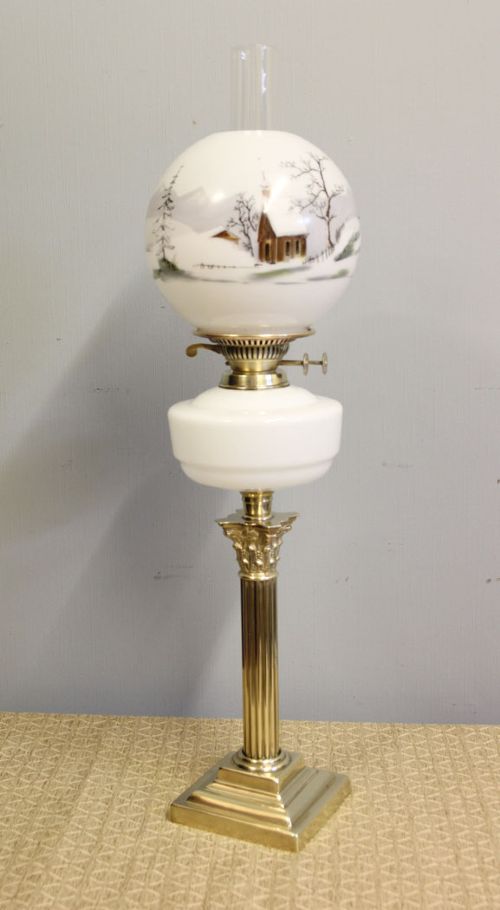
The selections available here lean heavily into Edwardian and Victorian aesthetic choices, often combining metal stands with decorative glass reservoirs. Corinthian column designs and standard lamp formats appear alongside smaller table variants suited for specific rooms.
Origins trace back to English workshops and factories of the period, reflecting the manufacturing output of the era. Buyers meet both straightforward brass examples and more elaborate pieces featuring coloured glass components.
Materials and construction methods
Construction relies heavily on brass and copper for the structural columns and bases, providing the necessary weight and stability for tall stands. These metals undergo casting and spinning to achieve the desired profiles.
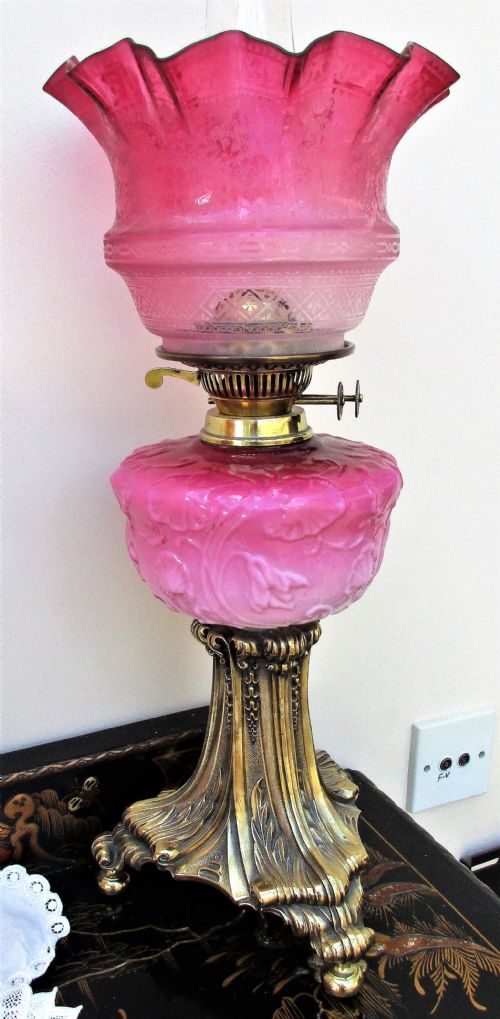
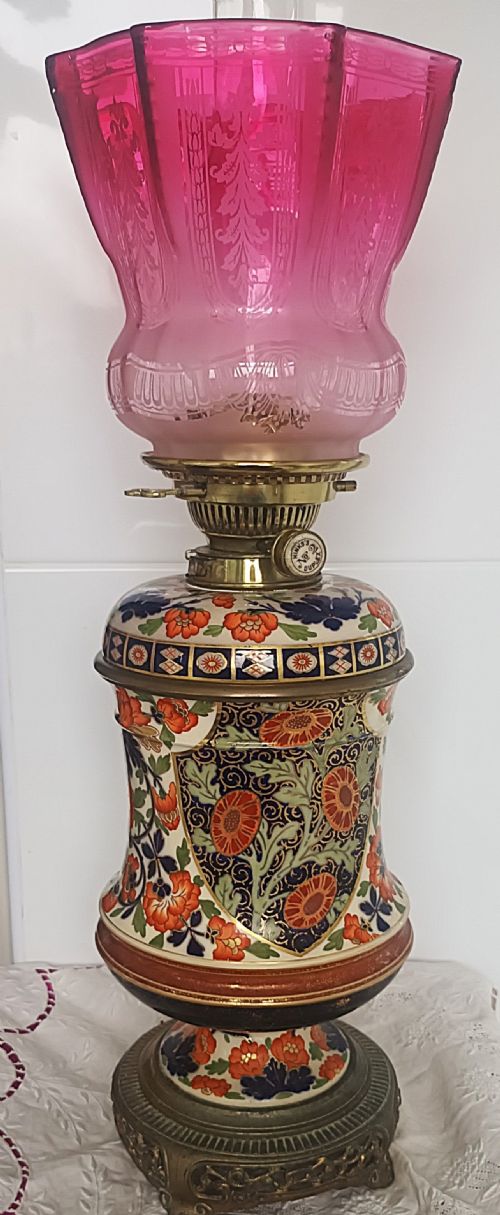
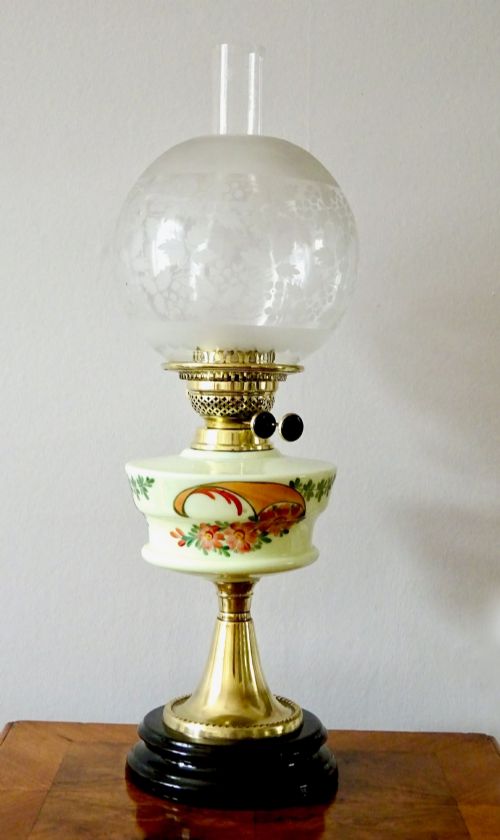
Glass forms a central component, visible in clear, cut, cranberry, opaline, and yellow glass reservoirs and shades. Techniques include glass blowing, pressing, and hand-painting with gilt decoration to enhance visual depth.
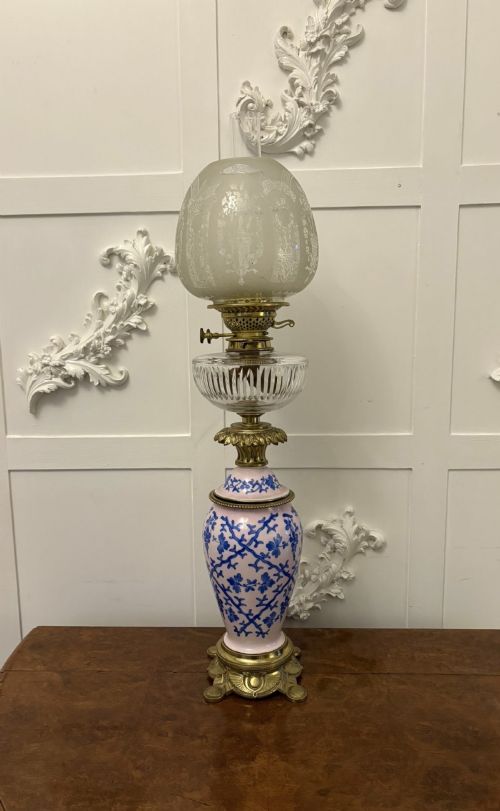
Ceramic elements appear in specific lamp bodies, often paired with metal mounts and specialised mechanical burners from makers of the period.
Listings feature pieces spanning from the Victorian era through the 1920s, constructed primarily from brass, copper, and various coloured glasses.
Distinctions in quality and execution
The distinction between standard examples and superior pieces rests on the weight of the metal components and the complexity of the glass work. Heavy cast brass bases and deeply cut crystal or layered cranberry glass indicate higher production standards.
Integration of branded burner mechanisms, such as those by established makers, elevates a piece above anonymous production. The precision of the collar fittings and the harmony between shade and reservoir determine the overall integrity of the design.
Hinks·Taylor Tunnicliff·Messengers·Harrods
The Edwardian Oil Burner Glossary
- Opaline glass
- A milky, semi-translucent glass that diffuses light softly. This material frequently appears in shades produced during the Edwardian period.
- Cranberry glass
- A rich pinkish-red glass created by adding gold chloride to the molten mixture. It remains a defining feature of decorative lamp shades from the nineteenth and early twentieth centuries.
- Corinthian column
- An architectural column style featuring ornate, leaf-carved capitals adapted for lamp standards. It provides a classical silhouette popular in formal Victorian and Edwardian interiors.
- Paraffin lamp
- An alternative term for an oil lamp utilising refined petroleum as fuel. These fixtures require specific burner assemblies to control the flame.
- Table lighter
- A small, table-standing device functioning similarly to a lamp but intended for igniting pipes or cigars rather than illumination.
Edwardian Oil Burner: Frequently Asked Questions
How do I date an oil lamp?
Dating relies on stylistic clues, materials, and mechanical burner patents stamped into the metal collars. Victorian examples often favour heavy classical revival motifs, while Edwardian pieces lean towards lighter brass forms and opaline shades.
Examining the manufacturing techniques of the glass and the assembly methods of the base helps narrow the decade of production.
Can these lamps still burn oil?
Most buyers choose to wire these pieces for modern electricity or keep them as decorative display items. Converting a lamp to electricity preserves the antique appearance without the practical limitations of burning paraffin indoors.
Professional conversion ensures the original brass and glass remain unaltered while providing safe domestic lighting.
Where should I place a standard lamp?
Tall floor and standard lamps suit corners of living rooms or beside reading chairs where their height commands attention. Their heavy brass bases provide steady floor placement in traditional interiors.
Smaller table variants sit comfortably on sideboards, desks, or occasional tables.
What glass shades were popular?
Cranberry and opaline glass shades dominate the period, offering distinct colouration and light diffusion. Cut glass and yellow glass also appear, reflecting changing interior design tastes from the Victorian era into the 1920s.
Matching the shade correctly to the reservoir style is essential for period accuracy.