




Edwardian Office Stationery
Edwardian office stationery brings practical workspace organisation into the home, offering sturdy timber filing cabinets, writing desks and brass accessories from the early twentieth century.
Edwardian Office Stationery
Edwardian office stationery encompasses the desks, filing cabinets and desktop accessories used to manage correspondence and paperwork during the late nineteenth and early twentieth centuries. These pieces reflect a period when business furniture transitioned towards functional utility whilst retaining traditional cabinetmaking standards.
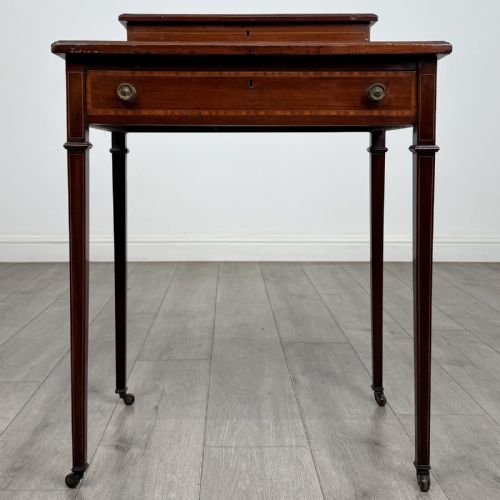
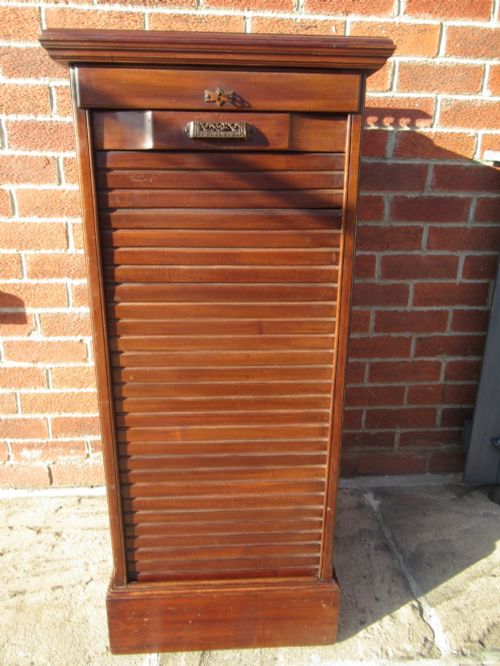
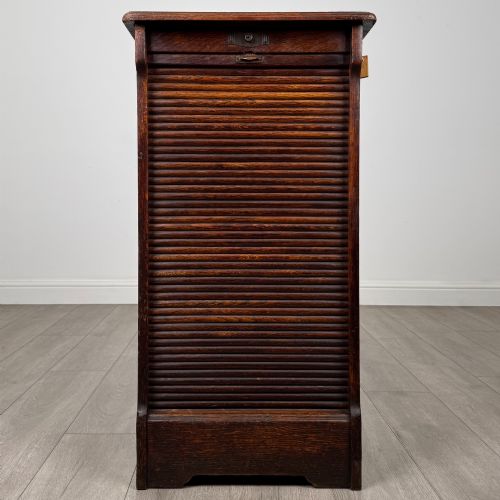
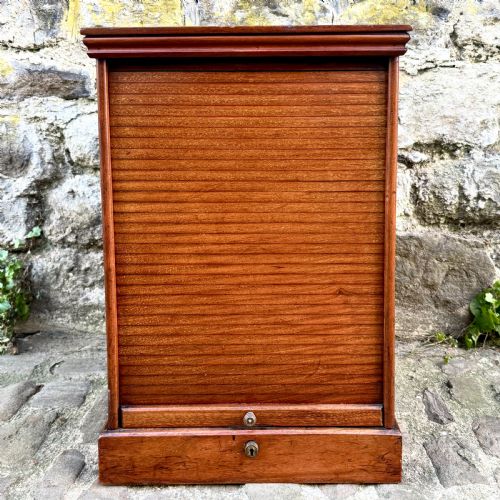
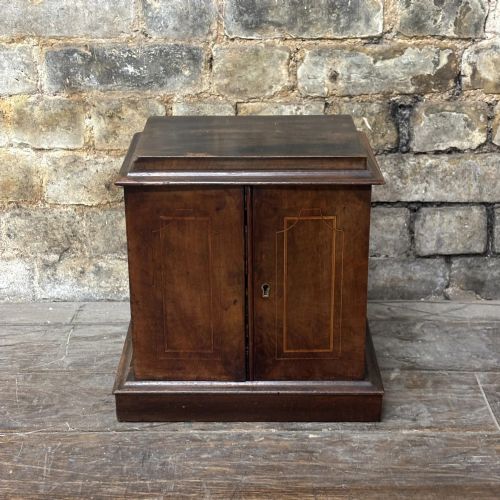
Buyers searching for Edwardian office stationery most frequently encounter timber filing cabinets featuring tambour fronts and writing tables constructed from mahogany or oak. The selection spans compact stationery cabinets alongside larger multi-drawer office furniture designed for domestic studies and commercial premises.
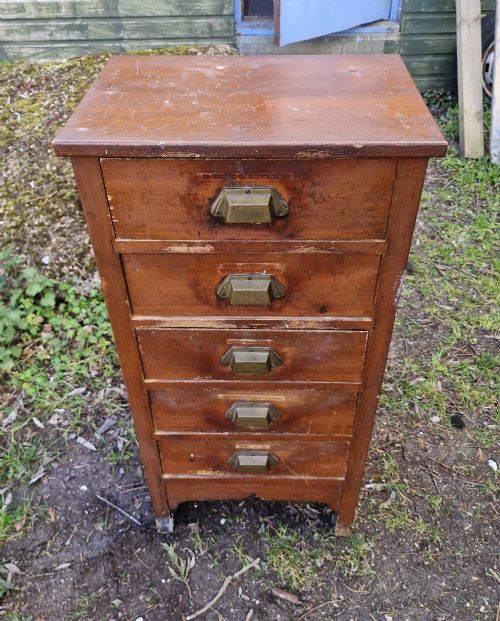
The objects originate predominantly from the Edwardian era and the early twentieth century, with occasional pieces stretching back into the late nineteenth century. Forms range from simple pine storage units to rosewood writing desks fitted with period brass handles.
Materials and construction
Makers utilised solid hardwoods including mahogany, oak and rosewood alongside utilitarian timbers like pine for internal carcases and backing boards. Tambour fronts relied on closely fitted wooden slats glued to canvas backings to slide smoothly within concealed grooves.
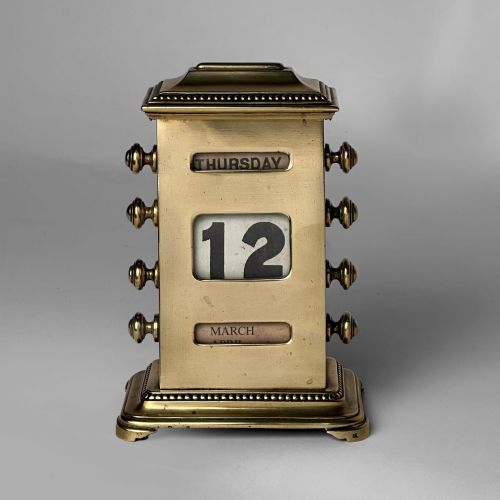
Hardware elements such as handles, hinges and perpetual calendars were cast in brass, providing durable operational fittings that complemented the dark polished timber surfaces. Joinery techniques prioritised structural strength to withstand daily clerical use in busy offices.
Edwardian Office Stationery Retail Price Guide 2026
Typical asking prices for edwardian office stationery among the pieces listed under this phrase on Sellingantiques today, from the lower quarter to the upper quarter. They describe what is for sale here now, not the wider market.
Brass perpetual calendars were built to last forever, which creates an amusing challenge when the mechanism stubbornly refuses to acknowledge modern leap years.
Distinguishing quality in office pieces
The choice of primary timber fundamentally divides standard utility pieces from finer items, with dense grains of mahogany and rosewood commanding greater attention than plain pine or utilitarian oak. Superior examples exhibit careful selection of timber figures across tambour slats and drawer fronts.
Hardware quality distinguishes finer items, particularly where original cast brass handles and operational mechanisms remain intact and function correctly. The sophistication of interior fittings, such as adjustable shelving within tambour cabinets, separates basic storage from more adaptable workspace furniture.
William Tonks of Birmingham
The Edwardian Office Stationery Glossary
- Tambour
- A flexible shutter door formed of narrow wooden slats attached to canvas, allowing it to slide around a curved track to conceal cabinet interiors. This mechanism became popular for space-saving office storage.
- Stationery cabinet
- A desktop or freestanding case fitted with compartments, pigeonholes and drawers designed specifically for holding writing paper, envelopes and correspondence materials. These often featured sloped lids or double doors.
- Perpetual calendar
- A desk accessory featuring adjustable cards, dials or slides to display the days and months across any given year without requiring replacement. Brass examples were commonly produced by specialised metalfounders.
- Writing table
- A domestic desk designed primarily for correspondence rather than heavy administrative work, usually featuring shallow drawers set beneath a flat writing surface.
Edwardian Office Stationery: Frequently Asked Questions
What is a tambour front cabinet?
A tambour front cabinet utilises a flexible door made of narrow wood strips fixed to canvas, which slides along a recessed track to open and close.
This clever design allows the door to disappear into the cabinet body, saving valuable floor space in cramped Edwardian offices.
How do I care for antique office furniture?
Keep wooden surfaces clean using a soft cloth and apply quality beeswax periodically to nourish the grain without building up sticky residue.
Position pieces away from direct heat sources and strong sunlight to prevent the timber from warping or the polish from fading.
What timbers were used for Edwardian desks?
Cabinetmakers predominantly relied on dense hardwoods such as mahogany, oak and rosewood for visible exterior surfaces and structural framing.
Pine and secondary softwoods were frequently utilised for internal components, drawer linings and backing boards to reduce weight and production costs.