
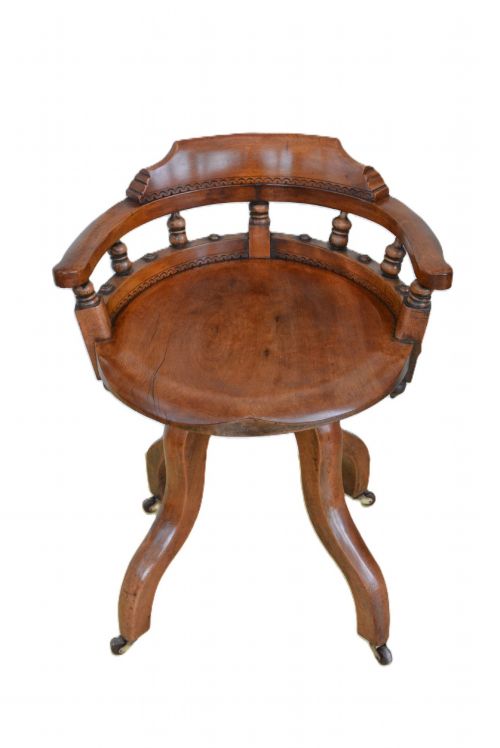
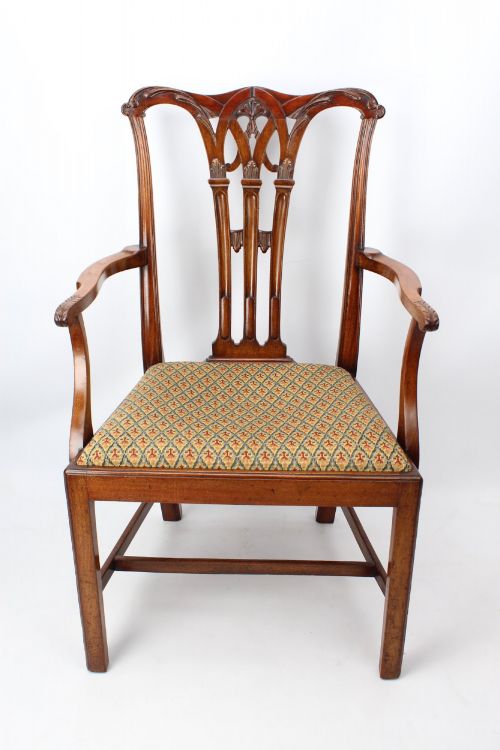
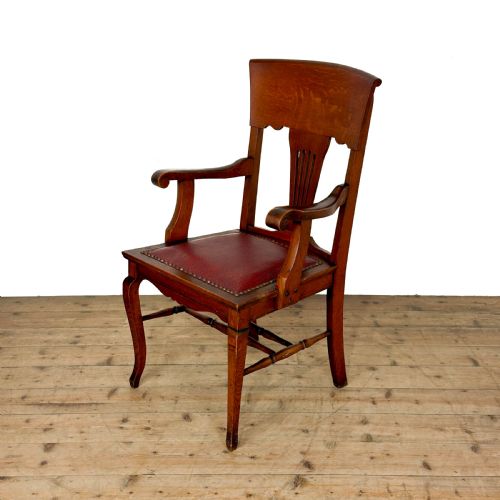


Edwardian Office Seating
Edwardian office seating brings sturdy swivel mechanisms and rich timber frames together to anchor a workspace with period character.
Edwardian Office Seating
When buyers search for edwardian office seating, they look for functional workspace chairs dating from the early twentieth century, alongside related Victorian and George V examples. The selection on this page centres on desk chairs, armchairs, and revolving office chairs designed for daily business use.
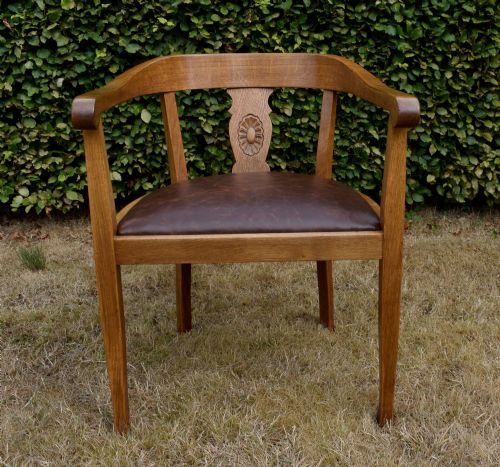
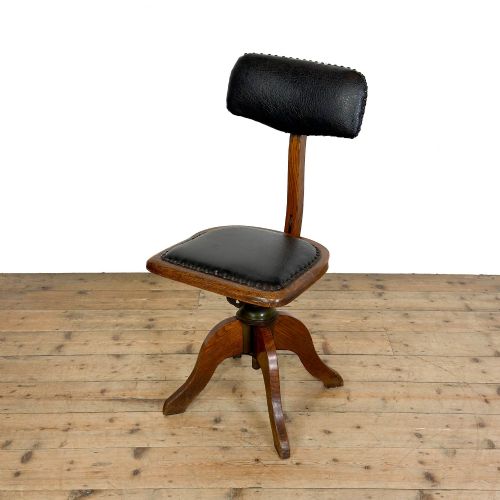
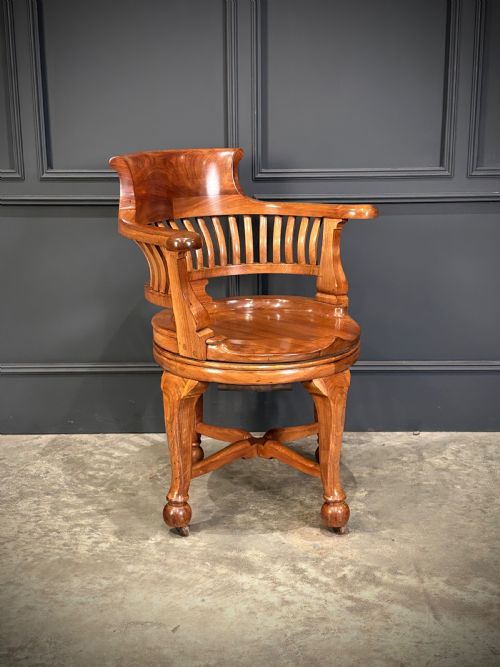
Most pieces date from the Edwardian period and the early twentieth century, utilising robust timbers like oak, mahogany, and walnut. Forms range from simple armless side chairs to heavily carved ships chairs and swivel desk chairs with adjustable heights.
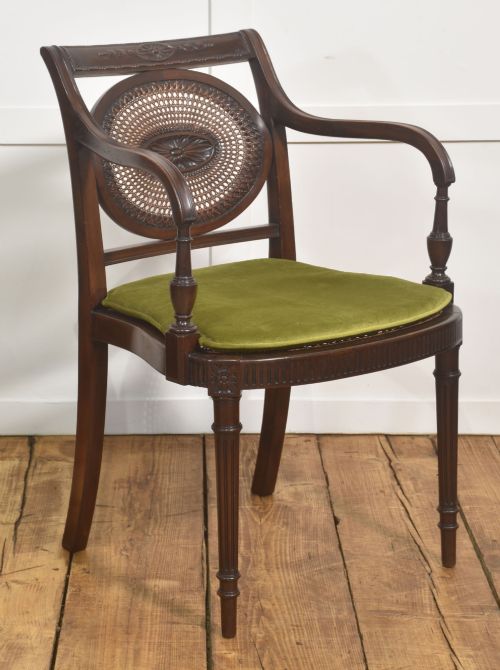
Makers and designers drew upon various styles, including Sheraton Revival, Arts and Crafts, and Aesthetic Movement influences. Buyers encounter solid oak revolving models alongside mahogany library armchairs and beech office seating.
Materials and Technique
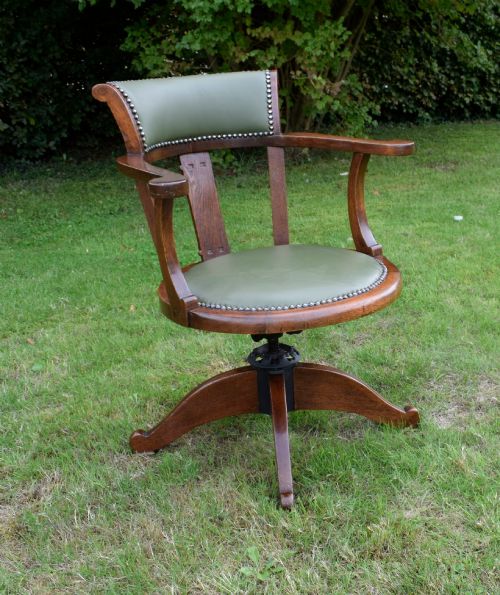
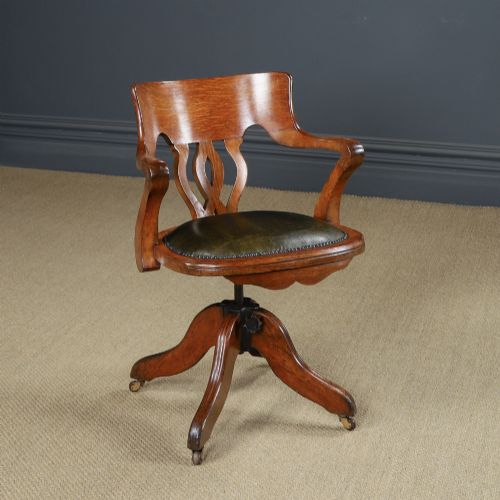
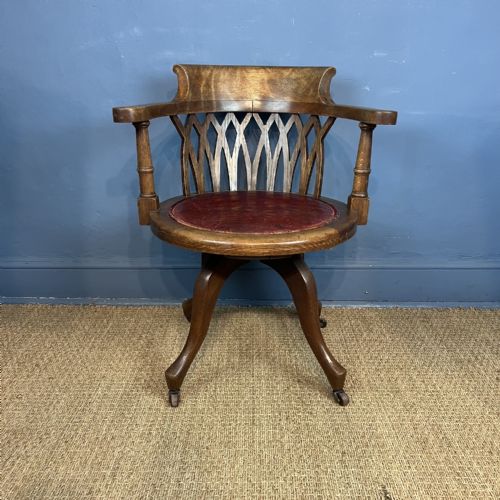
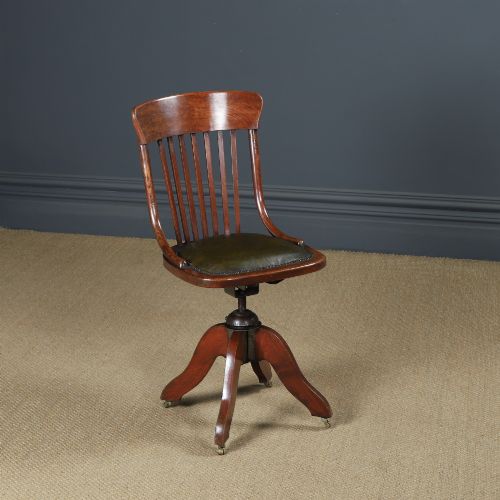
Cabinet makers constructed these frames predominantly in solid oak, mahogany, and walnut, often pairing them with bentwood or turned components. Brass and cast iron appear in the swivel mechanisms, adjustable height screws, and tilt actions.
Upholstered versions rely on leather, hide, or vinyl seats, frequently secured with decorative brass studs. Caned panels and turned spindles provide lighter alternatives in Sheraton Revival and Arts and Crafts designs.
Ships and liners utilised specialised revolving chairs designed to keep clerks upright during rough channel crossings.
Evaluating Construction
The distinction between ordinary utility seating and finer workshop production rests on the joinery of the revolving mechanism and the solidity of the timber frame. Heavy carving, inlay work, and retained original leather upholstery elevate certain models above standard commercial office output.
The integrity of the swivel and tilt action determines the daily usability of these chairs. Well-engineered iron and brass mechanics operate smoothly, while lesser examples show wear in the threaded spindles and joints.
The Edwardian Office Seating Glossary
- Swivel desk chair
- A revolving seat mounted on a central column that allows rotation around a vertical axis. These mechanical chairs often include adjustable height and tilt functions for workspace utility.
- Smokers bow
- A sturdy wooden armchair with a low, rounded back rail supported by turned spindles. This form offers a comfortable seating position derived from traditional Windsor designs.
- Sheraton Revival
- A late nineteenth and early twentieth century style inspired by eighteenth century neoclassical furniture. Pieces feature satinwood inlay, tapered legs, and refined mahogany frames.
- Arts and Crafts
- A design movement prioritising honest construction, visible joinery, and solid materials. Office chairs in this style emphasise straightforward oak frames and functional simplicity.
- Rise and fall
- A mechanical seating adjustment that alters the height of the chair using a threaded screw column. This mechanism allows the user to raise or lower the seat level relative to a desk.
Edwardian Office Seating: Frequently Asked Questions
What defines edwardian office seating?
These pieces comprise wooden desk chairs, revolving armchairs, and swivel seats produced around the early twentieth century. They combine traditional cabinet making with mechanical height adjustment for working environments.
Materials typically include solid oak, mahogany, and walnut, often paired with leather upholstery or cane panels. The designs reflect prevailing aesthetic movements of the era, from plain Arts and Crafts utility to inlaid Sheraton Revival elegance.
How do swivel mechanisms operate on these chairs?
Early revolving office chairs rely on iron and brass central spindles that permit full rotation. Many incorporate a screw adjustment to raise or lower the seat height.
Some models also feature a tilt mechanism that allows the backrest to recline slightly against a spring tension. These mechanical elements provide ergonomic adjustment while maintaining solid timber construction.
Where were these chairs originally used?
Workspaces such as solicitors' offices, maritime vessels, libraries, and administrative banks utilised these durable chairs daily. Ships often employed compact revolving chairs to stay secure in motion.
Domestic studies and schoolrooms also accommodated these robust wooden designs. Their heavy timber frames withstood constant movement and heavy usage.
How do I care for leather seats on antique chairs?
Preserving original leather involves cleaning gently with a damp cloth and applying a suitable leather conditioner to prevent drying. Avoid harsh chemical cleaners that strip the natural finish.
Maintaining stable room humidity protects both the timber frame and the upholstery from cracking. Regular inspection of the structural joints keeps the chair stable during everyday use.
How do I distinguish Edwardian chairs from Victorian ones?
Victorian office seating generally tends towards heavier, darker timber finishes and dense carving. Edwardian pieces often display lighter oak or mahogany tones with simplified proportions.
Stylistic crossover remains common around the turn of the century, as cabinet makers blended Victorian mass with Edwardian refinement. Examining the joinery and decorative motifs helps clarify the period of production.