

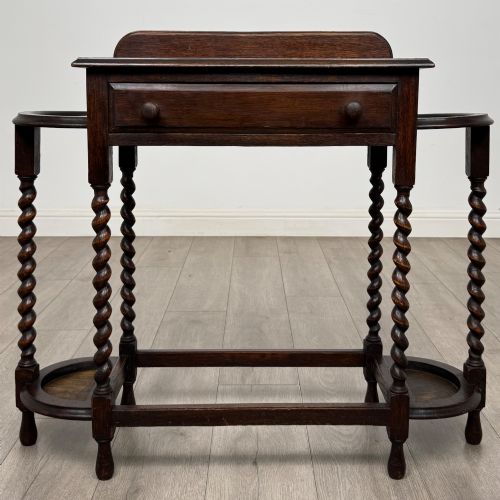
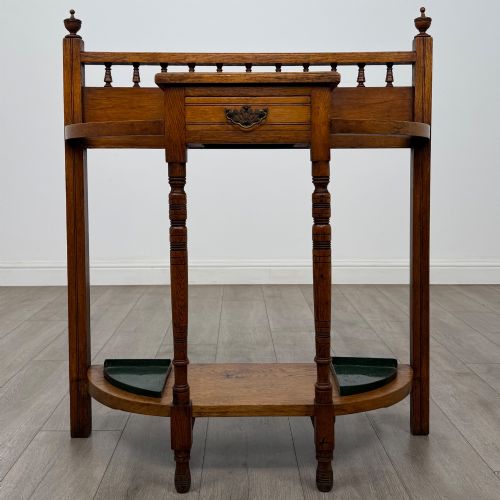
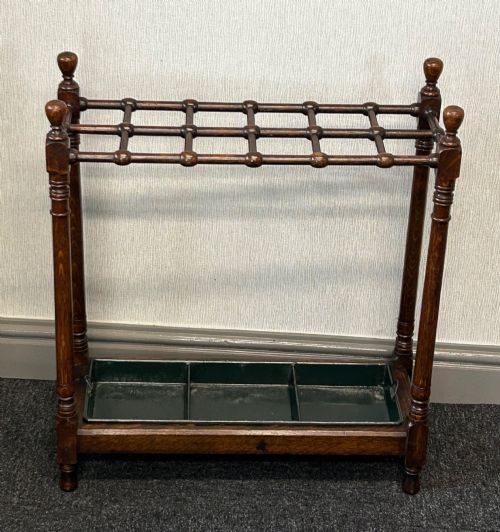
Edwardian Oak Stick Holder
These edwardian oak stick holder pieces keep hallway coats and walking gear tidy with sturdy timber and honest metal work.
Edwardian Oak Stick Holder
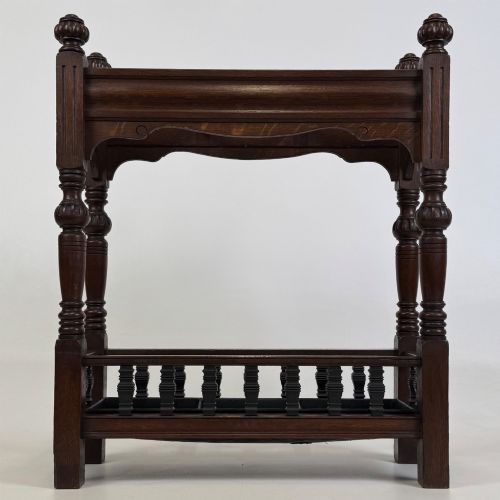
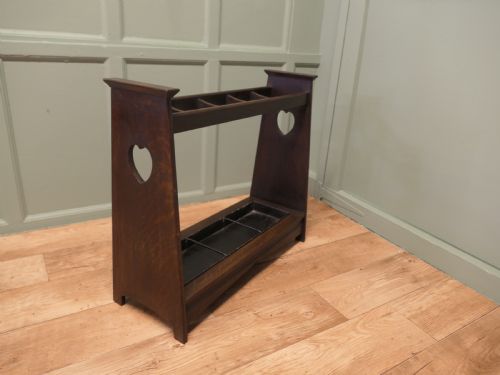
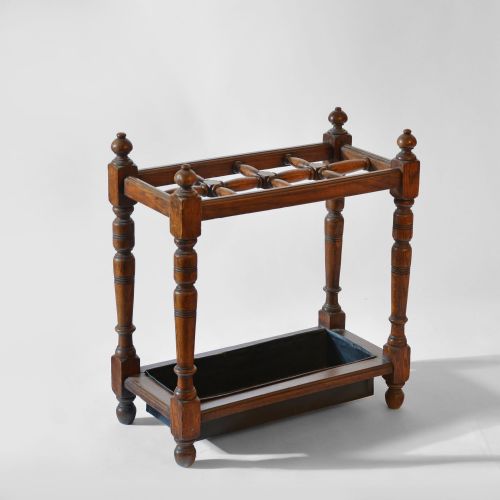
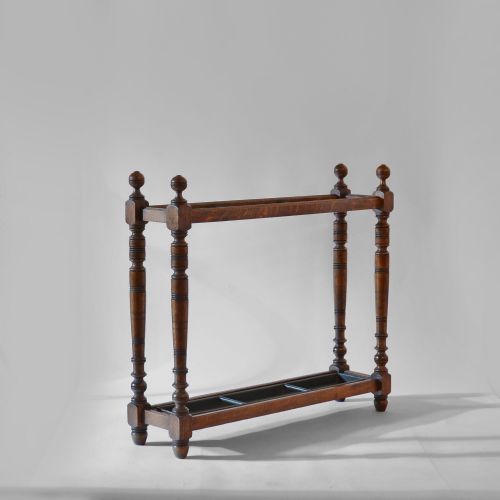
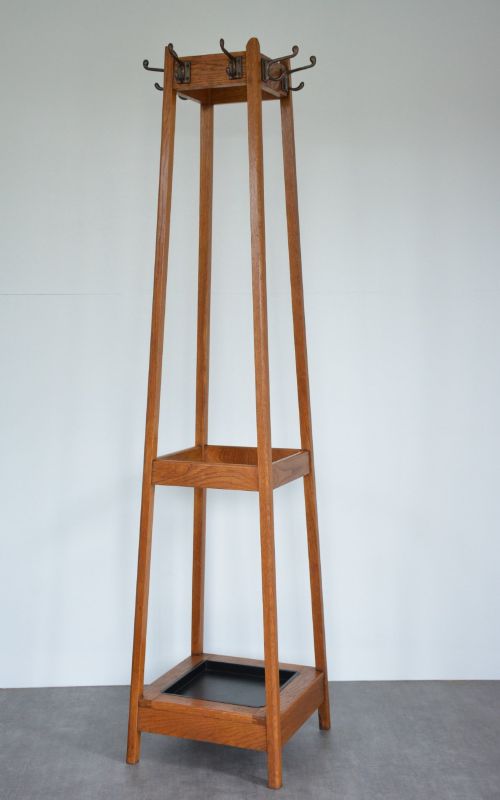
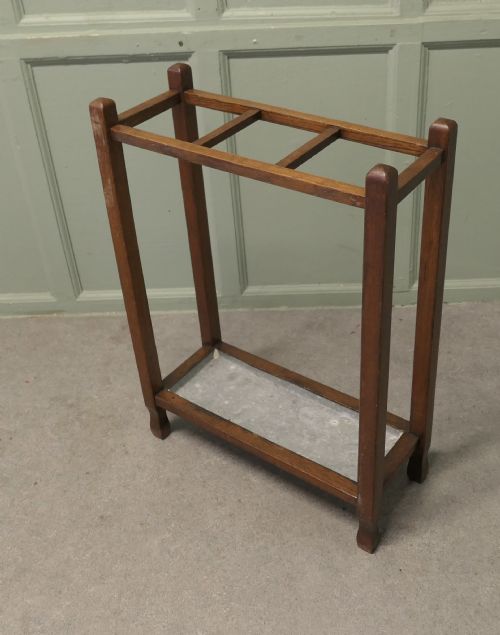
An edwardian oak stick holder serves the entrance hall by receiving umbrellas, walking sticks and canes. The examples on this page span the Edwardian era, the Victorian period, and the Arts and Crafts movement.
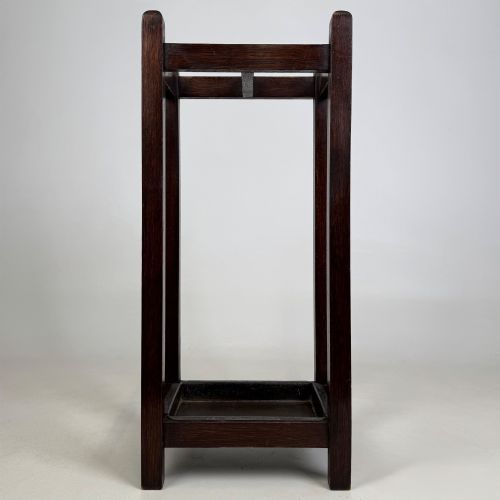
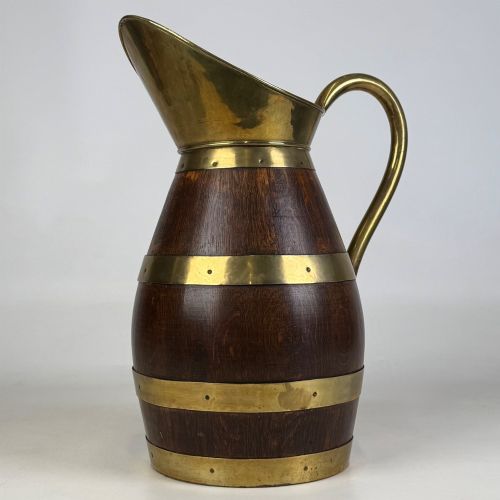
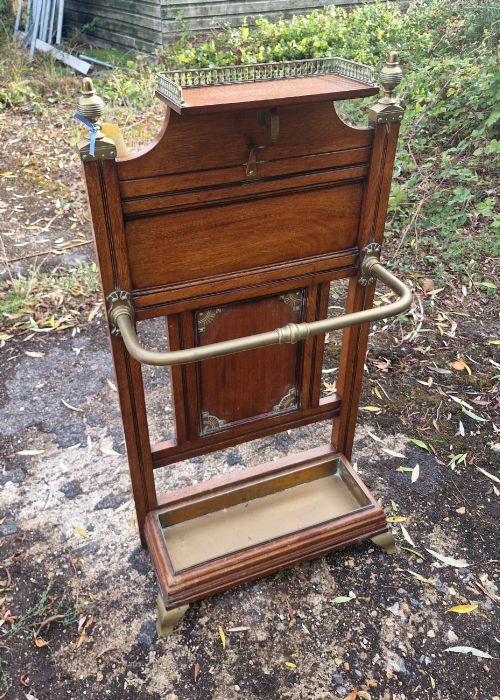
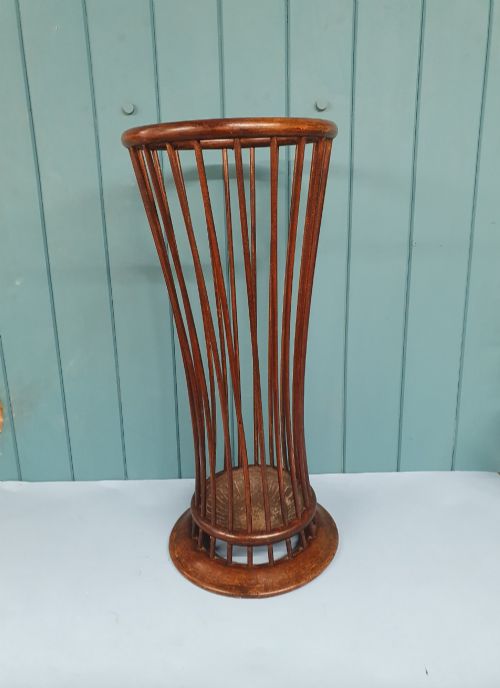
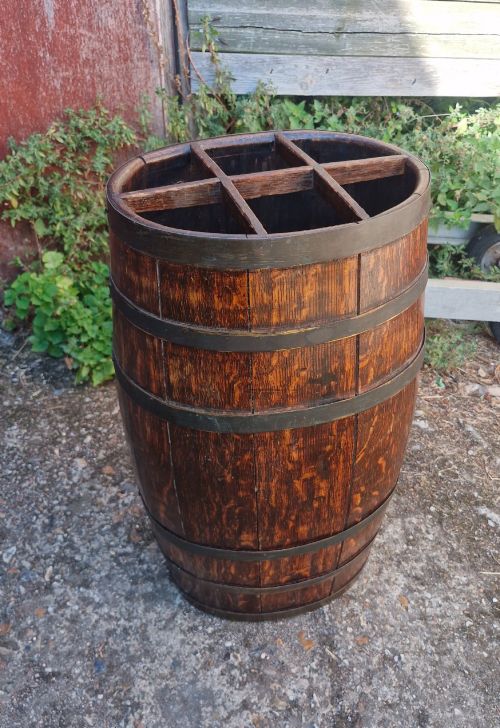
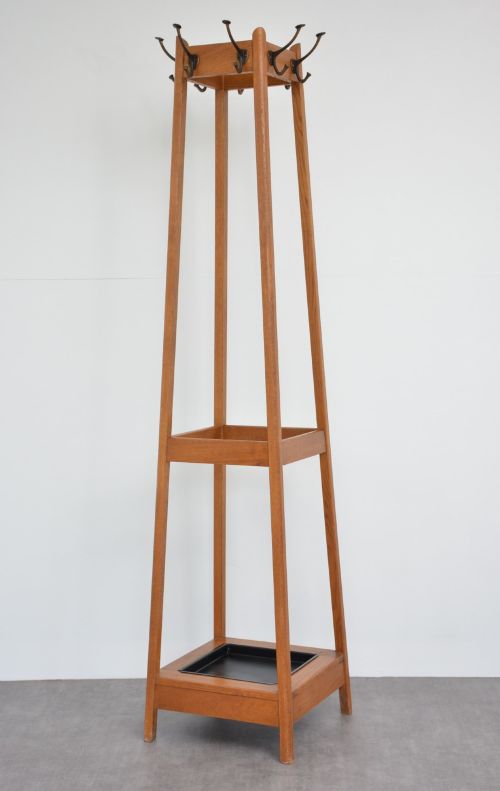
Most items appear as freestanding barrels, open rectangular frames, or integrated sections of larger hall stands. Timber tones range from deep golden oak to fumed finishes.
Makers shaped these utilitarian objects for country houses, town residences, and reception areas. Simple barrel forms stand alongside architectural hall stands fitted with coat hooks and mirrors.
Materials and Technique
Brass bands, copper binding, cast iron liners, and zinc drip trays protect the timber base from wet umbrellas. Caned panels and carved detailing appear on select Arts and Crafts and Gothic Revival pieces.
A few lucky umbrellas get to live in a coopered barrel.
Quality and Construction
Superior execution shows in timber selection, grain matching, and the integrity of joints. Hand-beaten metal fittings and original removable drip trays indicate a higher standard of manufacture than replaced components.
Design ambition separates basic utility from notable workshops. Pieces displaying thoughtful joinery, carved detailing, or integrated brass binding command greater attention than plain commercial production.
Heals of London·Liberty Design·James Shoolbred
The Edwardian Oak Stick Holder Glossary
- Coopered
- Constructed from curved staves of timber bound together with metal hoops, much like a traditional wooden barrel. This method suits oval and round umbrella stands.
- Drip tray
- A metal base insert placed at the bottom of a stand to catch water from wet umbrellas. Original trays made from zinc, copper, or brass add authenticity.
- Hall stand
- A large furniture piece combining a stick holder, coat hooks, a mirror, and sometimes a glove drawer. These items anchor the entrance hallway.
- Arts and Crafts
- A design movement valuing visible construction, honest materials, and functional simplicity. Pieces often feature unadorned oak surfaces and wrought metalwork.
Edwardian Oak Stick Holder: Frequently Asked Questions
Where should I place a stick stand?
These pieces suit entrance halls, boot rooms, and reception areas where walking gear and wet umbrellas collect near the door.
Ensure adequate clearance around the stand so walking sticks and umbrellas can be lifted out without obstruction from nearby furniture.
How do I protect the oak from moisture?
Most stands include a metal liner or drip tray designed to catch water running off wet umbrellas and walking sticks.
Empty and dry this tray regularly to prevent standing water from damaging the interior timber base of the stand.
What styles complement these oak holders?
Arts and Crafts, Gothic Revival, and Aesthetic Movement designs pair naturally with traditional interiors, exposed floorboards, and panelled walls.
The warm grain of oak also coordinates well with both period country houses and contemporary minimalist hallways.
How do I distinguish Edwardian pieces from Victorian ones?
Edwardian items often display lighter golden oak tones and simplified lines, reflecting a shift towards airier domestic interiors.
Victorian examples frequently utilise darker timber finishes, heavier carved detailing, and more ornate brass or cast iron hardware.