

Edwardian Oak Pedestal Table
An edwardian oak pedestal table combines sturdy domestic utility with the honest grain of early twentieth-century timber, making it a practical anchor for any study or sitting room.
Edwardian Oak Pedestal Table
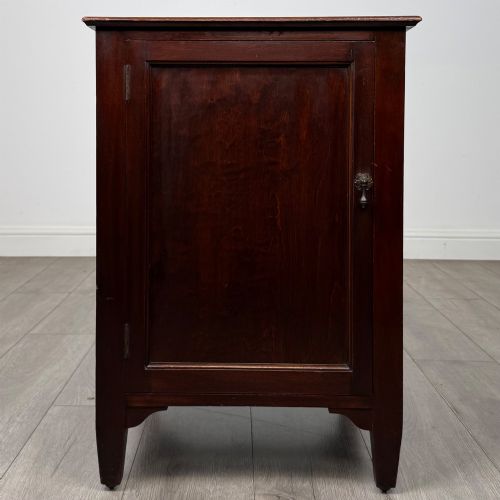
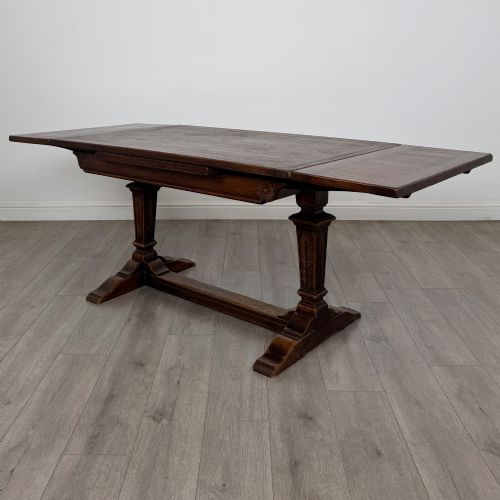
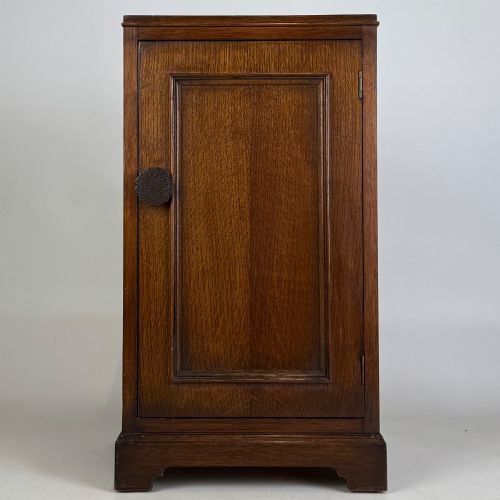
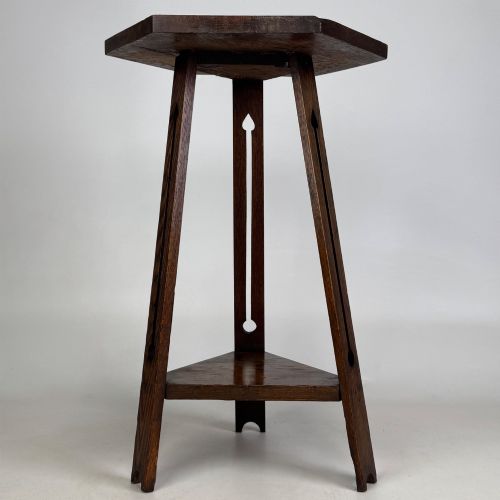
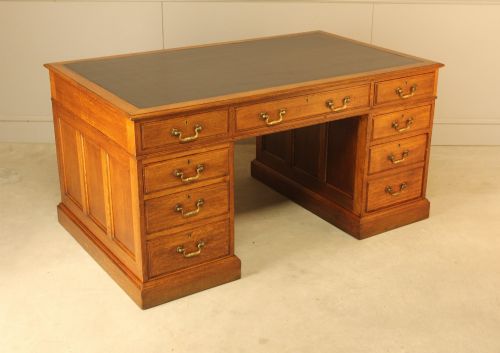
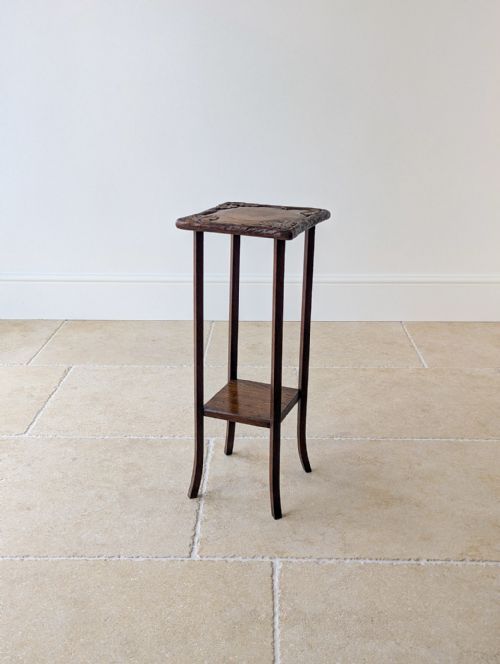
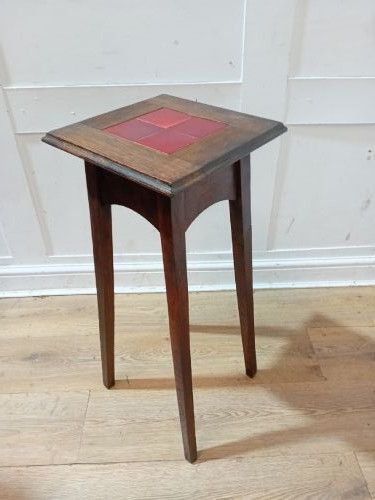
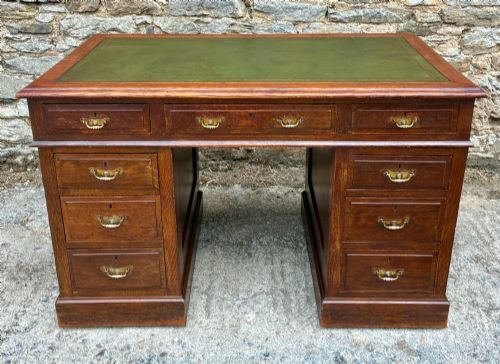
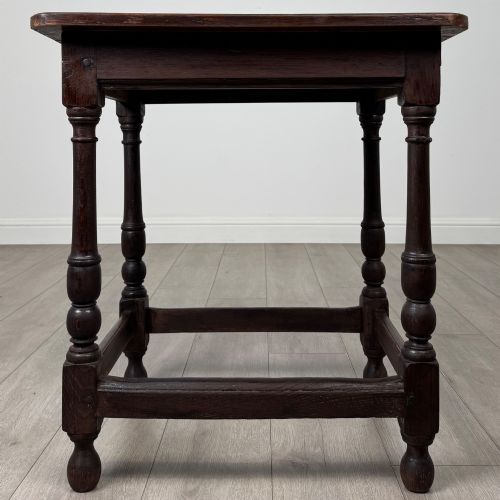
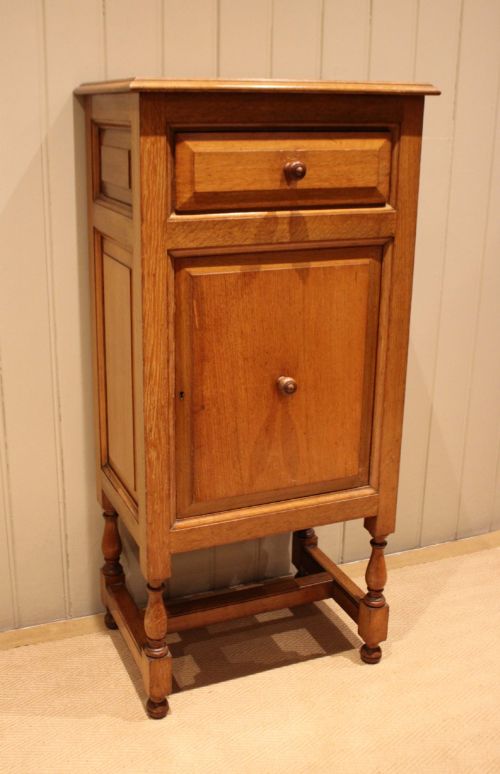
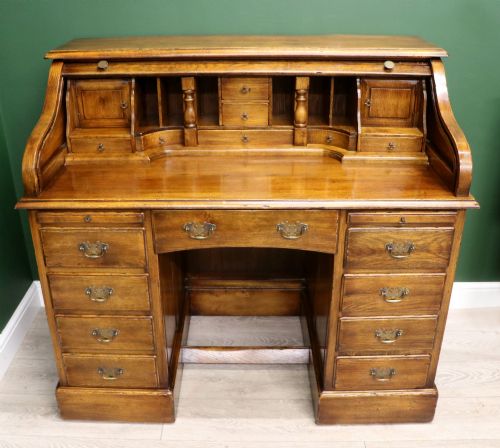
An edwardian oak pedestal table typically presents as a sturdy writing desk, partners desk, or occasional support resting upon columnar or cabinet pedestals. These pieces emerge primarily from the Edwardian period and the early twentieth century, though related Victorian and 1930s examples share similar utilitarian forms.
How They Were Made
Cabinet makers constructed these tables predominantly from solid oak, frequently incorporating ash, burr walnut, and stained wood for secondary surfaces or decorative contrast. Metal, brass, and cast iron appear in drawer pulls, handles, and structural braces, while leather inserts frequently line the writing surfaces of desks.
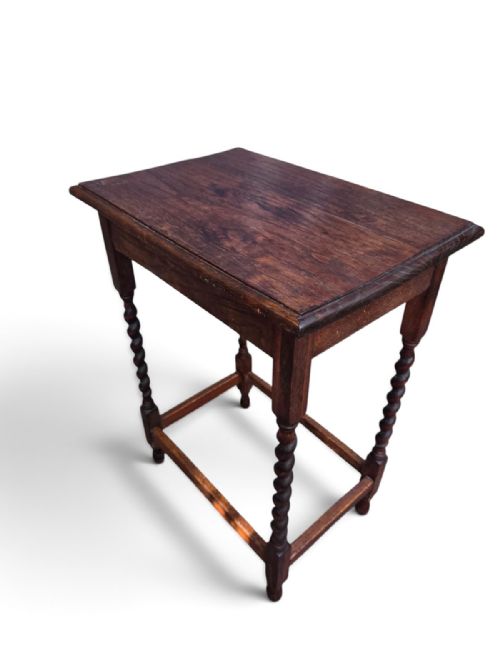
Joinery techniques relied upon traditional drawer linings in oak, panelled doors, and turnings such as barley twist legs. Surfaces received wax or French polish finishes to protect the timber while accentuating the natural medullary rays in the oak.
Estate managers and Victorian clerks kept these heavy oak drawers sliding smoothly with liberal applications of old-fashioned tallow.
What Varies in Quality
The distinction between standard utility items and finer examples rests upon the selection of timber and the precision of the joinery. Pieces featuring quarter-sawn oak with pronounced figuring command greater attention than those built from plain or heavily stained substitute woods.
Baillie Scott·Shapland & Petter·Simpson Halifax·James Shoolbred
The Edwardian Oak Pedestal Table Glossary
- Pedestal table
- A table supported by one or more central pillars or pedestals rather than four corner legs. These designs provide stability and maximise knee clearance.
- Arts and Crafts
- A design movement prioritising traditional craftsmanship, visible construction, and simple forms. It rejected mass production in favour of honest materials like oak.
- Barley twist
- A decorative turning technique resembling a spiral rope. This woodworking method appears frequently on the legs of tables and plant stands from the period.
- Draw leaf
- An extension mechanism utilising sliding leaves stored beneath the main top. It allows a table surface to expand quickly when required.
- Burr walnut
- A highly figured wood veneer derived from the growth excrescences of walnut trees. It provides rich patterns used selectively on drawer fronts and panels.
Edwardian Oak Pedestal Table: Frequently Asked Questions
How do I identify an Edwardian piece?
Edwardian furniture generally dates between 1901 and 1910, showing lighter proportions than heavy Victorian designs while retaining solid timber construction. Look for simpler lines, subtle carving, and a focus on domestic utility.
Makers of this era frequently combined traditional joinery with emerging styles like Arts and Crafts or Jacobean Revival. Examining the secondary woods inside drawers often confirms the period of manufacture.
Were these tables used as desks?
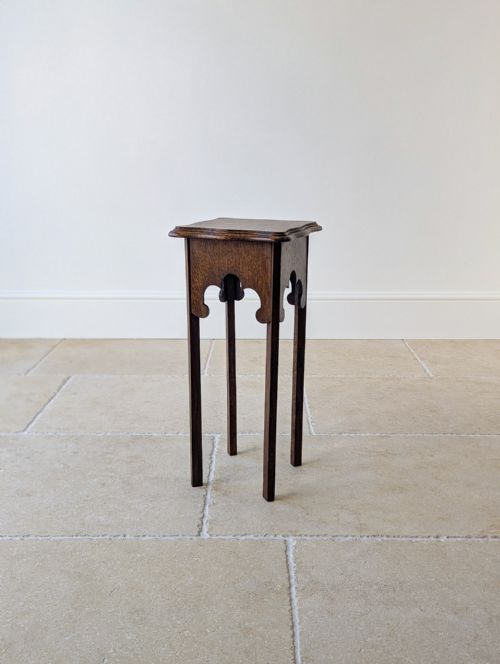
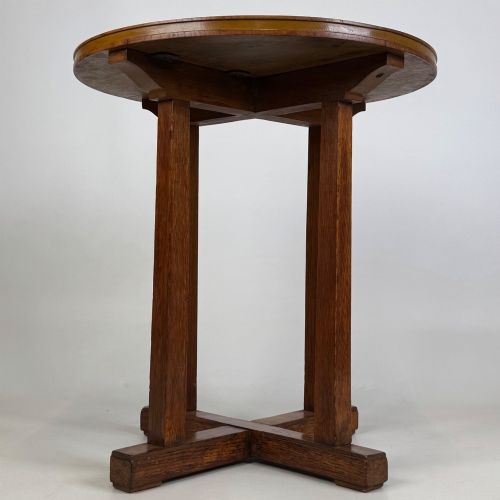
Many pedestal tables function primarily as writing desks, office partners desks, or study tables equipped with banks of drawers. Smaller variations served as occasional tables, lamp tables, or plant stands.
The inclusion of leather inserts and multiple drawers indicates a primary purpose for correspondence and administration rather than dining.
What is quarter-sawn oak?
Quarter-sawn oak is produced by cutting the log radially into quarters before sawing planks perpendicular to the growth rings. This method creates distinctive silver flecking known as medullary rays.
Cabinet makers valued this cut for its dimensional stability and decorative appearance on prominent surfaces.
How should I care for oak furniture?
Maintain oak surfaces by dusting regularly with a dry cloth and applying natural beeswax periodically to nourish the grain. Avoid placing solid wood pieces near direct heat sources or strong sunlight.
Proper humidity control prevents the timber from splitting and preserves the original polish over decades of domestic use.