
Edwardian Oak Lamps
Edwardian oak lamps combine domestic utility with substantial timber construction, offering a durable focal point for period interiors.
Edwardian Oak Lamps
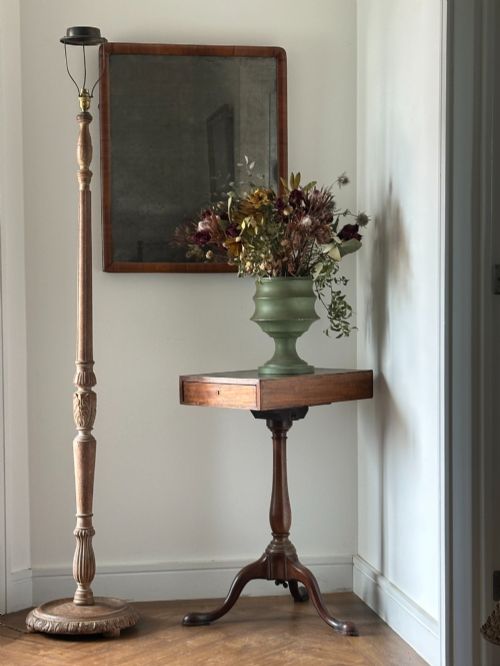
Edwardian oak lamps represent a convergence of sturdy domestic hardware and period craftsmanship, utilising solid timber alongside brass, ceramic tile, and glass fittings. Buyers searching for edwardian oak lamps encounter floor lamps, standard lamps, and table-top designs that translate architectural timber forms into functional illumination.
The version most commonly met on this page is the column or candlestick table lamp, often paired with fabric shades and recorded across periods spanning from the late nineteenth century through the interwar years. Makers frequently drew upon Arts and Crafts, Gothic Revival, and Jacobean styles to shape the oak body.
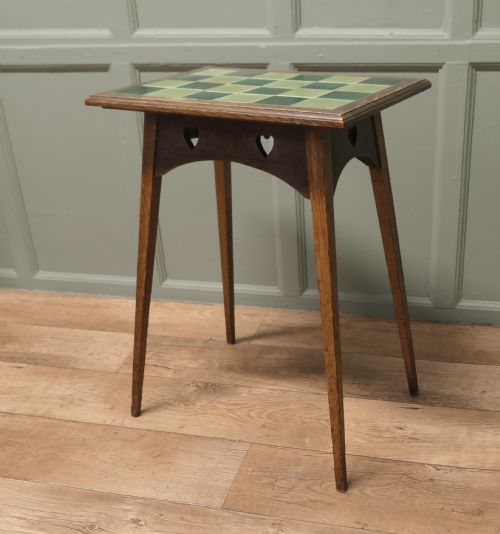
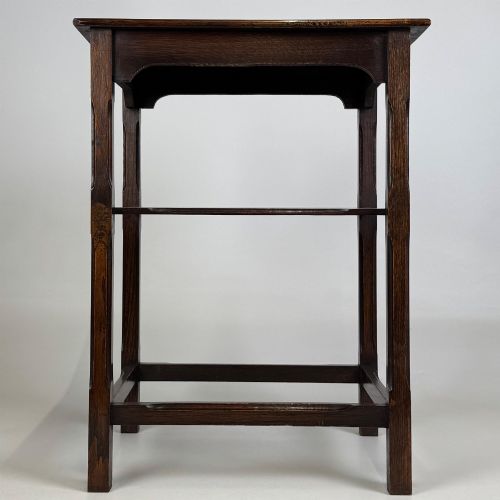
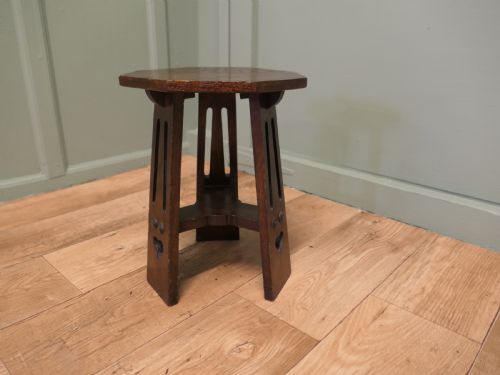
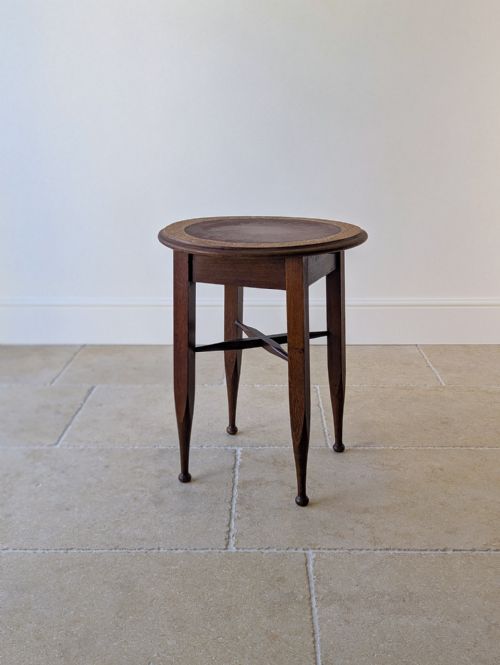
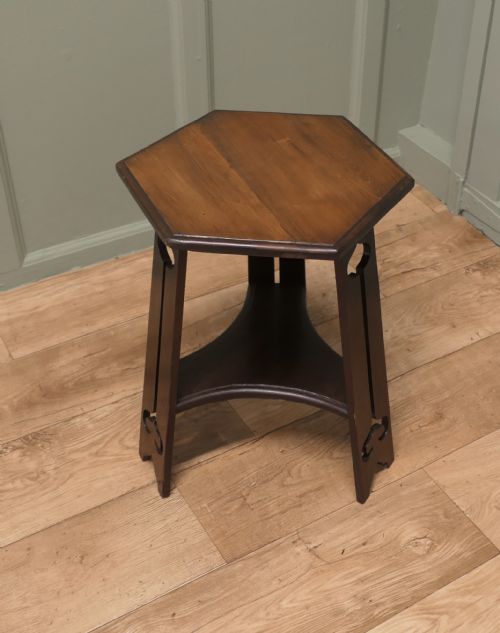
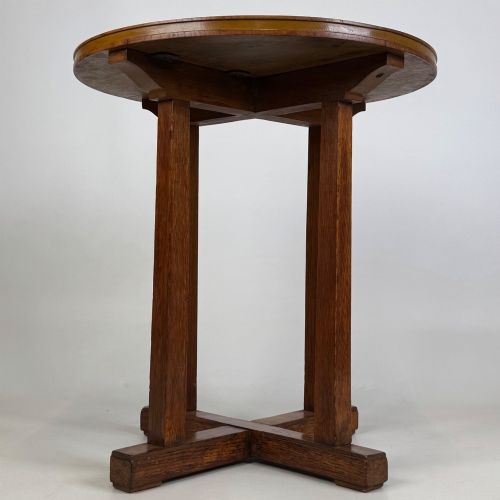
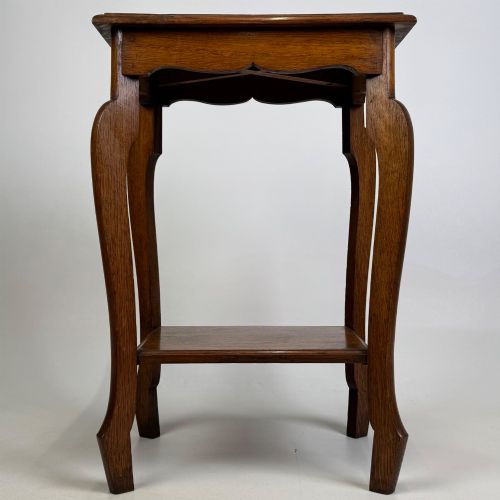
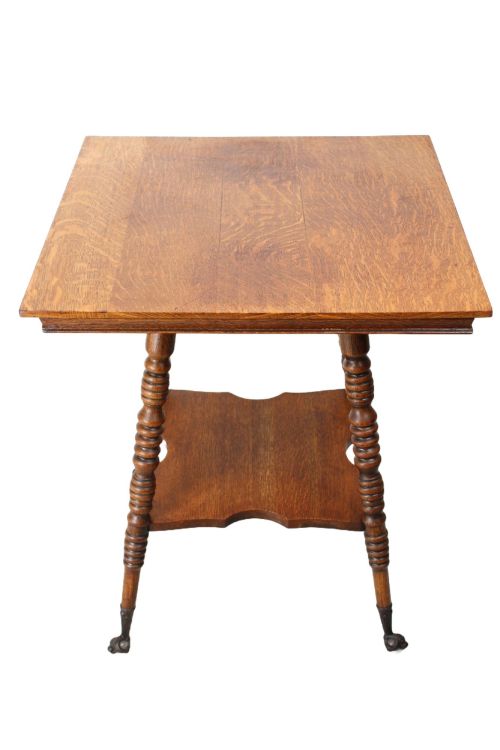
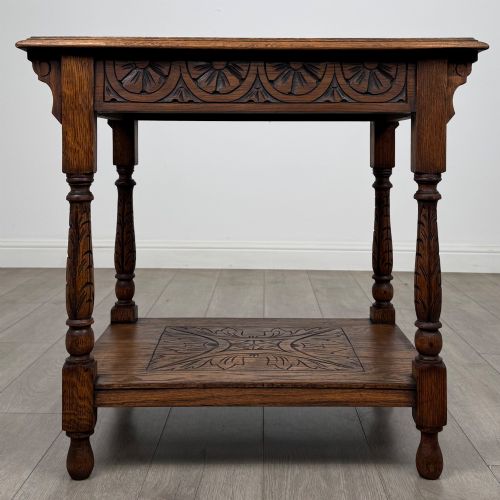
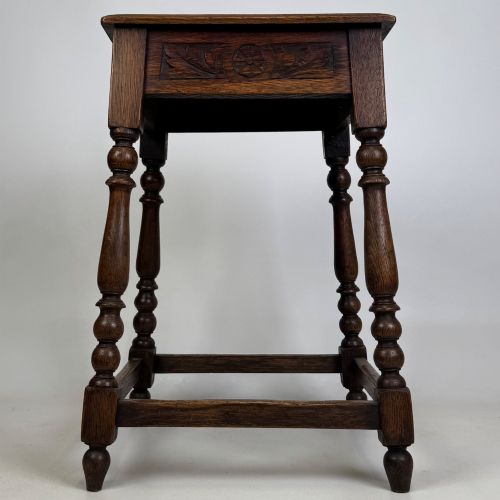
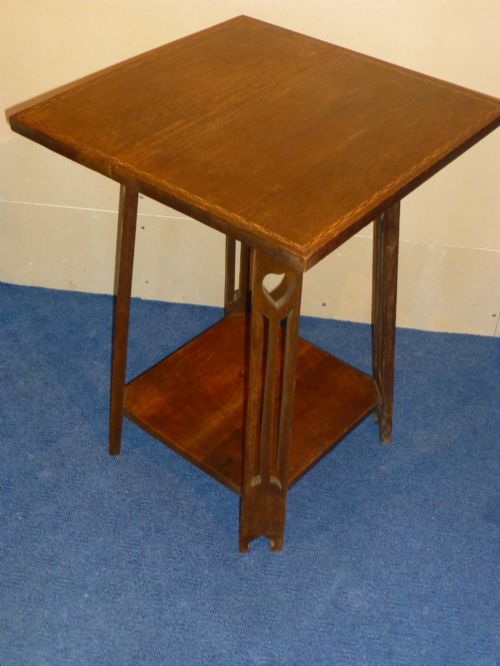
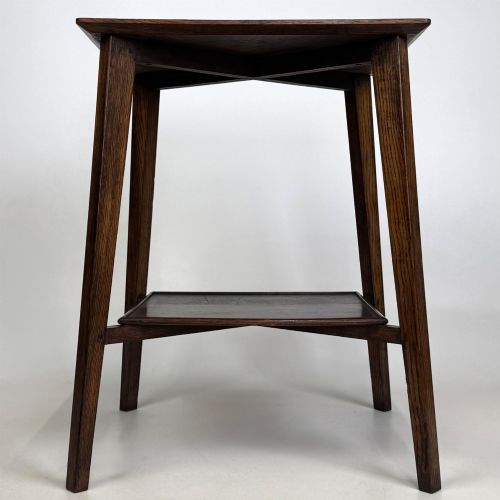
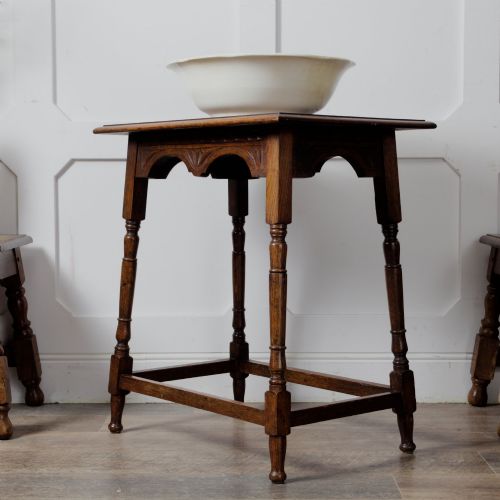
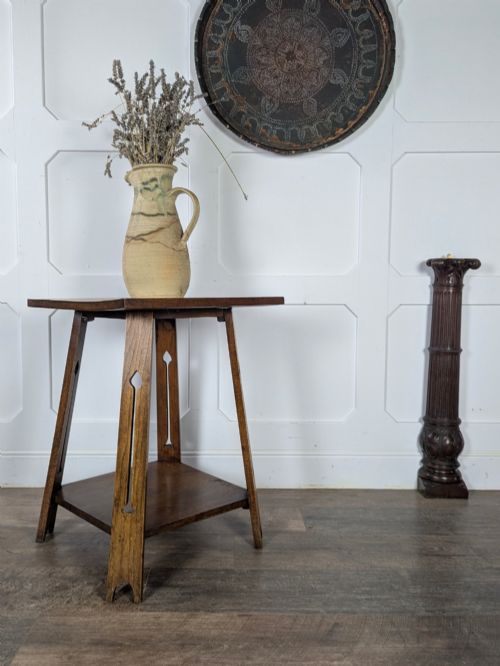
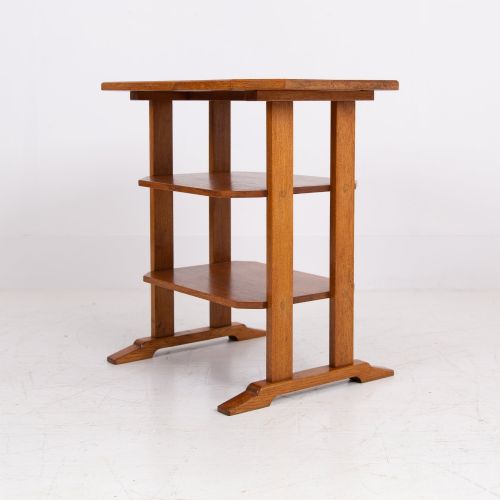
Alongside dedicated lamps, the selection includes multifunctional oak furniture such as plant stands, lamp tables, and occasional tables that served to hold lighting equipment in period homes. These forms reflect the utilitarian yet decorative priorities of workshops operating around the start of the twentieth century.
How they were made
Makers constructed these pieces primarily from solid oak, sometimes utilising wood inlay, carved enrichment, or limed finishes to accentuate the grain. Metal elements such as brass and copper appear frequently as structural mounts, candle cups, or decorative tops.
Joining techniques relied on traditional cabinet-making methods suitable for dense hardwoods, allowing vertical columns and table bases to support heavy wiring and weighted lamp fittings. Surface treatments range from polished patination to matte wax finishes applied over hand-carved details.
Listings feature oak material combined with brass, glass, and ceramic tiles across Edwardian, Arts and Crafts, and Gothic Revival styles.
What varies in quality
Quality is dictated by the crispness of hand-carving and the structural integrity of the timber joints, distinguishing workshop pieces from mass-produced commercial items. Examples displaying thoughtful proportions and integrated metalwork demonstrate superior design ambition.
The choice of secondary materials, such as heavy gauge brass or specialised ceramic tiles, separates standard utility items from higher-tier productions associated with recognised schools of design.
Liberty and Co.·William Birch·Baillie Scott·Heals·Hubert Simpson of Kendal
The Edwardian Oak Lamps Glossary
- Arts and Crafts
- A design movement emphasising handcraftsmanship, simple forms, and local materials. It heavily influenced the aesthetic of domestic oak furnishings during the Edwardian period.
- Barley Twist
- A type of turning shaped like a spiral rope, frequently utilised on the stems of floor lamps and table supports. This technique adds vertical movement to dense timber furniture.
- Cotswold School
- A regional grouping of craftsmen who maintained traditional woodworking methods using solid oak. Their output is characterised by minimal ornamentation and visible construction details.
- Standard Lamp
- A term historically used to describe a floor-standing lamp base. These tall vertical wooden columns required weighted bases for stability.
- Occasional Table
- A small, movable table designed for specific subsidiary uses around a room, such as holding a lamp or a plant stand.
Edwardian Oak Lamps: Frequently Asked Questions
How do I identify an Edwardian oak lamp?
Look for dense solid oak construction combined with period stylistic cues such as barley twist turnings or chamfered column shafts. These pieces often feature brass fittings and wiring configurations contemporary with the early twentieth century.
Examine the base for weight and stability, as standard lamps and table lamps required substantial timber volume to remain upright safely.
Were these lamps originally electric?
Many surviving examples began as oil lamps or candlestick adaptations before being converted to electricity during subsequent decades. Rewired components are common in order to meet modern safety standards while retaining the antique timber body.
Original brass socket mounts and switches often provide clues regarding the timeline of twentieth-century electrical conversions.
What styles accompany oak lamps from this era?
Arts and Crafts, Gothic Revival, and Jacobean Revival motifs appear frequently across these listings. Designers favored exposed grain, chamfered edges, and structural honesty over applied veneer.
Such stylistic choices mirror the broader architectural and interior design movements popular between eighteen ninety and nineteen thirty.
How should I care for antique oak furniture?
Maintain the timber by applying a neutral beeswax polish periodically to nourish the dry oak surface. Avoid placing wooden lamps near direct heat sources to prevent timber splitting.
Dust regularly with a soft cloth to preserve the natural patinated finish accumulated over a century of domestic use.