


Edwardian Oak Coffee Tables
Edwardian oak coffee tables bring sturdy domestic craft and rich timber grain to sitting rooms.
Edwardian Oak Coffee Tables
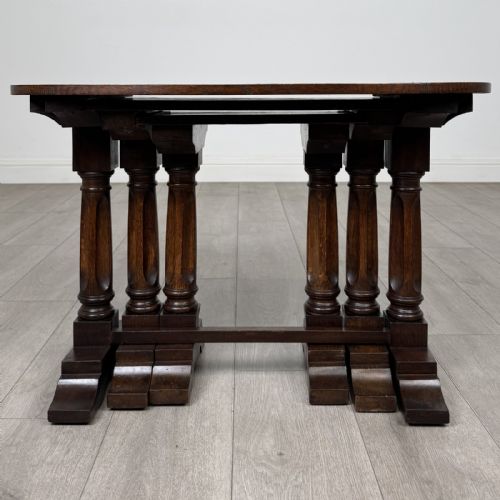
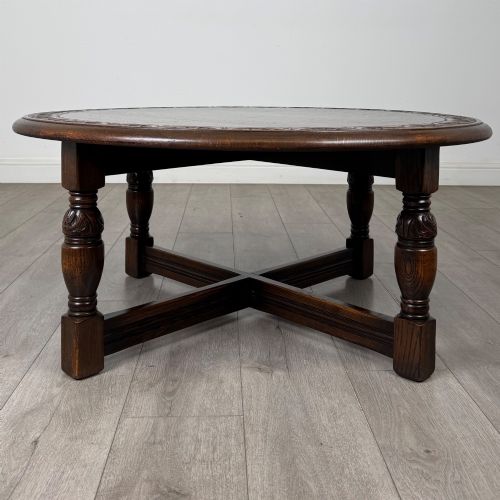
Edwardian oak coffee tables encompass a varied selection of low surfaces, occasional designs, and nested sets originating from the early twentieth century and the broader Edwardian period. Buyers searching for Edwardian oak coffee tables will encounter formats ranging from simple oval tops to intricate six-sided carvings, nests of multiple tables, and drop-leaf mechanisms.
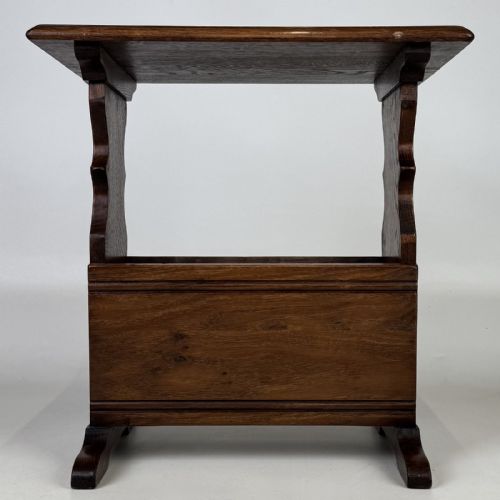
The assortment includes related forms such as side tables, butler's trays, and refectory styles adapted for low-level use alongside seating. The influence of the Arts and Crafts movement appears frequently, alongside Jacobean revival motifs and rustic farmhouse interpretations executed in solid timber.
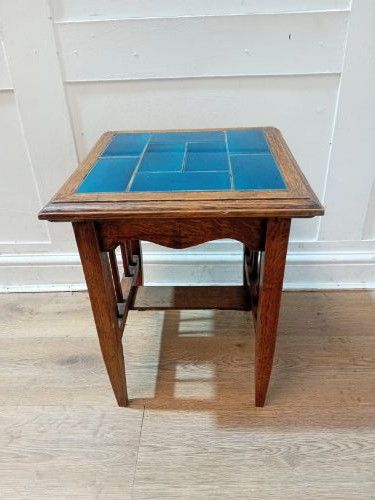
Many examples utilise oak paired with alternative components like ceramic tiles, brass hardware, or painted finishes. The domestic interiors of the era favoured adaptable furniture, which explains the presence of folding, extending, and nesting configurations across the selection.
Materials and construction
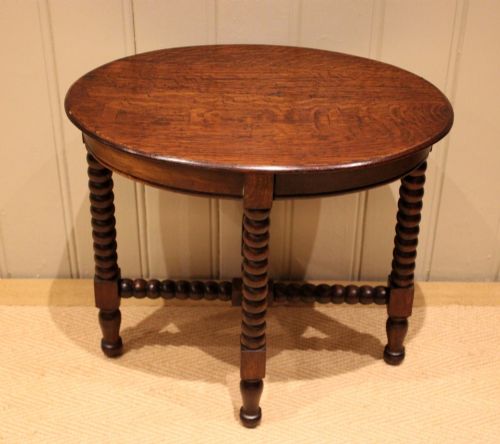
Construction relies primarily on solid oak, selected for its durable grain and finished with turned, barley twist, or carved legs that support oval, round, or rectangular tops. Joinery techniques from the period prioritize stability, utilising sturdy frames to withstand daily household use.
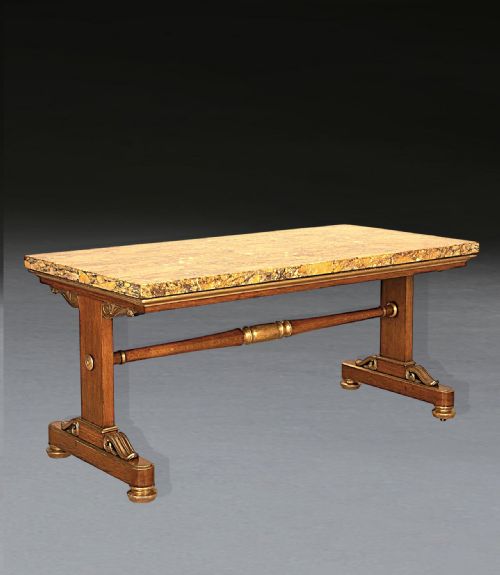
Selected pieces incorporate decorative insets such as ceramic tiles or Siena marble into the timber framework, adding colour and texture to the surface. Brass fixtures, baize lining, and painted surface treatments also appear on specific occasional and folding variants.
Some tables double as card holders or removable trays, proving Edwardians loved multitasking furniture just as much as we do.
Judging quality
Quality in these tables is defined by the integrity of the timber, the precision of the joinery, and the crispness of any hand-carving or turned leg details. Superior examples display thoughtful proportions and harmonious integration of secondary materials like ceramic tiles or brass fittings.
The distinction between standard domestic production and finer workshops lies in the weight of the solid oak and the stability of mechanical elements such as drop leaves, nests, and folding actions. Well-preserved surface patination and honest timber ageing elevate an individual piece.
Liberty of London
The Edwardian Oak Coffee Tables Glossary
- Nest of tables
- A set of graduated tables designed to fit neatly beneath one another when not in use. This space-saving form appears frequently in oak across multiple periods.
- Barley twist
- A decorative turning technique resembling a spiralling rope column. This detail is commonly found on the legs of Edwardian occasional and side tables.
- Butler's tray
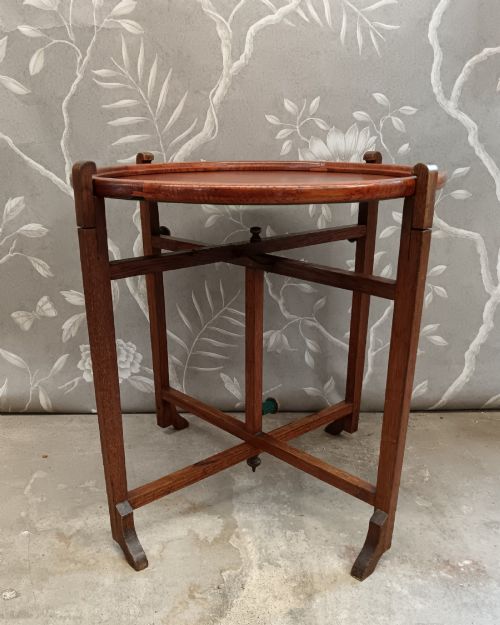
- A removable tray top resting upon a folding or fixed stand. Versions in oak served portable functions in Edwardian and later domestic spaces.
- Refectory table
- A long, narrow dining table design occasionally adapted into lower proportions. Solid oak construction and sturdy stretcher bases characterise the form.
- Arts and Crafts
- A design movement prioritising traditional craftsmanship and visible construction. Tables from this tradition often feature unadorned oak surfaces and simple geometric forms.
Edwardian Oak Coffee Tables: Frequently Asked Questions
How do you use a nest of tables?
A nest provides flexible surface space that expands when entertaining and tucks away compactly when floor space is needed. Individual tables can be distributed around a room for drinks or books.
In daily living, the smallest tables often sit neatly beneath the main surface, preserving room layout while keeping extra tiers close at hand.
How do I care for antique oak?
Oak benefits from regular dusting with a dry cloth and occasional treatment with suitable natural waxes to nourish the grain. Avoiding direct heat sources prevents the timber from drying out or splitting.
Protecting surfaces from moisture using coasters ensures the polished or waxed finish maintains its character over decades of everyday use.
How can I identify an Arts and Crafts oak table?
Arts and Crafts tables emphasise honest construction, visible joinery, and the natural grain of solid oak rather than excessive surface ornamentation. They often feature simple geometric lines or trefoil motifs.
Makers from this movement, such as Liberty of London, produced robust pieces that favoured straightforward utility and fine tactile qualities.