
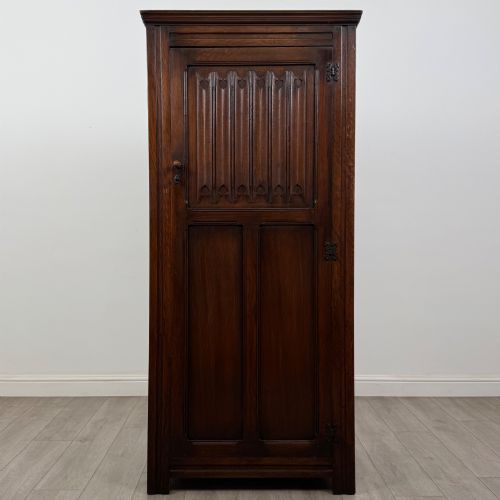
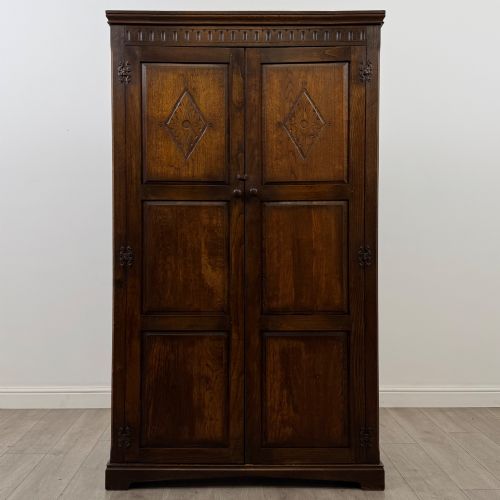
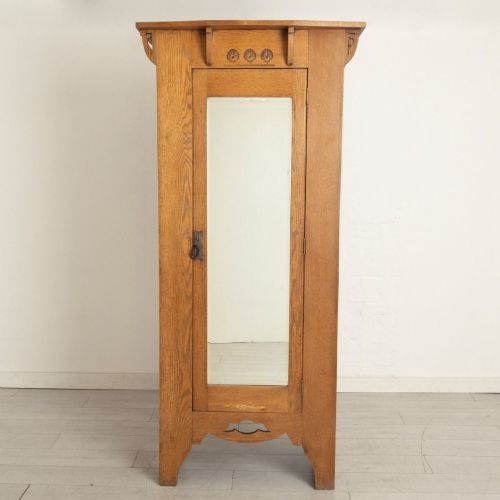
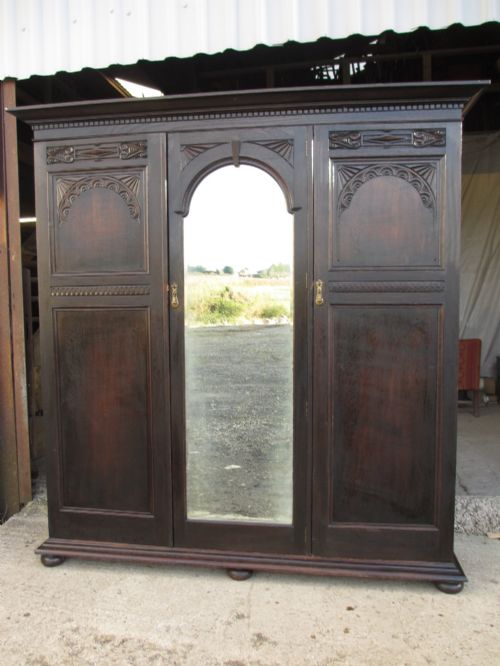
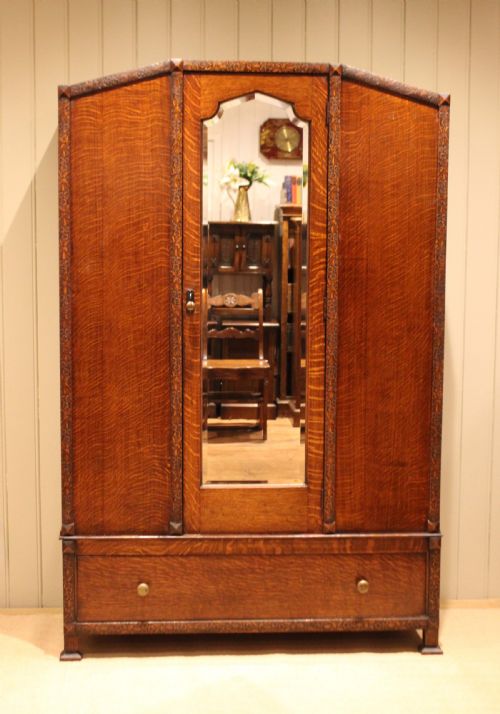


Edwardian Oak Clothes Armoire
These edwardian oak clothes armoire pieces offer generous hanging space and sturdy construction, bringing practical period storage to a bedroom.
Edwardian Oak Clothes Armoire
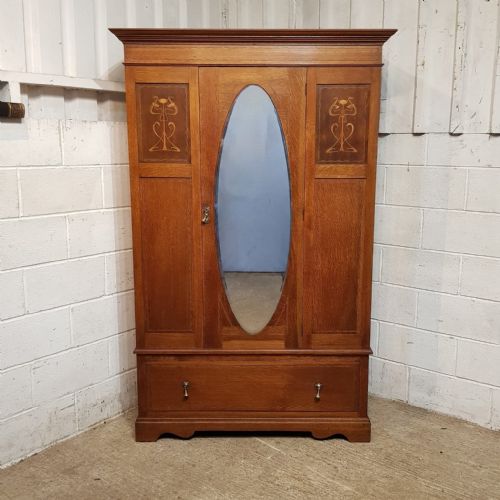
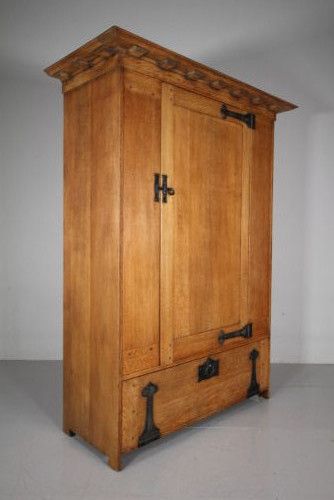
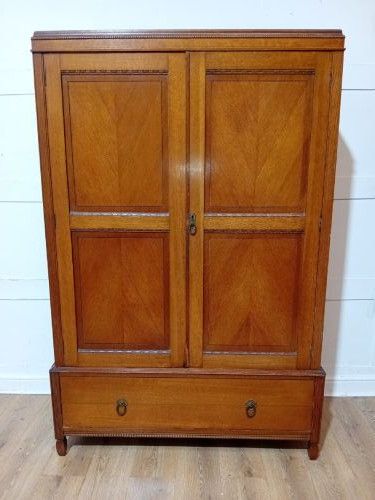
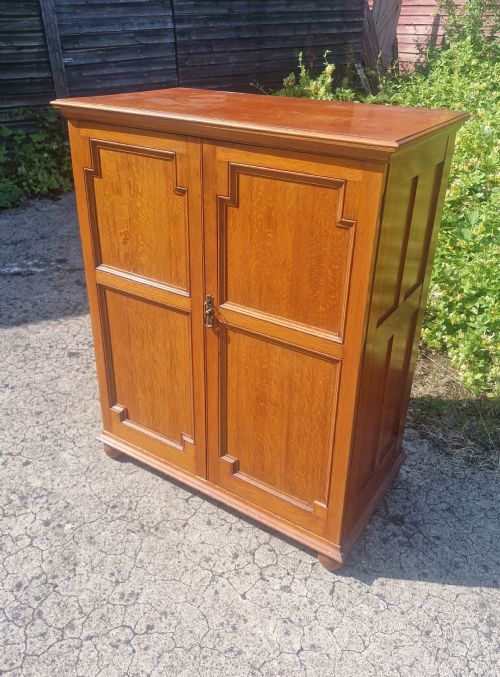
An edwardian oak clothes armoire represents the large timber storage furniture produced during the early twentieth century, spanning standard wardrobes, compactums, and linen presses. The examples found here range from simple two-door cupboards to grand triple mirror door wardrobes and fitted compartments.
Most items date from the Edwardian period or around nineteen hundred, with occasional pieces extending into the nineteen twenties and thirties. Buyers encounter diverse stylistic influences, notably Arts and Crafts, Gothic Revival, and Art Nouveau interpretations executed in sturdy timber.
How they were made
Cabinetmakers built these wardrobes primarily using solid oak, occasionally combining it with pollard oak veneers or integrating brass, iron, and metal hardware. Wrought iron and mother of pearl details appear on specific Arts and Crafts and Art Nouveau designs.
Construction techniques include carved panel details and mirror door integrations, alongside stamped or labelled maker signatures on factory pieces.
Design influences on this page span Arts and Crafts, Art Nouveau, and Gothic Revival styles from nineteen hundred onward.
What varies in quality
Quality differences emerge in the depth of hand-carved ornamentation and the selection of timber figures, such as pollard oak accents. Plain structural joinery contrasts with elaborate Arts and Crafts or Gothic Revival detailing.
Makers stamp or label certain pieces, marking a distinction between standard commercial workshops and notable firms like Heals, Maple and Co, or Harris Lebus.
Heals·Harris Lebus·Maple and Co
The Edwardian Oak Clothes Armoire Glossary
- Compactum
- A multi-compartment wardrobe designed for comprehensive gentleman or lady attire storage. It combines hanging space with drawers and interior shelving.
- Linen Press
- A tall storage piece traditionally used for folded textiles, featuring upper cupboard doors and lower drawer banks. They appear frequently in early twentieth-century oak.
- Arts and Crafts
- A design movement prioritising honest construction, visible handcraft, and simple timber forms. It rejects excessive machine-made ornamentation.
- Pollard Oak
- Timber taken from trees pruned close to the trunk to produce a clustered, highly decorative grain pattern. Cabinetmakers use it for veneered panels.
- Edwardian Gothic Revival
- A stylistic revival drawing on medieval architectural motifs, translated here into carved timber wardrobes and cupboards.
Edwardian Oak Clothes Armoire: Frequently Asked Questions
What is a compactum wardrobe?
A compactum is a multi-functional wardrobe designed to house various items of clothing within a single footprint. It typically integrates hanging space alongside internal drawers, sliding trays, and shoe compartments.
These pieces offer versatile storage for modern bedrooms while retaining period timber character.
How do I identify an Arts and Crafts wardrobe?
Arts and Crafts wardrobes display an emphasis on solid timber construction, honest joinery, and restrained decoration. Look for hand-wrought metal hinges, copper or brass handles, and occasionally carved plant motifs.
Such pieces often date from around nineteen hundred and reflect a rejection of heavy Victorian mass production.
Are these wardrobes easy to dismantle?
Many large Edwardian wardrobes and armoires were constructed to be taken apart for transport and installation in upper-floor bedrooms. Cornice tops, side panels, and base sections often separate using internal bolts or pegs.
Buyers should inspect the specific construction to confirm whether a piece flat-packs before attempting relocation.
What is a gentleman's wardrobe?
A gentleman's wardrobe is a specialised clothing cupboard featuring a combination of hanging sections, pull-out trays, and short shirt drawers. They were tailored specifically for male attire in the early twentieth century.
These compact layouts suit modern users seeking organised storage without occupying excessive wall space.