

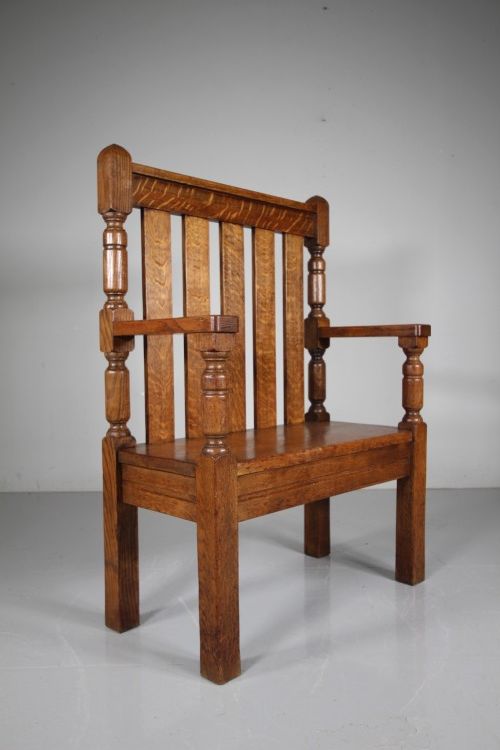


Edwardian Monks Bench
These edwardian monks bench pieces combine seating and storage in heavy timber, offering a practical hallway furnishing with historical presence.
Edwardian Monks Bench
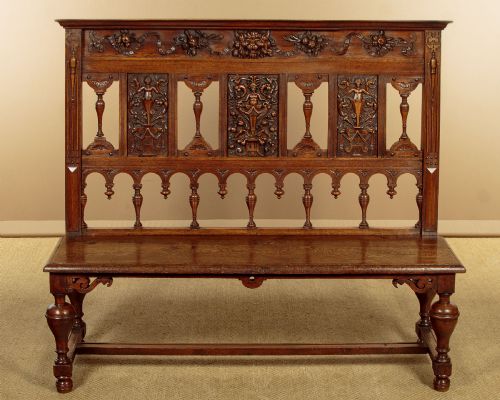
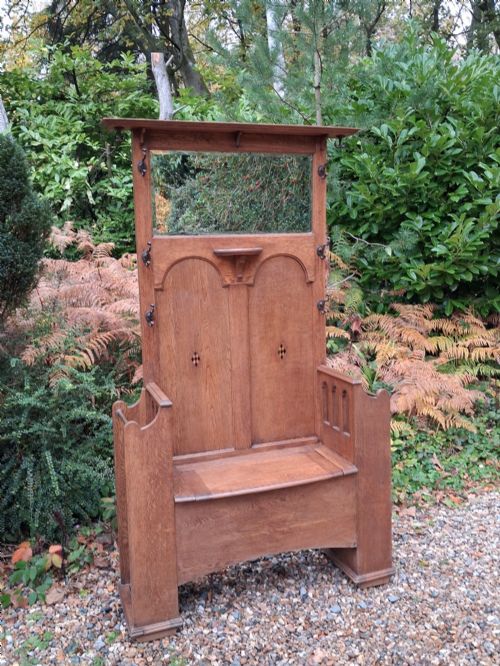
The pieces appearing under this search include hall benches, settles, and monks seats spanning the Edwardian period alongside Victorian and later twentieth-century iterations. Oak is the predominant timber across these forms, often decorated with carving, paneling, or inlay.
Makers and workshops of the era drew heavily on earlier historical vocabularies, producing pieces styled in Jacobean Revival, Arts and Crafts, and Art Nouveau aesthetics. They served primarily in entrance halls and vestibules of country houses and domestic dwellings alike.
What Varies in Quality
The distinction between standard commercial production and finer workshops lies in the depth and execution of the carved decoration and the selection of timber grain. Pieces associated with notable retailers or designers exhibit more considered proportions and refined joint work.
Hardware quality also differentiates the range, with robust brass fittings and smooth mechanical pivots indicating superior manufacture compared to utilitarian replacements. The integrity of the box construction and the fit of the lift-up lid reflect the original joiner's skill.
Edwardian Monks Bench Retail Price Guide 2026
Typical asking prices for edwardian monks bench among the pieces listed under this phrase on Sellingantiques today, from the lower quarter to the upper quarter. They describe what is for sale here now, not the wider market.
Listings under this phrase span from the mid-nineteenth century through the Edwardian era into the 1930s, constructed predominantly in solid oak.
Liberty·Shapland & Petter
The Edwardian Monks Bench Glossary
- Monks bench
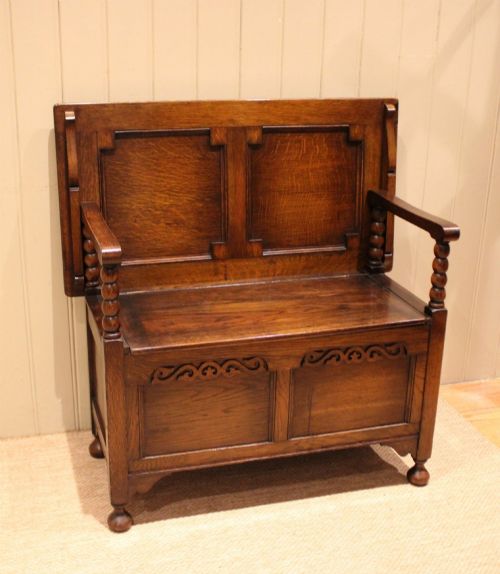
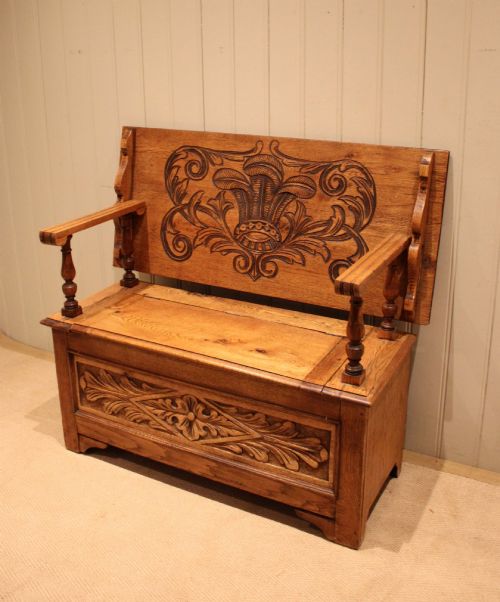
- A convertible seat featuring a pivoting back that folds down to form a table top above a box base. This form provided dual utility in compact hallway spaces.
- Settle
- A wooden bench with a high back, solid arms, and a closed base designed to keep out draughts. These pieces often incorporate hinged lids concealing storage compartments.
- Marquetry inlay
- The technique of fitting contrasting pieces of wood veneer into a prepared surface to form decorative patterns. It appears on select panels of Edwardian furniture.
- Arts and Crafts
- A design movement valuing hand craftsmanship, vernacular traditions, and simple construction over mass production. This style heavily influenced late nineteenth and early twentieth-century seating.
Edwardian Monks Bench: Frequently Asked Questions
How do I convert a monks bench into a table?
The high backrest pivots on wooden or metal pins located near the arms, allowing the entire upper section to tilt forward and rest horizontally upon the armrests. This transforms the back into a flat surface suitable for use as a table.
Ensure any items resting on the seat are cleared before operating the mechanism. The pivot points should move freely without excessive lateral play.
Where were monks benches placed in a home?
These pieces were traditionally positioned in entrance halls and corridors to provide seating for putting on footwear while concealing hats, gloves, or cloaks within the box base. Their solid construction handled the heavy traffic of a home's entryway.
Their dual function made them particularly useful in smaller dwellings where extra table space was occasionally required.
How do I care for oak hall furniture?
Regular dusting with a dry, soft cloth maintains the finish of the timber without building up unnecessary residues. Occasional application of quality beeswax nourishes the grain and protects the surface from dry indoor atmospheres.
Avoid placing these benches in direct sunlight or close to heat sources, which can cause the solid oak panels to split or warp over time.