

Edwardian Mirror Sideboard
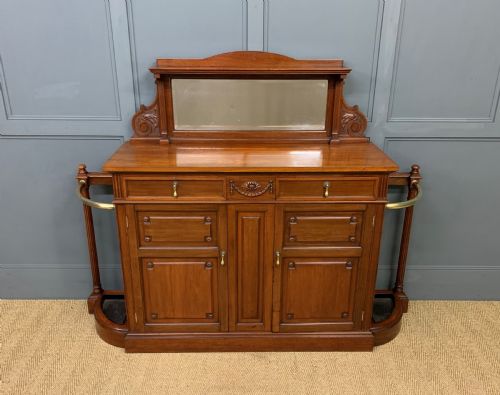
An Edwardian mirror sideboard brings utility and reflecting glass into the dining room or hall, anchored by solid timber.
Edwardian Mirror Sideboard
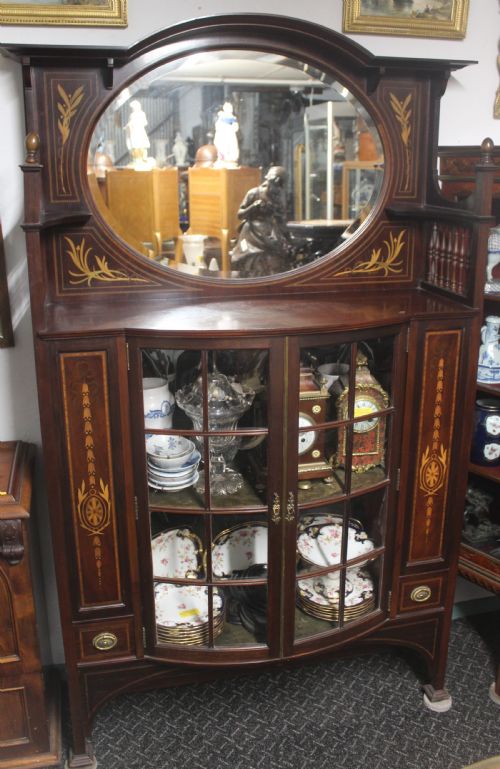
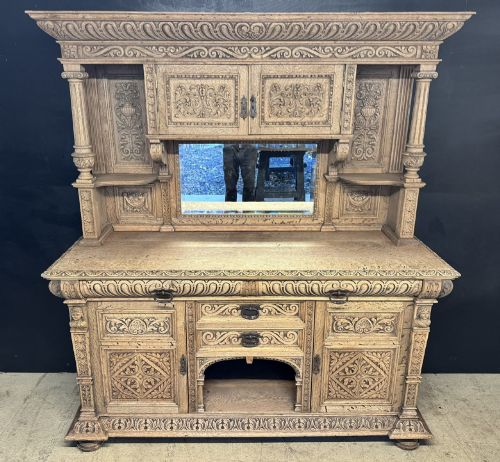
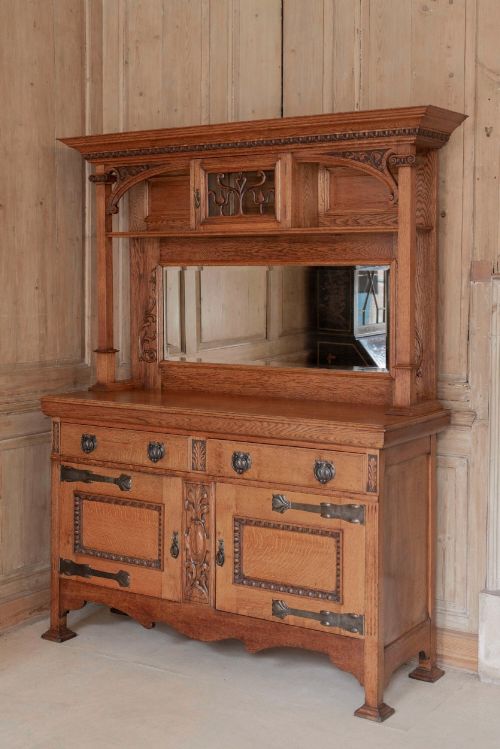
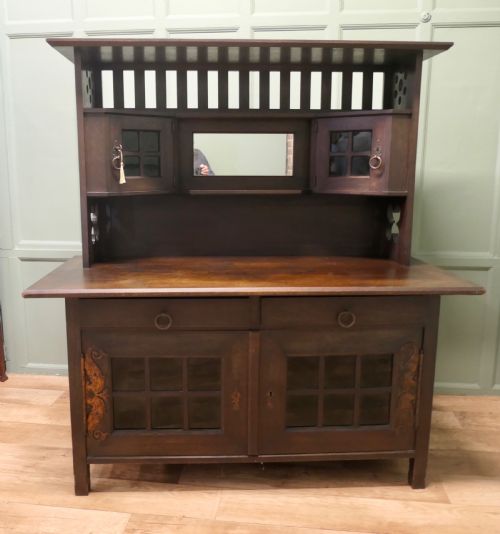
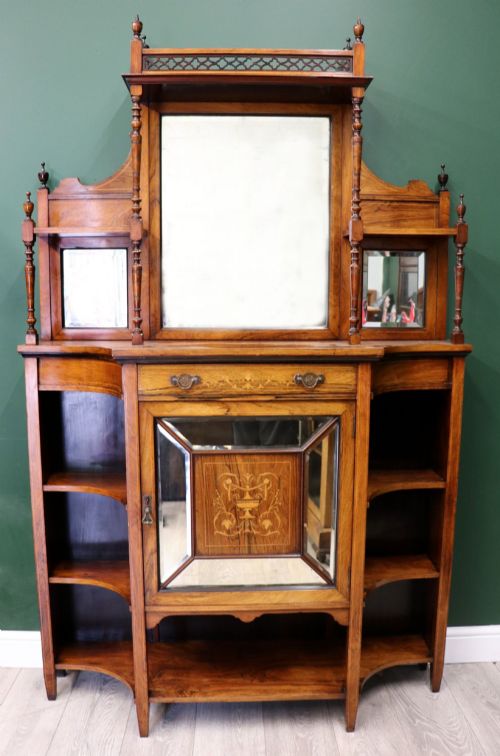
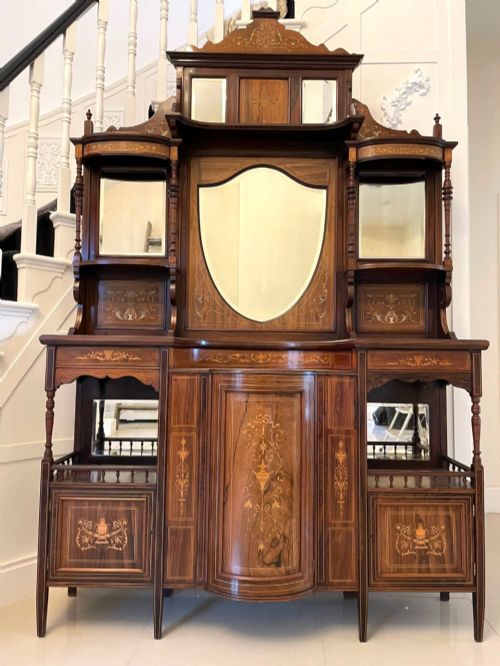
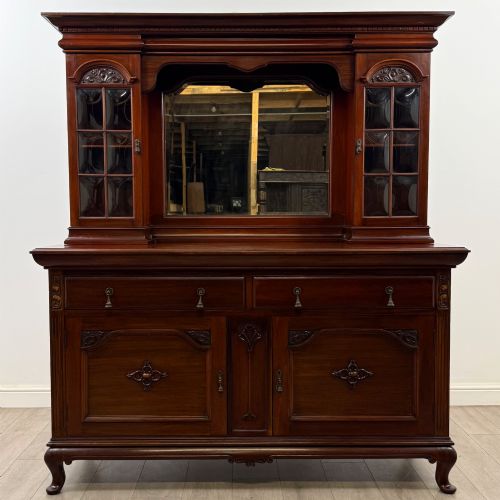
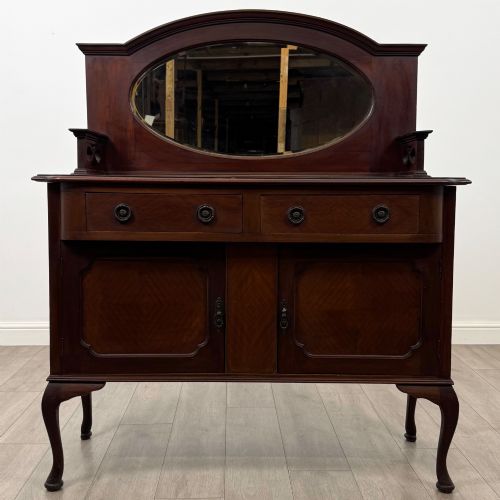
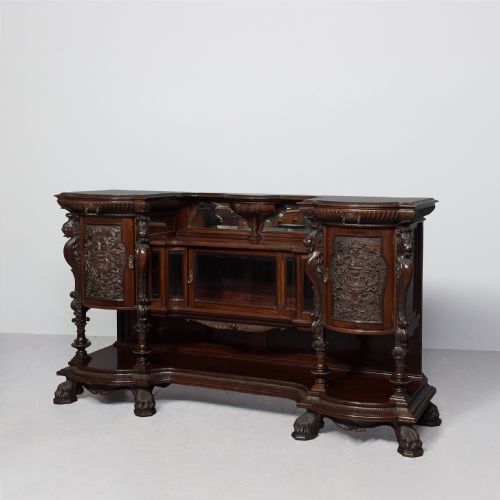
An edwardian mirror sideboard combines a low timber storage base with an upright wooden frame holding a glass mirror, standing as a principal furniture piece in dining rooms and halls. The pieces on this page span the Edwardian era, the Victorian period, and the late nineteenth century up to nineteen thirty, drawing on diverse design impulses.
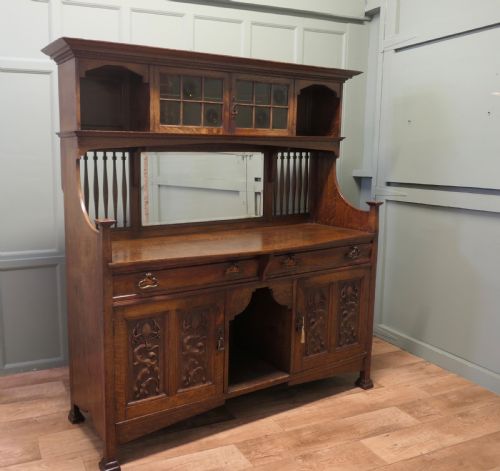
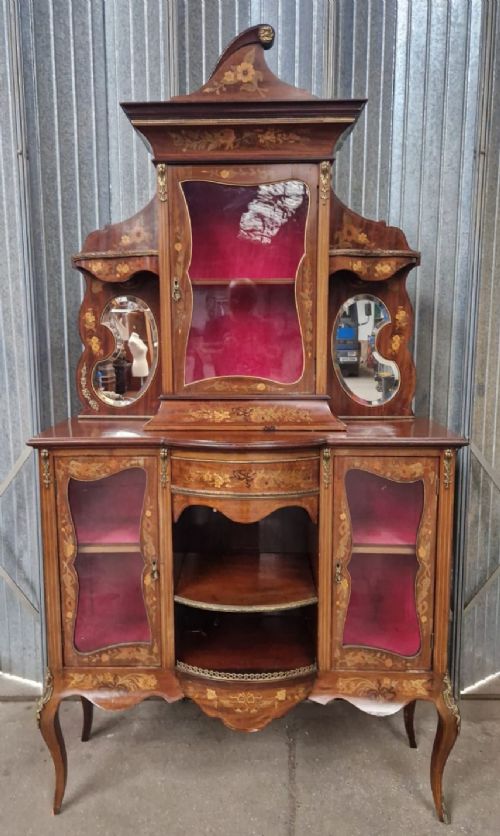
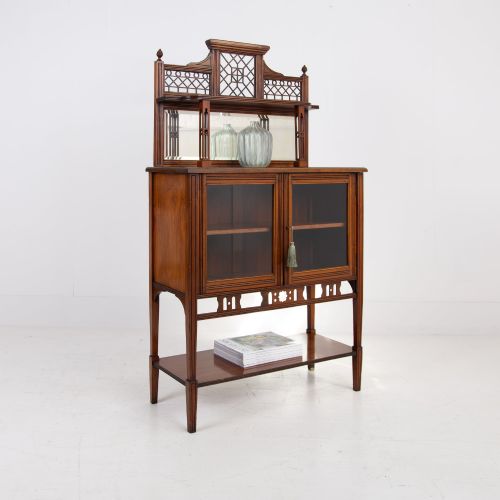
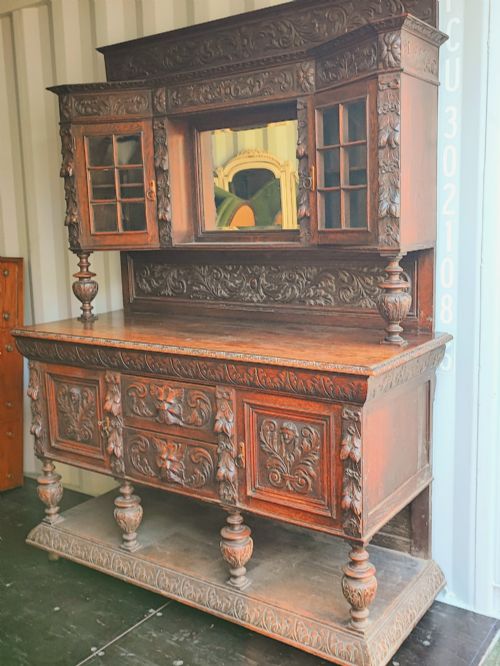
Makers adapted older forms, producing substantial oak and mahogany sideboards alongside lighter rosewood and walnut cabinets. Styles range from plain golden oak to elaborate inlaid designs and movement pieces featuring carved details and leaded glass doors.
Materials and construction
Carpenters built these carcasses primarily in oak, mahogany, walnut, and rosewood, applying contrasting veneers and marquetry inlay for surface pattern. Brass hardware secures doors and drawers, while bevelled mirror glass is fitted securely into carved or panelled wooden frames.
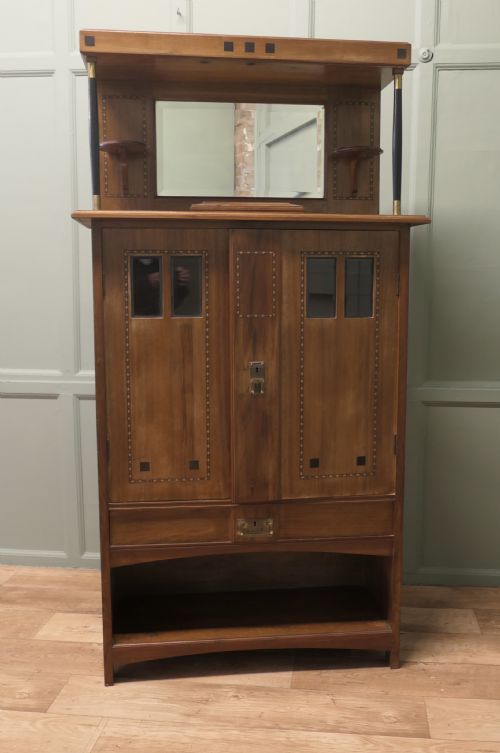
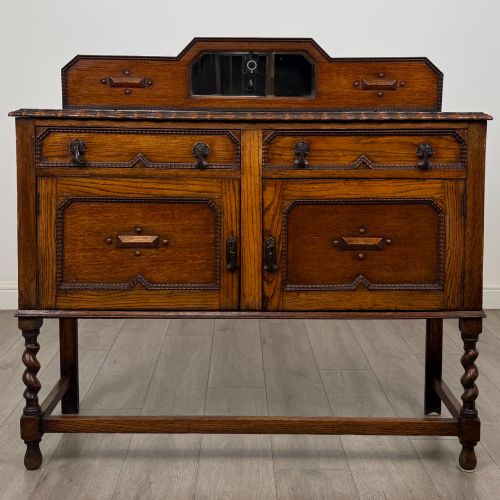
Surface detailing relies on hand carving, barley twist legs, marble tops, and glazed or leaded door panels. Selected examples incorporate specialised hardware and leaded glass work characteristic of the arts and crafts and secessionist movements.
Edwardian Mirror Sideboard Retail Price Guide 2026
Typical asking prices for edwardian mirror sideboard among the pieces listed under this phrase on Sellingantiques today, from the lower quarter to the upper quarter. They describe what is for sale here now, not the wider market.
A smiling green man occasionally peers out from heavy carved oak foliage.
Gradations of craftsmanship
Quality rests on the selection of timber, the crispness of hand carving, and the sophistication of inlay work. Finer examples display carefully matched grain patterns, dense pollard oak or burr walnut, and robust internal framing that withstands daily use.
The integration of the mirror back into the base sideboard dictates visual balance, where superior pieces maintain proportion between the heavy timber storage and the lighter glass housing.
Leonard Wyburd for Liberty and Co·Shapland and Petter·Shoolbred and Co·T Simpson and Son
The Edwardian Mirror Sideboard Glossary
- Mirrorback
- A wooden superstructure attached to the rear of a sideboard containing one or more glass mirrors. This element reflects light and displays ornamental carving.
- Marquetry
- Decorative woodwork where thin pieces of veneer are fitted together to form pictorial patterns on the surface. Cabinet makers used contrasting woods to achieve botanical or geometric designs.
- Barley twist
- A turned wooden furniture leg resembling the spiral shape of a barley stalk. This decorative turning appears frequently on oak sideboards of the period.
- Credenza
- A low dining room cabinet or sideboard, often featuring extensive marquetry inlay and glass doors. The form developed from Italian serving tables into elaborate nineteenth century display furniture.
- Green man
- A sculptural architectural ornament depicting a human face carved with leaves, vines, or branches. It appears in relief on heavy carved oak furniture.
- Secessionist
- A modernist design movement focusing on geometric forms and stylised motifs that broke away from historical revival styles. These pieces often exhibit clean lines and unconventional hardware.
Edwardian Mirror Sideboard: Frequently Asked Questions
What is an edwardian mirror sideboard?
An edwardian mirror sideboard is a large wooden storage unit featuring cupboards or drawers beneath an integrated glass mirror. These pieces served to store dining silver and linens while brightening rooms through reflected light.
They stood principally in formal dining rooms and entrance halls. The upper mirror frame frequently incorporated small display shelves for ceramics.
How do I care for the mirror glass?
Clean the glass using a soft cloth and a gentle, ammonia free glass cleaner applied to the cloth rather than directly to the mirror. This prevents moisture from seeping behind the silvered backing.
Inspect the wooden frame periodically to ensure the mirror plate remains secure. Avoid placing the sideboard in direct sunlight to protect the surrounding timber veneer.
How do I tell Edwardian from Victorian?
Victorian sideboards tend to feature heavier proportions, dense dark timbers, and elaborate carvings or high polish finishes. Edwardian pieces generally display lighter woods, simpler silhouettes, and influences from arts and crafts design.
Edwardian makers also favoured golden oak and satinwood stringing over the heavy burr walnut and rosewood common in earlier decades.
Can I use it in a modern hallway?
These sideboards provide practical storage for shoes, post, and keys inside deep cupboards and drawers. The mirror back proves useful for a final check before leaving the house.
Measure the hallway space carefully, as these units require adequate clearance for opening cupboard doors. Ensure the floor is level so the heavy timber frame and mirror sit stably.