



Edwardian Mirror Chest
An Edwardian mirror chest combines fitted bedroom storage with an adjustable glass plate, anchoring period dressing furniture with practical utility.
Edwardian Mirror Chest
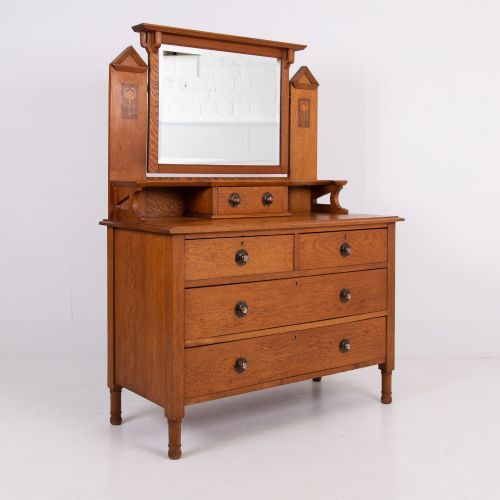
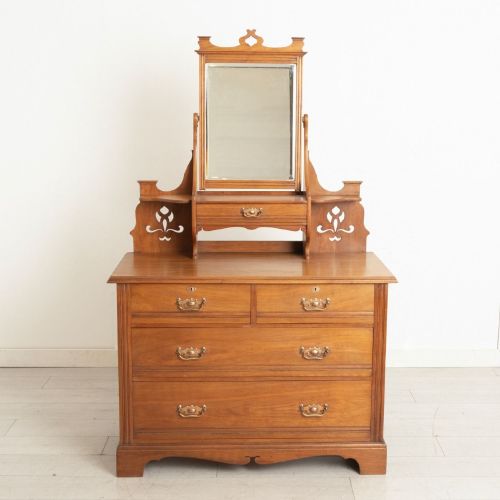
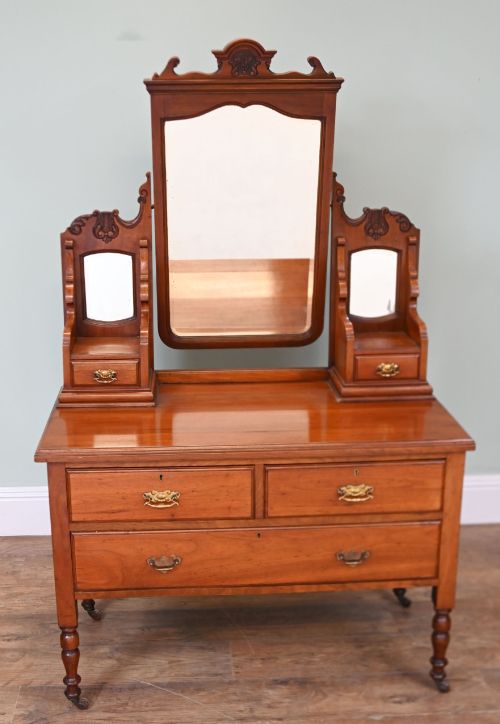
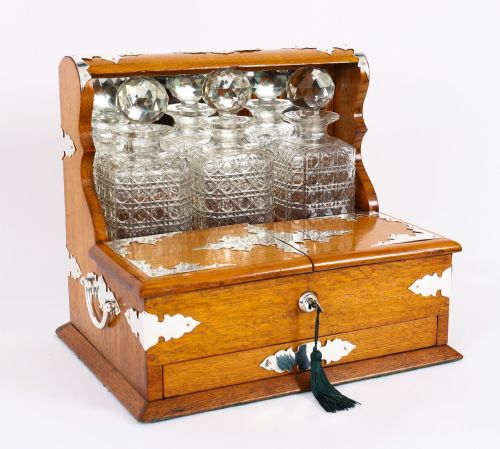
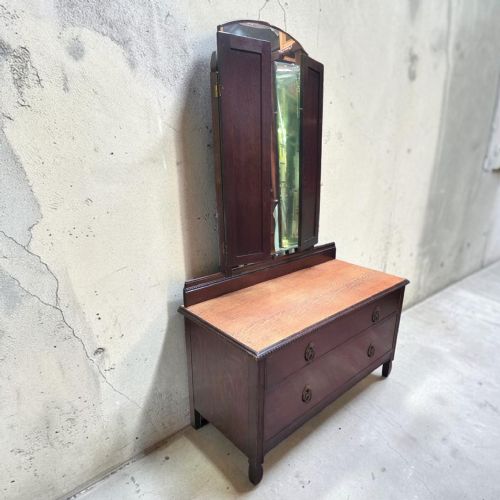
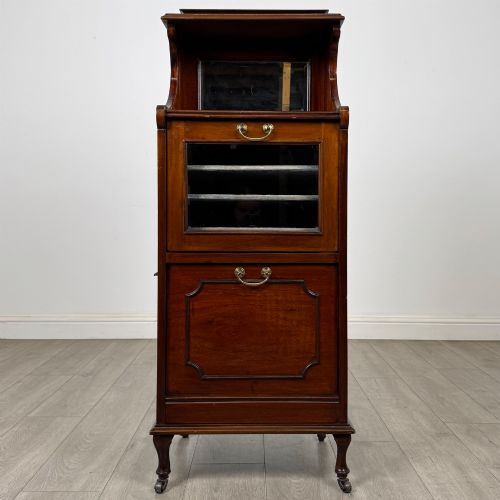
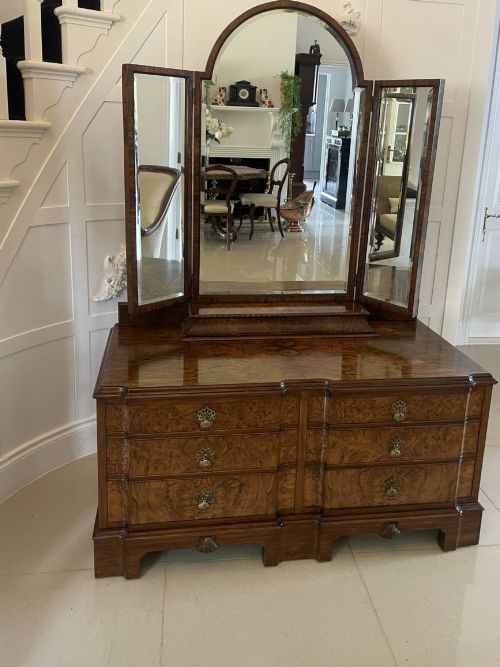
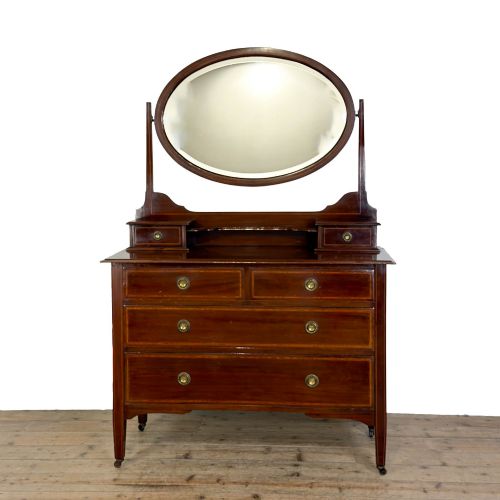
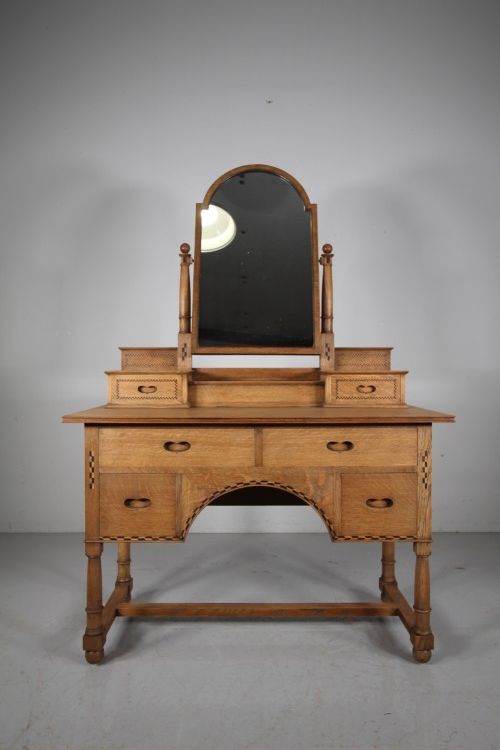
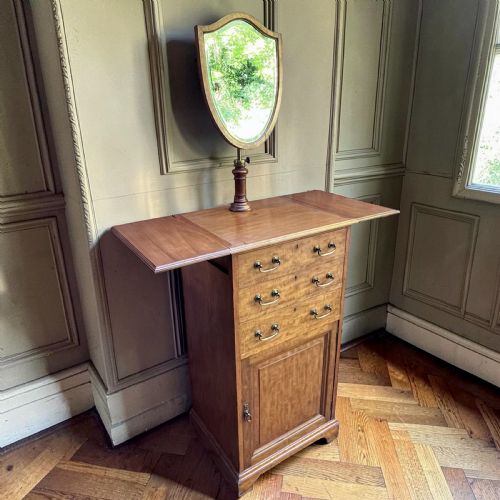
An edwardian mirror chest typically takes the form of a dressing chest or dressing table equipped with a pivoting glass plate supported on upright arms. The pieces found here span the Edwardian era alongside late Victorian and early twentieth century examples, utilising timber carcases fitted with multiple storage drawers. While the core function remains personal grooming and clothes storage, the furniture encompasses distinct regional workshops and cabinet-making traditions from around nineteen hundred.
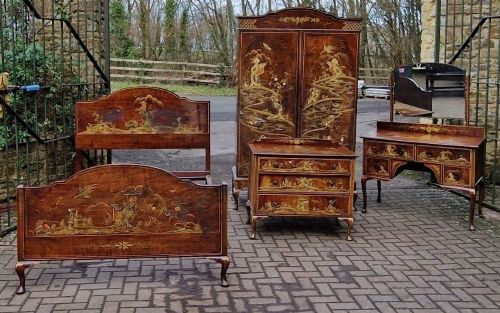
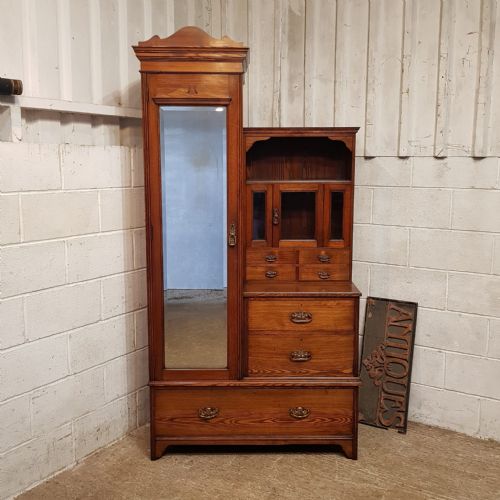
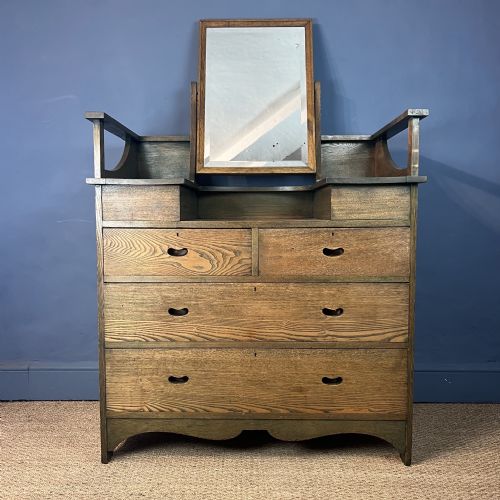
Most examples rely on traditional timber construction combined with glass and brass hardware, frequently appearing in forms ranging from compact oak dressing chests to larger walnut bedroom suites. Makers frequently incorporated satinwood inlay, marquetry, or specific regional styles such as Arts and Crafts to elevate the appearance of the bedroom furniture. Buyers encounter variations that include single-drawer table top mirrors, triple mirror arrangements, and combination wardrobes alongside standard dressing tables.
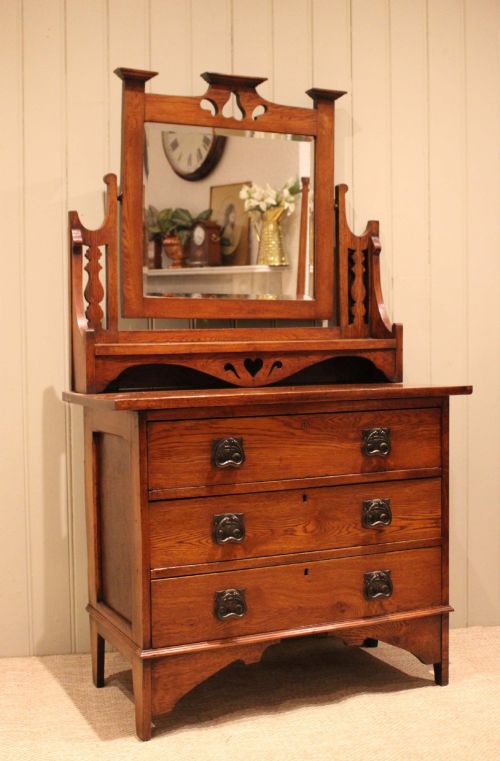
The layout generally places deep drawers in the lower section beneath a superstructure carrying the mirror glass, allowing the user to adjust the angle during use. Surviving pieces demonstrate the shift from heavier late Victorian proportions toward lighter Edwardian and Arts and Crafts aesthetics using oak, mahogany, and ash. These items served as central pieces in period sleeping quarters, combining the roles of chest of drawers and dressing glass into a single item.
How they were made
Cabinet-makers constructed the carcases using solid timbers such as mahogany, oak, and walnut, frequently applying veneers of satinwood or burr walnut to drawer fronts and tabletops. Structural integrity relied on dovetailed drawer construction and mortise and tenon joints, ensuring durability across decades of daily use in the bedroom. Brass handles, escutcheons, and mirror brackets provided both functional operation and decorative contrast against the polished wood surfaces.
The mirror glass itself was traditionally silvered and held within a wooden frame supported by adjustable brass or wooden side pivots, allowing the plate to tilt. Specialised regional variants featured green stained ash, scumble glazing, or marquetry inlay to suit prevailing aesthetic movements like the Arts and Crafts style. Workshops utilised hand-finishing techniques including French polishing or wax application to seal the grain and accentuate the natural figuring of the timber.
Edwardian Mirror Chest Retail Price Guide 2026
Typical asking prices for edwardian mirror chest among the pieces listed under this phrase on Sellingantiques today, from the lower quarter to the upper quarter. They describe what is for sale here now, not the wider market.
Listings feature woods including mahogany, oak, walnut, satinwood, and ash across Edwardian and Victorian periods.
What varies in quality
The standard of timber selection and veneer matching defines the visual merit of the piece, with figured burr walnut or carefully chosen mahogany representing the upper tier. Superior examples display refined cabinet-making details such as hand-cut dovetails, crisp inlay work, and robust brass hardware that operates smoothly without play.
Design ambition also separates mass-produced items from pieces originating in notable workshops or attributed to specific designers, where proportions, carved motifs, and structural joinery receive greater attention. The condition of the original mirror glass and the stability of the pivoting frame contribute significantly to the overall integrity of the piece.
Shapland and Petter·Heals of London·George Walton·Edwards and Roberts·Harris Lebus·Gillows
The Edwardian Mirror Chest Glossary
- Cheval mirror
- A full-length plate suspended in a standing frame that tilts vertically. It allows the user to view their entire outfit.
- Satinwood inlay
- Contrasting blonde wood veneer inserted into recesses within a darker timber carcase. This technique creates geometric or floral decorative borders.
- Arts and Crafts
- A design movement emphasising hand craftsmanship and simple structural forms. Pieces from this tradition often feature exposed joinery and minimal ornamentation.
- Scumble glazing
- A decorative painting technique applied over a base coat to simulate wood grain or texture. It appears on alternative timbers to mimic more costly woods.
- Marquetry
- Fitted pieces of various woods assembled to form decorative pictures or patterns. Craftsmen veneer these designs onto the primary carcase surfaces.
Edwardian Mirror Chest: Frequently Asked Questions
How do I clean the mirror glass?
Use a soft cloth dampened slightly with warm water or a mild glass cleaner, avoiding harsh chemicals that might damage the silvering behind the plate.
Take care not to let moisture seep into the wooden frame or the brass pivot joints during cleaning.
Can I remove the mirror safely?
Most mirrors detach by unscrewing the side pivot bolts from the upright arms attached to the main chest carcase. Keep the small washers and screws together in a secure container.
Two people should handle the glass plate during removal to prevent accidental twisting or chipping of the edges.
How should I care for the wood?
Apply a quality beeswax polish periodically using a soft cloth, rubbing gently along the grain to maintain the lustre of the French polished or waxed surface.
Keep the furniture away from direct heat sources and strong sunlight to prevent the timber from drying out or splitting.
Are these pieces suitable for modern bedrooms?
The compact footprint and dual function of storage and mirror make them practical additions to contemporary sleeping spaces. They offer generous drawer capacity while serving as functional dressing surfaces.
Their varied revival styles allow them to complement both traditional interiors and more eclectic modern room schemes.