

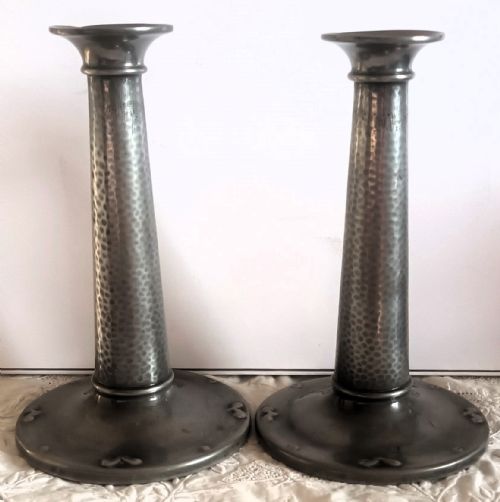


Edwardian Metalwork Lighting
Edwardian metalwork lighting brings substantial weight and tactile honesty into a room through honest copper, pewter and brass forms.
Edwardian Metalwork Lighting
When you search for edwardian metalwork lighting, you are looking at practical objects designed to hold candles or illuminate rooms through metal craftsmanship from the late nineteenth and early twentieth centuries. The pieces on this page span the 1890s, the nineteen-hundreds and the nineteen-tens, capturing a time of transition in domestic interiors.
How edwardian metalwork lighting was made
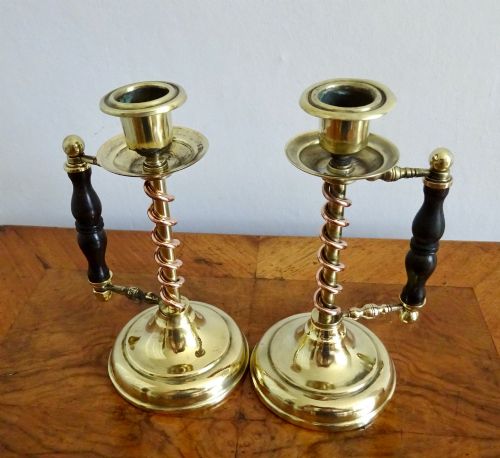
The material evidence on this page relies heavily on copper, brass and pewter, sometimes enhanced with silver, silvered pewter, wood, fabric or inset turquoise cabochons. Workshops shaped these metals through hammering, casting and joining techniques that left visible tool marks on the finished surfaces.
Designers utilised the inherent qualities of each metal, letting patinated copper and dull pewter express a rejection of mass production in favour of hand-wrought integrity.
Edwardian Metalwork Lighting Retail Price Guide 2026
Typical asking prices for edwardian metalwork lighting among the pieces listed under this phrase on Sellingantiques today, from the lower quarter to the upper quarter. They describe what is for sale here now, not the wider market.
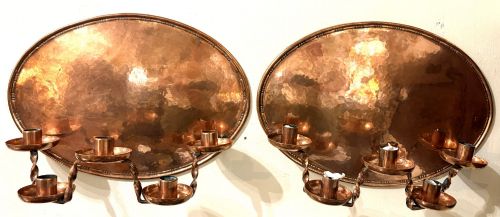
Object forms on this page range from portable chambersticks and wall sconces to substantial five-light candelabra and telescopic standard lamps.
What varies in quality
The distinction between ordinary and exceptional metalwork lies in the decisiveness of the form and the integrity of the surface finish. Pieces associated with recognised designers or prominent guilds display sharper articulation in their hammered textures and more deliberate proportions.
The handling of secondary materials like turquoise inserts or contrasting brass elements separates standard production items from ambitious sculptural pieces that command deeper attention from collectors.
Archibald Knox for Liberty and Co·Birmingham Guild of Handicraft·WMF
The Edwardian Metalwork Lighting Glossary
- Arts and Crafts
- A design movement valuing handcraft, natural materials and simple utility over industrial mass production. It heavily influences the copper and brass candlesticks found in this category.
- Art Nouveau
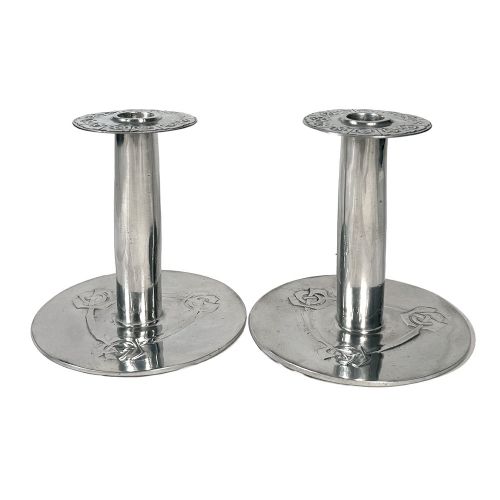
- A style characterised by flowing, organic lines and plant-like motifs that appears frequently in the pewter lighting on this page.
- Chamberstick
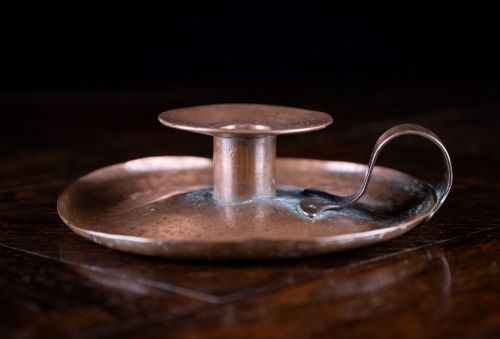
- A low candlestick fitted with a pan to catch dripping wax and a loop handle for carrying from room to room. These portable items form a distinct subset of early metalwork lighting.
- Tudric
- The trade name used by Liberty and Co for their range of pewter ware, often associated with organic forms and distinctive model numbers. It represents a pinnacle of early twentieth-century pewter design.
- Candelabra
- A branched candlestick designed to hold multiple candles simultaneously. They provide grander illumination than single sticks and often feature heavy brass or copper construction.
Edwardian Metalwork Lighting: Frequently Asked Questions
What is edwardian metalwork lighting?
It encompasses domestic light fittings such as candlesticks, wall sconces and floor lamps made primarily from copper, brass and pewter around the turn of the twentieth century.
These pieces reflect the design philosophies of the Arts and Crafts and Art Nouveau movements, prioritizing hand-finished metals and functional utility.
How do I identify arts and crafts lighting?
Look for visible hammer marks, unlacquered copper or pewter surfaces, and straightforward structural forms that celebrate the nature of the metal.
Designs often eschew excessive ornamentation in favour of honest construction and architectural simplicity.
What is tudric pewter?
Tudric is the specific trade name given by the retailer Liberty and Co to their high-grade pewter wares produced during the early twentieth century.
Items bearing this mark often feature stylized plant motifs and distinctive model numbers associated with designers like Archibald Knox.
How should I clean copper and pewter?
Historic metalwork generally benefits from minimal intervention to preserve the natural oxidation and patination accumulated over a century.
A gentle dusting with a soft cloth is usually sufficient, avoiding harsh commercial polishes that strip away character.