

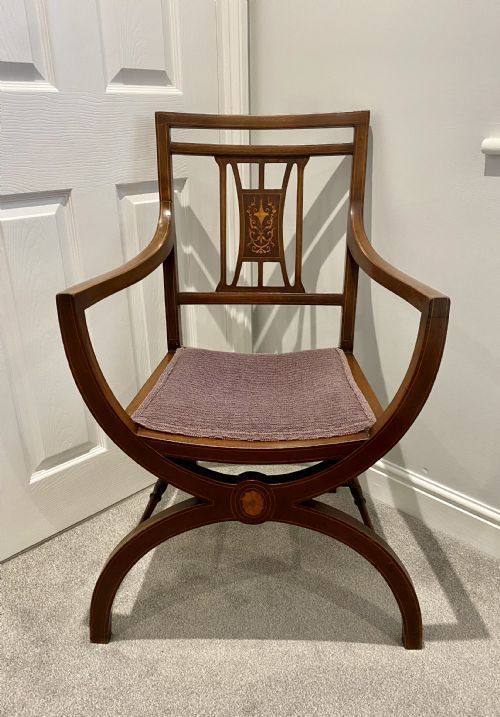
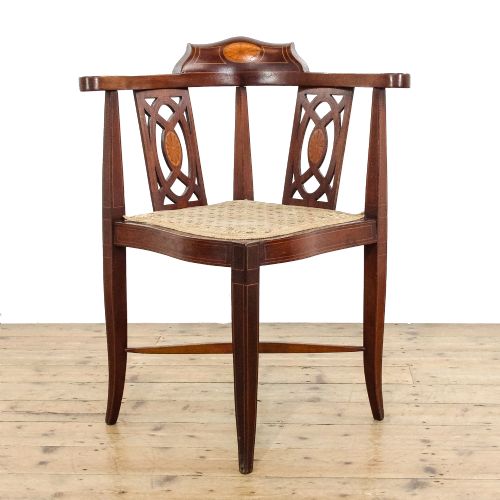
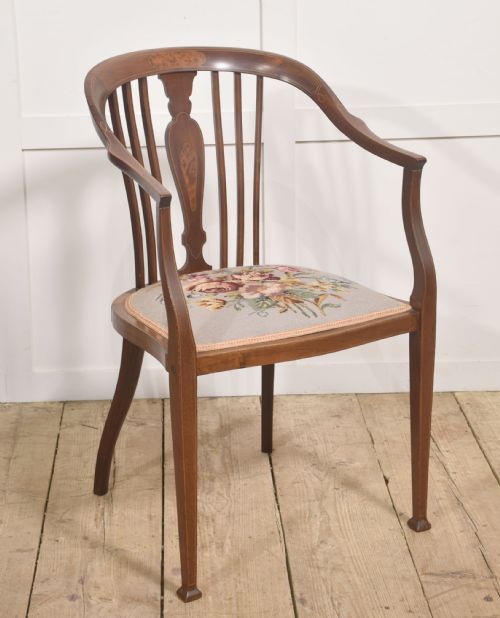
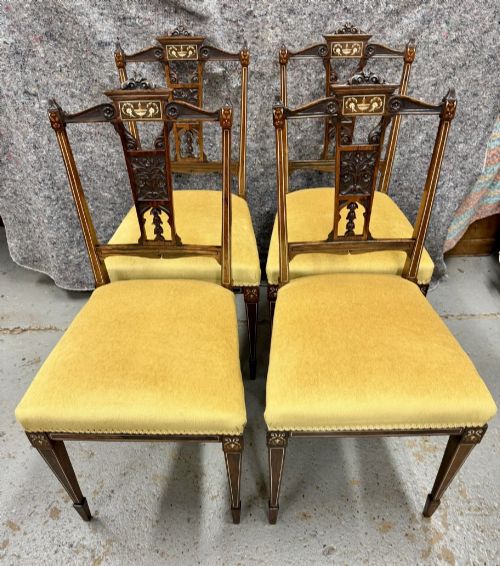


Edwardian Marquetry Desk Chair
These pieces are Edwardian marquetry desk chairs, offering refined floral and classical ornamentation suited to study spaces and libraries.
Edwardian Marquetry Desk Chair
When you search for an Edwardian marquetry desk chair, you encounter a selection spanning the Edwardian era, 1900, 1890, 1910, the Victorian period, and the 19th century. These chairs appear in forms such as desk chairs, library desk chairs, elbow chairs, and tub armchairs, alongside related seating like occasional chairs, salon chairs, and corner chairs.
The version you are most likely to meet on this page is the Edwardian inlaid mahogany desk chair or elbow chair. These pieces combine standard office and study seating with decorative wood inlay, executed in styles including Edwardian, Sheraton Revival, and Art Nouveau.
Materials and construction
Makers built these chairs primarily using mahogany, rosewood, and walnut as the main timber bodies. They incorporated contrasting timbers such as satinwood, boxwood, and various wood inlays to create intricate marquetry patterns across the backs and frames.
Upholstery materials included fabric, velvet, and re-leathered surfaces for swivelling ships chairs and desk seats. Artisans combined these soft furnishings with precise joinery and delicate inlay techniques typical of the period.
Edwardian Marquetry Desk Chair Retail Price Guide 2026
Typical asking prices for edwardian marquetry desk chair among the pieces listed under this phrase on Sellingantiques today, from the lower quarter to the upper quarter. They describe what is for sale here now, not the wider market.
Listings feature mahogany, rosewood, and walnut timbers enhanced by satinwood and boxwood inlay.
Judging quality
The standard of the marquetry and inlay work dictates the upper tier of these pieces. Crispness in the satinwood and boxwood details against the dark mahogany or rosewood ground separates finer examples from simpler production.
Structural integrity and the retention of original upholstery or appropriate re-leathering define the better items. Pieces bearing maker attributions or distinct stylistic flourishes like Sheraton Revival or Art Nouveau motifs also command greater interest.
Shoolbred·Jenks & Wood
The Edwardian Marquetry Desk Chair Glossary
- Marquetry
- Decorative veneer applied to furniture in patterns and pictures using different woods, metals, or shells. This technique creates the ornamental designs seen on the backs of these chairs.
- Sheraton Revival
- A late 19th and early 20th century design movement inspired by the furniture of Thomas Sheraton. It relies on classical motifs, satinwood inlay, and light proportions.
- Art Nouveau
- An international style of art and architecture prominent around 1900. It is characterised by organic, sinuous lines and floral motifs.
- Carver armchair
- An armchair, typically with wooden arms, traditionally used at the head of a dining table or as a desk seat. These often match sets of side chairs.
Edwardian Marquetry Desk Chair: Frequently Asked Questions
What is an Edwardian marquetry desk chair?
An Edwardian marquetry desk chair is a wooden seat intended for study or office use, featuring decorative inlaid wood patterns from the early 20th century.
These chairs combine practical seating ergonomics with the refined decorative tastes of the Edwardian period.
How were these chairs used originally?
They served as comfortable seating at writing desks, library tables, and office spaces during the Edwardian era and late Victorian times.
Owners utilised them for correspondence, reading, and administrative tasks in private homes and libraries.
How do I live with one today?
You can integrate these chairs into modern study rooms, home offices, or bedrooms as functional seating or decorative accents.
Pair them with traditional wooden desks or use them as occasional chairs where their inlay work can be fully appreciated.
How do I tell Edwardian from Victorian examples?
Edwardian pieces generally exhibit lighter timbers, finer satinwood inlay, and slimmer proportions influenced by the Sheraton Revival style.
Victorian predecessors often display heavier mahogany construction and more robust, substantial frames with simpler decorative elements.