

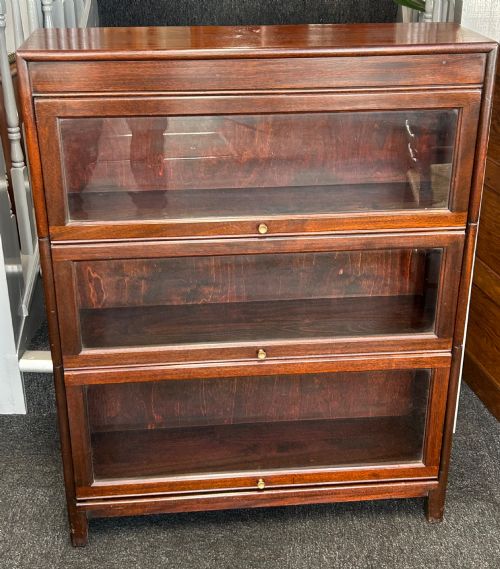
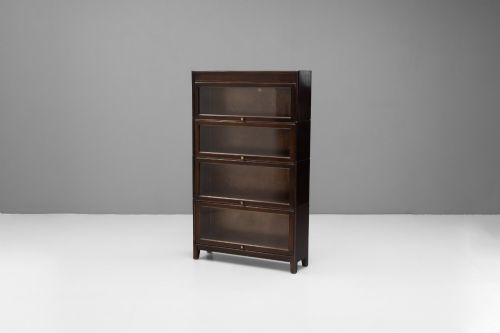
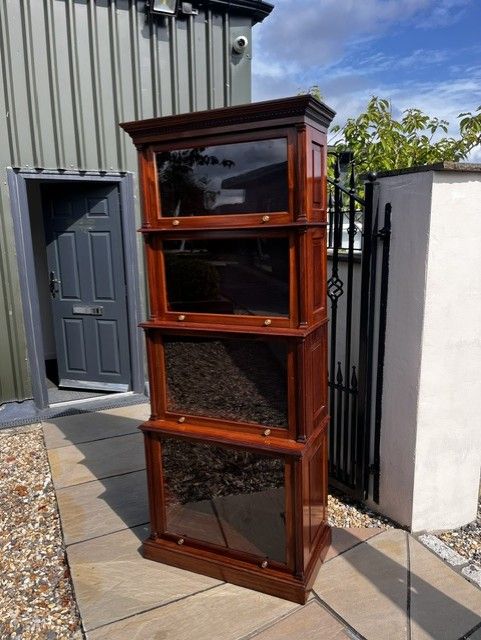


Edwardian Mahogany Stacking Bookcase
An Edwardian mahogany stacking bookcase is a modular sectional cabinet offering adjustable shelf heights for practical home storage.
Edwardian Mahogany Stacking Bookcase
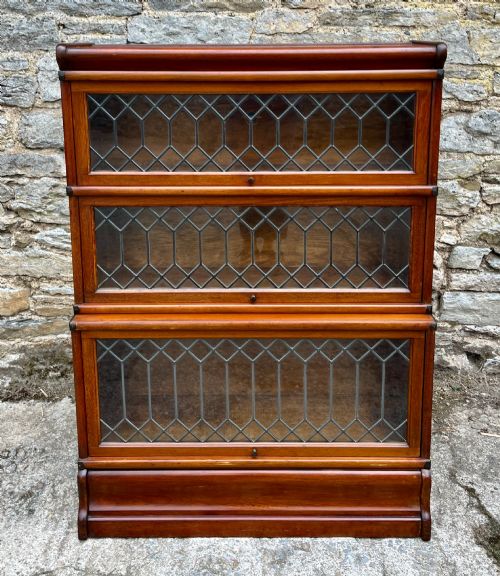
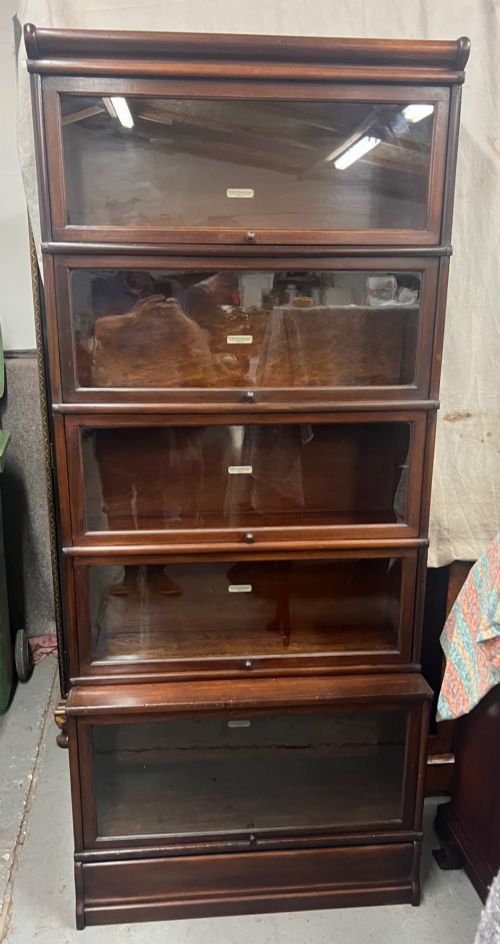
These sectional cases appear most frequently in solid mahogany or mahogany veneers, dating from the Edwardian period and the early decades of the twentieth century. Makers such as Globe Wernicke and Gunn Furniture produced these designs to protect valuable libraries from dust while remaining easy to dismantle and move.
The versatile tier system accommodates various book heights by stacking individual modules on a base plinth and topping them with a cornice. Buyers encounter configurations ranging from compact two-tier units to towering five-tier editions.
How they were made
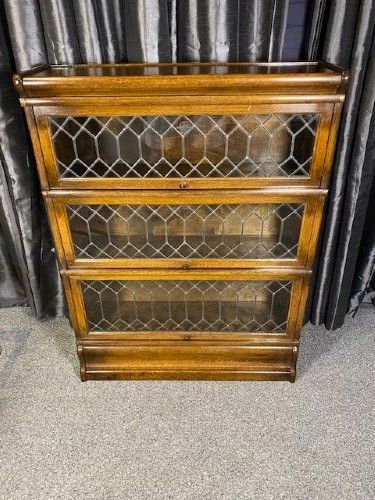
Makers utilised solid mahogany and mahogany veneers over secondary timbers, incorporating glass panes secured with lead or wooden glazing bars. Brass and metal hardware mechanism parts enable the lifting and sliding action of the doors on each separate tier.
The construction relies on interlocking wooden carcases that stack securely without permanent fixings, supported by a distinct base and capped with a decorative cornice moulding.
Edwardian Mahogany Stacking Bookcase Retail Price Guide 2026
Typical asking prices for edwardian mahogany stacking bookcase among the pieces listed under this phrase on Sellingantiques today, from the lower quarter to the upper quarter. They describe what is for sale here now, not the wider market.
Listings feature Edwardian examples alongside pieces dated from 1900 to 1920, constructed in mahogany, oak, and glass.
What varies in quality
The refinement of the mechanical door action and the matching of the mahogany grain across separate tiers distinguish superior examples from standard production pieces. Finer cabinets display careful attention to joinery detail in the cornice and base mouldings.
Makers known for specialised sectional furniture integrated patented hardware systems that operate with greater smoothness and longevity than anonymous workshop copies.
Gunn Furniture·Globe Wernicke·AMYL
The Edwardian Mahogany Stacking Bookcase Glossary
- Stacking bookcase
- A modular piece of furniture built from separate removable tiers that rest one upon another. These units allow the owner to add or subtract sections as a library grows.
- Barrister bookcase
- An alternative term for a stacking bookcase featuring glazed lifting doors. The design gained popularity among professionals who needed to transport portable libraries.
- Sectional cabinet
- A piece constructed in distinct horizontal modules designed for easy dismantling and relocation. Each tier forms a self-contained storage compartment.
- Cornice
- The decorative moulding that forms the topmost crown of the bookcase. It finishes the vertical stack and mirrors the profile of the base plinth.
- Leaded glass
- Small panes of window glass joined together by narrow strips of lead came. This technique appears on specific glazed doors within the period.
Edwardian Mahogany Stacking Bookcase: Frequently Asked Questions
How do the stacking sections separate?
Each tier lifts away from the module beneath it once the top cornice and upper sections are removed. The weight of the timber keeps the interlocking modules stable during normal use.
Lifting handles or side strap mechanisms on certain models assist with carrying individual tiers safely during relocation or reconfiguring.
What is a barrister bookcase?
A barrister bookcase is a sectional cabinet featuring glass front doors that lift and slide into the top of each compartment. Lawyers originally used these units because they protected books from dust and allowed the entire library to move easily.
The modular design meant professionals could pack their books into separate tiers and transport them without unpacking individual shelves.
How should I clean mahogany wood?
Dust the mahogany surfaces regularly with a soft, dry cloth to prevent dirt accumulation on the polish. Avoid using silicone sprays or harsh chemical cleaning agents that can damage the antique finish.
Apply a traditional beeswax occasionally to nourish the timber and maintain a gentle, natural sheen across the grain.
Can I add more tiers later?
Adding more tiers depends on finding matching sections from the same maker and period with identical dimensions. Variations in depth, width, and wood tone make matching separate modules challenging.
Most buyers keep the original configuration intact to preserve the proportion and visual harmony of the assembled cabinet.