



Edwardian Mahogany Salon Chairs
Edwardian mahogany salon chairs combine lighter frames with decorative inlay to bring refined elegance to formal reception spaces.
Edwardian Mahogany Salon Chairs
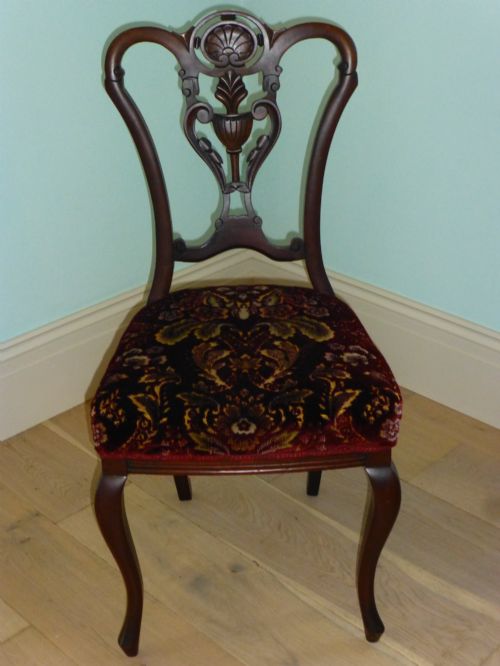
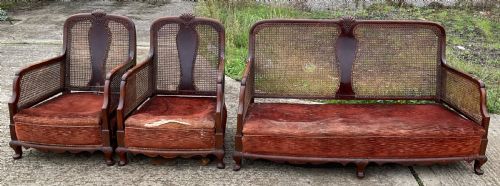
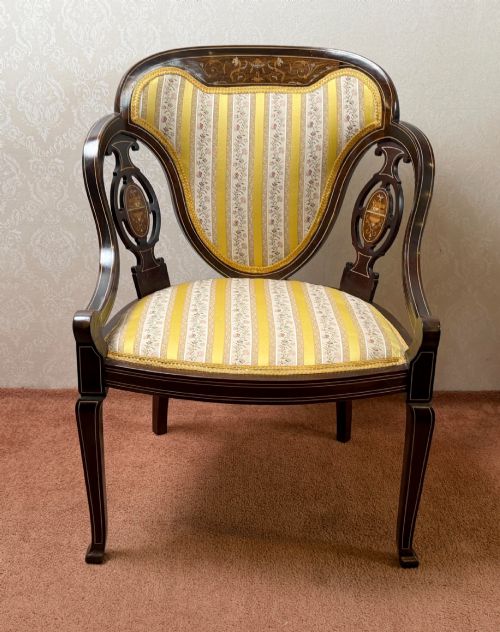
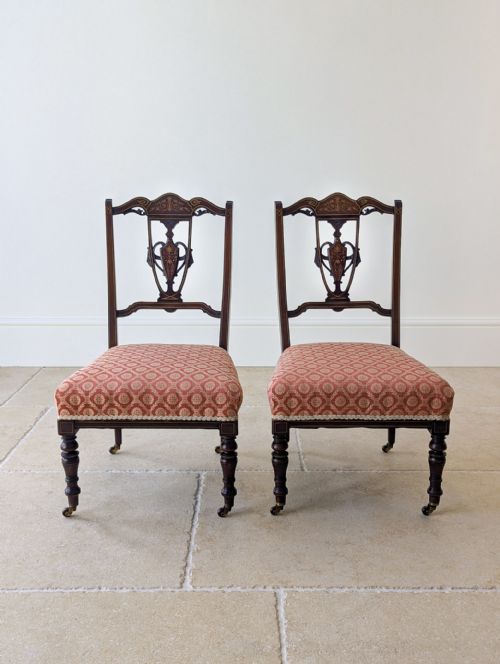
When searching for edwardian mahogany salon chairs, buyers encounter refined seating built primarily around the turn of the twentieth century. These pieces encompass individual armchairs, side chairs, and matched sets designed for entertaining rather than heavy daily lounging.
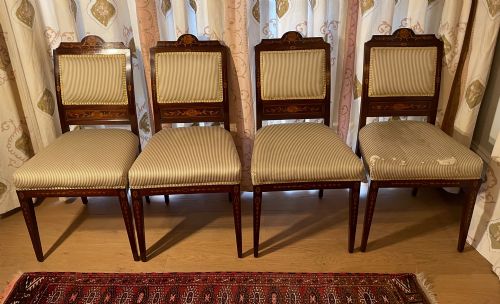
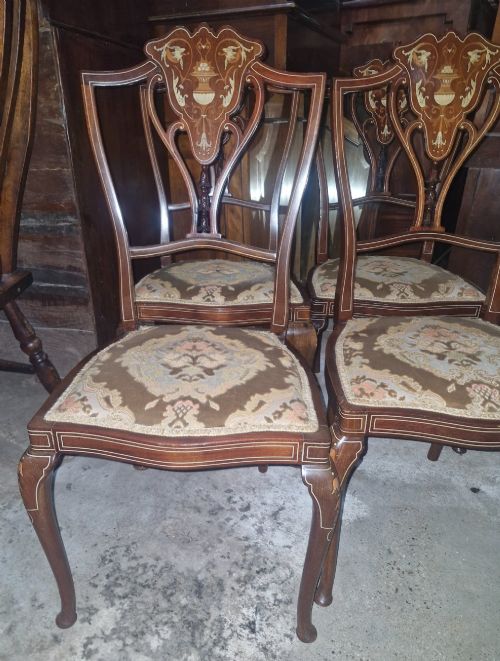
The version most frequently met on this page is the single side chair or paired armchair featuring delicate wood inlay and slender legs. Makers drew heavily on Sheraton Revival and occasionally Art Nouveau motifs to ornament the mahogany frames.
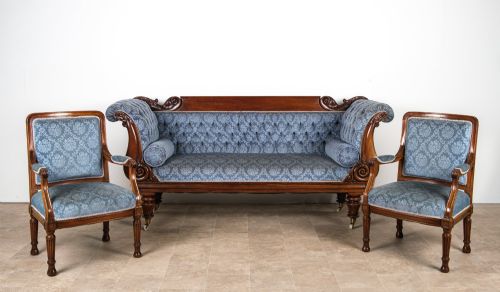
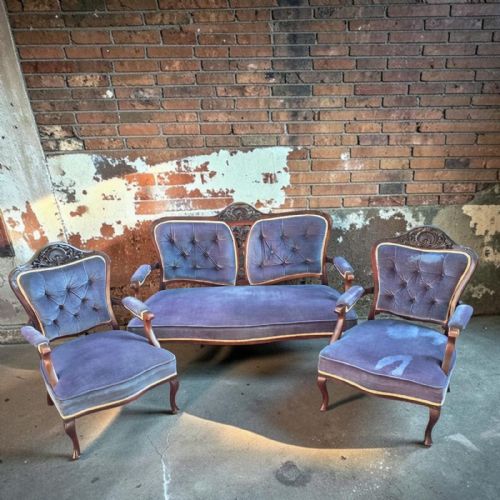
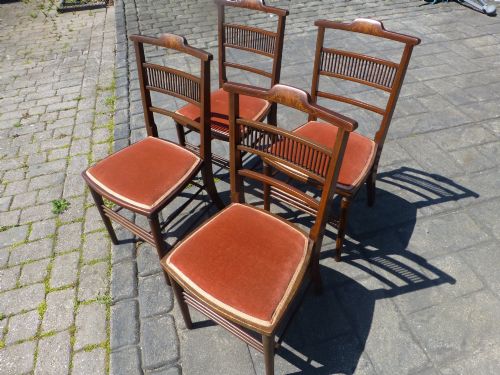
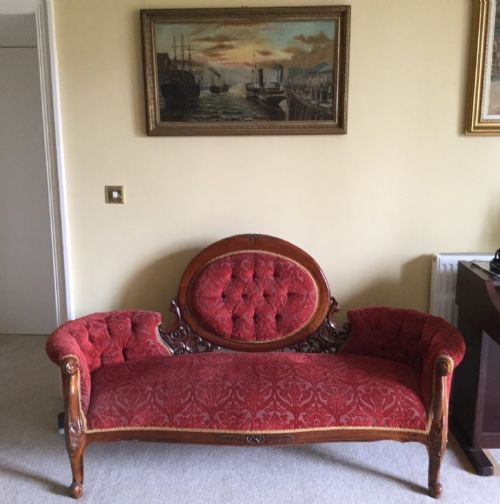
Beyond standalone seating, these designs also emerge within larger parlour suites and sets of four, maintaining the lighter proportions characteristic of the period.
Materials and construction
The framework relies predominantly on solid mahogany, valued for its rich grain and structural stability. Artisans frequently enhanced these surfaces using contrasting veneers such as satinwood and boxwood.
Inlay techniques included stringing and intricate marquetry to depict floral or neoclassical patterns into the wood. Upholstery materials ranged from simple fabric to velvet, silk, and deep pile brocade, often supported by traditional sprung bases.
Edwardian Mahogany Salon Chairs Retail Price Guide 2026
Typical asking prices for edwardian mahogany salon chairs among the pieces listed under this phrase on Sellingantiques today, from the lower quarter to the upper quarter. They describe what is for sale here now, not the wider market.
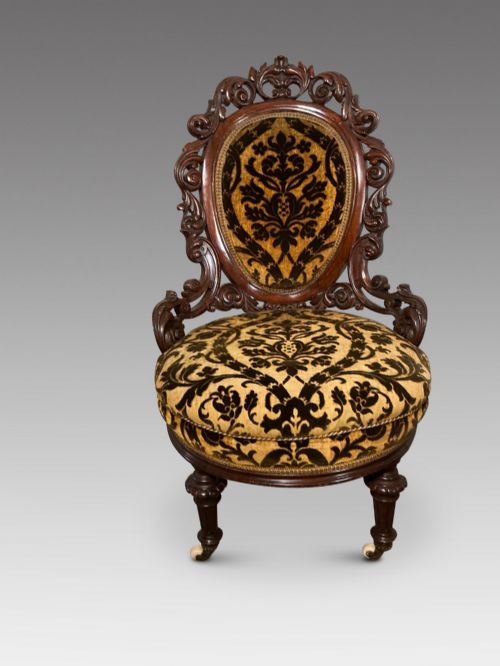
The listings span the late Victorian period through the Edwardian era, showing a transition from heavier carved forms to lighter inlaid furniture.
Markers of quality
Quality in these seating items depends largely on the crispness of the carving and the precision of the marquetry inlay. Finer examples display tightly fitted joints and hand-selected mahogany grain rather than plain timber.
The choice of upholstery fabric and the retention of original hand-stitched details also elevate certain specimens above standard commercial output from the same era.
Blyth And Sons
The Edwardian Mahogany Salon Chairs Glossary
- Marquetry Inlay
- Decorative patterns formed by fitting contrasting pieces of veneer into the wooden surface. This technique created elaborate floral and neoclassical designs on chair backs and rails.
- Sheraton Revival
- A late nineteenth and early twentieth century design movement inspired by eighteenth century cabinetmaker Thomas Sheraton. It prioritised clean proportions, satinwood contrast, and classical motifs.
- Bergère
- An enclosed upholstered armchair with wooden framing exposed around the sides and back. These chairs often feature cane panelling or upholstered panels within the mahogany structure.
- Salon Suite
- A matched set of seating comprising a settee and multiple arm or side chairs. Such suites provided uniform furnishings for formal drawing rooms.
Edwardian Mahogany Salon Chairs: Frequently Asked Questions
What distinguishes Edwardian salon chairs from Victorian ones?
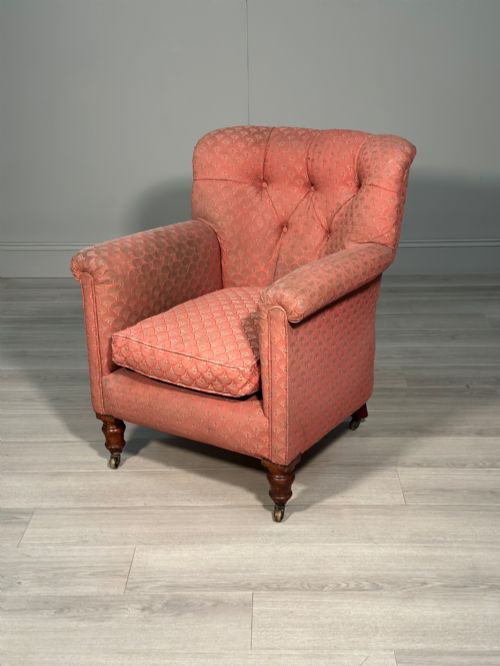
Edwardian examples typically exhibit lighter proportions, slender legs, and brighter mahogany tones influenced by revival styles. Victorian predecessors tended to be heavier, with darker timber finishes and deep buttoned upholstery.
Craftsmen around the turn of the century favoured restrained ornamentation over the dense carving associated with earlier decades.
Were these chairs meant for daily dining?
Most pieces designed for the salon or parlour served primarily for entertaining, receiving guests, and occasional sitting. Their lighter frames and delicate inlay made them less suited to robust daily use around a dining table.
Matching sets often functioned as flexible seating that could be easily rearranged within reception rooms.
How do I care for antique mahogany and upholstery?
Maintain the mahogany frames by dusting gently with a dry cloth and occasionally applying traditional beeswax to nourish the timber. Avoid placing the furniture in direct sunlight to protect both the polished wood and delicate silk or velvet fabrics.
Professional cleaning is recommended for antique upholstered elements to preserve fragile textiles and interior stuffing.
Are pairs and larger sets common?
Pairs of armchairs or side chairs frequently survive together, having been made for specific corners of a drawing room. Sets of four or larger suites appear less often intact.
Original matching suites including a settee and multiple chairs represent rarer survivals from the period.