

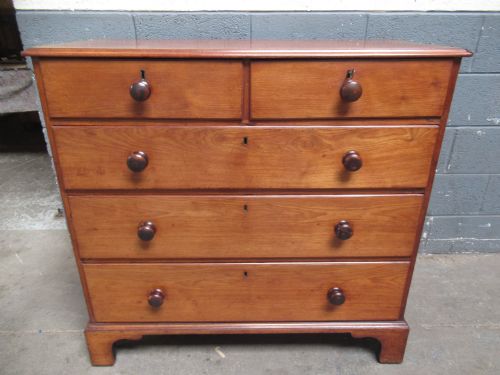
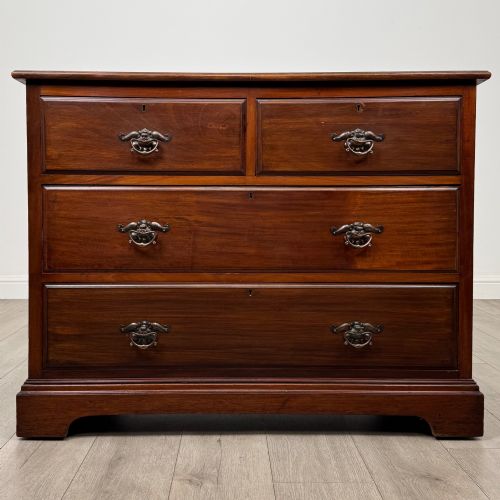
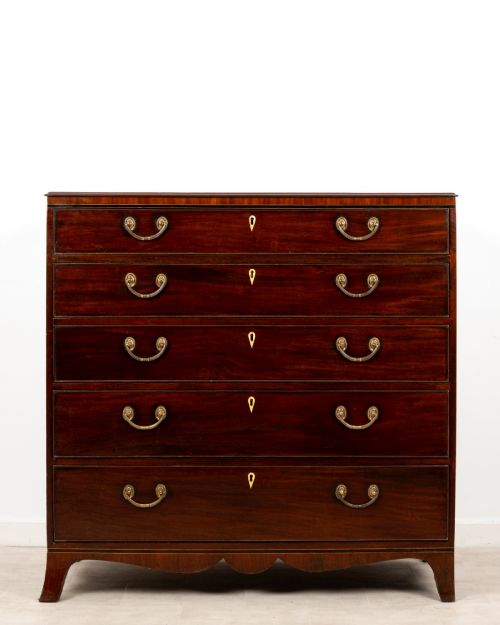
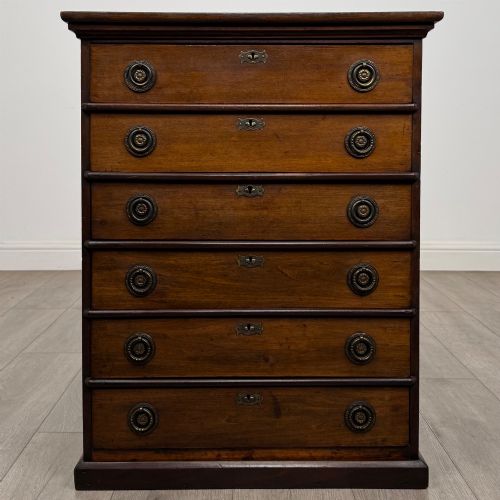


Edwardian Mahogany Bureau Chest
An Edwardian mahogany bureau chest brings together fitted writing compartments and deep drawer storage in a single polished timber form.
Edwardian Mahogany Bureau Chest
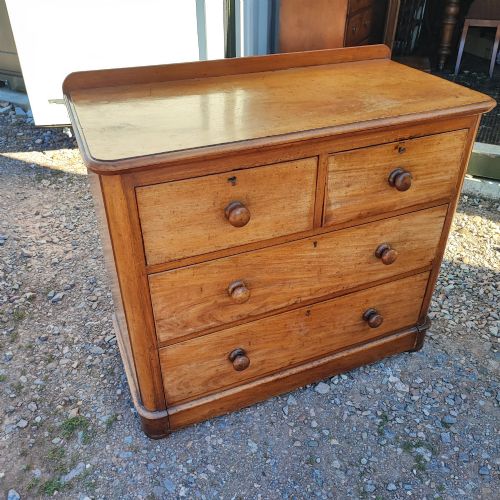
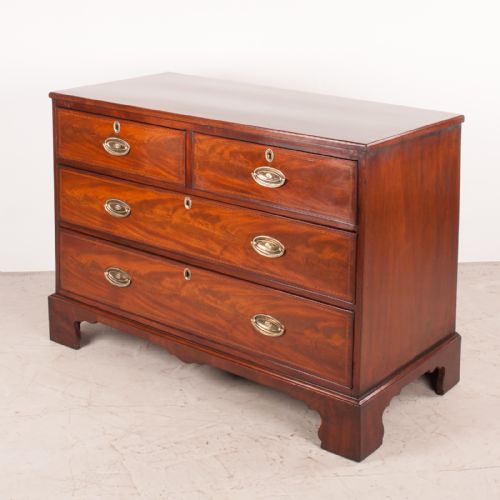
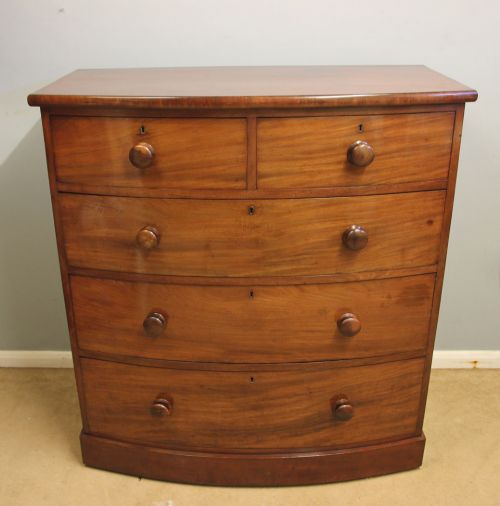
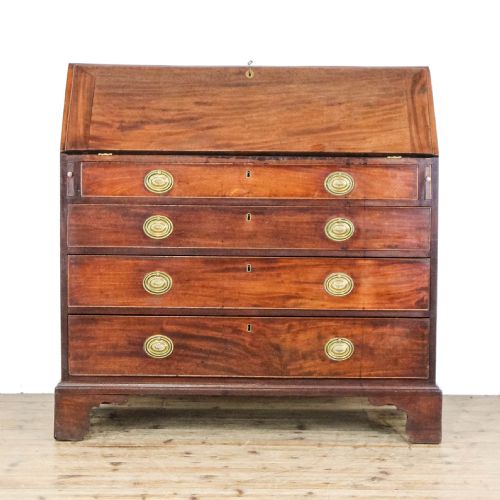
When you search for an edwardian mahogany bureau chest, you find pieces that combine a sloping writing flap with multi-drawer storage beneath. The listings show forms ranging from Edwardian examples down to earlier Georgian and Victorian interpretations.
Most pieces encountered here date from the Edwardian period or display Edwardian style characteristics. They merge the practical compartmentalised interior of a bureau with the substantial base of a standard chest of drawers.
Makers utilised various traditional furniture formats, occasionally pairing the bureau body with upper bookcase sections or dressing table fittings. Mahogany remains the dominant timber across these regional and period variations.
The markers of finer execution
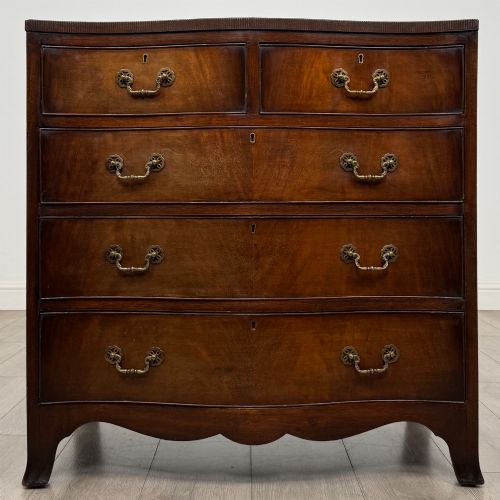
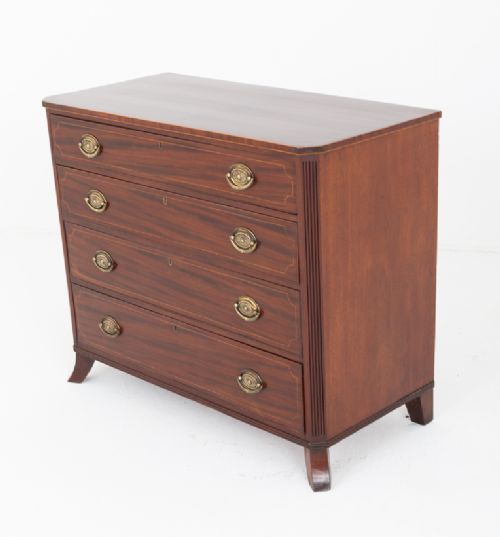
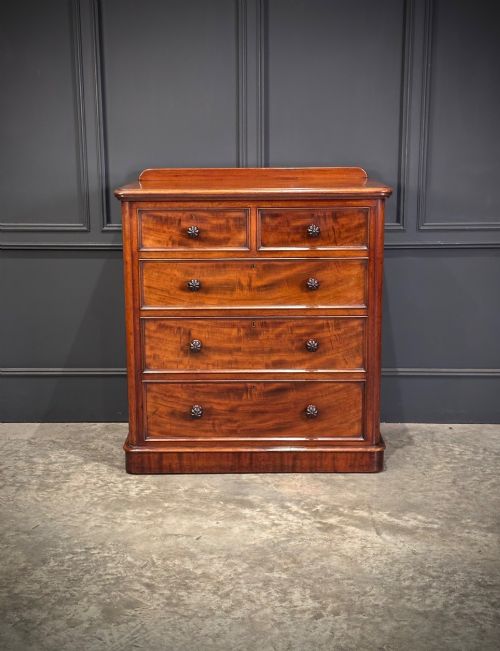
Quality rests in the selection of timber figures, particularly where flame mahogany veneer creates symmetrical patterns across the drawer fronts and writing flaps. The crispness of inlaid satinwood stringing and the precision of the dovetail joints reveal the hand of the cabinetmaker.
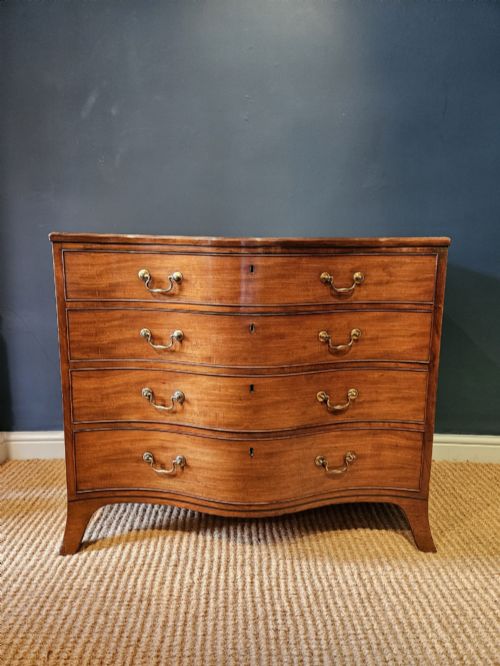
Finer examples maintain original brass hardware and smooth internal mechanisms within the pigeonholes and small drawers of the bureau interior. The proportion of the serpentine or bow front dictates the elegance of the silhouette.
Cabinetmakers occasionally concealed secret compartments behind the stationary pigeonholes of these writing desks for private letters.
The Edwardian Mahogany Bureau Chest Glossary
- Bureau
- A writing cabinet featuring a sloping lid that drops down to form a desk surface over multiple drawers. It conceals internal compartments and pigeonholes for stationery.
- Flame mahogany
- Timber cut to expose a fiery, undulating grain pattern that creates dramatic visual movement. Cabinetmakers applied this veneer selectively to prominent exterior surfaces.
- Serpentine front
- A furniture front curving outward at the ends and inward at the centre in a continuous wave. This undulating contour demands skilled carpentry to execute cleanly.
- Brushing slide
- A pull-out shelf positioned above the top drawers, designed for writing letters or holding items without opening the main desk. It slides flush into the carcass when not in use.
- Caddy top
- A raised, moulded tabletop profile with stepped edges reminiscent of tea caddy lids. It adds a distinct architectural finish to the upper edge of a chest.
Edwardian Mahogany Bureau Chest: Frequently Asked Questions
What is an edwardian mahogany bureau chest?
It is a dual-purpose furniture piece combining a sloping desk flap with a set of storage drawers below.
The design provides both a compact writing station and substantial drawer capacity within a single mahogany frame.
How do I spot an Edwardian period piece?
Edwardian items often display lighter proportions and subtle inlay work influenced by Sheraton revival styles.
They date from the early twentieth century, contrasting with the heavier timbers and darker patination of earlier Victorian and Georgian iterations.
How were these desks used historically?
Owners used the fold-down flap for correspondence, storing writing paper and ledgers in the internal pigeonholes.
The lower drawers held household linens, documents, or personal clothing.
What woods besides mahogany are used?
Makers incorporated satinwood for decorative stringing and inlay details around the drawer borders.
Internal structural elements and secondary drawer linings commonly utilise oak or pine.
How do I care for mahogany timber?
Keep the wood away from direct sunlight and strong heat sources to prevent the mahogany veneer from drying out or splitting.
Apply traditional wax polish occasionally to maintain the natural lustre of the polished surface.