

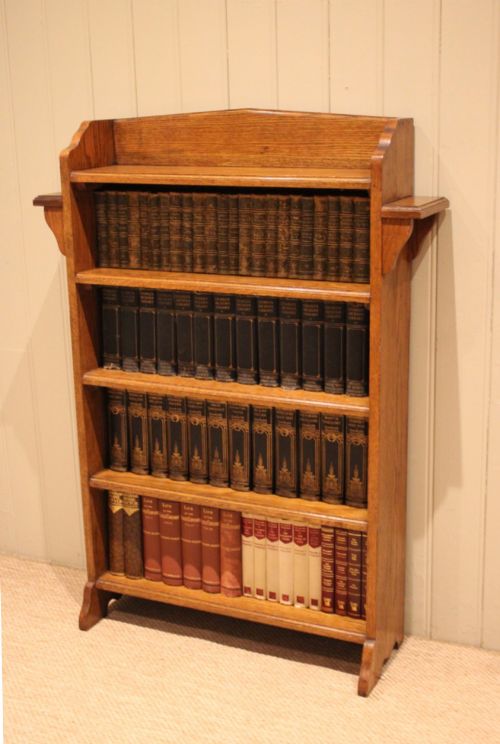
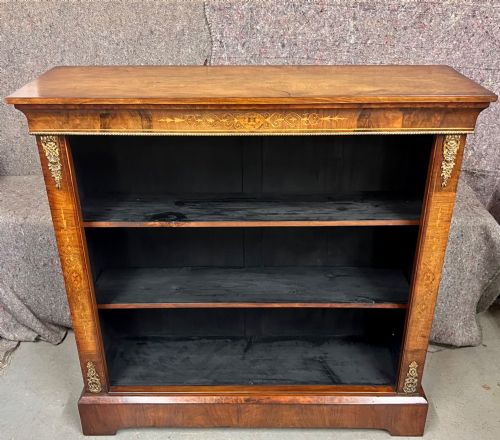
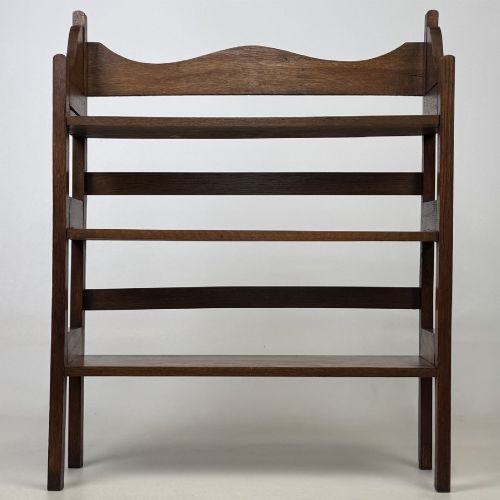
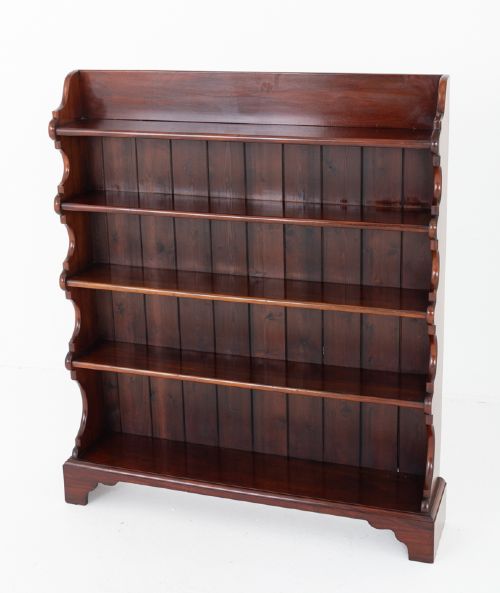


Edwardian Low Bookshelf
An Edwardian low bookshelf offers a practical way to display volumes at a comfortable height, bringing period timber into daily use.
Edwardian Low Bookshelf
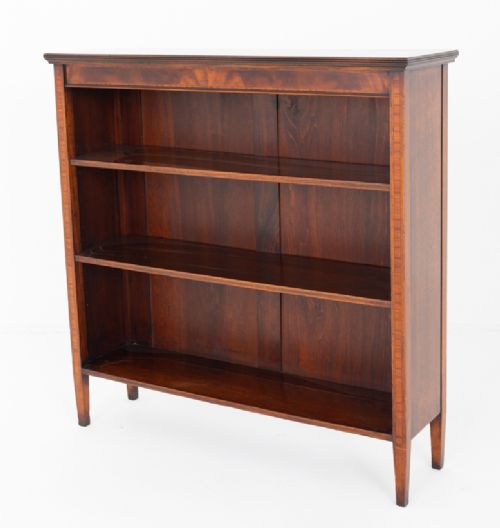
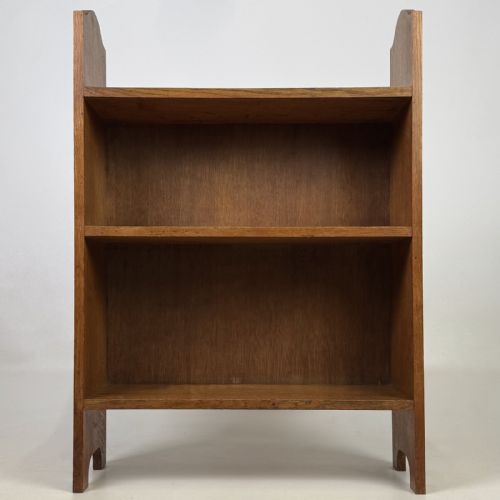
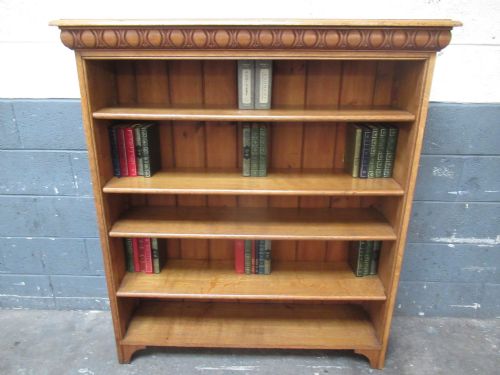
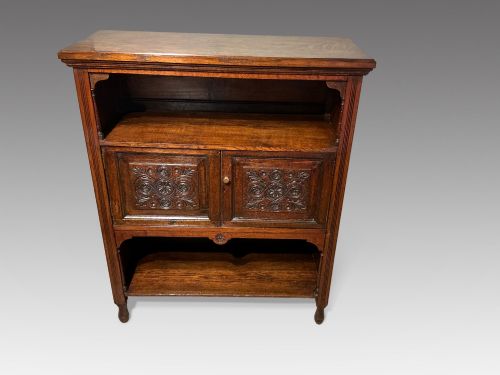
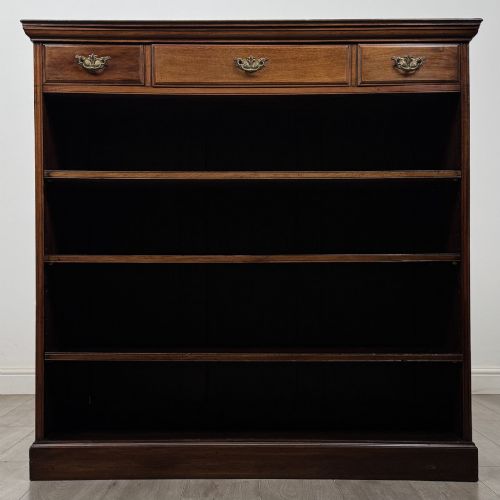
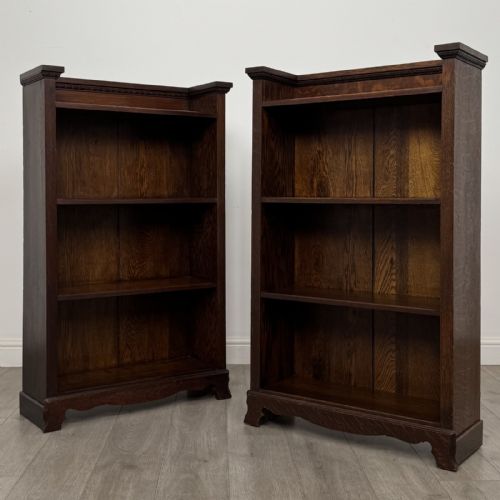
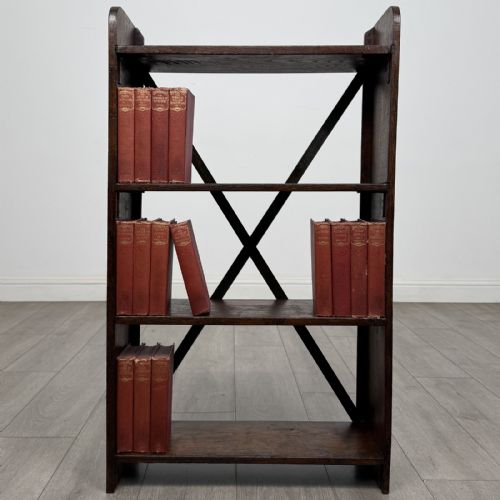
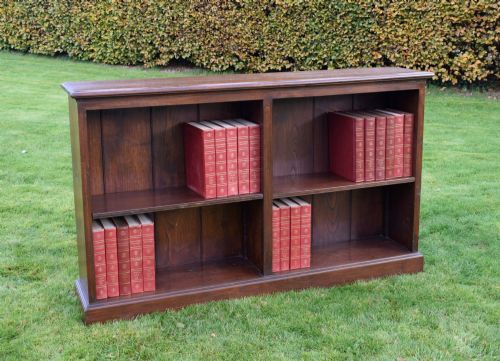
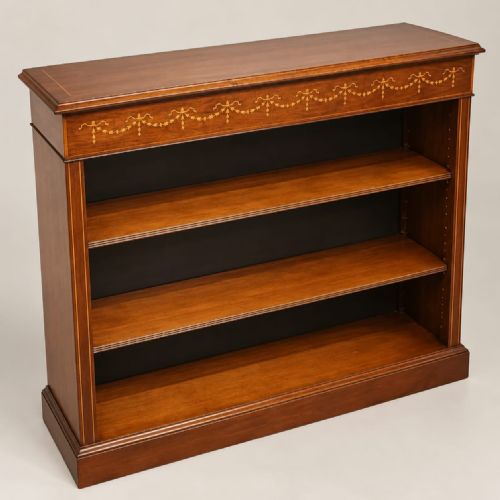
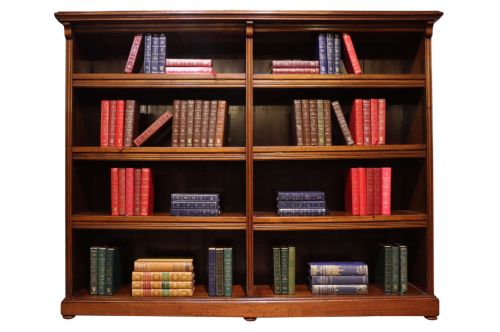
When searching for an Edwardian low bookshelf, buyers encounter low-stature open shelving units designed to sit beneath window height or along domestic walls. These pieces originate primarily from the Edwardian period, alongside related examples from late Victorian years and the early twentieth century.
The format centres on open bookcases and waterfall bookcases, frequently executed in oak and mahogany. Many pieces incorporate adjustable shelves, raised galleries, or shaped sides to balance utility with decorative restraint.
Originating in domestic libraries and parlours, these low shelving units accommodate everyday volumes without dominating a room. Their proportions suit modern living spaces where vertical height is restricted.
Quality Variations
The distinction between standard utility items and finer examples rests on timber selection and timber preparation. Plain domestic woods sit below figured mahogany, burr walnut, and select satinwood pieces.
Detailing elevates a piece from basic carpentry to considered design, seen in dentil cornices, raised galleries, and carved edges rather than plain rectilinear construction. The inclusion of adjustable shelving mechanisms also denotes higher utility.
Edwardian Low Bookshelf Retail Price Guide 2026
Typical asking prices for edwardian low bookshelf among the pieces listed under this phrase on Sellingantiques today, from the lower quarter to the upper quarter. They describe what is for sale here now, not the wider market.
Some models squeeze a magazine rack right into the side panels, proving Edwardian readers also struggled with stray periodicals.
The Edwardian Low Bookshelf Glossary
- Raised gallery
- A low decorative railing or upstand positioned along the top rear edge of a bookcase. It prevents small items from slipping off the upper surface.
- Dentil cornice
- A moulding decorated with a repeating pattern of small square blocks resembling teeth. This architectural feature crowns the top of more formal bookcases.
- Open bookcase
- A shelving unit without doors, providing direct access to the books stored within. This form dominated domestic study spaces during the early twentieth century.
- Bracket foot
- A simple structural foot supporting the corners of a piece of furniture, shaped into an L-profile. It lifts the base slightly clear of the floor.
Edwardian Low Bookshelf: Frequently Asked Questions
What is an Edwardian low bookshelf?
An Edwardian low bookshelf is a piece of open storage furniture manufactured during the early twentieth century, designed to hold books at an accessible height below standard eye level.
These pieces typically feature open shelving without glass or wooden doors, making them suited for frequent access in studies and living rooms.
How do I style a low bookshelf?
A low bookshelf functions well positioned against a plain wall or beneath a window, utilising the top surface for lamps, clocks, or small ornaments.
Because the shelves remain open, grouping books by height or colour creates a balanced visual arrangement within the room.
Are the shelves adjustable?
Many Edwardian low bookcases incorporate adjustable shelves supported by pegs or track systems, allowing the interior space to accommodate volumes of varying heights.
Fixed shelves also appear frequently in simpler utility models produced during the same era.
What woods were used?
Makers constructed these bookcases using standard cabinet timbers of the period, principally oak and mahogany.
Finer examples occasionally feature walnut, burr walnut, or satinwood veneers, sometimes enhanced with inlaid details.