

Edwardian Leather Top Table
An edwardian leather top table offers a practical surface combined with tactile writing hides, appealing to those seeking traditional study furniture.
Edwardian Leather Top Table
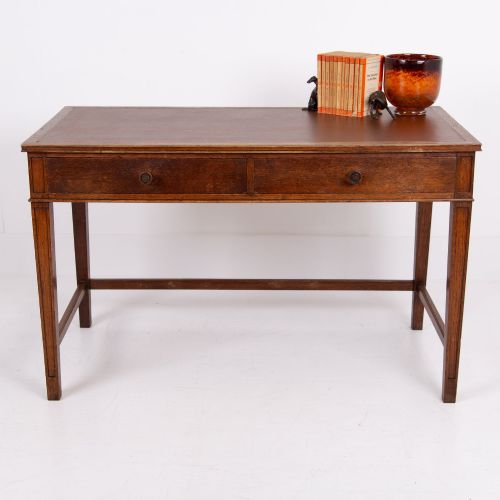
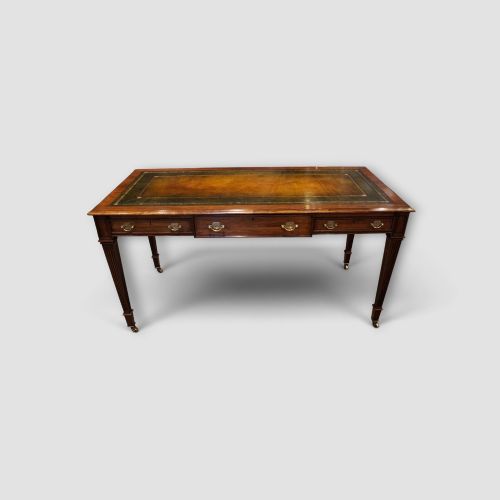
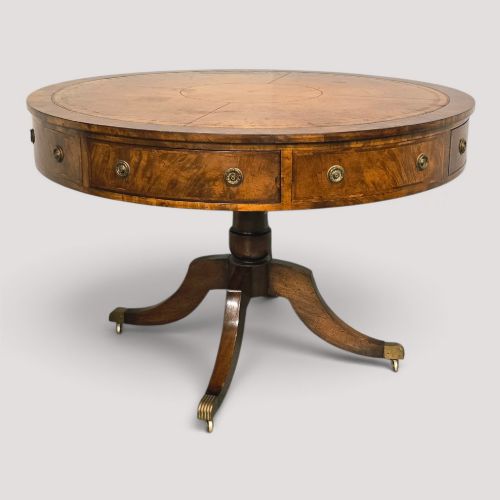
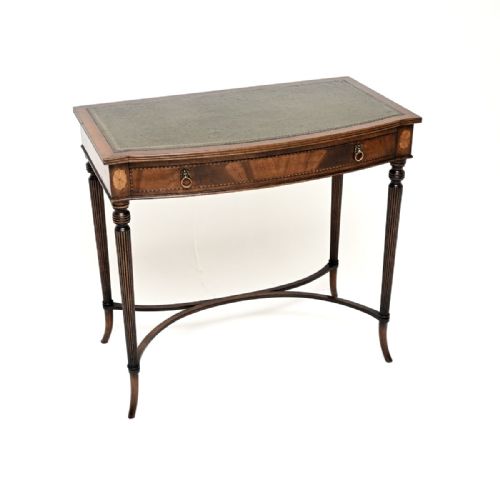
An edwardian leather top table encompasses writing desks, pedestal desks, and writing tables produced across the late nineteenth and early twentieth centuries. These pieces reflect the formal study requirements of their original domestic and institutional settings, surviving in configurations from compact writing surfaces to large partners desks.
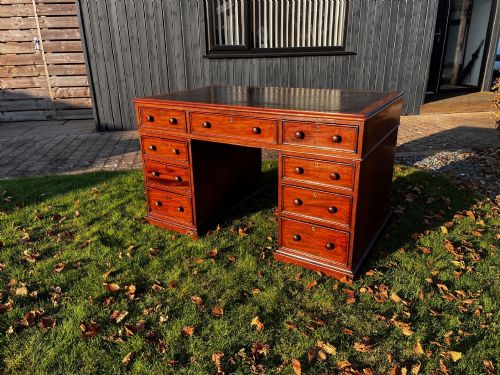
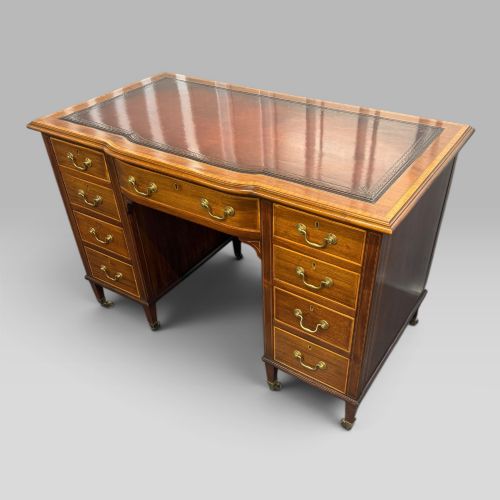
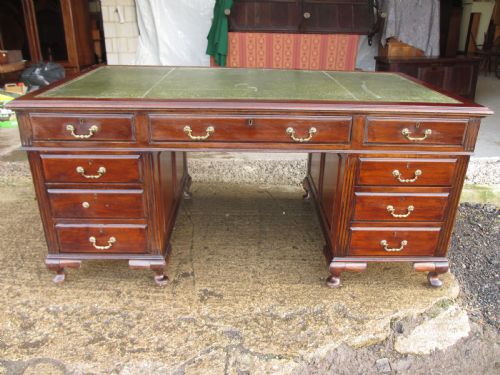
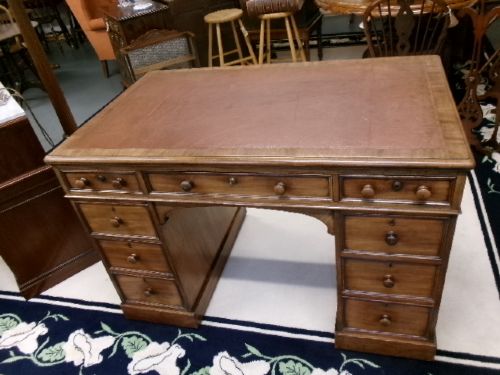
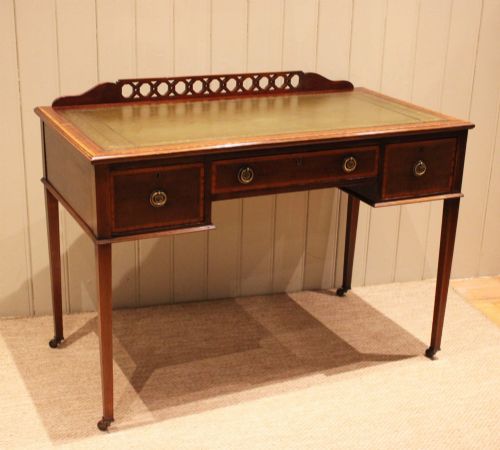
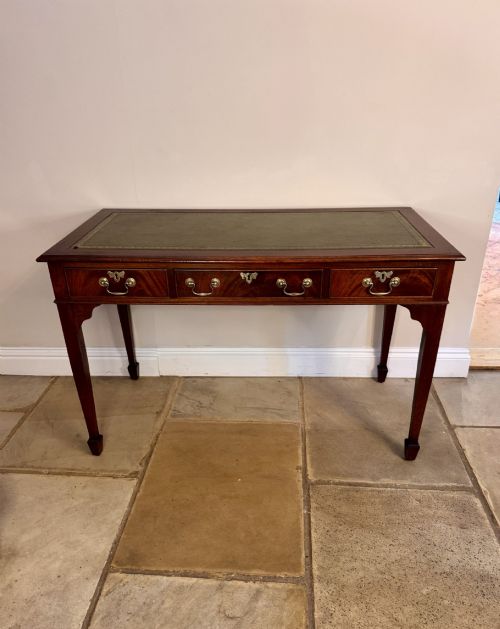
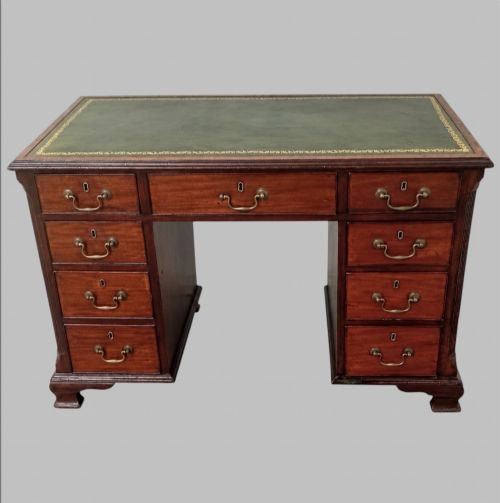
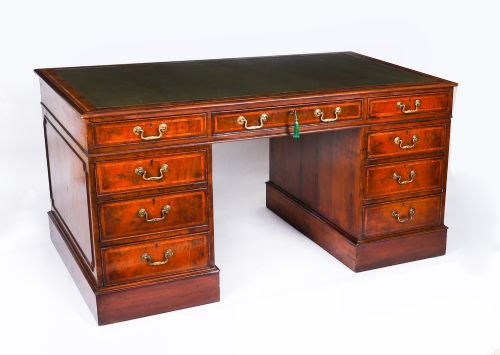
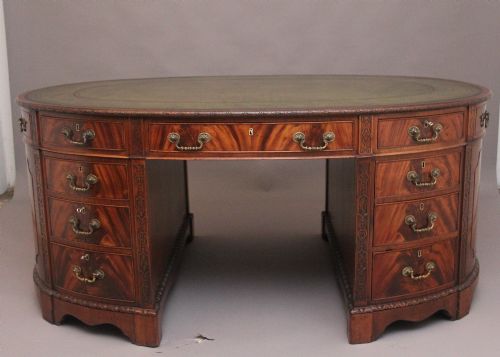
The version most commonly encountered on this page is the mahogany pedestal desk or writing table featuring a central drawer flanked by banks of smaller drawers. Such pieces frequently incorporate decorative satinwood stringing or crossbanding characteristic of the Edwardian era and the preceding Victorian period.
Materials and Construction
Makers utilised dense hardwoods including mahogany, walnut, burr walnut, and oak to construct the structural carcases and drawer frames. Selected pieces incorporate satinwood veneers, rosewood, or maple to create contrasting borders and decorative panels.
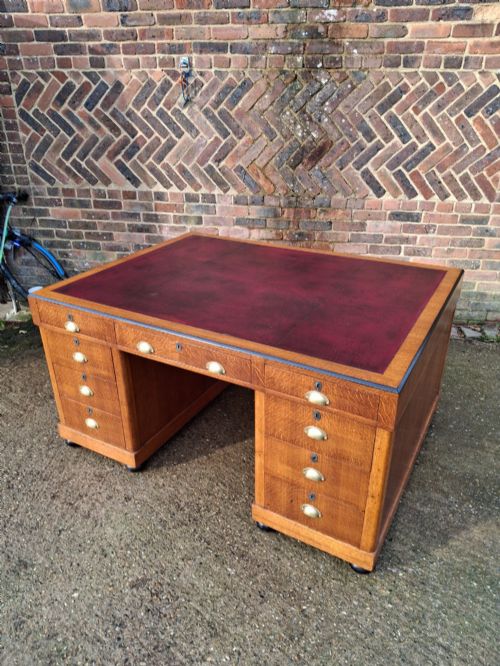
Writing surfaces employ bonded leather hides, often highlighted with blind or gilt tooling around the perimeter. Brass drawer pulls, handles, and occasional campaign-style mounts provide functional hardware across the various revival styles.
Edwardian Leather Top Table Retail Price Guide 2026
Typical asking prices for edwardian leather top table among the pieces listed under this phrase on Sellingantiques today, from the lower quarter to the upper quarter. They describe what is for sale here now, not the wider market.
Several desks retain hidden compartments designed for private correspondence.
Evaluating Execution
Quality reveals itself in the selection of timber veneers and the precision of the joinery within the drawer linings and carcase construction. Superior examples display continuous grain matching across drawer fronts and intricate inlay work executed by hand.
The treatment of secondary timbers and the retention of original hardware distinguish workshop output. Finer pieces demonstrate robust structural integrity in the pedestal blocking and careful tooling upon the leather writing surface.
Maple and Co·Howard and Sons·Trollope and Sons·Wylie and Lochhead Glasgow
The Edwardian Leather Top Table Glossary
- Pedestal desk
- A form comprising two independent banks of drawers supporting a single desktop above. This arrangement provides substantial storage while maintaining a formal architectural presence.
- Partners desk
- A double-sided writing table designed for two individuals to work opposite one another simultaneously. These large pieces typically feature drawers on both longitudinal faces.
- Crossbanding
- A decorative border technique where veneer strips are applied across the grain of the primary timber. This method frames the desktop or drawer fronts to create visual contrast.
- Stringing
- Thin inlaid lines of contrasting wood or light-coloured material set into the primary surface. It outlines panels and edges on Edwardian case furniture.
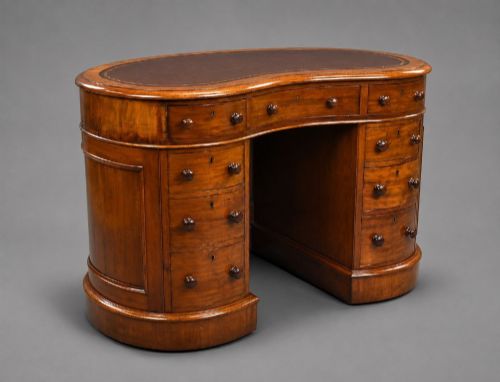
- Kidney shape
- A curved desk or table contour designed to wrap partially around the user. This configuration appears frequently in refined walnut and satinwood writing pieces.
Edwardian Leather Top Table: Frequently Asked Questions
What is an edwardian leather top table used for?
These tables served primarily as domestic or institutional writing surfaces for correspondence, bookkeeping, and administrative tasks. Their configuration of drawers kept stationery and documents organised within arm's reach.
Today, they function effectively as standalone desks or library tables in residential studies. The inset leather provides a durable, flat plane suitable for daily work and writing.
How do I identify an Edwardian piece?
Edwardian furniture typically displays lighter timber tones, restrained neoclassical revival motifs, and delicate satinwood stringing. The proportions tend toward lighter visual weight compared to heavy mid-Victorian designs.
Examination of the secondary woods inside the drawers and the style of the brass hardware helps confirm the manufacturing period. Construction methods shift gradually from hand-cut dovetails to machine-assisted joints around this era.
How should I care for the leather top?
The leather surface requires cleaning with a soft, dry cloth and occasional treatment with appropriate leather balms to prevent drying. Avoid placing hot cups or liquids directly onto the hide to preserve the tooling and finish.
Direct sunlight can cause fading of both the leather hide and the surrounding mahogany or walnut timber. Maintaining stable room humidity protects the underlying wooden carcase from splitting.