



Edwardian Leather Captain Chair
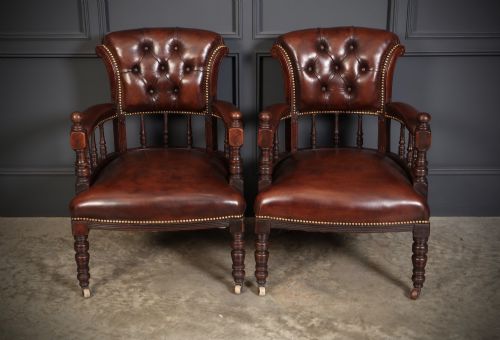
An edwardian leather captain chair combines deep-buttoned hide with sturdy timber framing to anchor a traditional study.
Edwardian Leather Captain Chair
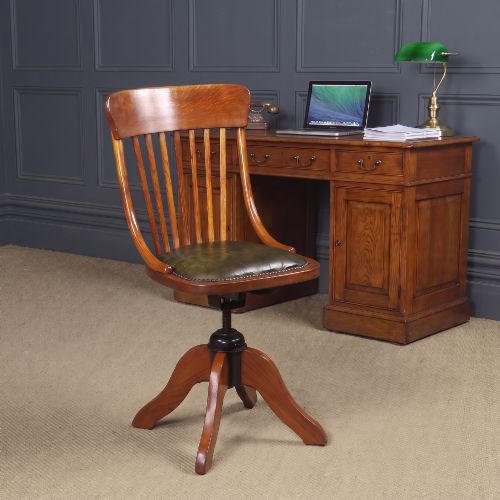
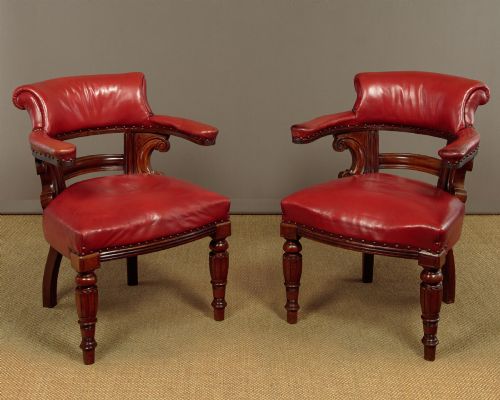
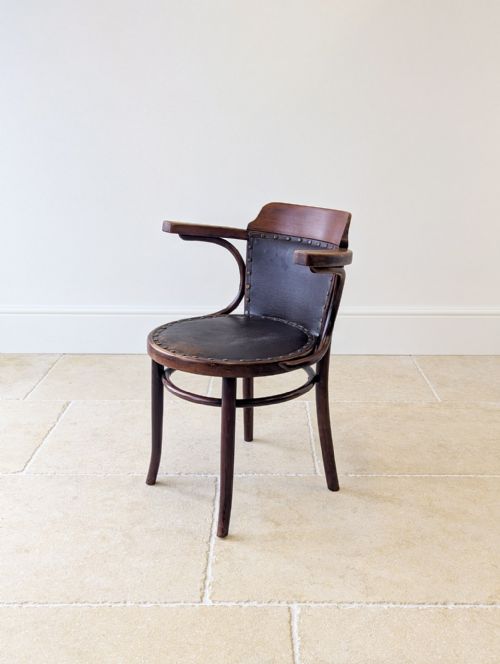
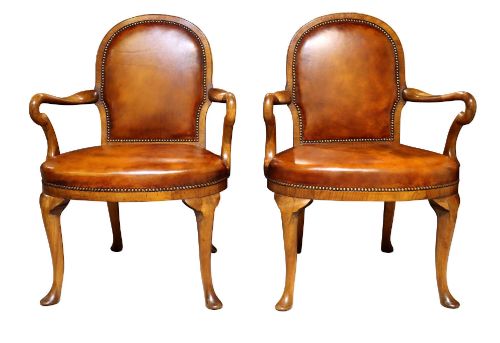
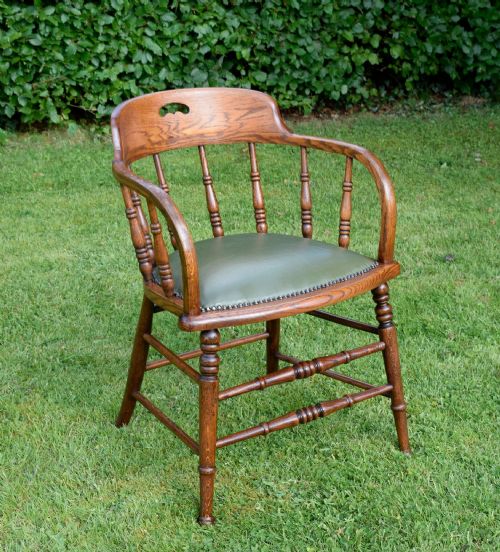
An edwardian leather captain chair brings together practical seating and traditional writing furniture through low-slung armrests and supportive back rails. You will encounter these pieces most frequently in oak or mahogany, often fitted with swivel actions or fixed frames suited for a library or study.
The selections span from late nineteenth-century Victorian forms up to the early twentieth century, incorporating Edwardian craftsmanship and Arts and Crafts influences. Many examples feature leather upholstery paired with timber frames in walnut, beech, or fruitwood.
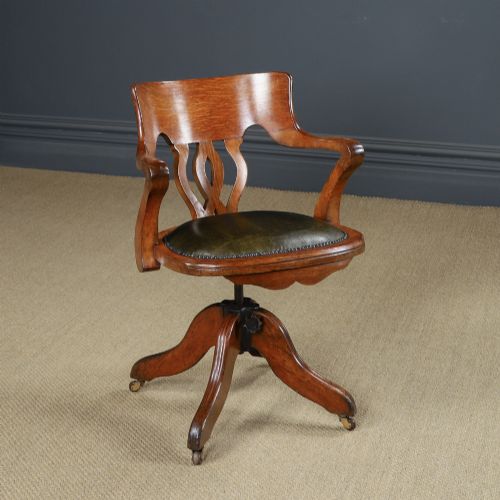
Makers and workshops of the period constructed these chairs to function primarily at office desks, combining revolving mechanisms with height-adjustable iron spindles. The resulting forms serve today as both functional workspace seating and robust decorative items.
Materials and construction methods
Carpenters utilised solid hardwoods such as oak, mahogany, and walnut to build the primary frames, securing joints with traditional dowels and glue. Beech and fruitwood also appear in structural elements where curved components were required for arms and backrests.
Upholsterers integrated durable cattle hide leather fixed with brass or iron tacks, often incorporating buttoning to secure the padding. Metal hardware including cast iron swivel mechanisms and brass castors provided the mechanical functionality necessary for revolving office chairs.
Edwardian Leather Captain Chair Retail Price Guide 2026
Typical asking prices for edwardian leather captain chair among the pieces listed under this phrase on Sellingantiques today, from the lower quarter to the upper quarter. They describe what is for sale here now, not the wider market.
Several swivel chairs still bear the gritty charm of ink-stained timber arms left behind by diligent Victorian clerks.
Judging build quality and finish
Superior examples rely on heavy, close-grained timber frames that maintain rigidity across the joints, whereas lesser pieces show movement or drying splits in the wood. The weight of the timber and the depth of the carving dictate the stability of the seat.
Leather quality distinguishes standard production from finer workshop output, with vegetable-tanned hides developing a rich patina over decades of use. The complexity of the revolving mechanism and the presence of original brass hardware further separate basic office chairs from high-grade library seating.
Kendrick & Jefferson
The Edwardian Leather Captain Chair Glossary
- Captain's chair
- A sturdy timber armchair with a rounded backrest supported by turned spindles, designed originally for office or shipboard use. These items frequently incorporate leather seat pads.
- Swivel mechanism
- An iron or steel spindle assembly beneath the seat allowing the chair to rotate fully. Early versions often include a wooden screw adjustment for altering the height.
- Smoker's bow
- A low-backed Windsor-style armchair featuring a continuous curved arm and back rail. They are typically constructed from solid oak or elm with a saddled wooden seat.
- Hide
- Untanned or tanned heavy cattle skin used for durable upholstery. This material accepts traditional hand-colouring and develops characteristic surface wear.
Edwardian Leather Captain Chair: Frequently Asked Questions
Can I adjust the height on these chairs?
Many Edwardian and late Victorian swivel chairs feature a threaded iron spindle beneath the seat that alters the height when turned. Other models rely on fixed wooden frames without mechanical adjustment.
Buyers should inspect the mechanism underneath to determine whether the height remains adjustable or if the spindle has been fixed in place over time.
How do I maintain the leather upholstery?
Traditional leather upholstery benefits from occasional applications of neutral beeswax or leather balm to keep the hide supple and prevent cracking. Avoid placing these chairs in direct sunlight or near heat sources that dry out the natural material.
Regular dusting with a soft cloth preserves the surface finish and prevents dirt from accumulating in the buttoned folds.
Are these chairs suitable for daily desk use?
Solid hardwood frames and sturdy leather seats make these chairs robust enough for regular office tasks. The ergonomic shape provides substantial lower back support during prolonged periods of sitting.
Reviewing the condition of the castors and the tightness of the frame joints ensures the chair can handle everyday movement without strain.
How do I distinguish Edwardian from Victorian examples?
Victorian office chairs tend to feature heavier carvings, darker walnut or heavy oak timber, and more robust proportions. Edwardian pieces often display lighter mahogany or golden oak frames with simpler decorative details.
Examining the construction methods and wood species helps determine whether a piece originates from the late nineteenth century or the early twentieth century.