






Edwardian Lamp Set
These edwardian lamp set listings bring together matching multi-piece lighting and interlocking tables, offering coordinated period illumination and surface space.
Edwardian Lamp Set
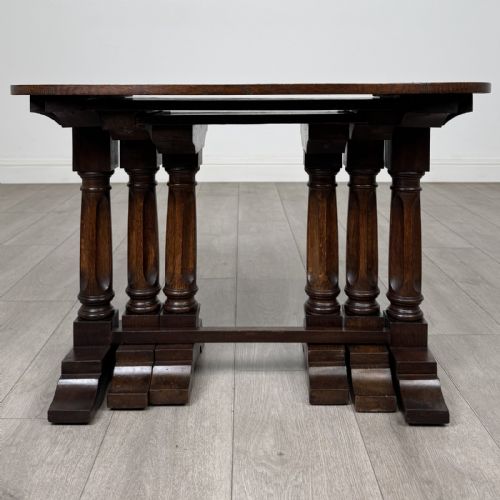
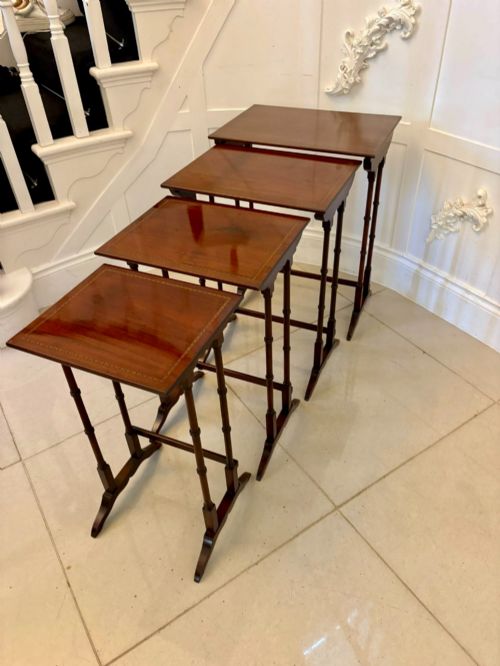
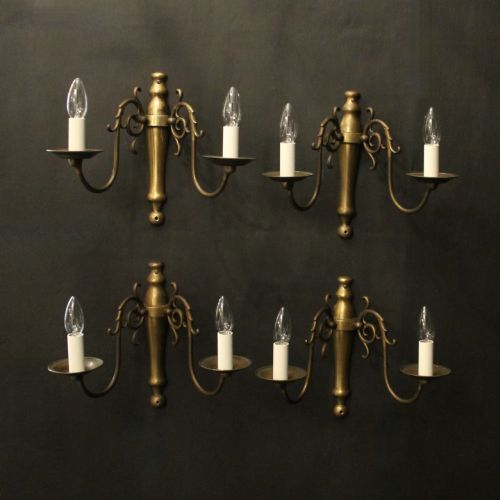
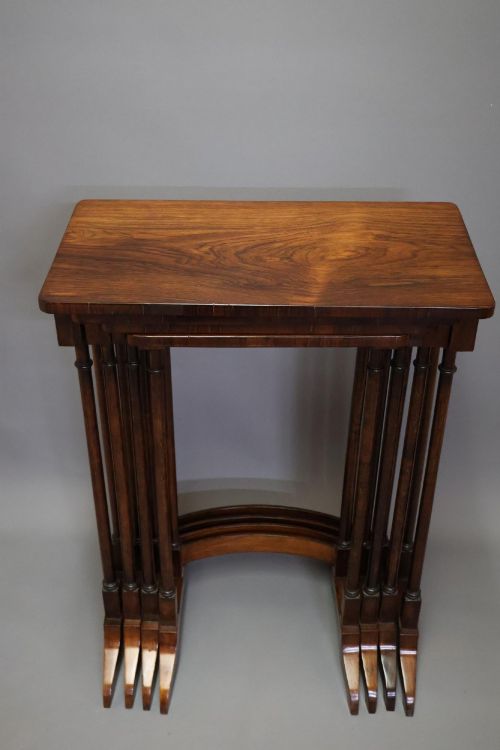
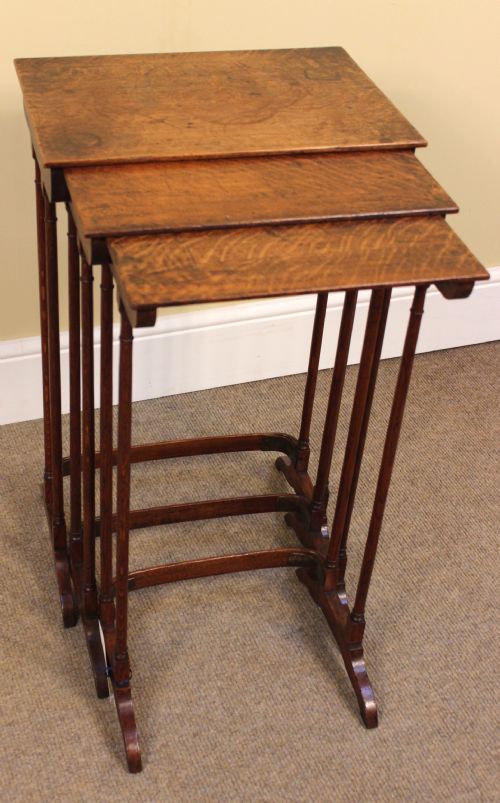
When searching for an edwardian lamp set, buyers encounter grouped objects that combine period lighting and matching auxiliary tables. These configurations span multiple forms, from nests of stacking tables to sets of wall lights, pendant lights, and floor lamps.
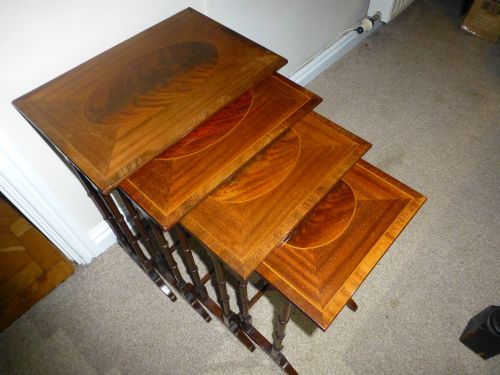
The selections on this page lean heavily towards Edwardian nests of mahogany and satinwood tables, alongside various brass wall and ceiling lights. Period pieces date predominantly from the early twentieth century, with occasional examples from the nineteenth century and the Regency era.
Forms vary between practical interlocking quartetto tables designed for compact spaces and coordinated brass or patinated lighting fixtures. Each grouping provides a unified aesthetic derived from traditional English, industrial, and Chinoiserie styles.
How they were made
Timbers such as mahogany, oak, and satinwood form the structure of the wooden sets, frequently enhanced with contrasting inlay work. Cabinetmakers utilised traditional joining methods to ensure stability across stacking table sets.
Lighting fixtures employ brass, patinated brass, cast iron, and opaline glass to achieve durability and specific illumination effects. Lacquer and Chinoiserie decoration provide decorative surface finishes on select wooden and metal pieces.
Edwardian Lamp Set Retail Price Guide 2026
Typical asking prices for edwardian lamp set among the pieces listed under this phrase on Sellingantiques today, from the lower quarter to the upper quarter. They describe what is for sale here now, not the wider market.
Listings feature wood and metal items across Edwardian, Regency, and nineteenth-century periods, utilising mahogany, brass, oak, and opaline glass.
What varies in quality
Construction standards distinguish simpler utility items from superior workshop output, particularly in the precision of joints on nesting tables and the weight of cast metal lighting. Finer examples display meticulous satinwood inlay and refined proportions.
Material selection dictates the longevity and visual depth of each set, with dense hardwoods and heavy-gauge brass representing higher manufacturing tiers. Surface treatments, from hand-applied lacquer to patinated finishes, retain varying degrees of original crispness.
William McGeoch & Co
The Edwardian Lamp Set Glossary
- Quartetto
- A matched set of four graduating tables designed to slide one beneath another. This term frequently appears in descriptions of Edwardian and Regency nests.
- Satinwood
- A durable, lustrous timber native to India and Ceylon, prized for its pale yellow colour and golden sheen. Cabinetmakers utilised it extensively for contrasting stringing and decorative panels.
- Patinated brass
- Metal surfaces showing a natural or chemically induced oxidation layer that develops over time. This finish adds depth and softens the bright reflection of raw brass.
- Opaline glass
- A milky, semi-translucent white glass popular for nineteenth and early twentieth-century lighting shades. It diffuses light evenly without harsh glare.
- Chinoiserie
- European decorative style reflecting Chinese artistic motifs and lacquer techniques. Artisans applied these designs to furniture surfaces during periods of revived Asian influence.
Edwardian Lamp Set: Frequently Asked Questions
What items make up an edwardian lamp set?
These listings include grouped lighting fixtures such as brass wall lights and floor lamps, alongside matching sets of interlocking tables. The combinations link illumination with functional surface space.
Buyers often find nests of mahogany tables paired conceptually or physically with period lighting to create a cohesive room arrangement.
How were stacking table sets used originally?
Quartetto nests served as flexible tea or side tables in drawing rooms, easily stored in a compact stack when floor space was required. Servants moved the individual tables as guests needed them.
The graduating sizes allowed all four pieces to occupy the footprint of the single largest table.
How do I identify Edwardian period pieces?
Edwardian items date from the reign of King Edward VII between 1901 and 1910, though the style extended slightly beyond these years. They often feature lighter proportions than heavy Victorian furniture.
Look for refined satinwood inlay on mahogany frames and simpler lines that draw on Sheraton Revival influences.
Can I mix different lighting styles?
Matching sets of wall lights, pendant lights, or floor lamps provide uniform illumination within a single space. Mixing brass fixtures with industrial cast iron or Chinoiserie wooden tables depends on the surrounding interior.
Coordinating pieces by material, such as patinated brass or oak, helps maintain visual consistency across a room.