
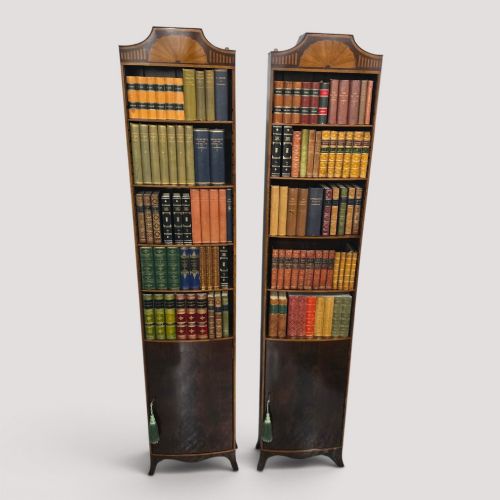
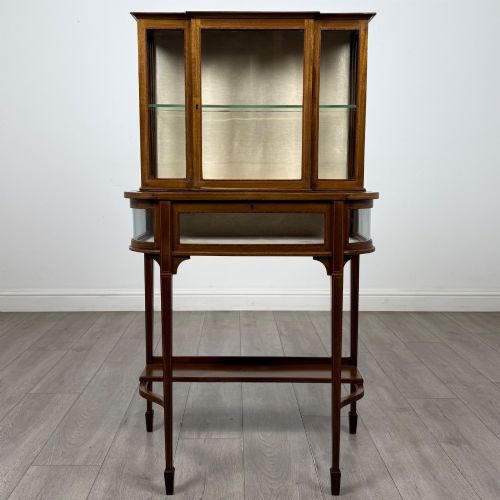
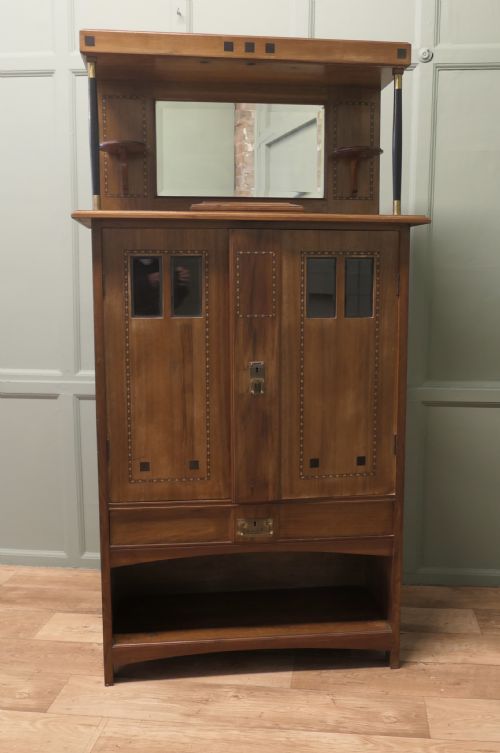
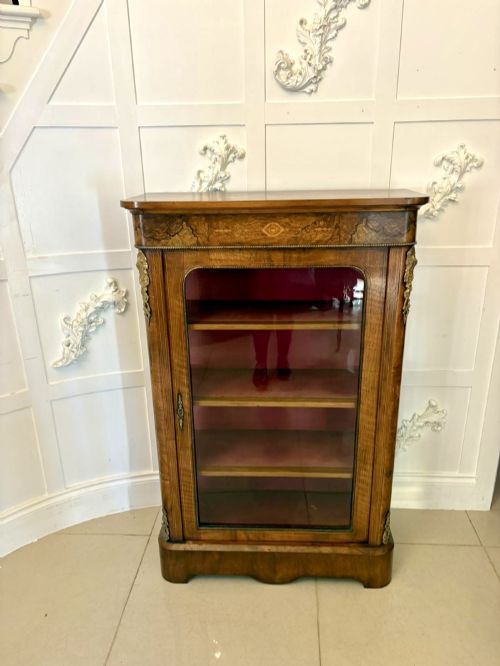
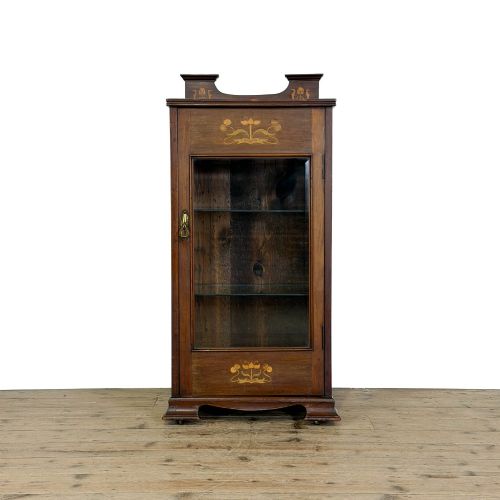
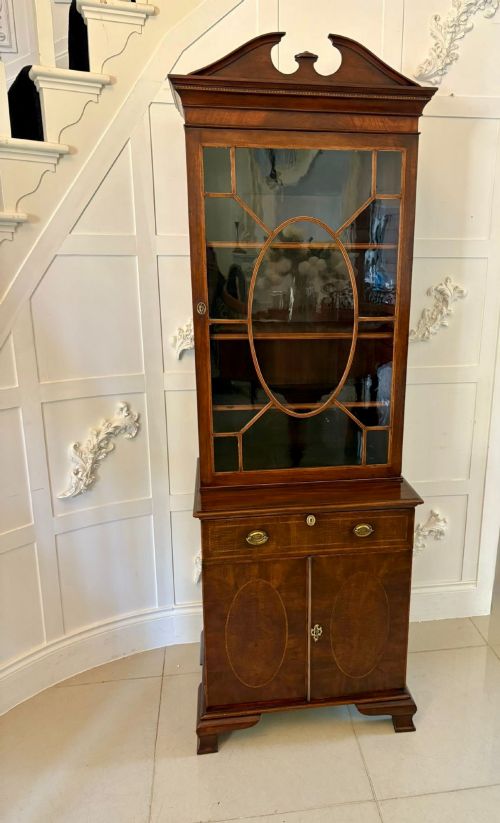
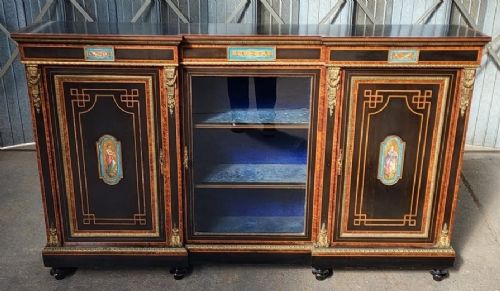
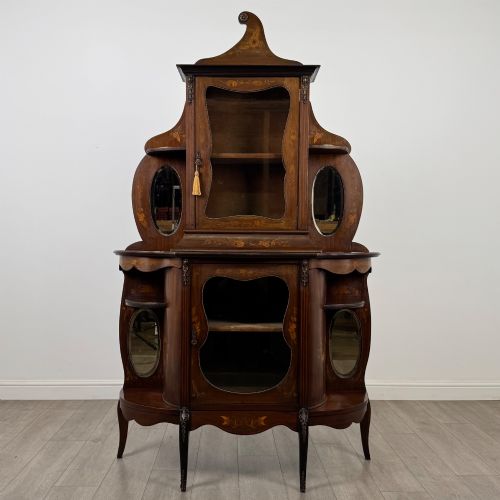
Edwardian Inlay Display Cabinet
When you choose an edwardian inlay display cabinet, you select a refined piece designed to showcase prized possessions with timeless British craftsmanship.
Edwardian Inlay Display Cabinet
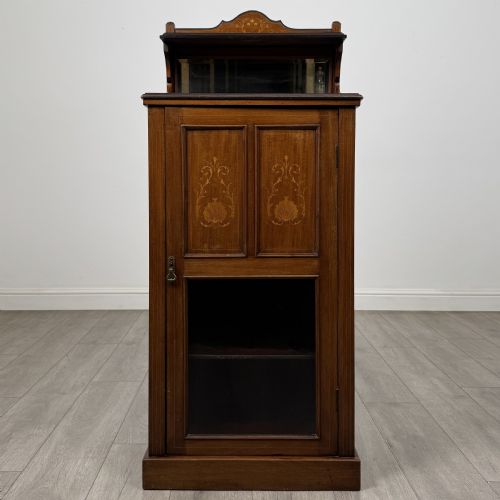
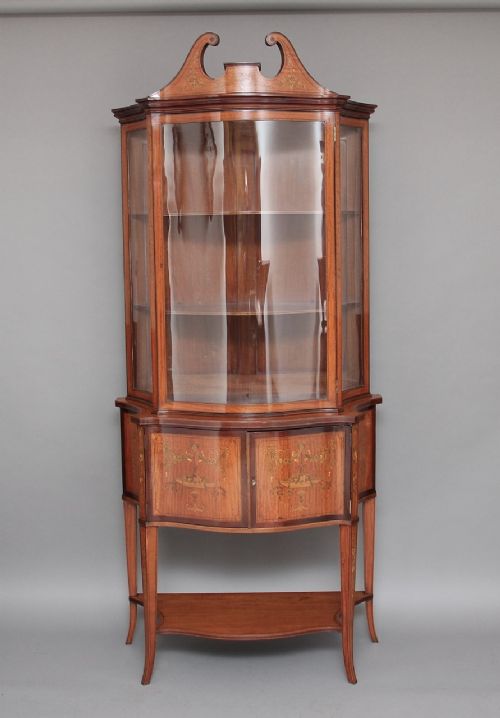
An edwardian inlay display cabinet is a refined piece of furniture designed to house and exhibit porcelain, glassware, and small ornaments behind glass panels. These cabinets emerge primarily from the Edwardian era and the late Victorian period, drawing heavily upon Sheraton Revival design principles.
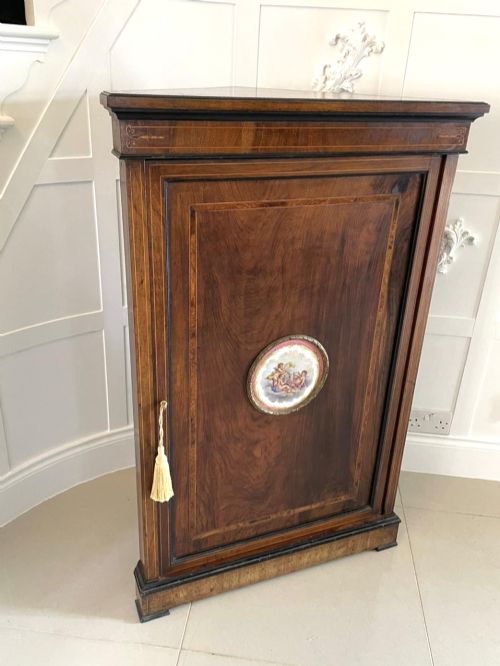
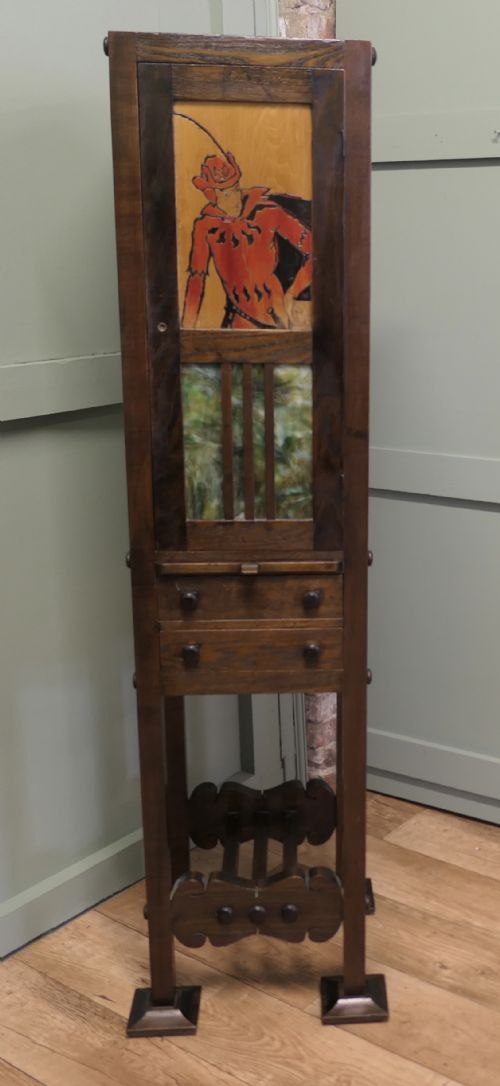
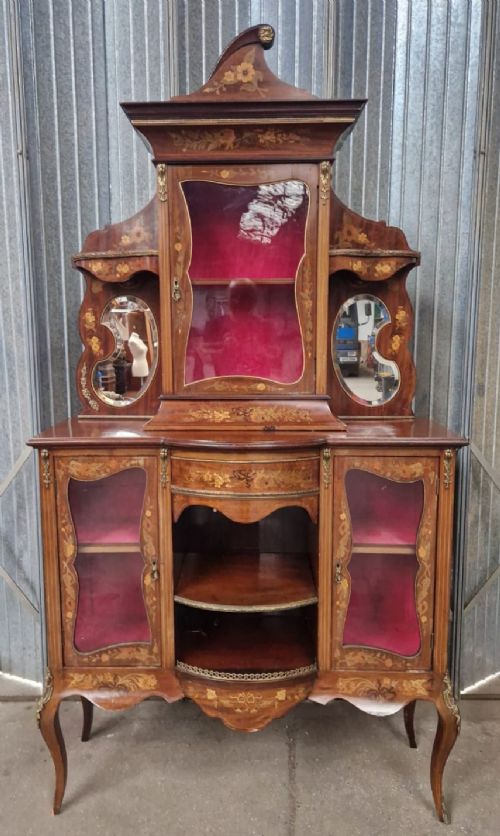
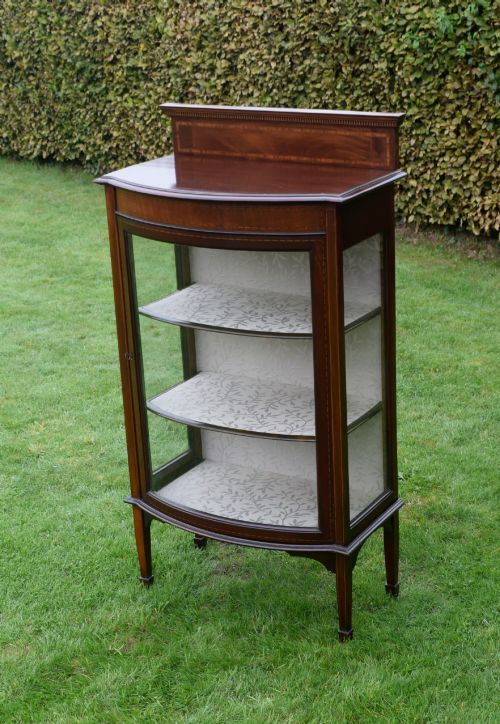
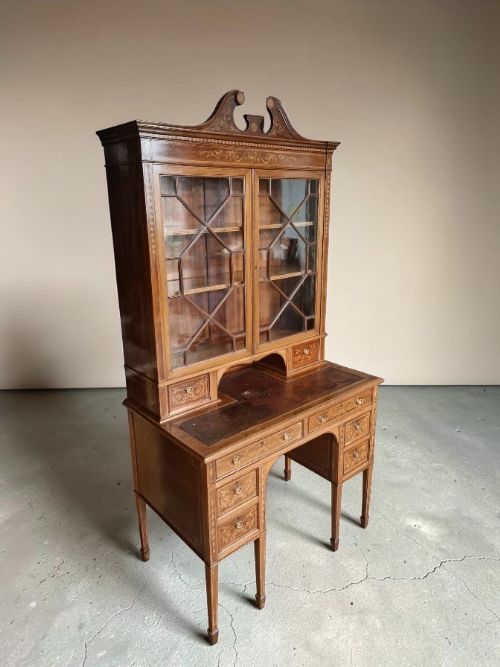
The version most commonly met on this page is constructed from mahogany or satinwood, featuring intricate wood inlay, glazed doors, and dedicated shelving. Alongside standard upright cabinets, buyers frequently encounter corner cabinets, bowfront designs, and narrow pedestal formats tailored for compact spaces.
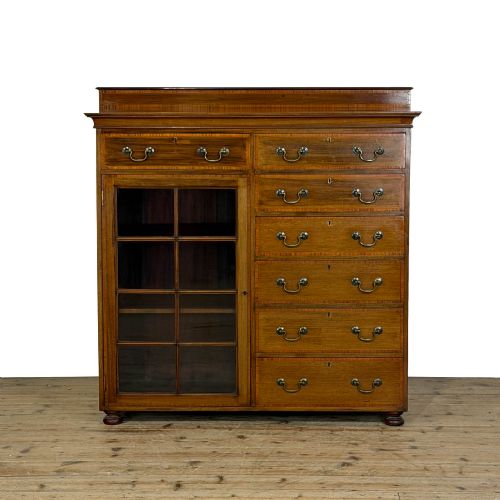
The form developed to meet domestic demands for both storage and display, integrating the utility of a bookcase or side cabinet with the decorative appeal of polished timber and delicate marquetry.
What varies in quality
Quality varies significantly in the precision and complexity of the inlay work, ranging from simple geometric stringing to elaborate pictorial marquetry involving multiple exotic timbers. The choice of primary wood grain also dictates distinction, with highly figured satinwood, burr walnut, or dense mahogany elevating a piece.
Construction methods define the upper tier of the range, seen in fine joinery details, original brass mounts, well-fitted glazed doors, and balanced proportions that reflect the Sheraton Revival aesthetic rather than mass production.
Listings feature woods including mahogany, satinwood, walnut, and rosewood, alongside decorative brass hardware and glass panels.
Edwards and Roberts·Shapland and Petter
The Edwardian Inlay Display Cabinet Glossary
- Sheraton Revival
- A late nineteenth and early twentieth century design style that reinterprets the classical, elegant furniture forms of eighteenth century designer Thomas Sheraton. It relies on light timbers and delicate inlay.
- Marquetry
- The art and craft of applying pieces of veneer to a structure to form decorative patterns and pictures. Craftsmen use varied wood tones to achieve depth.
- Bowfront
- A furniture facade that curves outward in a convex shape. This profile softens the corners of the cabinet.
- Ormolu
- Gilded bronze furniture mounts used for decorative enrichment. They appear on select high-end cabinets.
- Pier Cabinet
- A narrow cabinet designed to fit against the wall space between windows. These pieces often feature glass doors for displaying ornaments.
Edwardian Inlay Display Cabinet: Frequently Asked Questions
What defines an Edwardian display cabinet?
An Edwardian display cabinet is a glazed wooden storage piece created in the early twentieth century, characterised by lighter proportions and decorative wood inlay.
These cabinets often utilise Sheraton Revival motifs and mahogany or satinwood timbers to brighten interior spaces.
How do I tell Edwardian from Victorian cabinets?
Edwardian cabinets generally display lighter wood tones, more slender proportions, and refined, restrained inlay work compared to earlier pieces.
Victorian counterparts tend to utilise heavier timbers like burr walnut or rosewood with denser, darker finishes and more robust construction.
Where should I place a corner cabinet?
A corner cabinet fits neatly into empty room junctions, making efficient use of awkward angles while adding vertical display space.
They work effectively in dining rooms or drawing rooms to house collections of porcelain and glassware without dominating the floor area.
Are the shelves inside usually adjustable?
Many cabinets feature fixed wooden shelving, though certain refined examples incorporate adjustable supports to accommodate items of varying heights.
Interior layouts often include fabric-lined bases or mirrored backs designed to enhance the visibility of displayed objects.