





Edwardian Inlaid Tripod Table
An edwardian inlaid tripod table brings slender elegance to a corner, uniting light timbers with delicate botanical decoration.
Edwardian Inlaid Tripod Table
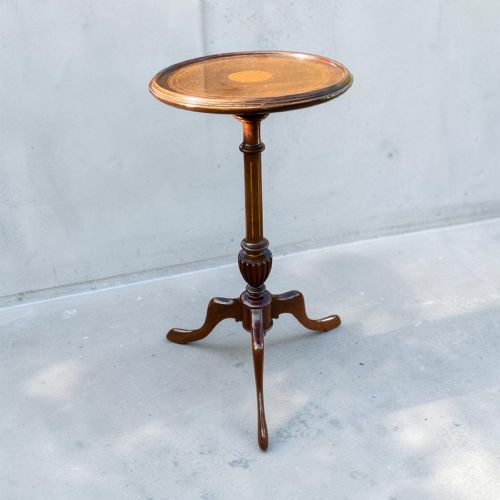
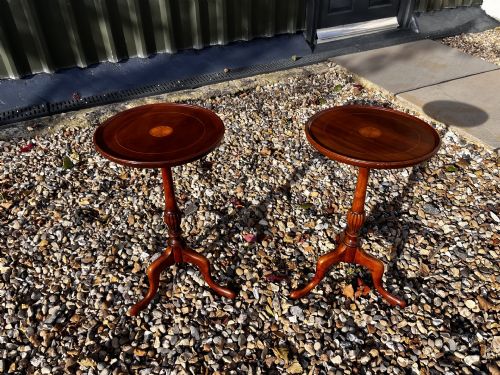
When you search for an edwardian inlaid tripod table, you are looking at small occasional tables raised on three slender legs, frequently created during the Edwardian era or the Victorian period. These nimble pieces serve easily as wine tables, lamp tables, or small side tables in a drawing room.
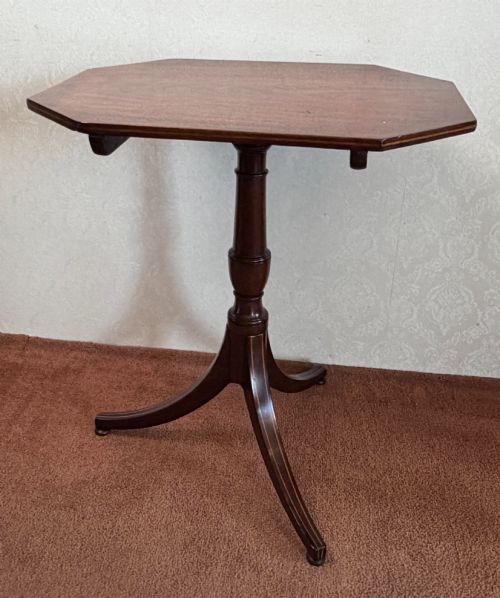
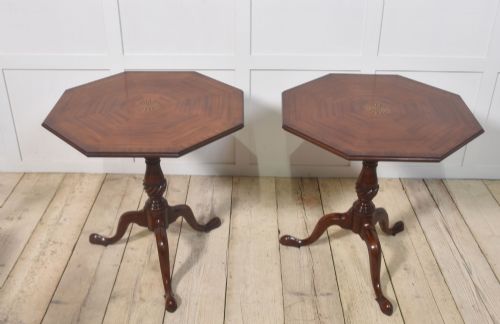
The versions you are most likely to meet on this page combine mahogany or rosewood with contrasting boxwood stringing and marquetry motifs. Alongside standard circular tops, the selection includes octagonal variants and specialised forms like work tables and shaving stands.
How they were made
Cabinetmakers constructed these tables using dense hardwoods such as mahogany, rosewood, and walnut, often selecting burr walnut or figured veneers for the main surface. Turned pedestals branch into three legs that terminate in pad or spade feet.
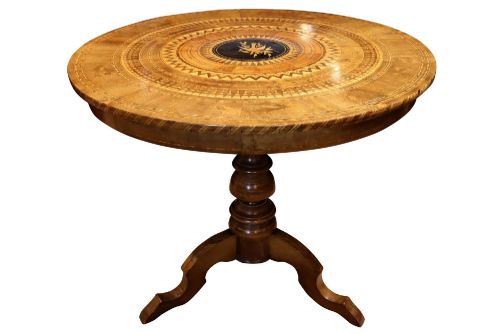
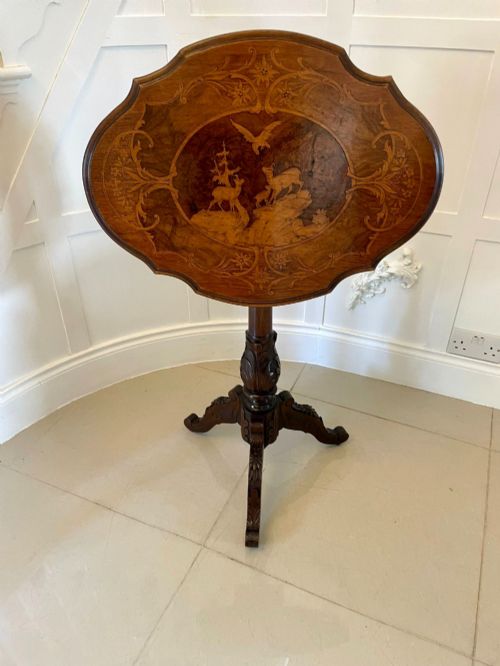
Decoration relies on marquetry inlay and boxwood stringing, set flush into the timber to form geometric borders, urns, or floral sprays. Brass fittings occasionally appear on hinges, castors, or tilting mechanisms.
Edwardian Inlaid Tripod Table Retail Price Guide 2026
Typical asking prices for edwardian inlaid tripod table among the pieces listed under this phrase on Sellingantiques today, from the lower quarter to the upper quarter. They describe what is for sale here now, not the wider market.
Materials recorded on this page include mahogany, rosewood, burr walnut, oak, birch, and exotic specimen woods, accented with boxwood inlay and brass.
What varies in quality
The distinction between standard examples and finer pieces lies in the crispness of the timber selection and the precision of the marquetry. Figured veneers and finely executed boxwood stringing demonstrate greater workshop skill than plain surfaces.
Stability in the tripod base and the tightness of the joinery also separate everyday utility items from superior cabinet work. Well-balanced proportions ensure the table stands firmly on its three legs without rocking.
The Edwardian Inlaid Tripod Table Glossary
- Tripod table
- A small stand supported by a central pillar that divides into three legs at the base. This format allows the table to tuck neatly into corners or beside seating.
- Marquetry inlay
- Decorative patterns formed by fitting small pieces of contrasting veneer into a prepared recess in the wood surface. It often depicts floral sprays or neoclassical motifs.
- Boxwood stringing
- Narrow inlaid lines of pale boxwood set into dark timber to outline edges and panels. This technique adds sharp visual contrast to table tops and legs.
- Tilt-top mechanism
- A hinge beneath the table surface that allows the top to fold vertical when not in use. This enabled tables to be stored flat against a wall.
- Occasional table
- A small, movable table designed for specific, temporary uses such as holding a lamp or drinks. They appear across the Victorian and Edwardian periods.
Edwardian Inlaid Tripod Table: Frequently Asked Questions
What is an edwardian inlaid tripod table used for?
These pieces function primarily as small side stands for holding lamps, small decorative objects, or glasses. Their compact footprint makes them useful beside armchairs or in hallways.
Historically, specific variations like wine tables or work tables served particular domestic tasks during the evening. Today, they fill similar practical roles while adding period character to a room.
How do I distinguish Edwardian from Victorian tables?
Edwardian examples generally exhibit lighter proportions, brighter mahogany or satinwood timbers, and restrained inlay. Victorian versions tend to use heavier rosewood or walnut with denser marquetry.
Construction details and finish also offer clues, though cabinetmakers often continued earlier Georgian style traditions across both reigns.
Are tilt-top tables stable?
Tilt-top mechanisms allow the surface to fold vertical, which originally saved space when the table was stored. The hinge should lock securely when the top is horizontal.
A well-fitted catch prevents the surface from wobbling during normal use, though older mechanisms can loosen over decades of handling.
Where should I place a tripod table?
Their three-legged base makes them well suited to corners, empty wall spaces, or beside low seating where four-legged tables might crowd the floor. The slender pedestal keeps the visual weight light.
Avoid placing them in direct sunlight or near strong heat sources, which can dry out delicate veneers and cause timber to warp.