


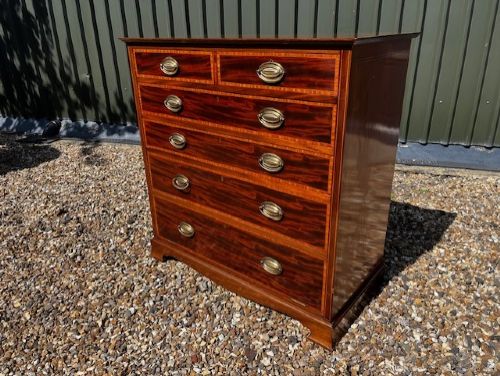
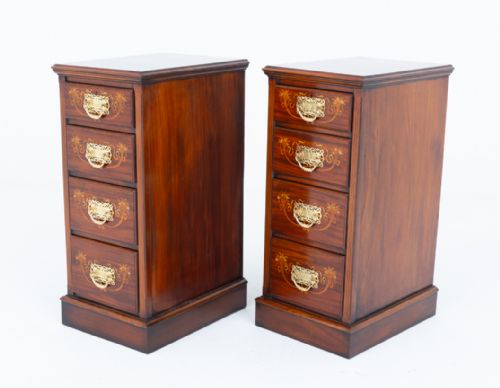
Edwardian Inlaid Chest Drawers
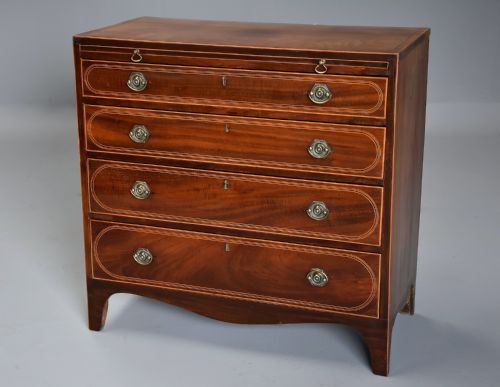
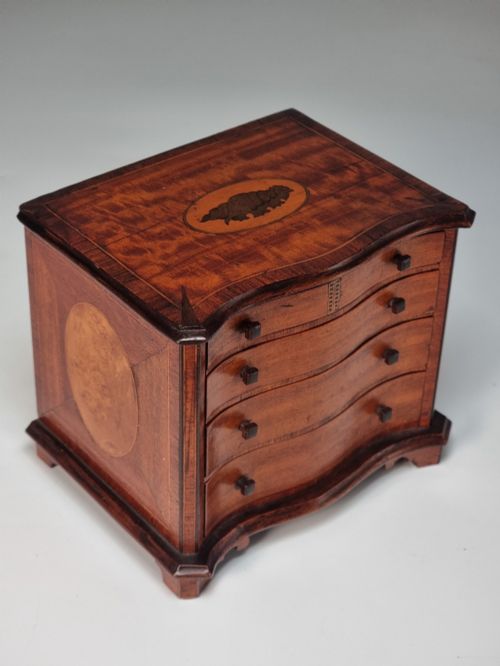
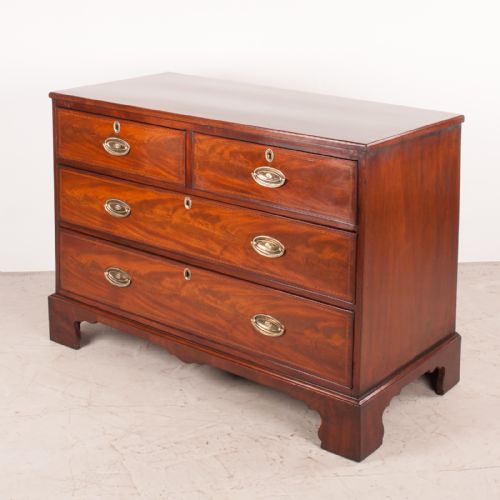
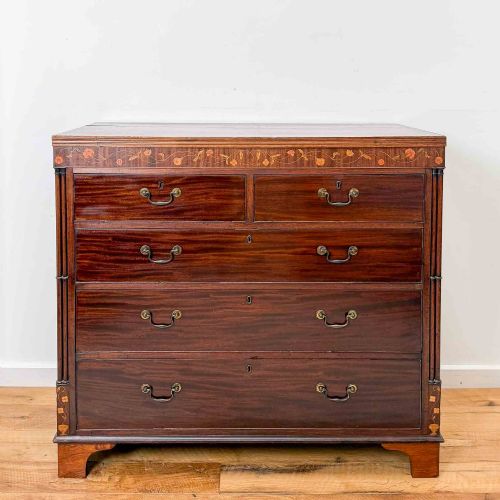
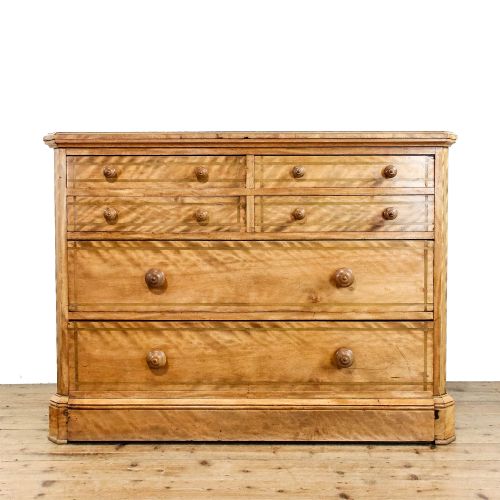
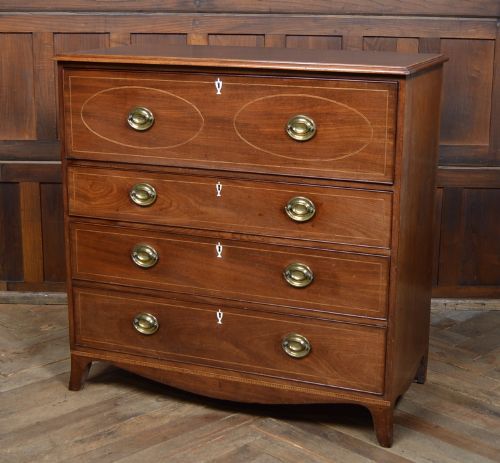
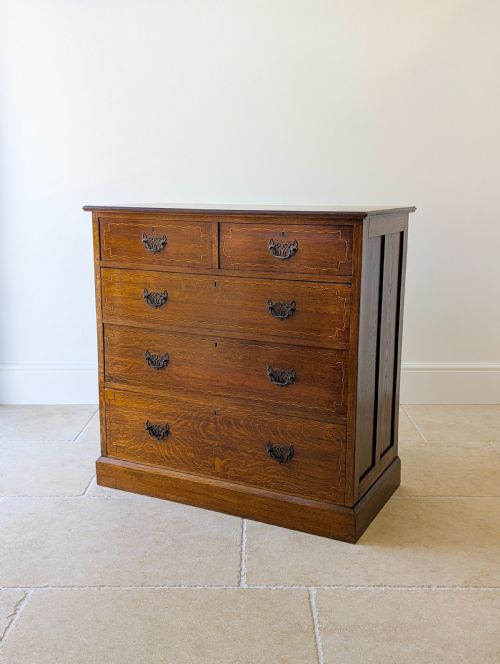
An edwardian inlaid chest drawers brings refined woodwork and subtle stringing into a bedroom, offering practical storage disguised as decorative art.
Edwardian Inlaid Chest Drawers
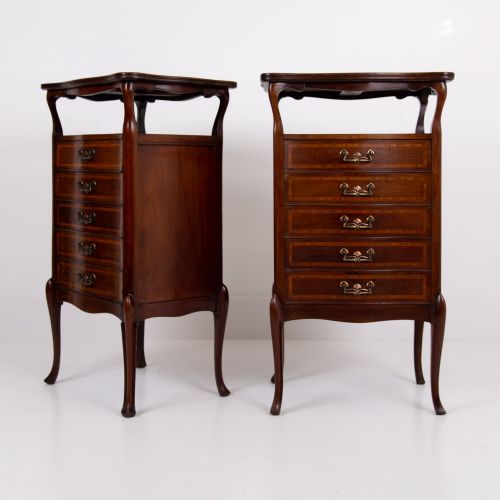
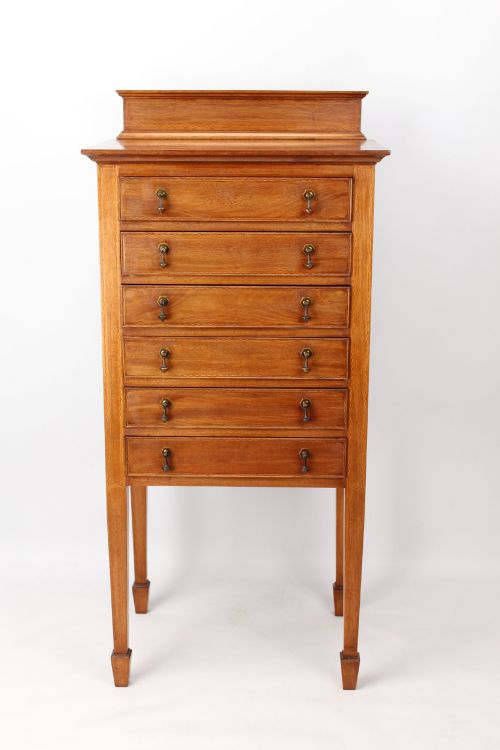
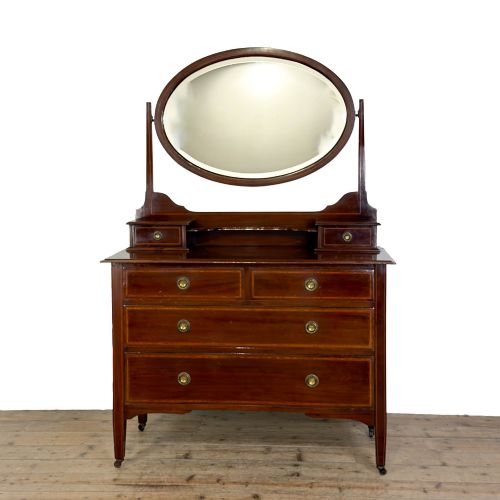
Beyond standard drawer configurations, the category encompasses specialised forms like music cabinets, tallboys, and compact bedside units. Edwardian makers adapted traditional storage shapes to suit contemporary homes, often pairing the main chest with matching dressing tables or mirrors.
How they were made
Makers constructed these carcasses predominantly using mahogany, oak, or walnut, frequently selecting flame grain veneers for the primary drawer fronts. These surfaces provide the rich natural figuring that underpins the visual depth of the furniture.
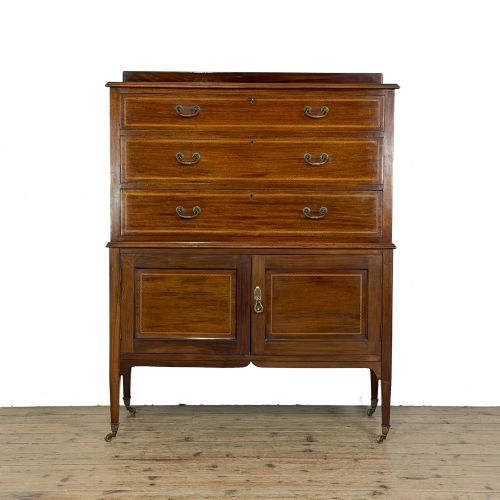
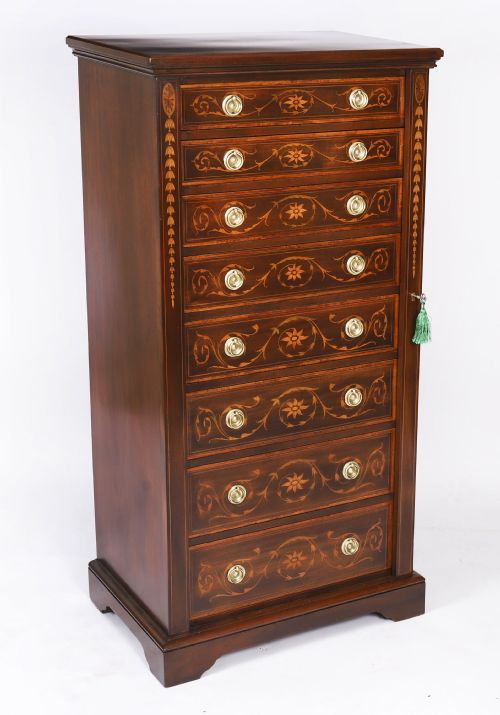
Decoration relied on precision cutting of contrasting timbers such as satinwood, boxwood, and ebony to create delicate stringing, husks, and floral motifs. Brass hardware such as drop handles and escutcheons finished the assembly, matching the linear geometry of the inlay.
Listings feature mahogany, satinwood, and oak carcasses, frequently enhanced with boxwood and ebony stringing.
What varies in quality
The standard of a piece depends heavily on the crispness of the cabinetmaking and the complexity of the marquetry work. Finer examples show seamless integration of boxwood and satinwood inlays into the primary timber without lifting edges or visible filler.
Proportion and secondary wood selection further separate standard production from superior workshops. Well-balanced serpentine fronts, smooth drawer runners made from durable secondary hardwoods, and substantial brass fittings indicate a higher tier of manufacture.
J Shoolbred·Druce & Co·A. F. Lloyd·Maple & Co·Wright & Hunter·Edwards and Roberts·Waring
The Edwardian Inlaid Chest Drawers Glossary
- Inlay
- A technique where small pieces of contrasting wood are fitted into recesses flush with the surrounding surface. This method creates decorative borders and floral motifs on drawer fronts and top panels.
- Serpentine
- A curved furniture front characterised by a convex centre flanked by concave ends. This undulating shape requires advanced woodworking skill to execute properly.
- Tallboy
- A tall chest of drawers consisting of one chest stacked upon another, or built as a single tall vertical unit. It maximises vertical storage space while maintaining a small floor footprint.
- Stringing
- Thin strips of contrasting light or dark wood inlaid into grooves around the edges of drawers or tabletops. It defines the structural outlines of Edwardian case pieces.
- Wellington chest
- A narrow vertical chest of seven drawers secured by a locking hinged side flap. This form provides secure storage with a distinct architectural presence.
Edwardian Inlaid Chest Drawers: Frequently Asked Questions
How do I style an Edwardian inlaid chest in a modern bedroom?
An edwardian inlaid chest drawers works effectively as a focal point against neutral walls that highlight the warm tones of mahogany and satinwood. Keeping the surface uncluttered with just a simple lamp or mirror allows the intricate stringing and grain patterns to remain the primary visual feature.
Because these pieces come in various sizes, from slim music cabinets to broad chests, they fit easily into both large master bedrooms and compact guest spaces. Pairing them with contemporary furnishings creates a balanced interior that respects historical craftsmanship while remaining functional for daily use.
What is the difference between Edwardian and Georgian chests?
Georgian chests generally feature heavier solid timbers, deeper proportions, and simpler structural lines with less reliance on complex surface banding. They reflect the architectural tastes of the eighteenth century, emphasising natural wood grain over ornamental contrast.
Edwardian interpretations, influenced by Sheraton and Hepplewhite revivals, tend to be lighter in scale and brighter in palette. They incorporate extensive satinwood and boxwood inlay work, reflecting the mechanized precision and decorative lightness available to early twentieth-century workshops.
How should I clean the wooden surface?
Maintenance requires only a soft, dry cloth to remove dust from the polished mahogany and delicate inlay work. Avoiding harsh chemical cleaners preserves the integrity of the original polish and prevents moisture from seeping into the wood joints.
Applying a quality natural wax occasionally helps nourish the timber and maintain a soft sheen without building up heavy residue. Keeping the chest away from direct heat sources and strong sunlight prevents the veneers and stringing from drying out or fading over time.
Were these chests used only for clothing storage?
While standard bedroom chests stored garments and linens, many variations served entirely different domestic purposes. Music cabinets held sheet music and folios, while pedestal chests and Wellington models organised documents, accessories, or collectibles.
Specialised forms like dressing table chests and secretaire units combined storage with a writing surface or vanity mirror. This versatility meant that similar exterior casework could conceal entirely different internal arrangements depending on the room it was intended for.