
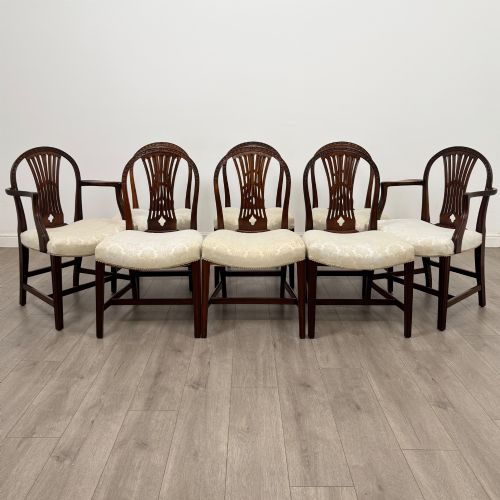
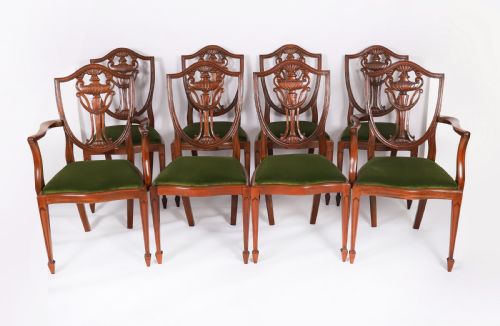


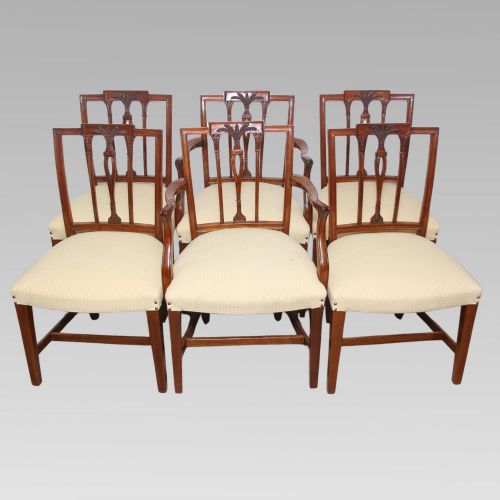


Edwardian Hepplewhite Dining Set
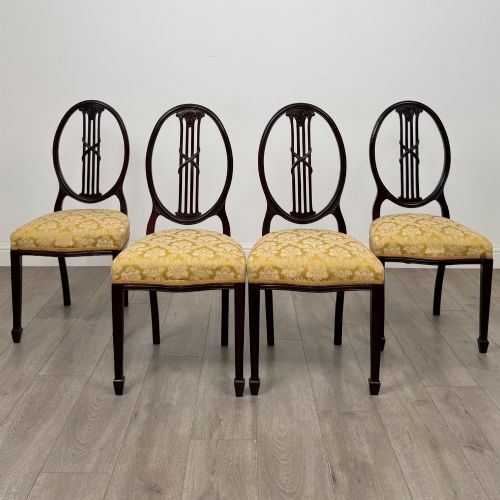
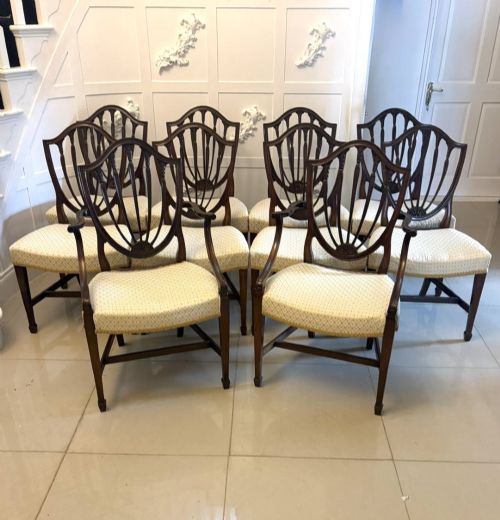
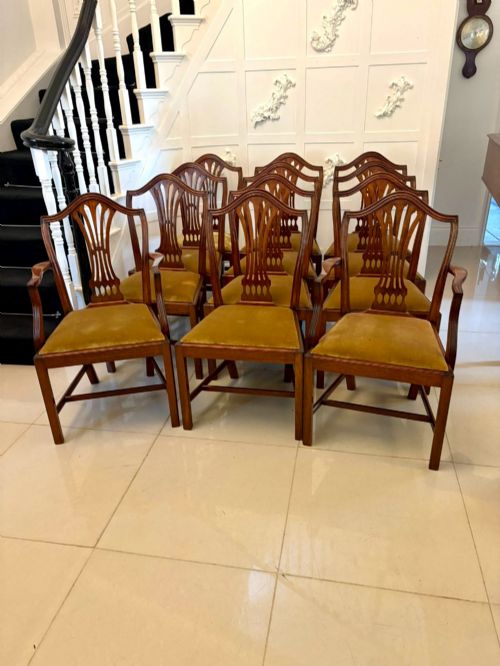
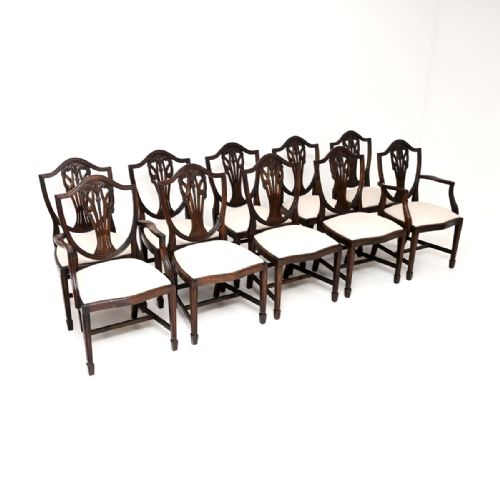
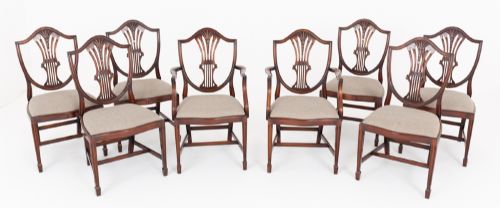
These edwardian hepplewhite dining set pieces bring revival grace to the room through shield-back forms and polished wood.
Edwardian Hepplewhite Dining Set
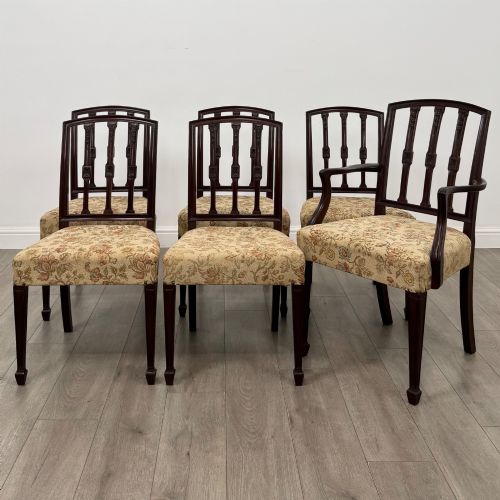
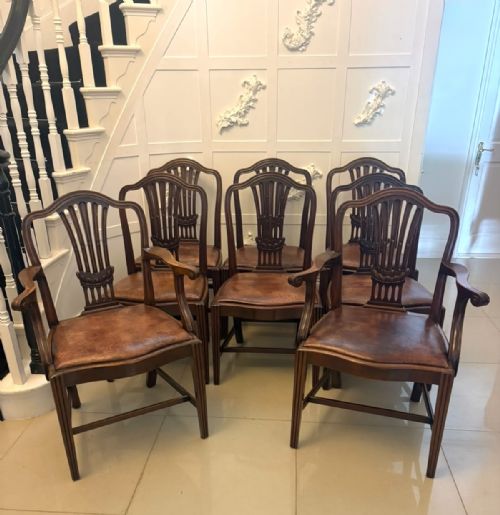
An edwardian hepplewhite dining set combines revival aesthetics with functional seating designed for formal dining rooms. These groupings typically comprise sets of four, six, eight, ten, or twelve chairs, frequently including carvers.
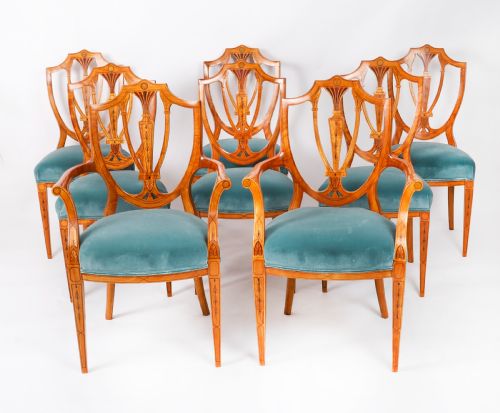
The pieces emerge from periods spanning the Edwardian era, Victorian times, and the early twentieth century. Makers drew directly upon eighteenth-century George Hepplewhite designs, reinterpreting them with mahogany, walnut, and satinwood.
Dining chairs and side chairs dominate the selection, built around characteristic shield backs and carved splats. The revival movement ensured these suites supplied larger households with uniform seating arrangements.
How They Were Made
Cabinetmakers utilised dense timbers such as mahogany and satinwood, often pairing them with contrasting inlay work. Frames relied on sturdy wood joinery to support the open shield backrests.
Seats required layers of fabric, velvet, or leather over internal padding. Brass studs and upholstery webbing secured these coverings to drop-in or fixed frames.
Object forms on this page consist exclusively of dining chairs and side chairs.
What Varies in Quality
The crispness of the carved details on the shield back splats dictates much of the visual distinction between suites. Workshops employing skilled carvers achieved deeper relief and sharper lines in the wood.
The scale and uniformity of large sets separate standard production from superior suites. Matching timbers across eight or twelve chairs required careful stock selection by the maker.
Maple And Co·Cowtan And Sons
The Edwardian Hepplewhite Dining Set Glossary
- Shield Back
- A chair back shaped like a tapering shield, popularised in the eighteenth century and revived in later periods. This form provides an open silhouette often filled with carved drapery or pierced splats.
- Carver
- An armchair designed with elbow supports, traditionally placed at the head of a dining table. Pairs of these often accompanied larger sets of side chairs.
- Hepplewhite Revival
- A design movement taking inspiration from George Hepplewhite pattern books published in the late eighteenth century. Makers in the Victorian and Edwardian eras reproduced these graceful outlines.
- Satinwood
- A light-coloured, hard timber prized for its smooth grain and reflective surface. Artisans used it for banding and inlay work on dark mahogany frames.
- Upholstery
- The padded covering fixed to chair seats using fabric, leather, or velvet. These materials determine the tactile finish of the seating surface.
Edwardian Hepplewhite Dining Set: Frequently Asked Questions
What defines an Edwardian Hepplewhite dining set?
These sets consist of matching chairs produced around 1900 that imitate eighteenth-century Hepplewhite patterns. They typically feature mahogany frames and characteristic shield-shaped backrests.
Craftsmen of the period revived these classical proportions for contemporary dining rooms. The resulting suites combined historical revival styles with Edwardian manufacturing methods.
How many chairs came in these dining sets?
Sets varied in size to accommodate different household requirements, ranging from four chairs up to twelve or fourteen pieces. Larger configurations often included a pair of carvers for the table ends.
Dining arrangements in larger homes demanded uniform seating for numerous guests. Makers supplied these matching groups to maintain symmetry around the dining table.
What materials were used for the seats?
Original seats frequently utilised leather, velvet, or woven fabric stretched over stuffed upholstery foundations. Leather provided a durable surface for daily dining use.
Upholstery methods varied between drop-in pads and fixed upholstered frames. Material choices often reflected the formality of the room and the preferences of the original buyer.
How do you distinguish revival pieces from original ones?
Revival pieces exhibit timber treatment, joinery methods, and hardware consistent with the late nineteenth and early twentieth centuries. Examining the underside and the wear patterns reveals the period of manufacture.
Makers working in the Edwardian era adopted machine assistance alongside hand carving. This distinction separates eighteenth-century production from later revival suites.