

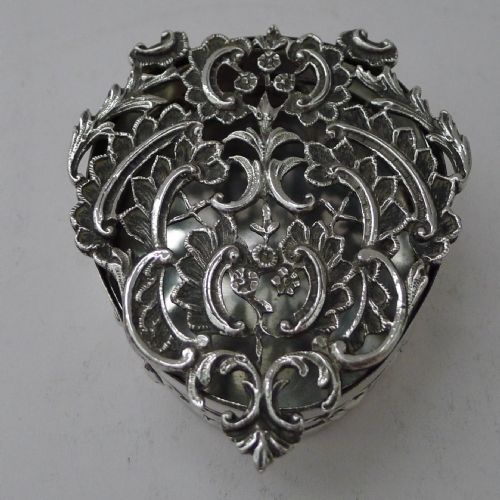
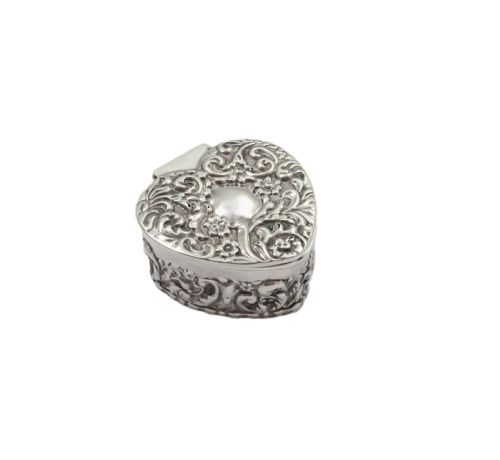


Edwardian Heart Shaped Box
An edwardian heart shaped box offers a charming repository for small treasures, combining period craftsmanship with an enduring romantic silhouette.
Edwardian Heart Shaped Box
An edwardian heart shaped box is a small container designed to hold trinkets, jewellery, pills or pot pourri. These pieces primarily date from the Edwardian era, alongside related examples spanning the Victorian period through to the George V reign.
The form appears most frequently in solid sterling silver or mounted upon cut glass and cut crystal bases. Makers also incorporated delicate materials such as porcelain, mother-of-pearl and guilloche enamel into the designs.
Collectors encounter various formats ranging from tiny pill boxes and ring holders to larger trinket and pot pourri boxes. Many examples carry hallmarks from assay offices in Birmingham, Chester and London.
How these boxes were made
Silversmiths shaped sterling silver into symmetrical heart contours, often embellishing the lids with pierced ornamentation, repousse work or enamel. Glass and crystal bodies were heavy-moulded and cut before receiving fitted silver mounts and hinged lids.
Internal compartments frequently retained original velvet or silk linings to cushion delicate items. Hinges and clasps required precise metalworking to ensure the lids closed flush against the shaped rims.
Victorian romanticism ensured that even your headache pills travelled in a tiny silver heart.
What varies in quality
Quality rests upon the crispness of the silver pressing or piercing and the substance of the metal used for the body. Substantial gauge silver maintains its structural integrity and resists denting along the sharp curves of the heart shape.
The refinement of the decorative elements dictates distinction, whether through intricate chased motifs, smooth enamel application or the depth of the cut crystal and glass. Maker attribution also elevates certain pieces above standard production.
William Comyns·Deakin and Francis·Royal Crown Derby
The Edwardian Heart Shaped Box Glossary
- Sterling silver
- A silver alloy containing 92.5 percent pure silver and 7.5 percent other metals, typically copper. This standard composition provides the durability required for small decorative boxes.
- Hallmark
- An official stamp applied by an assay office indicating the purity of the metal, the maker, and the year of production. British silver stamps typically include a leopard's head, anchor or three crowns alongside the date letter.
- Guilloche enamel
- A decorative technique where intricate geometric patterns are mechanically engraved beneath a translucent layer of coloured enamel. This finish appears on select pill and trinket boxes.
- Pot pourri box
- A specialised container featuring pierced or perforated lid work designed to diffuse scent from dried floral mixtures. These vessels share the characteristic heart silhouette of standard trinket boxes.
- Repousse
- A metalworking method where the smith hammers the silver from the reverse side to form raised relief designs on the front. This technique creates tactile floral and scroll motifs on box lids.
Edwardian Heart Shaped Box: Frequently Asked Questions
What fits inside an edwardian heart shaped box?
These containers suit small personal possessions such as rings, earrings, keepsakes and loose pills. Deeper versions accommodate small folded notes or delicate brooches.
Larger variants serve as standalone dressing table ornaments while keeping precious items secure under hinged lids.
How do I date a silver heart box?
Silver examples carry assay office marks and date letters stamped directly onto the metal surfaces. Cross-referencing these punch marks with standard British hallmark tables reveals the exact year of manufacture.
Stylistic indicators such as pierced scrollwork or enamel work also help narrow down the production period.
Are glass and crystal boxes fragile?
The glass and crystal bases feature thick, heavy walls designed for daily use on dressing tables. However, the delicate corners of the heart shape require careful handling to avoid chipping.
The fitted silver collars provide structural support around the upper rim of the glass body.
Where were these boxes manufactured?
British silversmiths produced the majority of these pieces, with prominent workshops operating in Birmingham, Chester and London. Regional assay offices stamped the metal to certify its standard.
Porcelain variants originated from established ceramic factories such as Royal Crown Derby.