


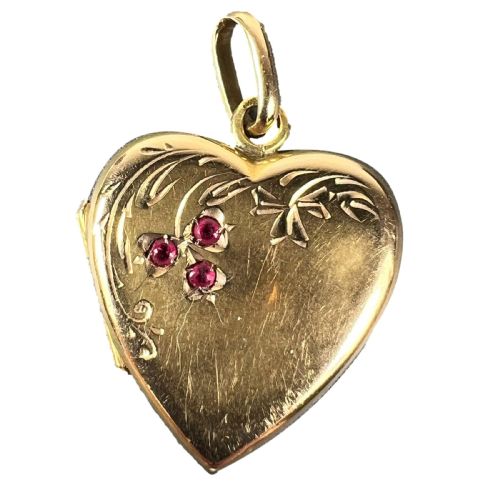


Edwardian Heart Locket
An edwardian heart locket is a sentimental jewel holding a portrait or keepsake, sought after for its romantic shape and delicate period craftsmanship.
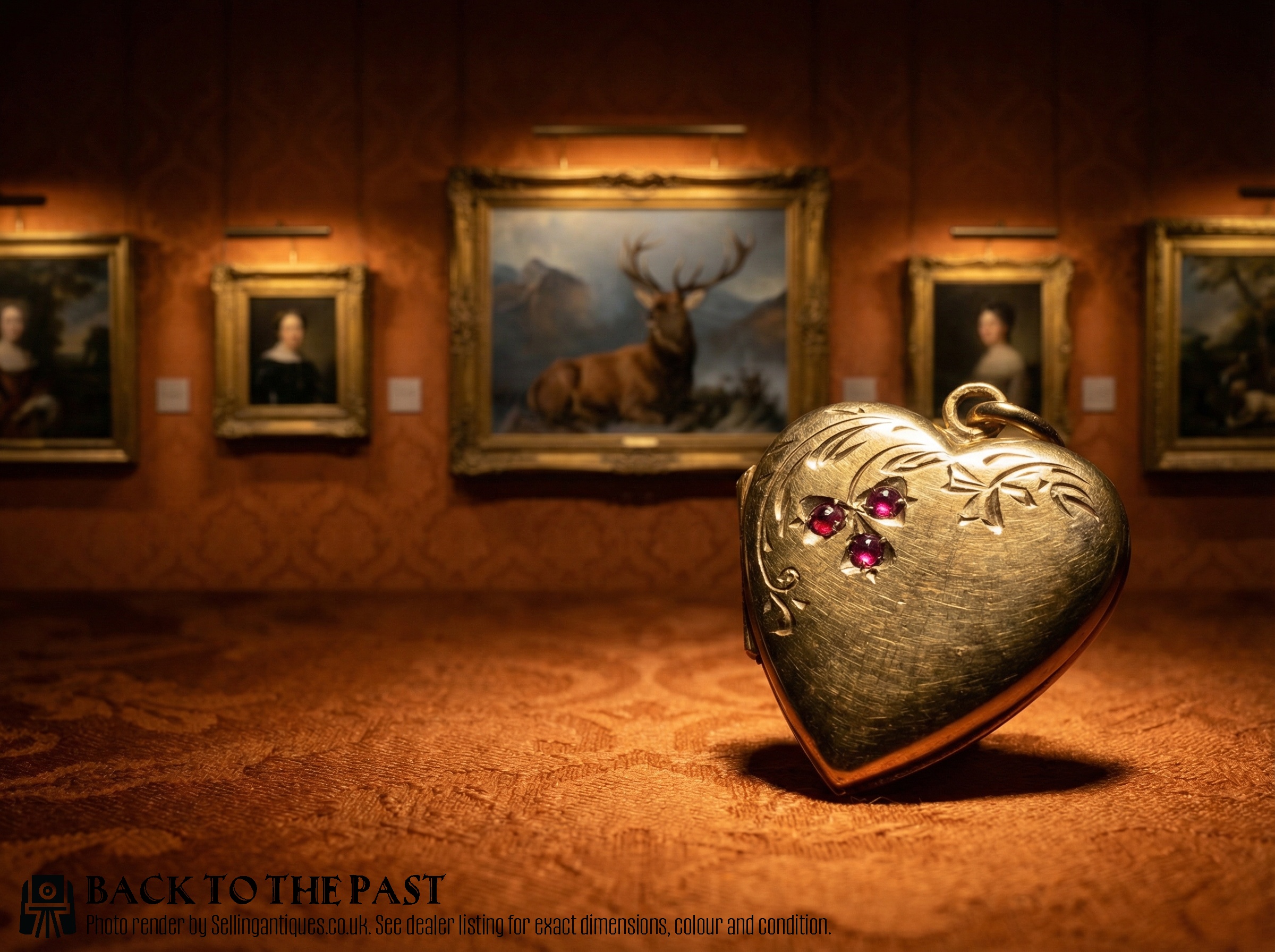
Edwardian Heart Locket
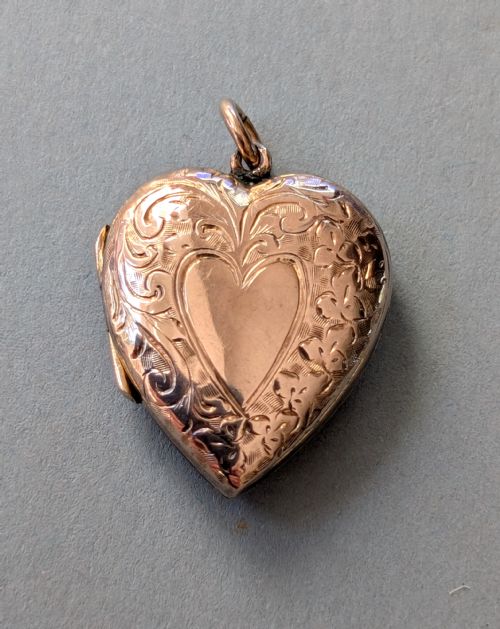
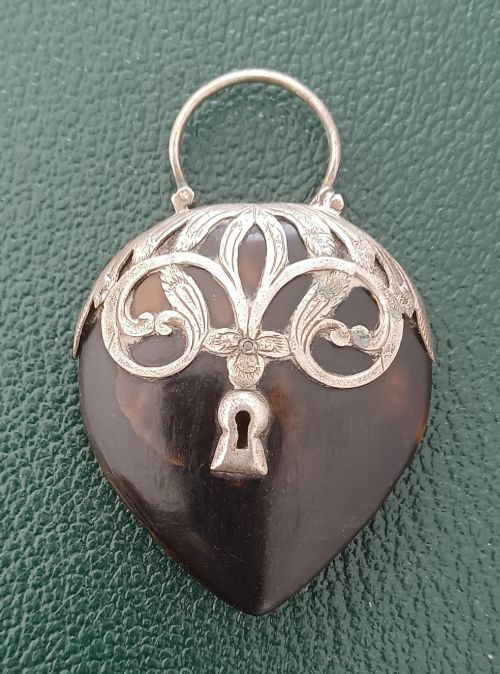
When you search for an edwardian heart locket, you encounter small hinged pendants designed to open and enclose miniatures, photographs, or hair mementos. These pieces take the form of puffed hearts, lockets combined with brooches, or padlocks intended for bracelets and chains.
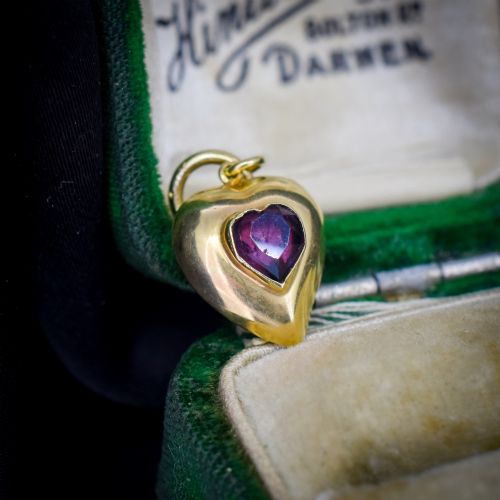
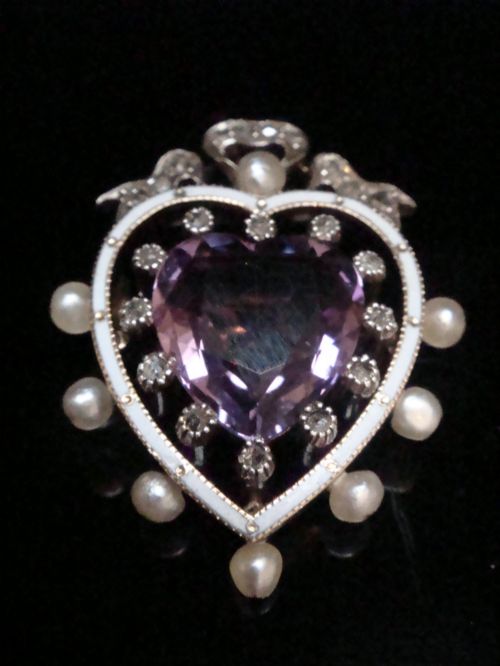
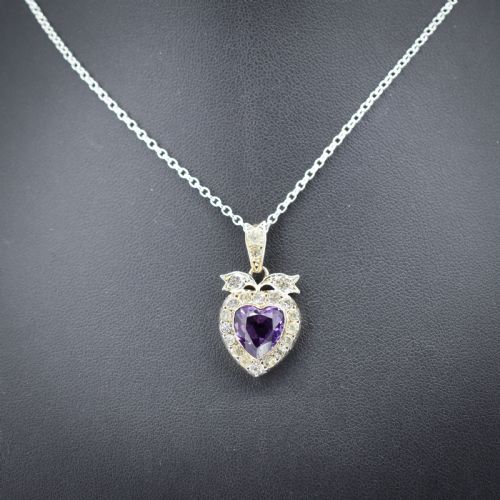
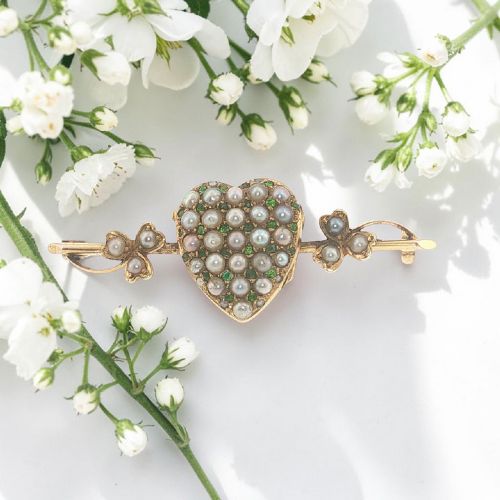
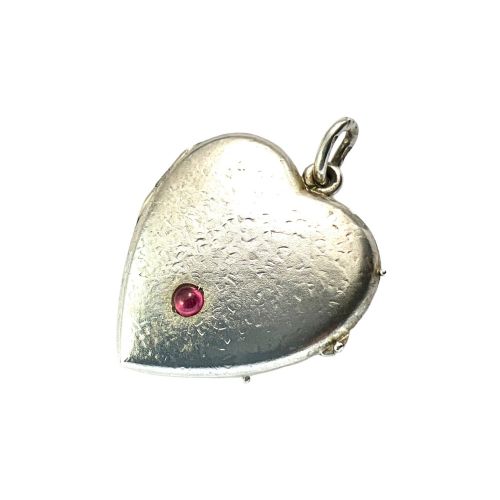
The versions most frequently met on this page date from the Edwardian era and the Victorian period, alongside select examples from the early twentieth century. They appear in gold of varying carats, silver, and tortoiseshell, often set with pearls, diamonds, sapphires, rubies, and amethysts.
Beyond standard pendants, the selection includes related forms such as charm pendants, memorial rings, and ornate bracelets featuring heart-shaped drops. Each item reflects the sentimental jewellery traditions of the nineteenth and early twentieth centuries.
How they were made
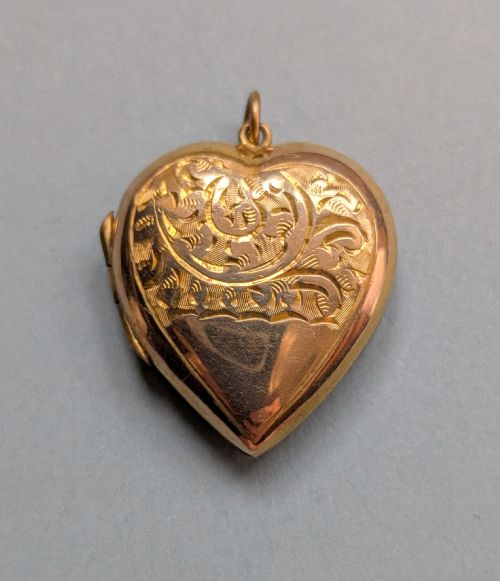
Maker's workshops constructed these lockets primarily from yellow gold, rose gold, and silver, utilising high carat alloys alongside nine-carat and fifteen-carat standards. Some pieces incorporate base metal back and front construction for structural durability.
Surface decoration relies on fine chasing, hand engraving of birds and butterflies, guilloche enamel, and the application of natural pearls, seed pearls, turquoise, and old cut diamonds in claw or flush settings.
Edwardian Heart Locket Retail Price Guide 2026
Typical asking prices for edwardian heart locket among the pieces listed under this phrase on Sellingantiques today, from the lower quarter to the upper quarter. They describe what is for sale here now, not the wider market.
Available forms range from standard photo lockets and charm pendants to brooches and memorial rings.
What varies in quality
Quality rests upon the weight and purity of the gold, distinguishing heavy solid fifteen-carat or eighteen-carat constructions from lighter nine-carat or back and front pieces. The precision of the hinge and snap closure also dictates the integrity of the locket.
The refinement of the gemstone setting and the complexity of hand engraving set individual pieces apart. Fine examples display well-matched natural diamonds, sapphires, rubies, or pearls secured evenly within clean metalwork.
B & F
The Edwardian Heart Locket Glossary
- Guilloche enamel
- A decorative technique involving intricate mechanical engine-turning beneath translucent coloured enamel. This finish creates a patterned background visible through the glassy surface.
- Old cut diamond
- A hand-faceted diamond shape characteristic of earlier periods, featuring a small table, high crown, and open culet. These stones possess a distinctive softer sparkle compared to modern cuts.
- Back and front
- A method of construction where only the exterior plates utilise solid precious metal while the internal framing employs base metal. This reduced the overall weight and cost of the jewel.
- Puff heart
- A hollow, three-dimensional heart pendant formed from two convex metal halves joined at a seam. These pieces offer volume while remaining light enough to wear comfortably on a chain.
- Seed pearl
- A very small natural or saltwater pearl, often drilled and threaded onto wire or glued into clusters. They frequently accent floral and sentimental motifs in period jewellery.
Edwardian Heart Locket: Frequently Asked Questions
What fits inside an edwardian heart locket?
These lockets were designed to hold small photographs, hand-painted miniatures, or woven locks of human hair. Many retain their original interior glass frames or metal rims to secure these keepsakes.
Because the compartments are compact, items must be trimmed precisely to fit the heart-shaped cavity without obstructing the hinge or snap closure.
How do I wear a heart padlock?
Heart padlocks function as secure clasps or decorative drops typically suspended from heavy link charm bracelets or neck chains. They feature a spring-loaded shackle that opens when a specific lever or bar is depressed.
While originally secured to everyday jewellery worn by Victorians and Edwardians, contemporary wearers often suspend them from slender chains as standalone pendants.
How do I tell Edwardian from Victorian?
Edwardian jewellery generally favors lighter, airier platinum and yellow gold designs featuring diamonds, pearls, and delicate openwork motifs inspired by eighteenth-century aesthetics. Victorian pieces often appear heavier, utilising dark amethysts, turquoise, garnets, and substantial gold settings.
Overlap in styles occurs frequently, particularly as late Victorian workshops transitioned into the Edwardian era, making hallmarks and specific gemstone combinations essential clues.
Are these lockets suitable for daily wear?
Historic lockets require careful handling due to their age, delicate hinges, and hollow internal construction. Everyday exposure to moisture, perfumes, and hard impacts can damage enamel work or loosen flush-set gemstones.
Reserving them for occasional wear ensures the hinges, glass inserts, and delicate gold or silver surfaces remain protected for the future.