



Edwardian Hall Mirror Rack
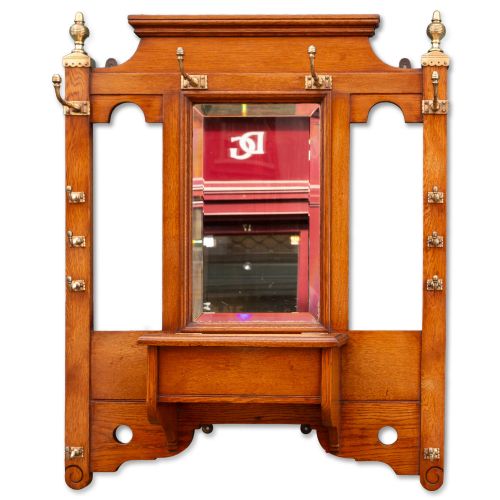
An edwardian hall mirror rack combines practical entryway storage with a central looking glass, typically rendered in oak or mahogany.
Edwardian Hall Mirror Rack
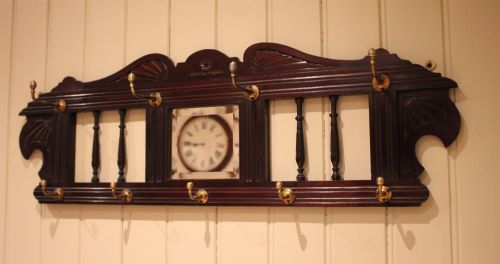
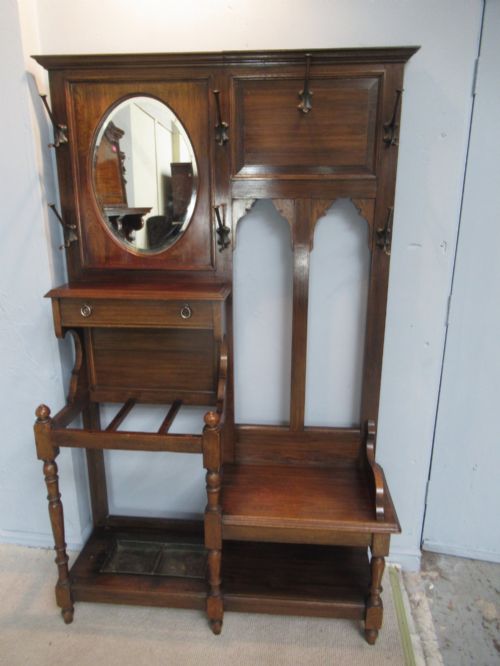
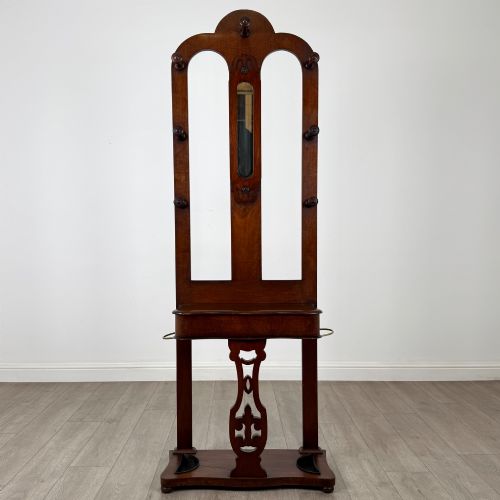
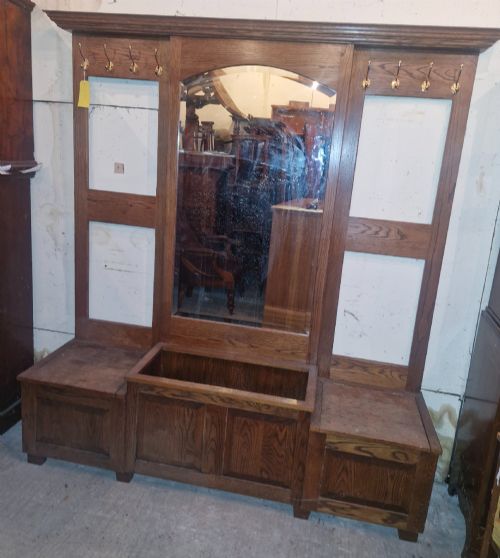
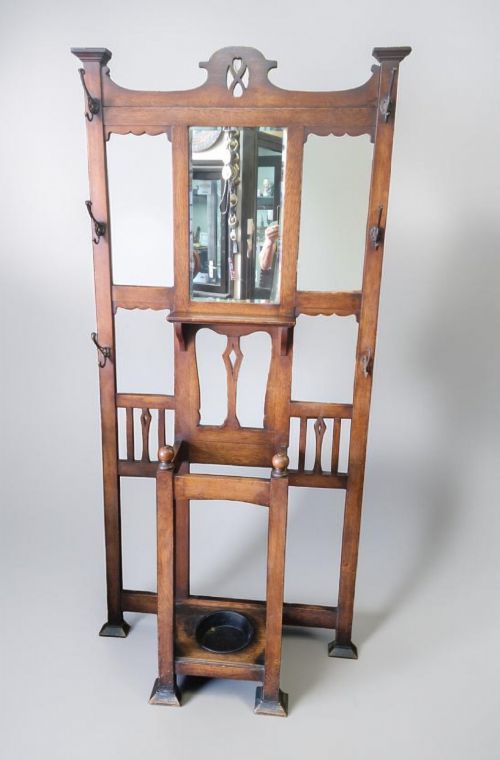
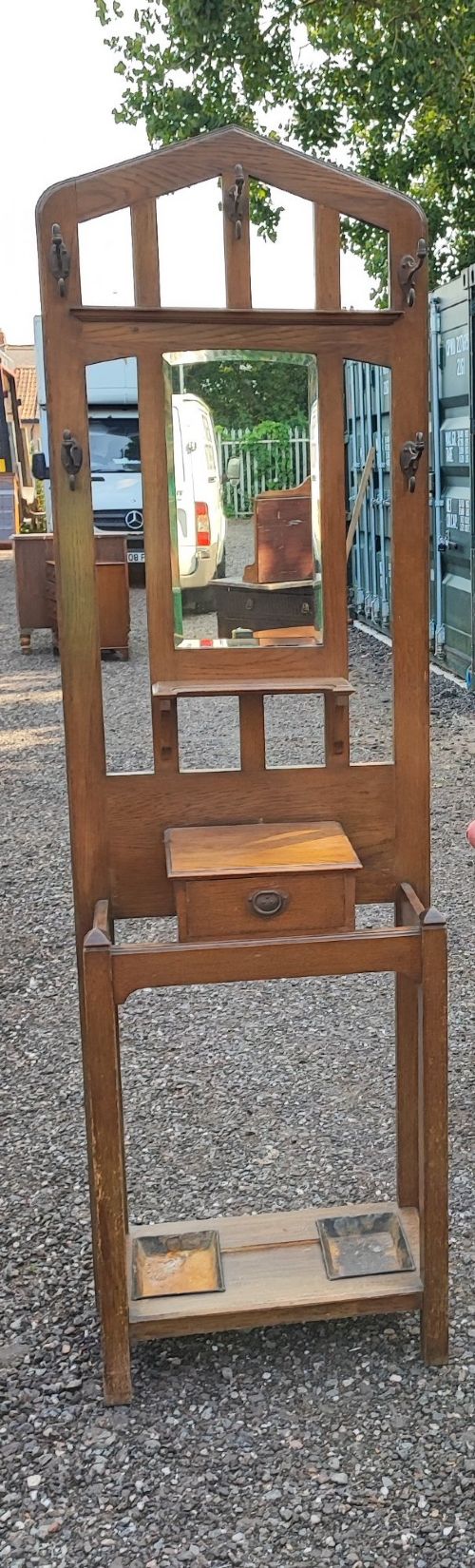
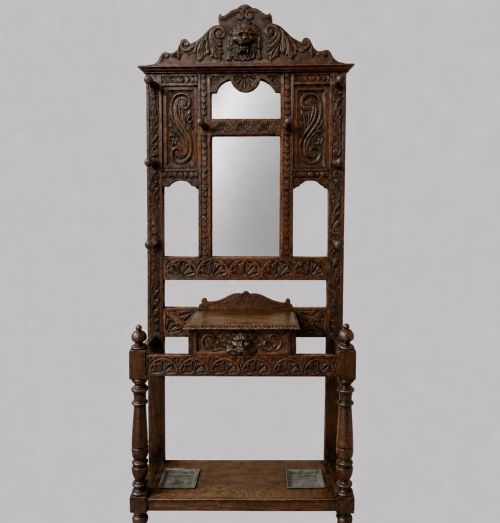
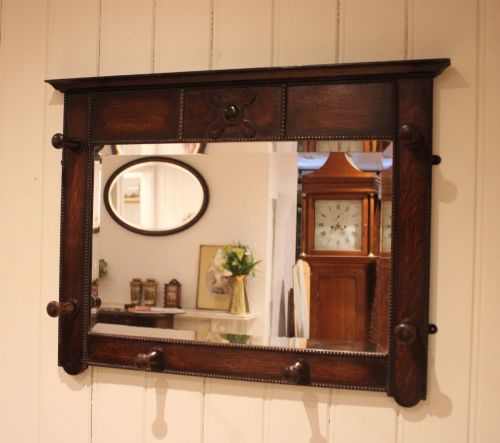
An edwardian hall mirror rack fulfills the practical need for hanging coats and hats while checking one's appearance before leaving the house, combining timber frames with glass and metal hooks. These pieces range from compact wall-mounted hanging racks to large freestanding hall stands featuring umbrella trays and seats.
The pieces appearing most frequently in this category date from the late nineteenth century through the early twentieth century, spanning Victorian, Edwardian, and Arts and Crafts aesthetics. Oak and mahogany serve as the primary foundational woods for these domestic furnishings.
How they were made
Joiners and cabinet makers constructed these pieces principally from solid oak and mahogany, frequently incorporating brass for coat hooks and rods. Carved ornamentation, such as Green Man motifs or stylized floral elements, appears across many oak and walnut examples.
Functional additions included bevelled glass mirror plates, cast iron drip pans for umbrellas, and occasionally inset ceramic tiles. Wall-mounted racks utilised secure brackets, whilst freestanding hall stands relied on sturdy timber framing and pegged joints to bear heavy winter garments.
Listings feature oak, mahogany, walnut, bamboo, brass, cast iron, and marble materials across Victorian and Edwardian periods.
What varies in quality
The standard of timber selection and depth of carving distinguish finer examples from standard utility pieces, with dense grains of oak, walnut, and mahogany demonstrating superior craftsmanship. The inclusion of heavy brass hardware and deep bevelled mirror plates indicates higher production value.
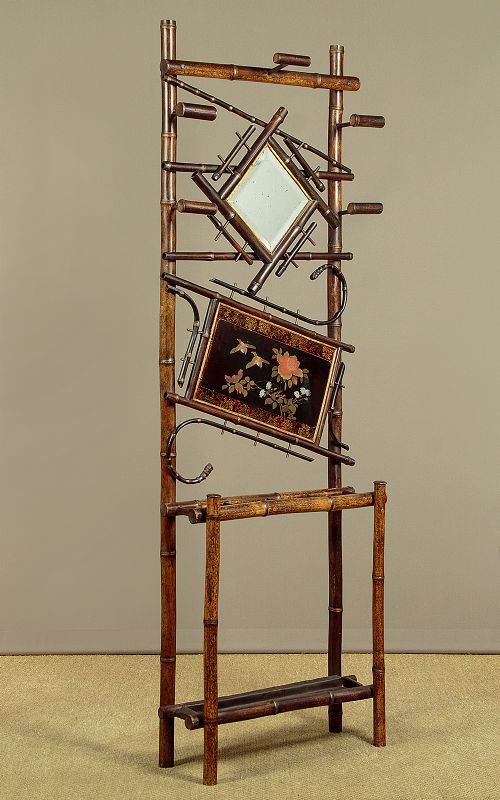
Design ambition also separates the range, as simple utilitarian coat racks contrast with elaborate Arts and Crafts, Art Nouveau, and Aesthetic Movement forms incorporating bamboo, inlaid woodwork, or decorative ceramic tiles.
Fischel·Coalbrookdale·Ellen E. Houghton of Minton
The Edwardian Hall Mirror Rack Glossary
- Bevelled plate
- A mirror glass whose outer edges are cut and polished at an angle to catch the light. This technique adds depth and decorative refinement to the looking glass.
- Hall stand
- A composite hallway furnishing that typically integrates a wall mirror, clothes hooks, glove box, and umbrella stands. Many versions also include a bench seat.
- Green Man
- A sculptural architectural motif depicting a face made of or entwined in leaves and vines. It appears frequently in carved oak on nineteenth-century furniture.
- Bentwood
- Wood softened by steam and bent into curved shapes under pressure. This technique allowed makers to create lightweight, flowing frames.
- Arts and Crafts
- A design movement emphasising handcraftsmanship, simple forms, and visible construction methods. Pieces from this tradition often feature unadorned oak and hammered metal details.
Edwardian Hall Mirror Rack: Frequently Asked Questions
How do I hang a wall mirror rack?
Wall-mounted versions require sturdy fixings screwed directly into wall studs or masonry to support the weight of heavy timber and hanging garments. Ensure the mounting brackets on the reverse are secure before loading the hooks.
For larger multi-functional pieces, additional wall anchors may be necessary to prevent tipping when coats and hats occupy the hooks.
What woods were used for hall stands?
Makers predominantly utilised oak and mahogany for their durability and rich grain patterns. Walnut also appears on finer examples from the period.
Alternative materials include bamboo and cast iron, which suited specific stylistic movements like the Aesthetic Movement or industrial country house interiors.
How do I care for the mirror glass?
Clean the glass with a soft cloth and a mild glass cleaner sprayed onto the cloth rather than directly onto the surface. This prevents moisture from seeping behind the bevelled edges and damaging the silver backing.
Maintain the surrounding timber frame with occasional application of appropriate wax polish to preserve the finish.
What is the difference between a hall rack and a hall stand?
A hall rack is typically a wall-mounted unit containing mirror plates, shelves, and coat hooks designed to save floor space in narrow hallways. It hangs entirely on the wall.
A hall stand is usually a freestanding piece of furniture that extends to the floor, often incorporating umbrella wells, drip pans, and sometimes a bench seat.