





Edwardian Guilloche Enamel Silver
Edwardian guilloche enamel silver brings together engine-turned precision and lustrous vitreous colour, forming small treasures designed for the dressing table and pocket.
Edwardian Guilloche Enamel Silver
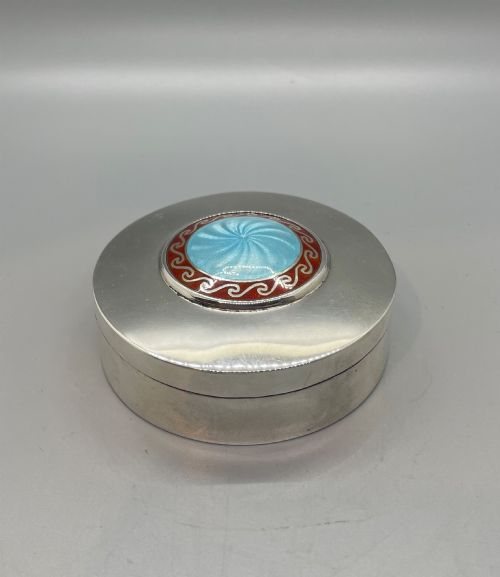
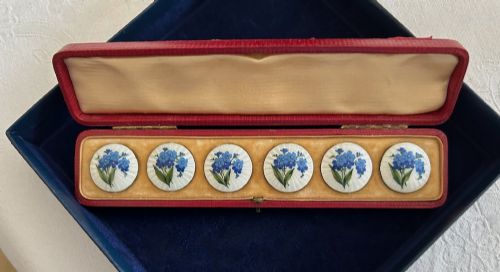
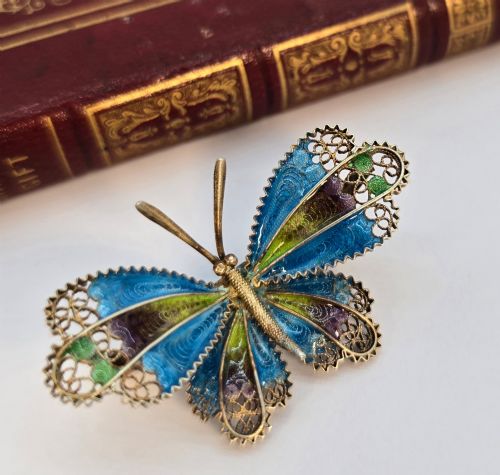
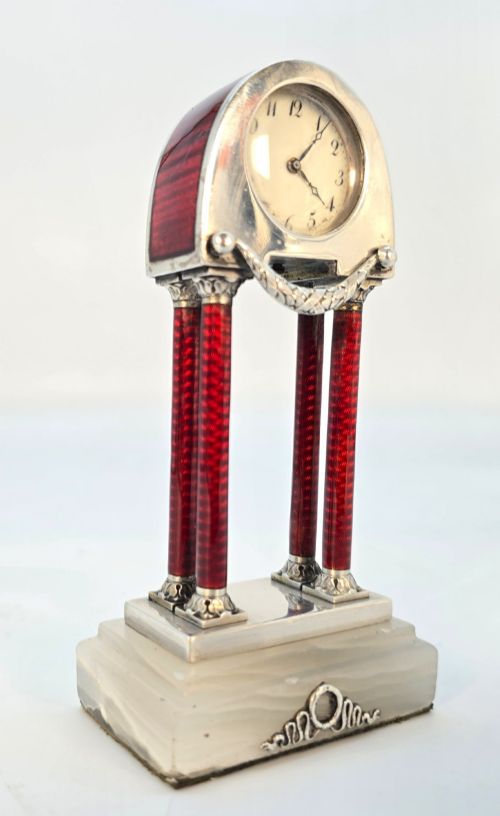
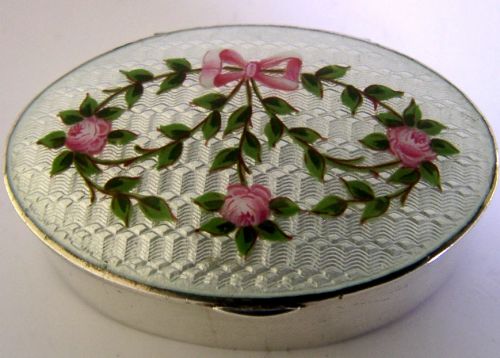
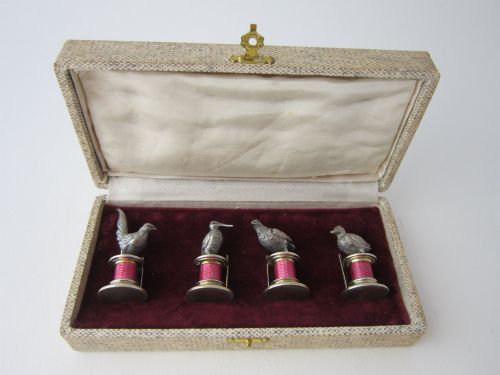
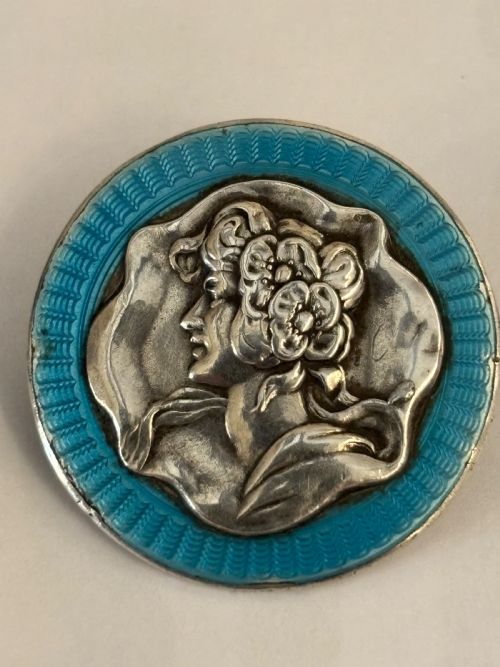
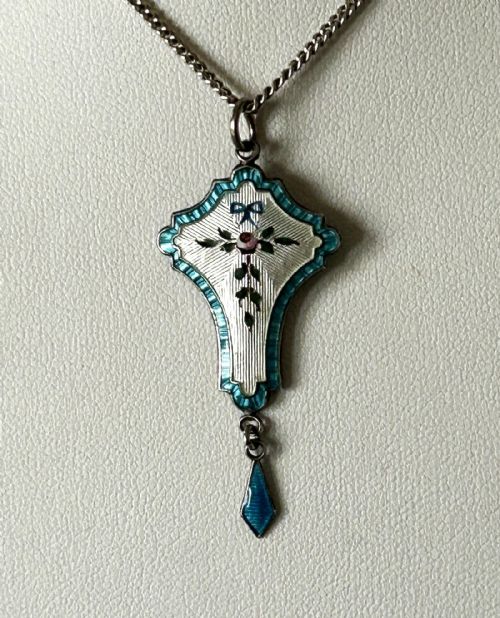
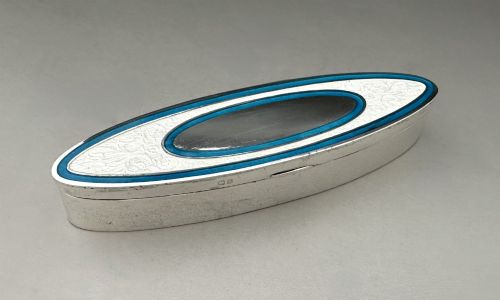
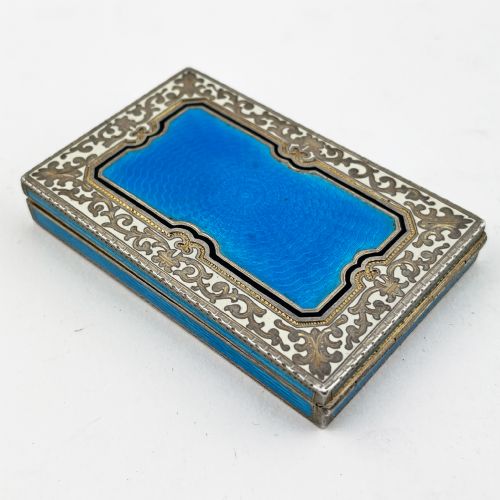
When you search for edwardian guilloche enamel silver, you encounter a refined selection of decorative objects and personal accessories made primarily during the early twentieth century. The selection spans utilitarian pieces such as trinket boxes, inkwells, scent bottles, and compacts, alongside wearable items like brooches, pendants, and belt buckles.
The objects frequently date from the Edwardian period and the subsequent Art Deco era, though examples extend into Victorian and 1930s styles. Makers based in Birmingham, London, Chester, and Sheffield contributed heavily to this output, often pairing sterling silver mounts with translucent coloured enamels.
Continental workshops from Vienna, France, and other European centres also produced comparable items, introducing miniature clocks, singing bird boxes, and card cases. These pieces reflect diverse stylistic influences, ranging from organic Art Nouveau motifs to geometric Art Deco designs.
How They Were Made
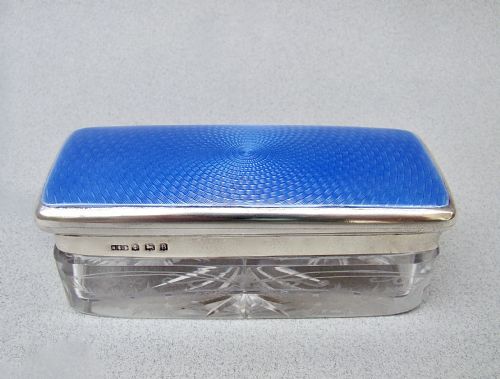
Silversmiths formed the structural mounts, boxes, and frames using sterling silver or silver gilt, employing techniques like casting, stamping, and engraving. Many items incorporate cut glass or glass bodies fitted with silver and enamel lids, as well as mesh constructions for purses.
The distinct guilloche pattern was achieved by machine-turning the metal surface with intricate geometric designs before applying vitreous enamel. Craftsmen then fused powdered glass to the engraved silver under high heat, often layering multiple translucent or multi-coloured enamels to create depth and light reflection.
Listings feature items from 1900, 1910, 1920, and 1930, encompassing Edwardian, Art Nouveau, and Art Deco styles.
What Varies in Quality
The standard of an item depends heavily on the complexity and precision of the underlying engine-turned engraving beneath the translucent enamel. Finer pieces display crisp, deeply cut patterns that catch the light uniformly through the vitreous layer.
The purity and handling of the metal also dictate grade, with heavy sterling silver mounts and silver gilt interiors marking superior manufacture. Additionally, the execution of painted floral details or the seamless application of multi-coloured enamel separates standard production items from master workshop output.
Henry Clifford Davis·Georg Adam Scheid·Henry Matthews·Levi and Salaman·C E Turner·Walker and Hall·J and R Attenborough·James Fenton·Saunders and Shepherd·Meyle and Mayer·Charles Horner
The Edwardian Guilloche Enamel Silver Glossary
- Guilloche Enamel
- A decorative technique where a metal surface is mechanically engraved with intricate geometric patterns and then covered with transparent enamel.
- Vitreous Enamel
- A material made by fusing powdered glass to a substrate by firing, resulting in a smooth, durable, and glossy coloured coating.
- Silver Gilt
- Silver that has been coated with a thin layer of gold on its surface, giving it a warm, golden appearance.
- Capstan Inkwell
- A desk accessory shaped like a nautical capstan, featuring a wide base that tapers upward toward the ink opening.
- Compact
- A small portable case containing a mirror and pressed powder, frequently fitted with an enamelled lid.
Edwardian Guilloche Enamel Silver: Frequently Asked Questions
What is guilloche enamel?
Guilloche enamel is a decorative technique where a metal substrate is mechanically engraved with precise, repeating geometric patterns before being coated with transparent glass enamel.
This method allows the underlying engraved pattern to show through the glossy coloured surface, creating a shimmering depth of field when viewed from different angles.
Are these items hallmarked?
Many British pieces feature clear hallmarks stamped into the silver, indicating the assay office, maker's mark, and date letter for years such as 1908, 1910, or 1926.
Continental and unmarked pieces rely on stylistic indicators and maker attribution to determine their origin and approximate period.
How were dressing table jars used?
Dressing table jars held powders, creams, pins, and small cosmetics on nineteenth and twentieth-century vanity tables.
The decorative silver and enamel lids protected the contents while adding a colourful, ornamental display to the bedroom suite.