



Edwardian Floral Drop Pendant
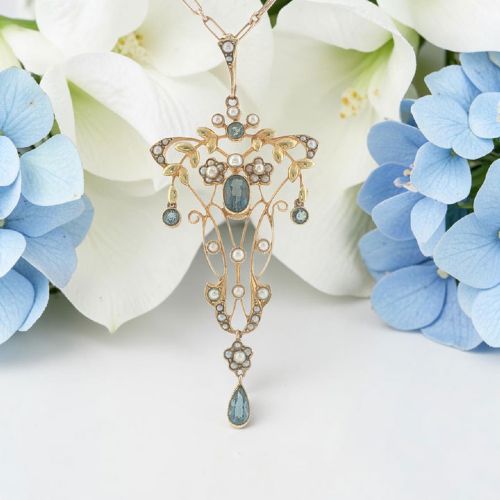
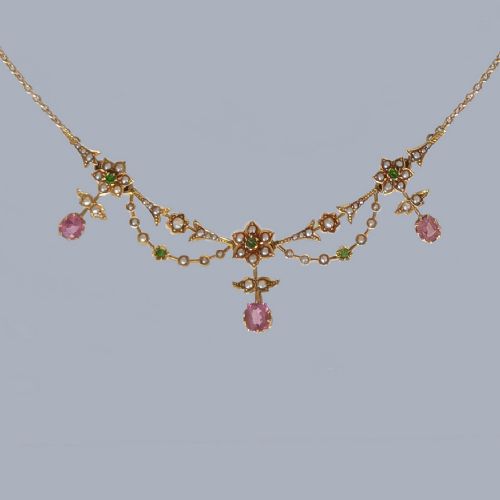
An edwardian floral drop pendant brings together delicate seed pearls and coloured gemstones in cascading designs that catch the light with every movement.
Edwardian Floral Drop Pendant
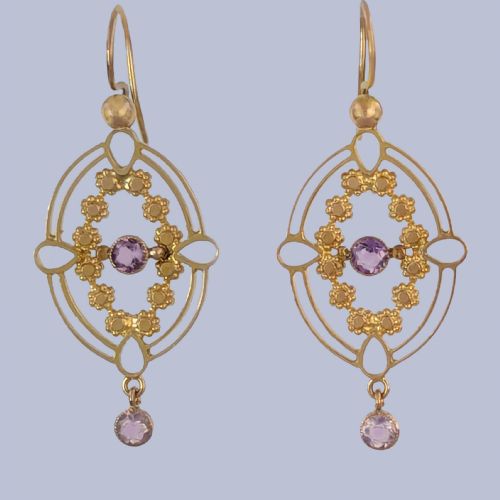
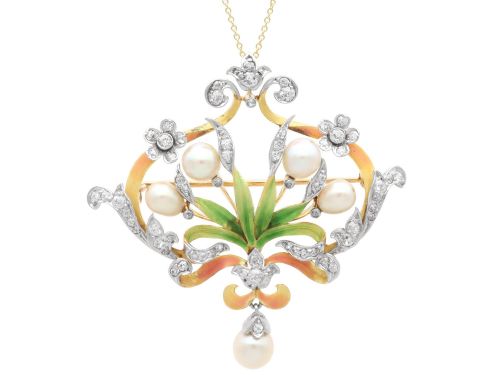
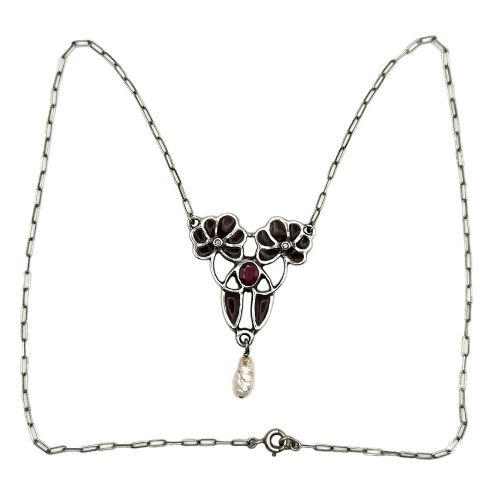
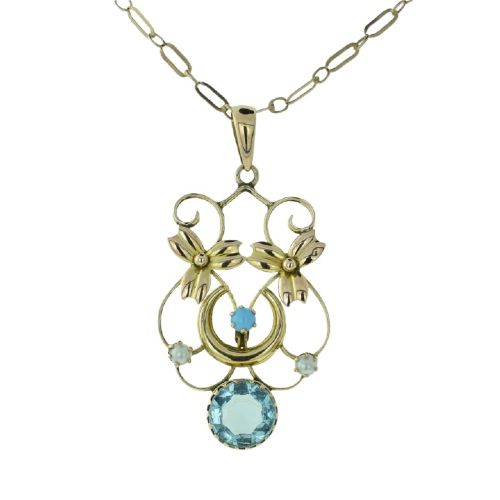
An edwardian floral drop pendant suspends delicate botanical and blossom motifs beneath fine chains, often incorporating central gems like aquamarine, amethyst, sapphire or peridot. These pieces draw heavily on the flowing organic curves of Art Nouveau alongside formal Edwardian elegance.
Most examples encountered on this page date from the early twentieth century, spanning the Edwardian era proper alongside adjacent Victorian, Arts and Crafts and later periods. The forms range from simple lavaliers to elaborate fringe necklaces and convertible pendant brooches.
Makers and workshops of the period utilised cascading configurations to display gemstones in balanced floral arrangements. Buyers find both gold and silver settings among the listed selections.
Materials and construction
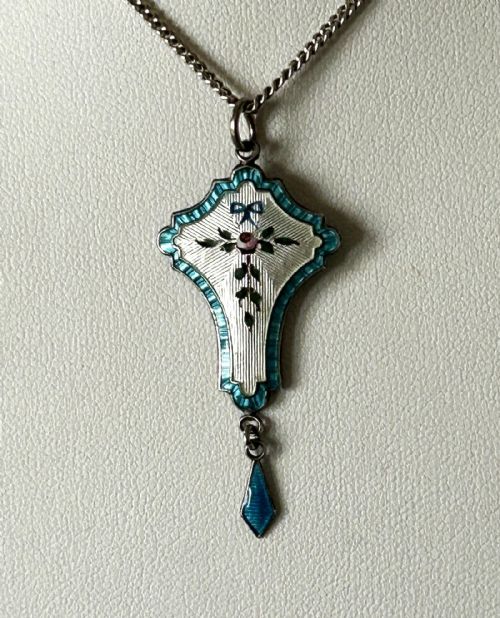
Goldsmiths worked primarily in 9ct and 15ct gold, alongside silver and platinum, to construct intricate frames for seed pearls and coloured stones. Enamel work also appears frequently, adding vibrant blue and green tones to silver and gold frameworks.
Seed pearls are individually set to trace delicate petals and leaves, paired with faceted aquamarines, amethysts, garnets and sapphires. Openwork wire scroll design and fine collet settings define the structural integrity of these drops.
Edwardian Floral Drop Pendant Retail Price Guide 2026
Typical asking prices for edwardian floral drop pendant among the pieces listed under this phrase on Sellingantiques today, from the lower quarter to the upper quarter. They describe what is for sale here now, not the wider market.
Some pendants double as brooches so the flowers can travel from collar to lapel without missing a beat.
Factors of quality
The fineness of the metalwork and the precision of the stone setting distinguish exceptional pieces from standard examples. Hand-wrought wirework and securely graduated seed pearls demonstrate superior workshop execution.
The clarity and saturation of the central gemstones, whether aquamarine, pink sapphire or amethyst, dictate the visual impact of the pendant. Integrated enamel work requires high technical skill to maintain smooth, unbroken surfaces.
S. Blanckensee & Son·Charles Horner
The Edwardian Floral Drop Pendant Glossary
- Seed pearl
- A very small, naturally formed saltwater or freshwater pearl, often drilled and threaded onto tiny wires to form floral clusters. These tiny pearls define the soft texture of Edwardian jewellery.
- Lavalier
- A pendant featuring a small gemstone suspended from a chain, with one or more further drops hanging below. This style gained immense popularity during the Edwardian period.
- Collet
- A band or collar of metal that holds a gemstone in place by its girdle. It provides a clean, finished edge around the stone.
- Cloisonne
- An enamel technique where thin metal wires are soldered to the metal base to create compartments for enamel paste. These compartments are then fired to produce colourful decorative patterns.
Edwardian Floral Drop Pendant: Frequently Asked Questions
How do I wear an edwardian floral drop pendant?
These pendants suspend gracefully from fine gold or silver chains, resting on the upper chest where the drop movement remains visible. They pair well with period blouses and open necklines.
Some pieces also function as brooches, offering versatile ways to pin them to lapels or fabrics depending on the mounting.
Are seed pearls fragile?
Seed pearls are held by fine wire or glue settings that require careful handling during daily wear. Avoid exposing them to harsh chemicals, perfumes or ultrasonic cleaning.
Store pendants flat in dedicated jewellery boxes to prevent the delicate drop chains from tangling or pulling.
How to tell an Edwardian pendant apart from Victorian ones?
Edwardian pieces typically favour lighter silver and yellow or rose gold settings with airy openwork, whereas Victorian jewellery often appears heavier and more substantial. Floral and garland motifs dominate Edwardian design.
Stones like aquamarine and peridot paired with platinum accents also point directly to the Edwardian penchant for lighter, ethereal aesthetics.
What metals were used?
Goldsmiths utilised 9ct, 15ct and 18ct gold, alongside silver and platinum. Rose gold and yellow gold frequently form the warm backing for seed pearl clusters.
Silver serves as the primary metal for many enamel and paste pieces, often paired with gold fronts during the transitional eras.