

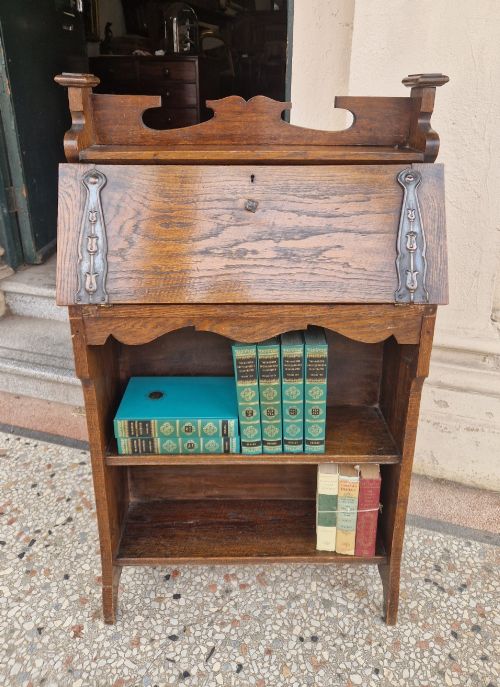

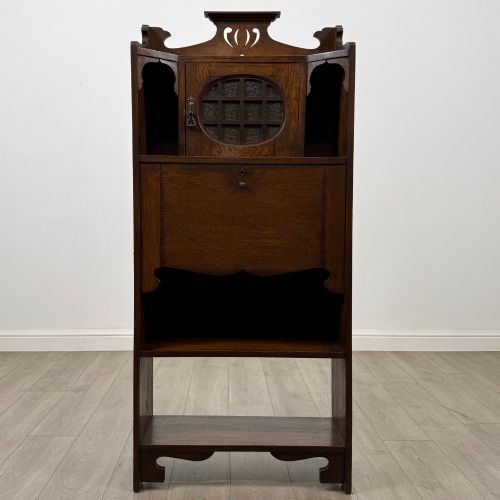
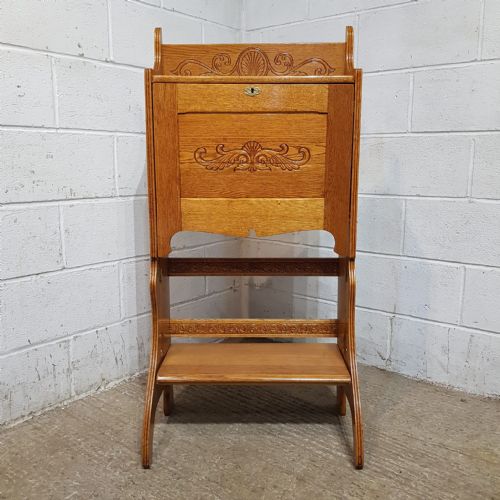
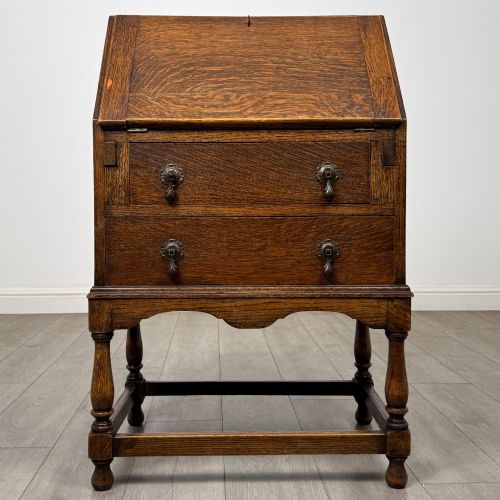
Edwardian Fall Front Desk
An edwardian fall front desk offers a practical writing surface that folds neatly away behind fitted pigeonholes and small drawers.
Edwardian Fall Front Desk
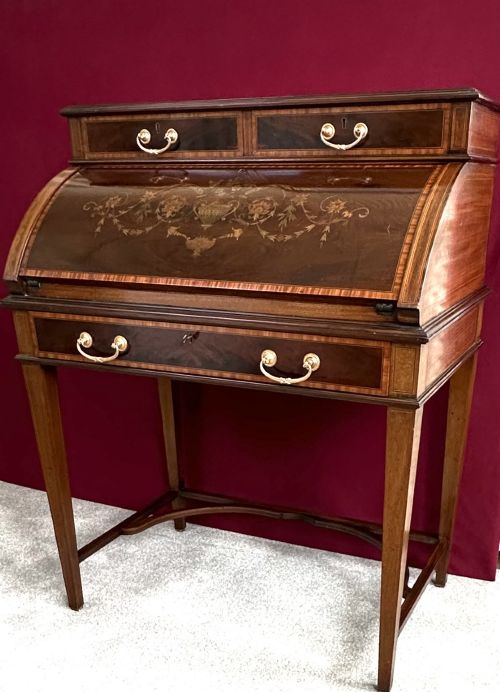
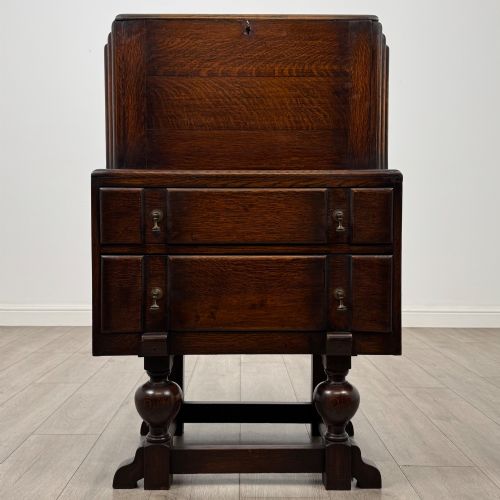
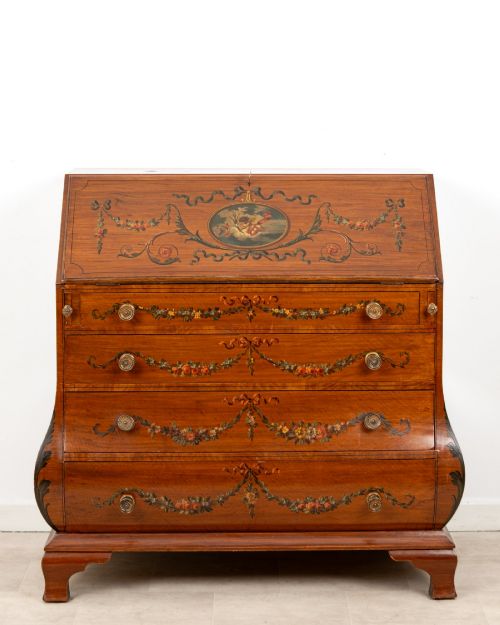
When you search for an edwardian fall front desk, you encounter pieces designed for compact domestic writing and storage, primarily originating from the Edwardian era alongside surrounding periods like the nineteenth century and the nineteen-twenties.
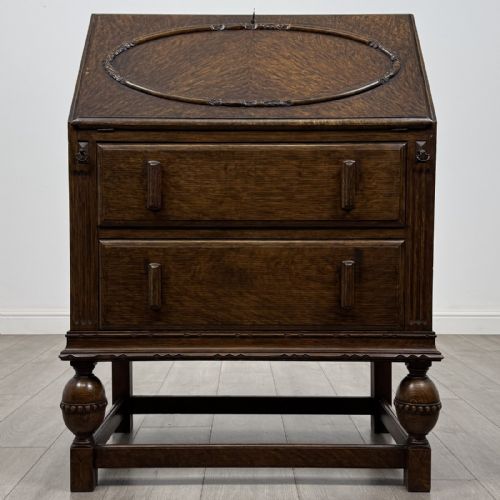
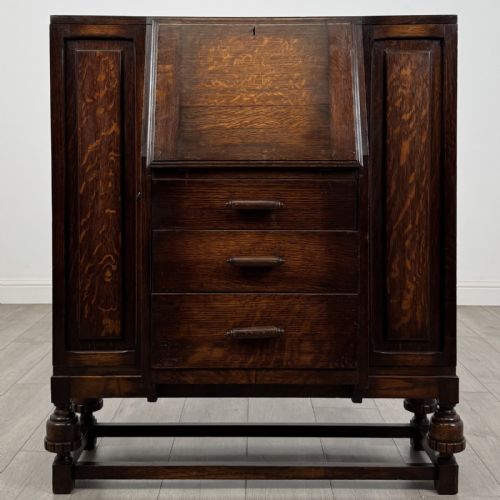
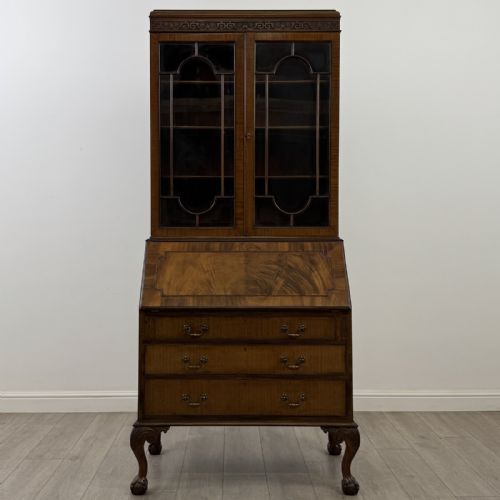
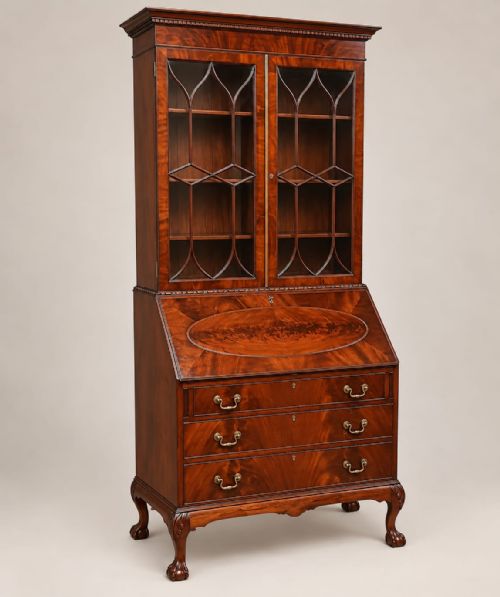
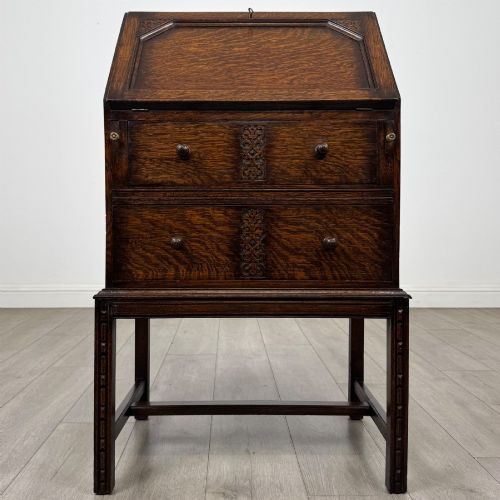
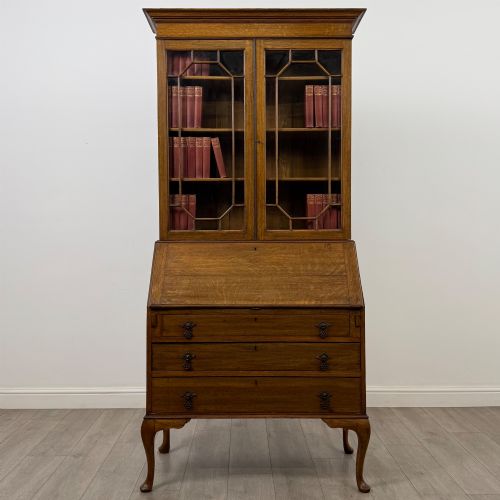
The most common form on this page is the bureau, often standing on bracket or cabriole legs, or integrated beneath a glazed bookcase top.
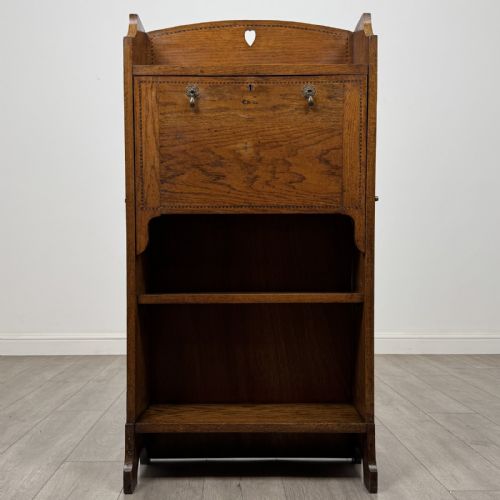
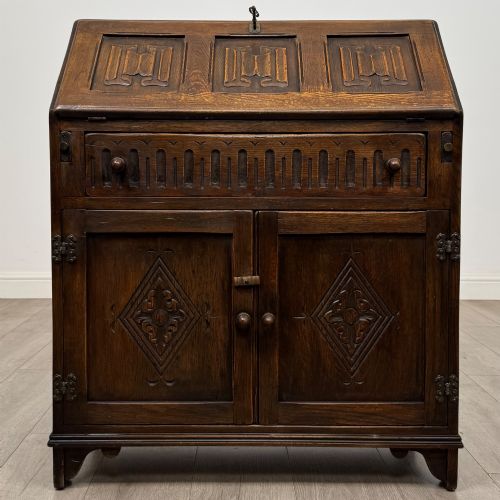
Makers drew on various historical revivals, producing pieces in Georgian, Jacobean, Tudor, and Arts and Crafts styles alongside standard Edwardian designs.
Materials and Construction
Cabinetmakers utilised timber construction, predominantly working in oak and mahogany, with walnut, satinwood, and yew appearing alongside secondary woods like elm.
Decorative elements include brass fittings, copper details, iron accents, glass doors, and inlaid woodwork such as linenfold carving or painted satinwood panels.
Edwardian Fall Front Desk Retail Price Guide 2026
Typical asking prices for edwardian fall front desk among the pieces listed under this phrase on Sellingantiques today, from the lower quarter to the upper quarter. They describe what is for sale here now, not the wider market.
Listings feature oak as the dominant timber, accompanied by mahogany, walnut, satinwood, and yew.
Design and Execution
The distinction between ordinary and finer pieces lies in the choice of timber figure, such as figured oak or matched walnut veneers, and the precision of the joinery within the internal stationery compartments.
Enhanced quality appears in balanced proportions, such as narrow writing formats, and deliberate stylistic integration like astragal glazing bars or carved claw and ball feet.
Harris Lebus·Liberty of London
The Edwardian Fall Front Desk Glossary
- Bureau
- A writing desk featuring a sloping hinged flap that drops down to form a writing surface above drawers or a cupboard. This term often interchanges with fall front desk in historical listings.
- Bureau Bookcase
- A cabinet combining a writing bureau at the base with a glazed shelving section overhead for book storage. These pieces often feature fitted interior pigeonholes.
- Fall Front
- A hinged flap that opens downwards from a vertical position to provide a horizontal writing surface. It conceals internal stationery compartments when closed.
- Astragal Glazing
- Wooden strips that divide glass panes within a cabinet door into smaller geometric sections. This technique is common on the upper bookcase portions.
- Linenfold
- A style of wood carving that imitates folded fabric, frequently seen on oak panels of this period. It reflects Tudor and Jacobean revival influences.
Edwardian Fall Front Desk: Frequently Asked Questions
What is an edwardian fall front desk?
An edwardian fall front desk is a compact writing cabinet featuring a hinged flap that pulls down for correspondence. Inside, users find small drawers and pigeonholes for stationery.
These items combine workspace and storage within a single upright footprint, making them suitable for smaller domestic rooms.
How do I identify the wood type?
Examine the grain patterns and colour variations across the exterior surfaces. Oak often displays prominent medullary rays, while mahogany shows a deeper reddish tone.
Specialist woods like satinwood or walnut provide lighter or more heavily figured surfaces, sometimes enhanced with decorative inlay.
What styles are common?
Listings reveal a mix of standard Edwardian cabinetwork alongside deliberate historical revivals. Pieces reflect Arts and Crafts simplicity or draw on Jacobean, Tudor, and Georgian aesthetics.
Details like linenfold panels, astragal glass doors, and cabriole legs help distinguish these various stylistic influences.
Where were they placed?
These desks served domestic writing needs in parlours, bedrooms, and studies. Their enclosed writing surfaces kept correspondence private and rooms tidy.
Bureau bookcase variations provided dual functions by housing household libraries above the primary writing desk.