



Edwardian Fainting Sofa
An Edwardian fainting sofa is an elongated seat designed for resting in a reclining position, offering a blend of period elegance and leisurely comfort.
Edwardian Fainting Sofa
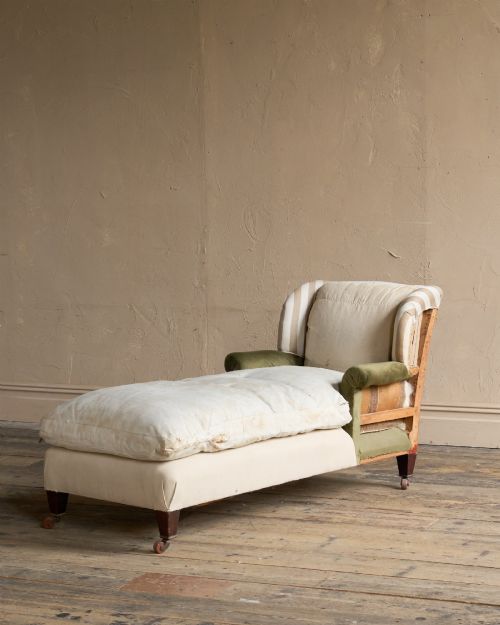
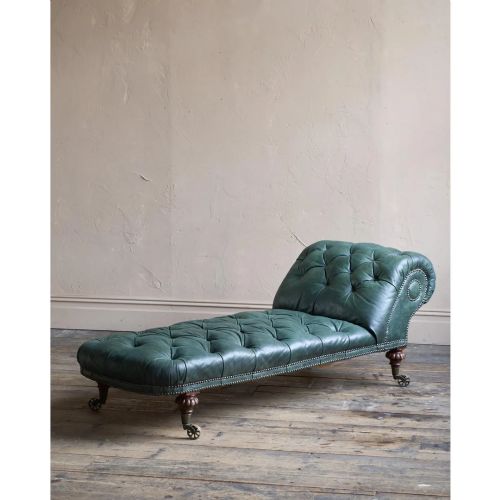
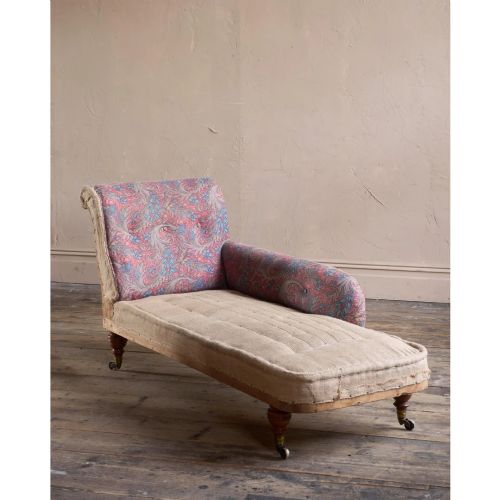
An edwardian fainting sofa typically appears as a chaise longue or daybed designed for reclining in domestic interiors. These pieces incorporate forms originating from the 19th century and the Edwardian period, often reflecting Victorian or Arts and Crafts styling.
The versions most commonly met on this page span from the late 19th century through to around 1910, constructed as single-ended daybeds or long armchairs. They utilise timber frames paired with upholstered surfaces finished in velvet, textile, or leather.
How they were made
Makers constructed the structural frames using hardwoods such as mahogany, walnut, oak, and general wood. These sturdy skeletons supported the extended seating decks required for full-length reclining.
Upholstery techniques involved textiles, velvet, and leather stretched over padded foundations, frequently secured with buttoning details. Accents and hardware incorporated brass and metal elements to complete the construction.
Edwardian Fainting Sofa Retail Price Guide 2026
Typical asking prices for edwardian fainting sofa among the pieces listed under this phrase on Sellingantiques today, from the lower quarter to the upper quarter. They describe what is for sale here now, not the wider market.
Listings feature items spanning the 19th century, Victorian era, Edwardian period, and around 1900, constructed from mahogany, walnut, oak, brass, leather, and velvet.
What varies in quality
The distinction between standard examples and superior pieces rests on the integrity of the timber frame and the refinement of the upholstery work. Items produced by notable makers display greater precision in woodwork and joinery.
Quality also manifests in the choice of covering materials, where fine leather and dense velvet outlast basic textiles. The preservation of original frame structures and traditional buttoning methods marks the higher tier of these pieces.
Howard and Sons·William Birch·Hampton and Sons
The Edwardian Fainting Sofa Glossary
- Chaise Longue
- A long chair for reclining, essentially a chair combined with a platform to support the legs. This form serves as the primary shape for pieces matching this search.
- Daybed
- A couch that can be used for lounging or sleeping during the day. These items share a similar elongated footprint with fainting sofas.
- Buttoning
- An upholstery technique where recessed buttons are pulled deep into the padding to create a quilted diamond pattern. This method adds firmness and visual texture.
- Solid Oak Frame
- A structural skeleton built entirely from oak timber. This material provides robust durability for seating furniture.
Edwardian Fainting Sofa: Frequently Asked Questions
What is an edwardian fainting sofa?
An edwardian fainting sofa is an elongated seating form designed for reclining without fully lying down. They bridge the gap between a conventional armchair and a daybed.
These pieces draw on 19th century and Edwardian design traditions, featuring single-ended backrests suited for parlours and drawing rooms.
How do I identify the period?
Period identification relies on examining the timber frame materials and the specific upholstery styles present. Pieces from the 19th century often display heavier Victorian carving or simpler early forms.
Edwardian examples tend towards lighter oak framing and specific turn-of-the-century decorative traits. Comparing the structural lines helps narrow down the decade of manufacture.
Where were they used?
These furnishings historically occupied sitting rooms, bedrooms, and private parlours. They provided a comfortable resting place for household members during the day.
Their elongated shape allowed occupants to recline while remaining fully dressed and upright in domestic social settings.
What materials are typical?
Frameworks utilise woods like mahogany, walnut, and solid oak, complemented by brass and metal structural components. Upholstery consists of leather, velvet, and various traditional textiles.
Combinations of these materials dictate the overall weight and tactile finish of each individual piece.