



Edwardian Extending Dining Table
When you search for an edwardian extending dining table, you find practical dining furniture designed to lengthen for guests using clever internal mechanisms.
Edwardian Extending Dining Table
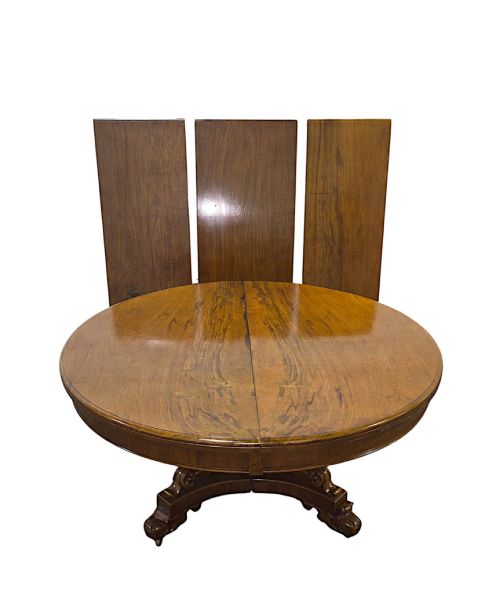
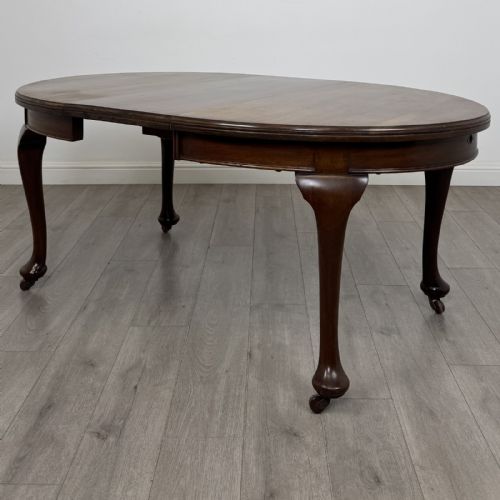
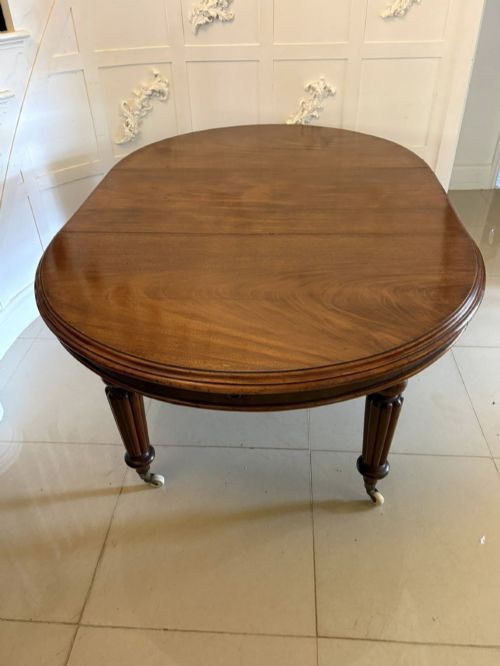
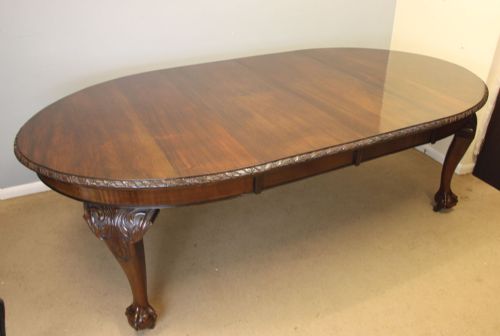
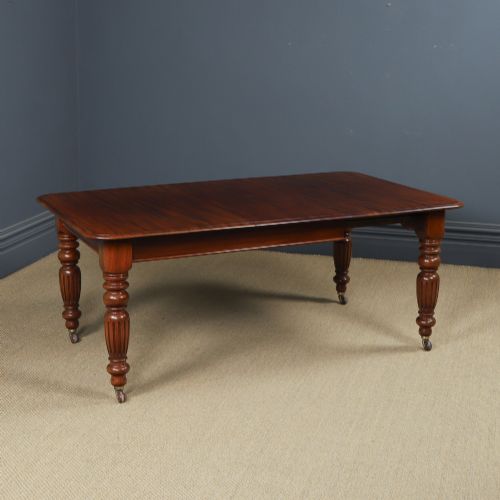
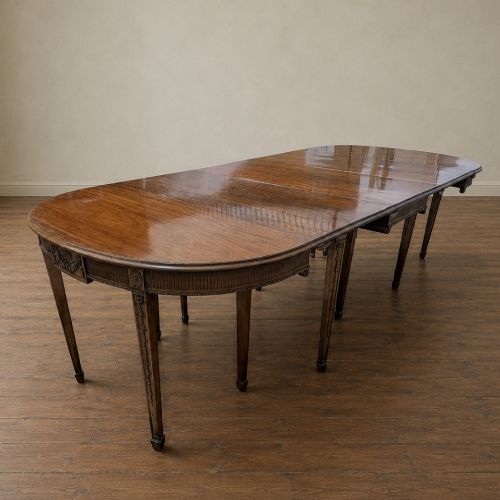
An edwardian extending dining table provides a sturdy surface for daily meals while offering the flexibility to expand for larger gatherings. These pieces appear frequently in mahogany and oak, often featuring additional leaves that store separately or wind out on internal metal screws. Makers of the period drew on earlier design revivals, producing tables with classical proportions and robust construction.
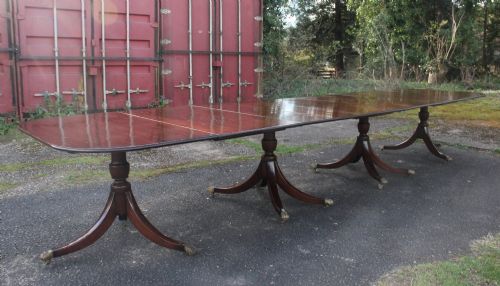
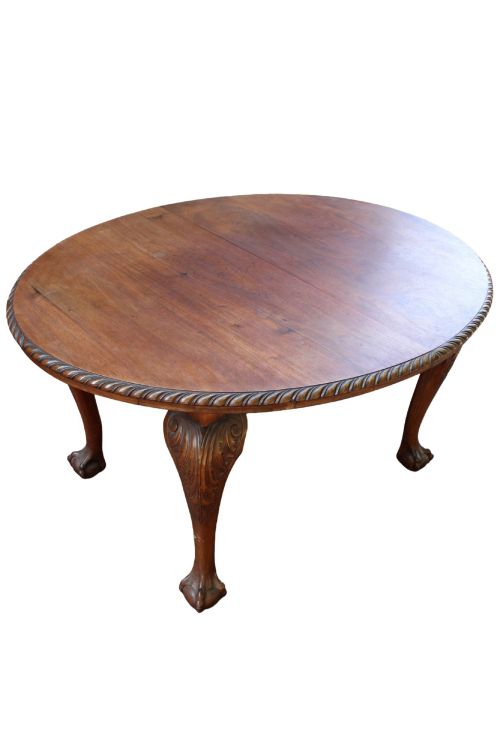
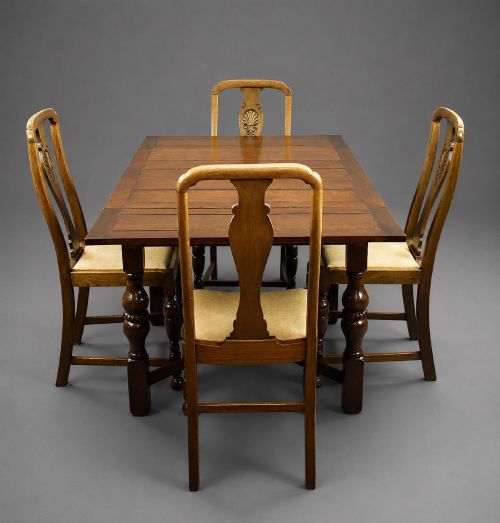
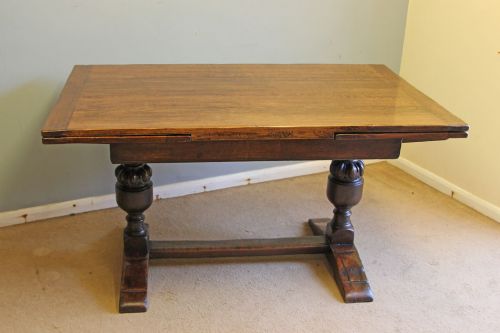
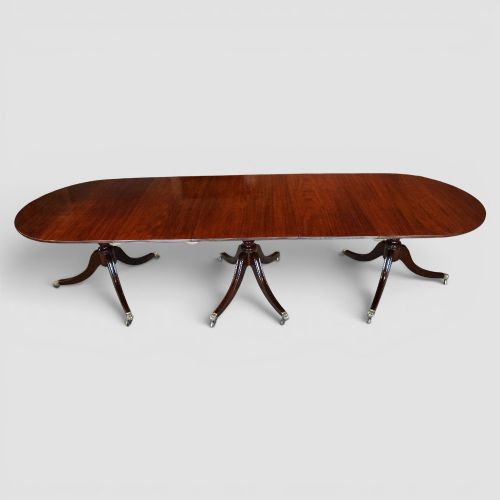
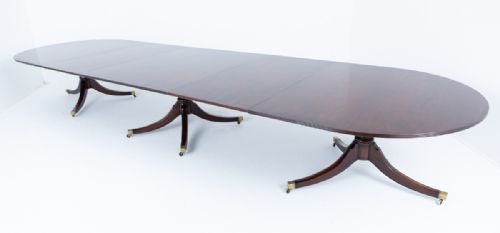
The format ranges from compact circular tables that pull apart to accept leaves, to large multileated pedestal tables capable of seating substantial groups. Oak examples often lean towards a simpler Arts and Crafts or farmhouse aesthetic, while mahogany versions display polished surfaces suited to formal dining rooms. Buyers encounter everything from wind-out mechanisms operated by a handle to draw-leaf designs that pull out from beneath the main top.
What Separates Examples
Quality rests in the precision of the extending mechanism and the stability of the frame when fully opened. Tables that glide smoothly on their runners without sagging at the joints demonstrate superior craftsmanship from original workshops.
The choice of timber grade and the execution of carved or inlaid details also define the tier of a piece. Fine matching of wood grain across added leaves indicates careful selection by the maker, whereas mismatched boards suggest secondary production.
Edwardian Extending Dining Table Retail Price Guide 2026
Typical asking prices for edwardian extending dining table among the pieces listed under this phrase on Sellingantiques today, from the lower quarter to the upper quarter. They describe what is for sale here now, not the wider market.
Many Edwardian dining tables spent their weekdays holding heavy ledgers or sewing projects before transforming into grand spaces for Sunday roast.
Gillows·Whytock and Reid·Maple and Co·Waring and Gillow
The Edwardian Extending Dining Table Glossary
- Wind-out mechanism
- An internal screw gear operated by a crank handle that separates the table halves to receive extra leaves. This system allows a single person to expand the surface.
- Draw-leaf
- A table design where extension leaves are stored directly beneath the main top and pulled out for use. They slide along wooden runners into place without requiring loose leaf storage.
- Pedestal base
- A central column, often triple or twin, supported by spreading legs that holds the table top. This design provides ample legroom for seated guests.
- D-end
- A table configuration featuring semicircular ends that can be detached or separated when leaves are inserted. These sections often stand alone as side tables when not joined.
Edwardian Extending Dining Table: Frequently Asked Questions
How do I operate a wind-out table?
Insert the winding crank into the socket beneath the rim and turn it clockwise to draw the table halves apart. Once the gap is wide enough, drop the matching leaf into position and turn the handle the opposite way to secure the joint.
Take care not to force the mechanism if it catches on the runners. Applying a small amount of appropriate lubricant to the metal screw thread helps maintain smooth operation over time.
Where are extra leaves stored?
Most loose timber leaves require storage outside the table when not in use, ideally in a dry room with stable temperatures to prevent warping. Draw-leaf variants store their extension panels neatly underneath the primary top.
Keeping loose leaves near the table ensures they acclimatise to the same environmental conditions. This practice reduces the risk of minor shrinkage gaps appearing when the table is assembled for dinner.
How do I care for the polished wood surface?
Dust the timber regularly with a soft, dry cloth and apply a quality beeswax periodically to nourish the grain. Avoid placing hot dishes or wet glasses directly onto the polish to prevent staining.
Position the table away from direct sunlight and strong heat sources such as radiators. Extreme temperature fluctuations cause the timber to expand and contract, which stresses the joints and mechanism.
How many people can these tables seat?
Seating capacity depends on the length of the table and the presence of additional leaves, ranging from intimate six-seat formats to large banqueting tables holding twenty or more. Pedestal versions often accommodate more diners because the legs do not obstruct chair placement.
Check the width and the position of any central pillars when planning seating arrangements. Tables with narrow widths or multiple pedestals offer greater flexibility for positioning chairs around the perimeter.