






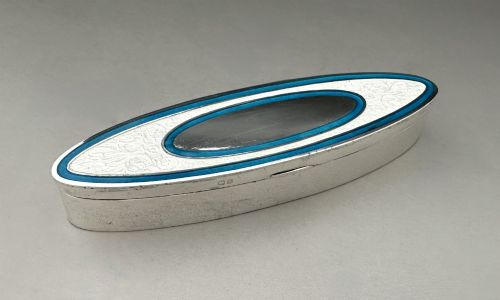


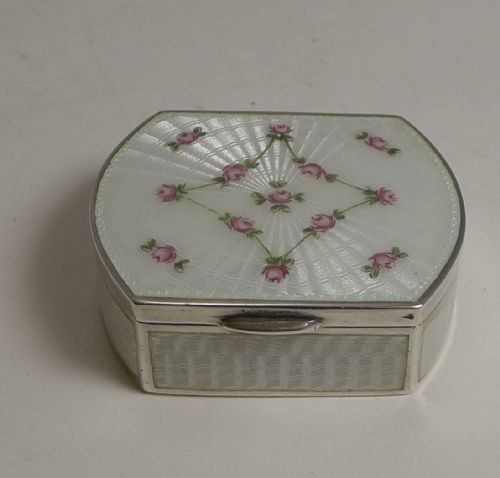
Edwardian Enamel Trinket Box
An Edwardian enamel trinket box brings together polished sterling silver or base metal and glossy surface colour, offering a neat home for pins, rings and small keepsakes.
Edwardian Enamel Trinket Box
An edwardian enamel trinket box typically takes the form of a small lidded container designed for a dressing table, desk or pocket, spanning vanity jars, pill boxes and rouge pots. These pieces range from compact circular pill containers to larger lidded jars in glass and silver.
The materials span sterling silver, copper, pewter, brass and cut glass, paired with vitreous, guilloche, bi-colour and porcelain enamel. While the label points to the Edwardian decade, the pieces extend into the 1920s and 1930s with distinct Art Deco and Arts and Crafts designs.
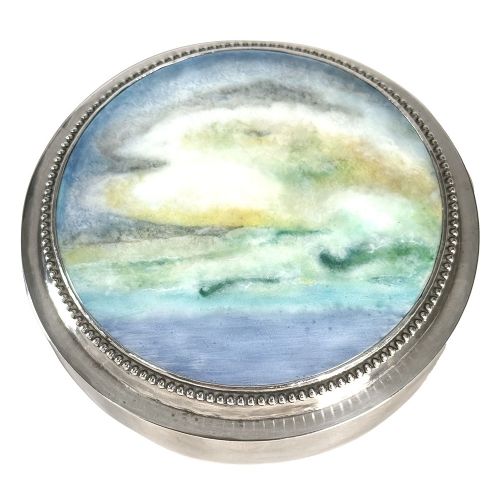
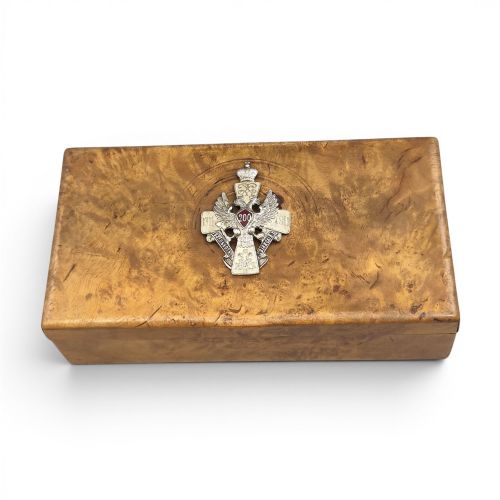
Makers and workshops from Birmingham, London, Austria, France and Russia shaped these small vessels, often incorporating landscape plaques, regimental badges or butterfly overlays. The forms serve both decorative and practical uses for holding small personal items.
Materials and construction
Silversmiths and metalworkers shaped the foundations of these boxes using sterling silver, copper, pewter or brass, frequently marking them with assays from London and Birmingham. Glass bodies appear in cut crystal and cranberry glass, topped with fitted metal rims and hinged lids.
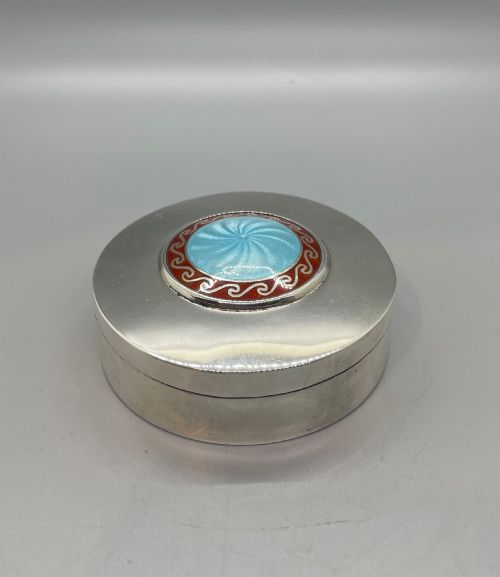
Coloured glass paste or vitreous enamel was fused to metal bases through firing, sometimes laid over machine-turned guilloche patterns to create geometric depth beneath translucent hues. Hand-painted landscape plaques and applied metal overlays were then mounted directly onto the lid.
Edwardian Enamel Trinket Box Retail Price Guide 2026
Typical asking prices for edwardian enamel trinket box among the pieces listed under this phrase on Sellingantiques today, from the lower quarter to the upper quarter. They describe what is for sale here now, not the wider market.
Listings feature items from the Edwardian period through the 1920s and 1930s, incorporating silver, copper, pewter, cut glass and cranberry glass.
Assessing quality and craftsmanship
The crispness of the engine-turned guilloche pattern beneath the translucent enamel dictates much of the visual depth, separating routine production from finer workshops. Precision in the hinge mechanism and the tightness of the lid closure reveal the original skill of the silversmith.
The integrity of the enamel surface itself sets the standard, where even firing without chips or stress fractures marks the upper tier of execution. Hand-painted details or applied metal motifs demonstrate careful artisan placement rather than mass assembly.
Guild of Handicrafts·Henry Clifford Davis·Liberty and Co
The Edwardian Enamel Trinket Box Glossary
- Guilloche enamel
- Decorative technique where a metal surface is engraved with intricate geometric patterns before being covered with transparent enamel. This allows the underlying pattern to show through with varying light reflections.
- Vitreous enamel
- Glass powder fused to a metal substrate at high temperatures to create a durable, glossy coloured surface. It provides the smooth, impervious finish seen on the lids of these small boxes.
- Bi-colour enamel
- Enamel work utilising two distinct contrasting colours within a single design scheme. This method creates borders or graphic divisions across the surface of the box.
- Assay mark
- Official stamp on precious metals indicating the purity of the metal, the place of testing, and the year of manufacture. These marks help date silver boxes to specific British or continental offices.
- Cabochon
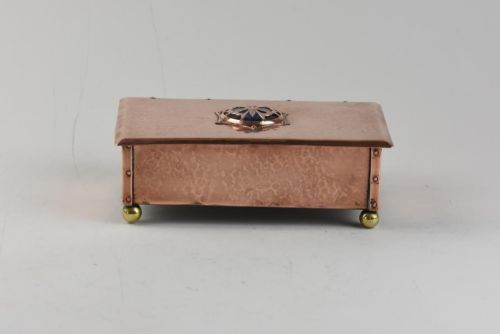
- Polished gemstone or enamel plaque shaped into a convex, rounded form rather than faceted. These often sit centrally on Arts and Crafts metalwork lids.
Edwardian Enamel Trinket Box: Frequently Asked Questions
How do I clean enamel boxes?
Enamel requires gentle care to protect the glass surface from scratching and to preserve any metal components. Use a soft, dry cloth for general dusting and avoid abrasive metal polishes directly on the enamel.
For the silver or copper mounts, apply a suitable metal cleaner carefully with a cotton bud, ensuring it does not seep beneath the enamel edges or hinges.
How do I tell Art Deco from Edwardian boxes?
Edwardian boxes tend to feature softer lines, floral motifs, garlands and translucent guilloche over gentle pastel backgrounds. They lean towards classic symmetry and traditional ornamentation.
Art Deco examples, appearing from the 1920s onward, showcase sharper geometric patterns, bold bi-colour contrasts and streamlined silhouettes. The engraving beneath the enamel often adopts repeating chevrons or sunbursts.
Were these boxes used for pills or trinkets?
Depending on their scale, these small containers served various personal functions including holding sewing pins, dressing table rings, beauty spots or medicinal pills. Smaller circular versions with tight-fitting lids were specifically suited for pocket or handbag use.
Larger lidded jars and boxes remained stationary on dressing tables to store everyday jewellery and small vanity accessories.