

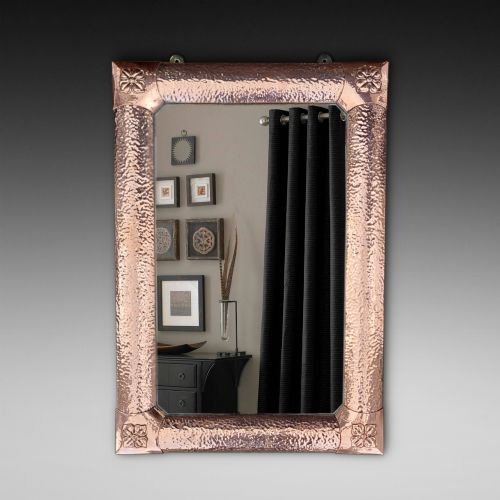


Edwardian Embossed Wall Mirror
An edwardian embossed wall mirror brings hand-wrought metalwork and reflective light to a hallway or reception room with genuine period character.
Edwardian Embossed Wall Mirror
An edwardian embossed wall mirror is defined by metal frames worked in relief, often housing either rectangular or oval glass plates. These items sit firmly within the decorative traditions of the turn of the twentieth century, bringing functional reflection together with artistic metalwork.
The pieces on this page are dominated by Arts and Crafts examples, alongside specific Art Nouveau and Glasgow Style items. Buyers will frequently encounter copper and brass frames featuring hand-beaten or embossed surfaces alongside earlier Victorian decorative works and later Edwardian hallway valets.
How they were made
Makers shaped these frames primarily from sheet copper and brass, employing hand-beaten techniques to raise motifs from the reverse side in relief. This metalwork was then mounted onto wooden backings to provide structural rigidity for the mirror glass.
Gilded gesso frames also appear alongside metal mounts and ceramic elements, relying on moulded plaster surfaces finished with metallic or gold leaf. The glass itself is typically set within these borders using traditional framing methods suited to wall hanging.
Edwardian Embossed Wall Mirror Retail Price Guide 2026
Typical asking prices for edwardian embossed wall mirror among the pieces listed under this phrase on Sellingantiques today, from the lower quarter to the upper quarter. They describe what is for sale here now, not the wider market.
Peacocks flank the brass frame on one notable Glasgow School mirror, watching every visitor who checks their reflection.
What varies in quality
Quality in these mirrors rests upon the ambition of the hand-beaten design and the crispness of the embossed detail. Simple geometric borders differ significantly from elaborate figurative compositions involving peacocks or stylised trees.
The integrity of the construction, from the weight of the copper or brass sheet to the preservation of the original gesso and mirror glass, dictates the standing of each piece.
Liberty & Company
The Edwardian Embossed Wall Mirror Glossary
- Embossed
- Decorated with raised patterns or designs moulded or hammered into relief on the surface of the metal sheet. This technique gives flat metalwork depth and tactile presence.
- Arts and Crafts
- A design movement valuing handcraftsmanship, simple forms, and traditional methods over mass production. It heavily influences the copper and brass frames seen in this selection.
- Art Nouveau
- An international style characterised by organic, flowing lines and stylised plant or animal motifs. Pieces in this manner often display sinuous curves and naturalistic asymmetry.
- Gesso
- A plaster-like mixture applied to a wooden base and carved or moulded before gilding. It provides a smooth, receptive surface for decorative frame ornamentation.
- Glasgow Style
- A distinct regional variant of the Arts and Crafts movement known for elongated proportions and stylised symbolic imagery. Mirrors from this circle frequently feature striking bird or plant motifs.
Edwardian Embossed Wall Mirror: Frequently Asked Questions
Where should I hang an embossed metal mirror?
These mirrors suit narrow hallways, entrance spaces, or living rooms where reflective glass opens up the field of vision. Placing them above a console table or reception furniture allows the metal frame to catch natural daylight.
Ensure the wall fixings match the substantial weight of metal and wooden backing boards. Position the glass at eye level to maximise both its decorative impact and its practical use.
How do I clean a copper or brass frame?
Dust the embossed metal gently with a soft, dry cloth to prevent the accumulation of grime within the recesses of the pattern. Avoid harsh chemical polishes that strip away the aged patina built up over decades.
Keep moisture away from the wooden backing and the edges of the mirror glass during any routine maintenance. Gentle care preserves the historical surface character of the metal.
What is the difference between Arts and Crafts and Art Nouveau frames?
Arts and Crafts frames emphasise the honesty of hand-beaten metalwork, geometric structure, and stylised natural forms like trees. They focus on the physical texture of the hammered copper or brass.
Art Nouveau designs embrace flowing, organic curves, whip-like lines, and sinuous plant motifs. These pieces lean into theatrical asymmetry and decorative grace rather than straightforward utility.
How can I date an Edwardian embossed wall mirror?
Dating relies on the stylistic markers of the frame, such as the distinct linearity of Glasgow Style work or the heavy ornamentation of Victorian decorative pieces. Materials like beaten copper and brass point firmly toward the late nineteenth and early twentieth centuries.
Construction details, including the type of wood backing and mirror plate bevelling, offer further clues. Comparing these elements with documented examples helps narrow down the period of manufacture.