

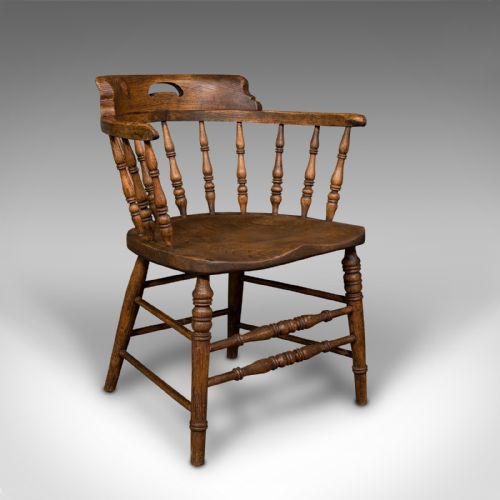
Edwardian Elm Windsor Chair
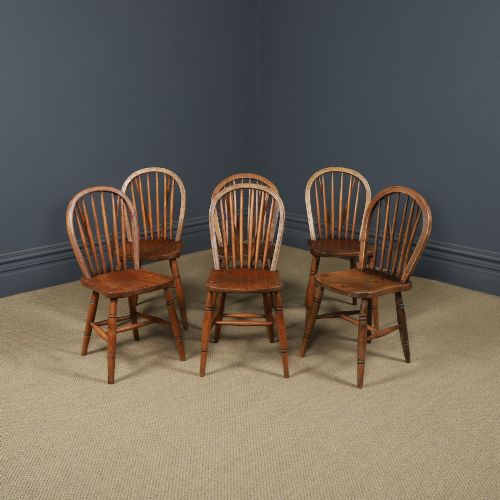
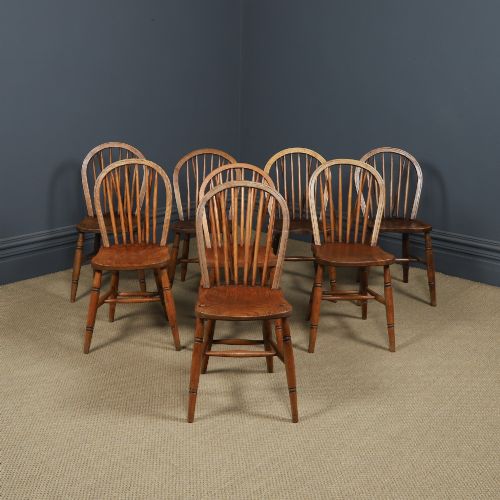
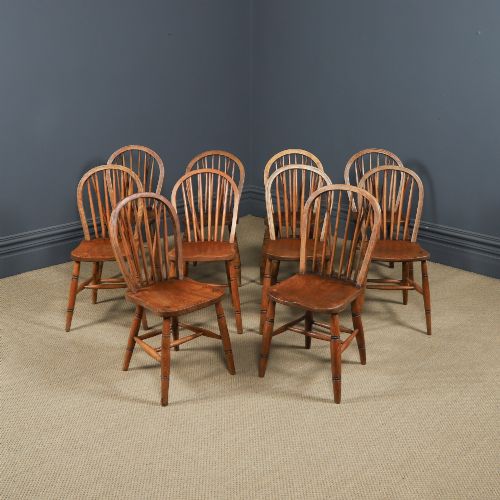
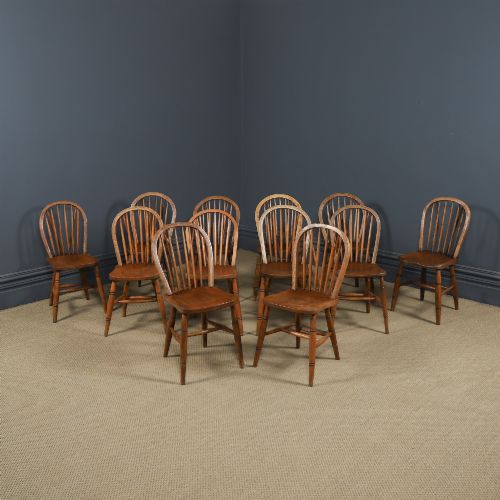
These edwardian elm windsor chair pieces bring solid country seating into modern rooms with deep seats and honest timbers.
Edwardian Elm Windsor Chair
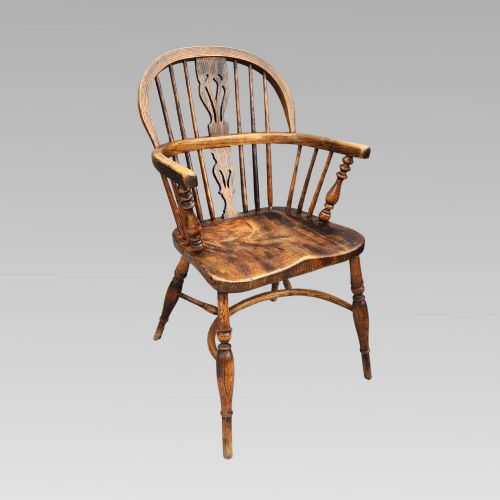
An edwardian elm windsor chair is a traditional form of vernacular seating rooted in English country houses and farmhouses. The pieces found here span nineteenth century origins through to nineteen ten, embracing styles from Victorian country to Edwardian country.
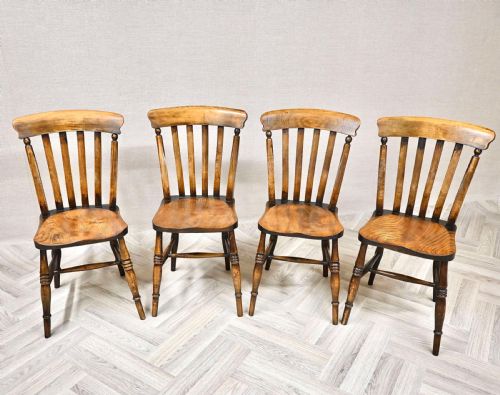
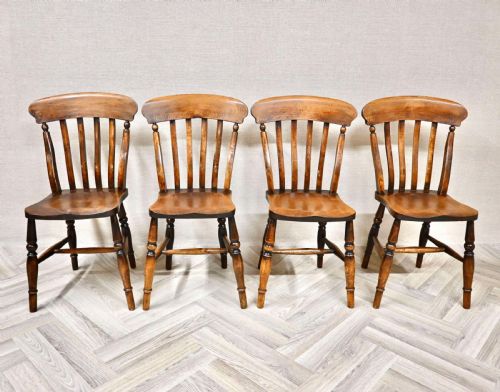
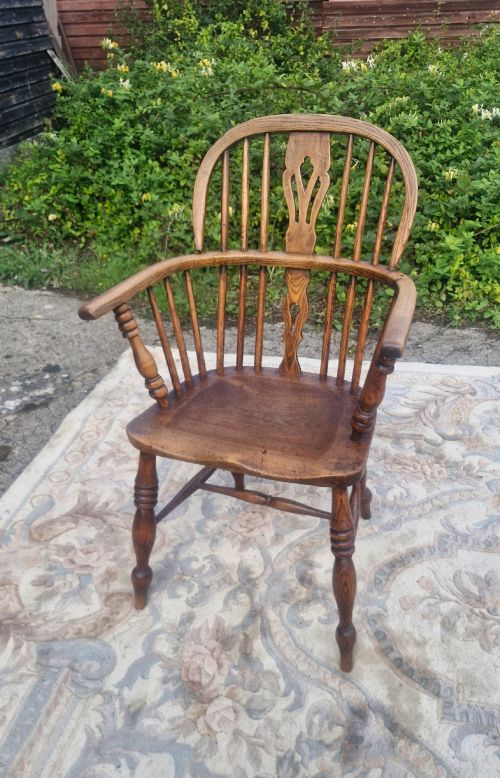
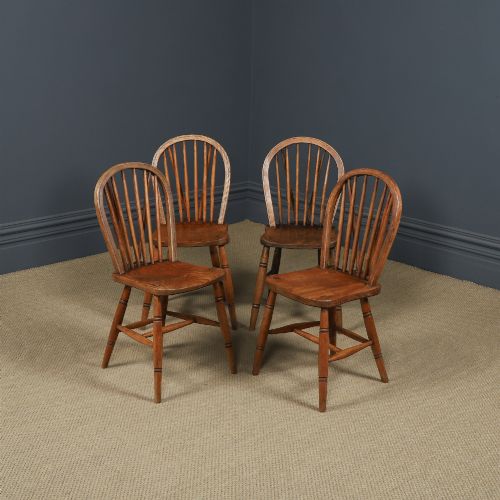
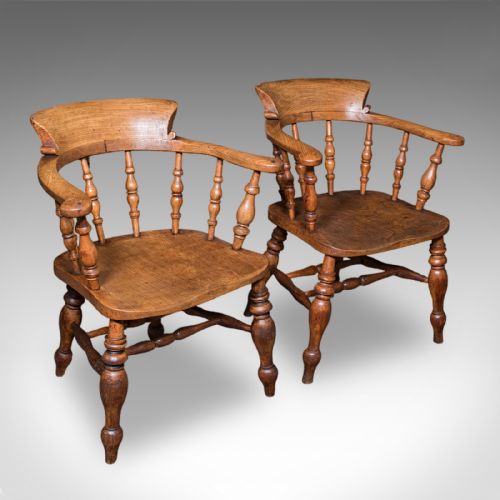
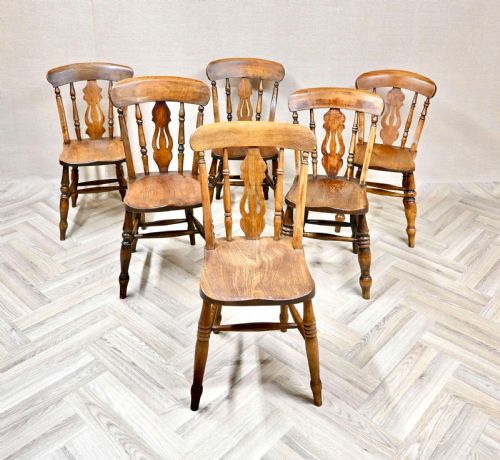
The common form on this page is the kitchen dining chair or the kitchen armchair, often appearing as matched sets or single carvers. Dining chairs and armchairs share the characteristic spindle or lath back construction that defines the vernacular tradition.
Makers drew on English country vernacular idioms, combining sturdy elm seats with ash, beech, or oak framework. These seating options served everyday domestic utility in farmhouses and country houses alike.
How They Were Made
Elm provided the deep, solid timber needed for carved saddle seats, resisting splitting when shaped. Turners and joiners paired these seats with ash or beech for spindles, legs, and bentwood hoops.
Steam bending formed the continuous hoop and stick backs, while traditional wedge and tenon joints held the undercarriages firm. Framework relied on native hardwoods selected for resilience and local availability.
Elm wood was chosen for kitchen chairs because its interlocking grain made the seats virtually impossible to split when restless children sat down.
What Varies in Quality
The distinction between ordinary and superior pieces rests on the figure of the elm seat and the crispness of the turned spindles. Well-matched timber sets maintain visual harmony across large dining configurations.
Structural integrity depends on the tightness of wedged joints and the retention of original timber components without excessive replacement parts. Refined proportions in the arm bows and crinoline stretchers elevate the presence of individual chairs.
The Edwardian Elm Windsor Chair Glossary
- Windsor chair
- A chair built with a solid wooden seat into which the legs and back spindles are separately inserted. This method creates a sturdy, rigid frame without a traditional box underframe.
- Lath back
- A chair back featuring a wide central vertical wooden slat flanked by spindles. This design offers robust back support typical of kitchen and farmhouse seating.
- Smoker's bow
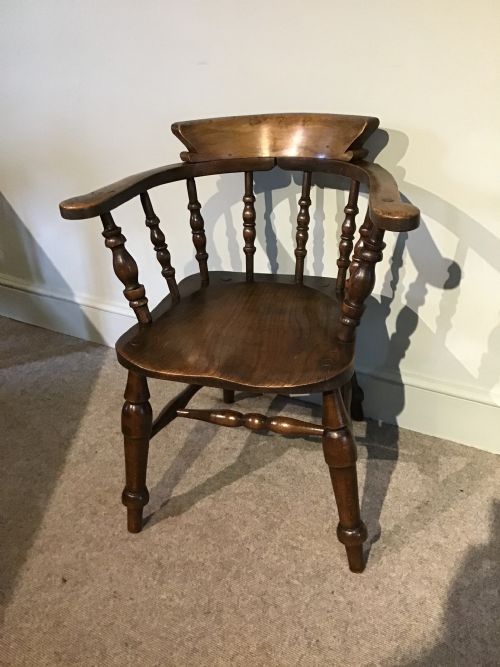
- A low-backed Windsor armchair with a continuous curved arm rail and spindle gallery. These sturdy seats served as comfortable smoking or library chairs.
- Crinoline stretcher
- An arched underframe stretcher shaped like a crinoline hoop that braces the legs of a chair. It adds rigidity and distinctive character to the lower framework.
- Wheelback
- A Windsor chair back incorporating a pierced central splat shaped like the hub and spokes of a cartwheel. This decorative motif became popular during the nineteenth and early twentieth centuries.
Edwardian Elm Windsor Chair: Frequently Asked Questions
How do I care for an elm seat?
Clean the timber with a damp cloth and feed the wood occasionally with natural wax to prevent drying. Avoid placing chairs near direct heat sources.
Elm responds well to gentle maintenance and develops a richer patina with regular handling over the years.
Can I mix these chairs with modern tables?
The organic grain and simple forms blend easily into contemporary dining spaces. Their low profiles allow them to tuck neatly beneath standard table heights.
Mixing single carvers with modern seating creates a relaxed, collected appearance in everyday rooms.
Are these chairs suitable for daily dining?
Constructed from tough native hardwoods, these seats were built for robust domestic use. The contoured elm planking provides surprising comfort during long meals.
Routine use strengthens the joints as long as the humidity in the room remains stable.
How do I identify the period of a chair?
Turned details, timber combinations, and joint construction help indicate whether a piece belongs to the Victorian era or nineteen ten. Earlier examples often show hand-tool marks beneath the seat.
Comparing back styles like hoop and stick or lath back narrows down the manufacturing decade.