

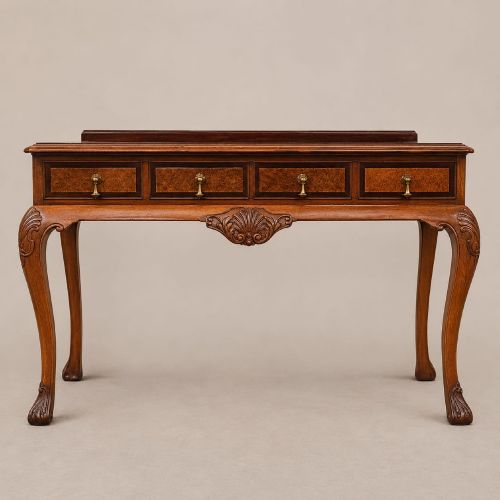
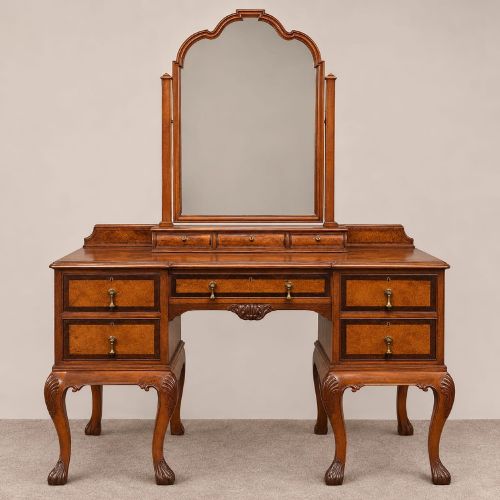
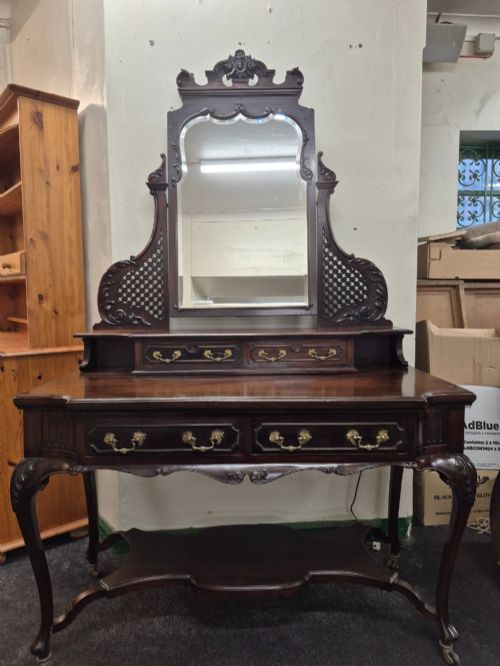
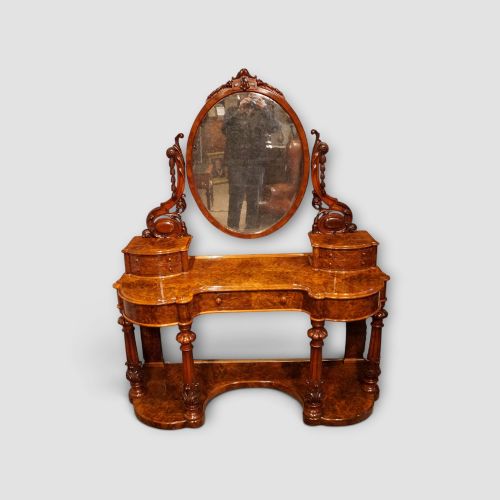
Edwardian Dressing Desk
An Edwardian dressing desk is a functional piece designed for personal grooming and writing, uniting period elegance with everyday utility in the bedroom.
Edwardian Dressing Desk
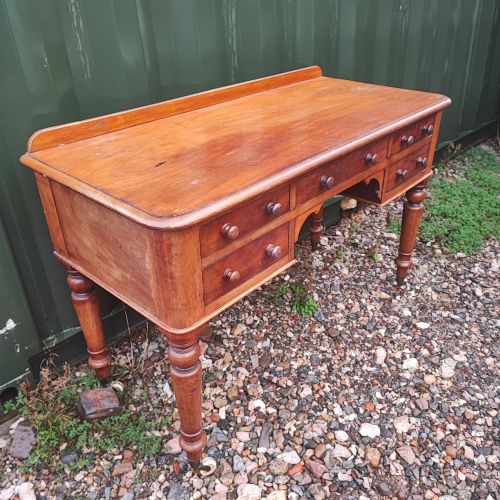
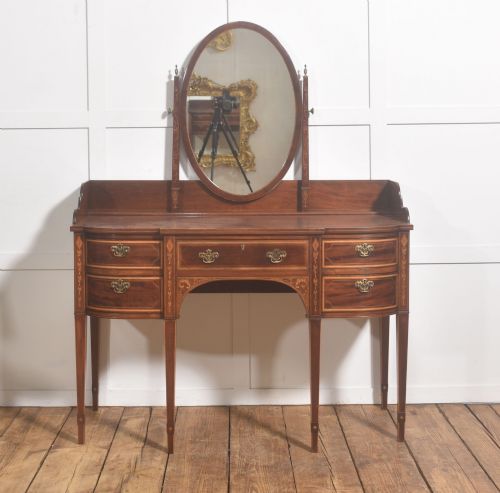
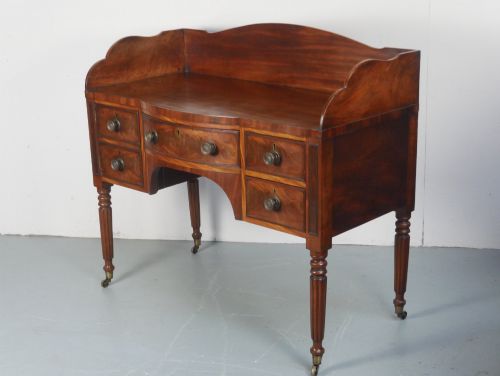
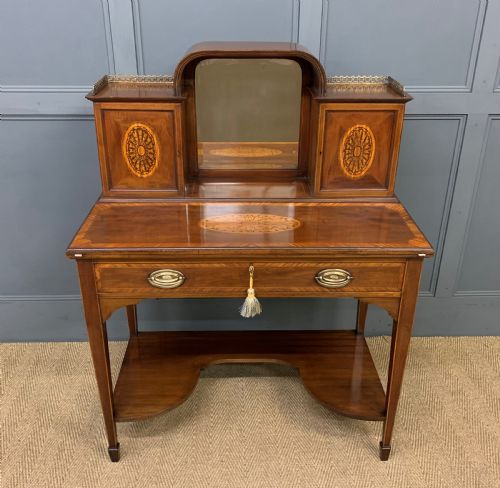
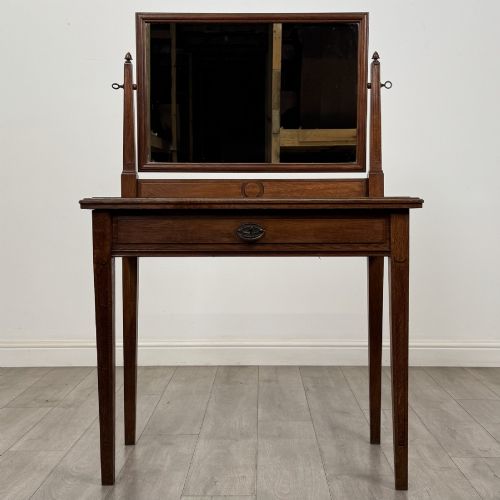
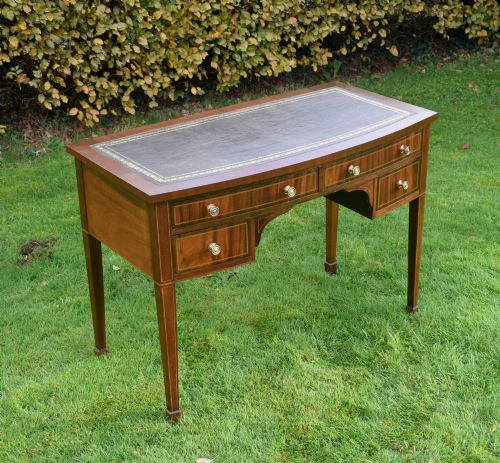
When searching for an Edwardian dressing desk, buyers encounter a crossover form that combines the surface of a writing table with the mirrors and compartments of a bedroom dressing table. These pieces serve multiple roles within a chamber, functioning as both a writing desk and a vanity.
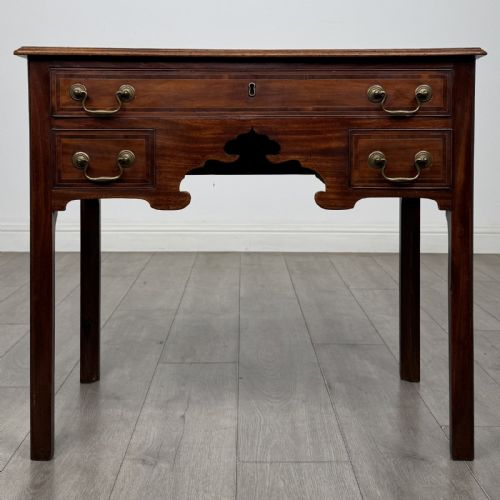
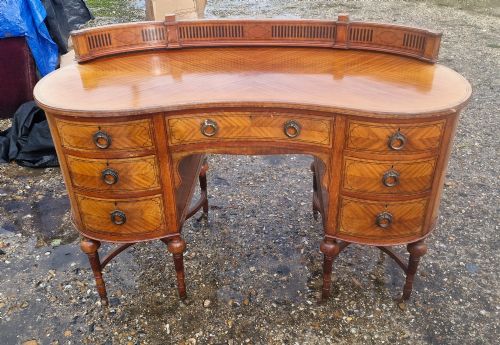
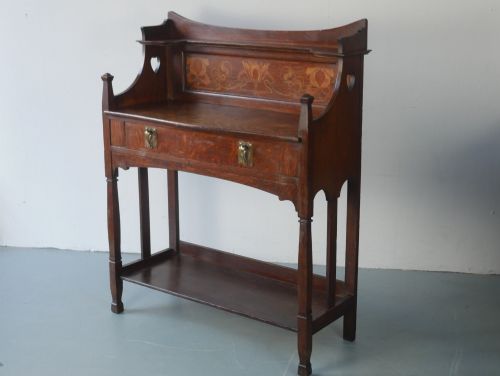
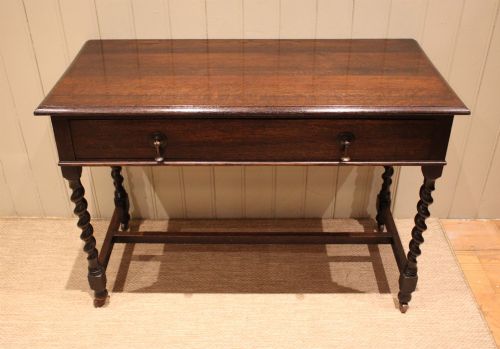
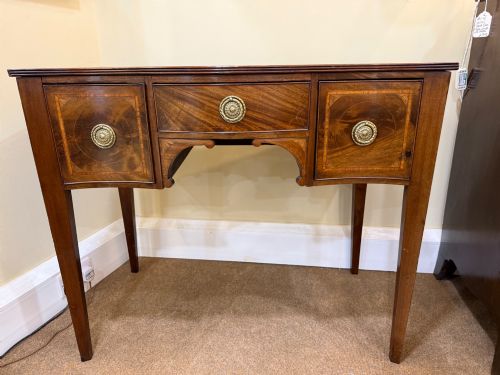
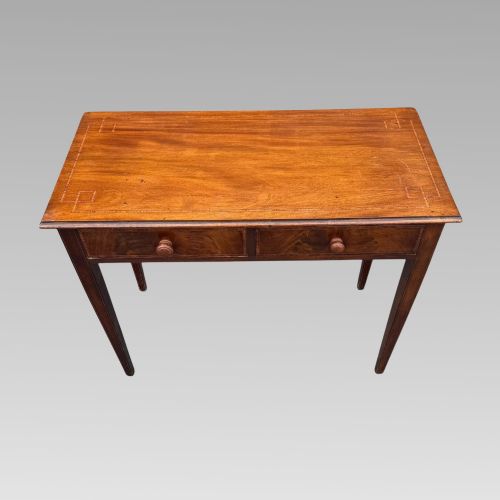
The selections on this page span the Edwardian period alongside related Victorian, 1900, and later revival styles. Mahoganies, walnuts, and oaks dominate the construction, often shaped into kidney forms or rectangular desks equipped with drawers.
Materials and construction
Cabinet makers utilised dense timbers such as mahogany, oak, and burr walnut for the primary frames, frequently incorporating satinwood for lighter decorative contrasts. Brass handles, leather inserts for writing surfaces, and glass mirrors complete the assembly of these functional items.
Joinery techniques from the period rely on traditional dovetailing for drawers and finely carved details on legs and edges. Inlaid banding and polished veneers demonstrate the precise handwork typical of early twentieth-century workshops.
Edwardian Dressing Desk Retail Price Guide 2026
Typical asking prices for edwardian dressing desk among the pieces listed under this phrase on Sellingantiques today, from the lower quarter to the upper quarter. They describe what is for sale here now, not the wider market.
Several desks include hidden compartments designed for discreet storage of letters and trinkets.
Distinctions in quality
The standard of a piece rests on the selection of timber veneers, such as figured burr walnut or rich mahogany, and the crispness of any carved or inlaid decoration. Makers who invested time in matched grain patterns and solid brass fittings elevated a standard bedroom item into high-grade furniture.
Structural integrity and original components dictate long-term worth. Retaining original glass mirrors, leather surfaces, and branded maker signatures separates workshop masterworks from generic commercial production.
Bath Cabinet Makers·Edwards and Roberts·Heal and Son·Maples of London and Paris·Wylie and Lochhead Glasgow·Richardson and Sons
The Edwardian Dressing Desk Glossary
- Burr walnut
- A highly figured wood grain obtained from the warted growths on walnut trees. It creates intricate, swirling patterns across table tops and drawer fronts.
- Satinwood
- A luminous, yellow-toned timber imported from the tropics. Cabinet makers utilised it for stringing, banding, and complete desk surfaces.
- Kidney shaped
- A curved furniture silhouette resembling a kidney bean. This form allows the user to sit closer to the central drawer span.
Edwardian Dressing Desk: Frequently Asked Questions
How do I use an Edwardian dressing desk today?
These pieces fit well in modern bedrooms or home offices as compact writing tables. The surface area accommodates a laptop while the drawers hold stationery and personal items.
Position the desk near natural light to utilise the original mirrors or writing space effectively without altering the vintage structure.
Can I tell an Edwardian desk from a Victorian one?
Edwardian pieces generally favour lighter timbers, simpler lines, and delicate inlay work influenced by Sheraton revivals. Victorian examples tend to be heavier in scale, utilising dark mahogany and burr walnut with denser carved ornamentation.
Checking the proportions and secondary woods often clarifies the specific period of manufacture.
Are the mirrors on these desks original?
Many desks retain their original bevelled glass mirrors, though silvering degradation can occur over a century. Original mirrors often show faint oxidation spots at the edges.
Replacements are sometimes fitted if the original glass suffered breakage during past house moves.
What is the best way to clean the wood surface?
Dust the timber regularly with a soft, dry cloth to prevent grit accumulation. Apply a quality beeswax periodically to nourish the polish and maintain the grain lustre.
Avoid modern chemical sprays or silicone polishes which can damage historic lacquer finishes over time.