


Edwardian Dressing Bureau
An edwardian dressing bureau combines a practical writing surface with drawers or mirrors, offering refined utility for daily correspondence and grooming.
Edwardian Dressing Bureau
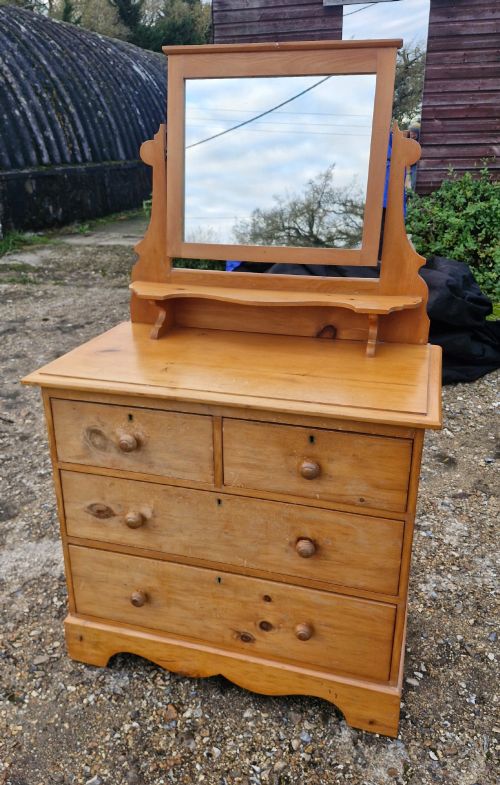
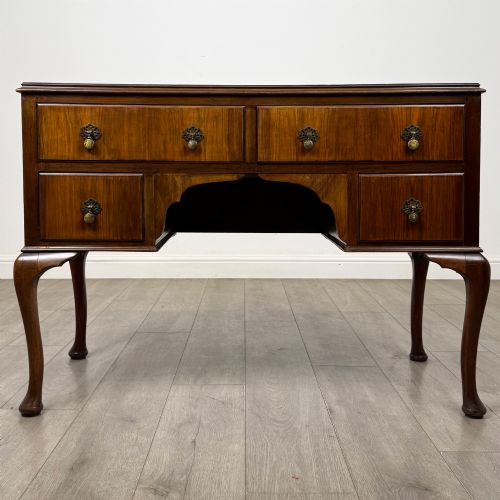
When searching for an edwardian dressing bureau, buyers encounter a crossover of forms designed for writing and personal grooming. These pieces bridge the gap between dedicated writing desks, ladies tables, and dressing chests with mirrors.
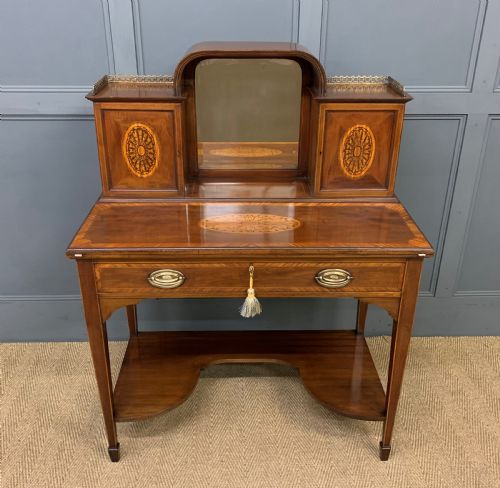
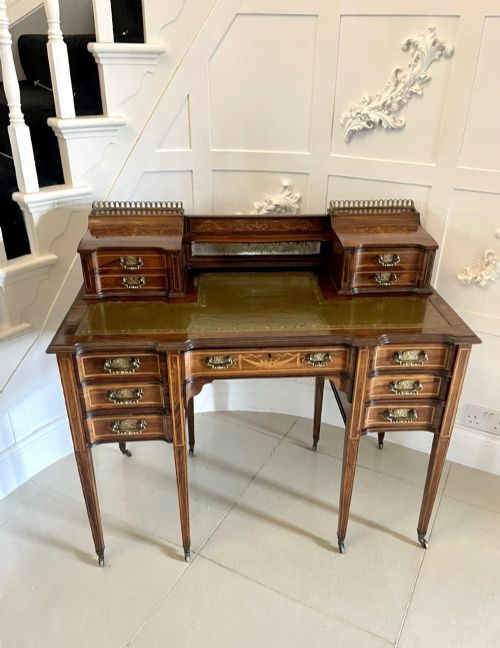
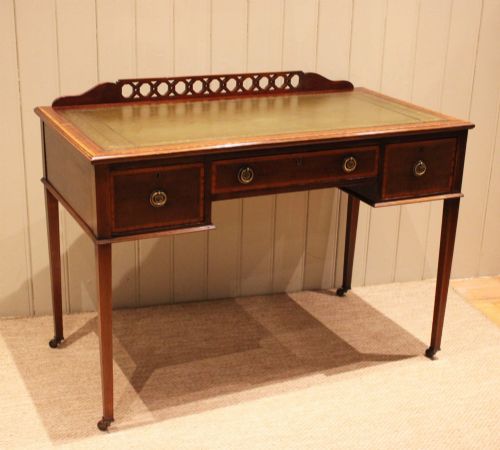
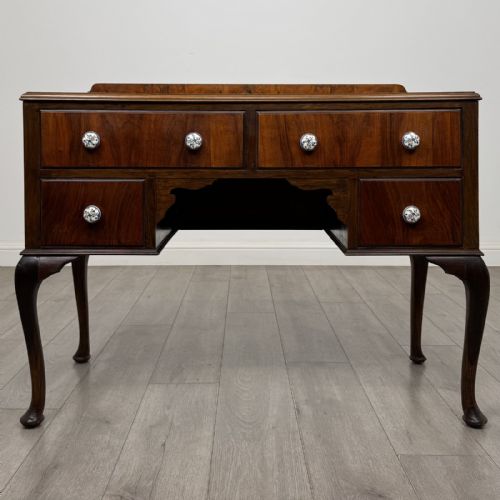
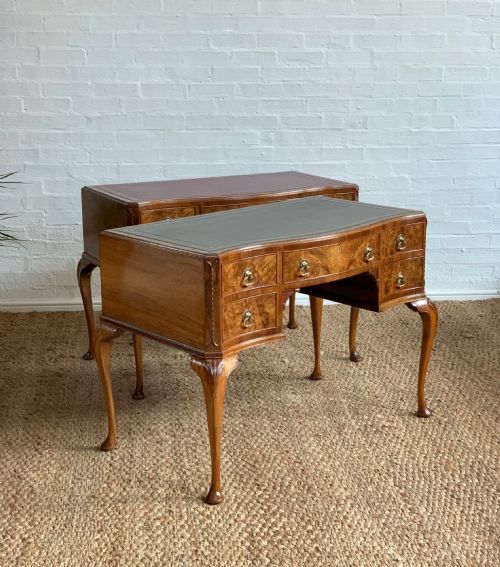
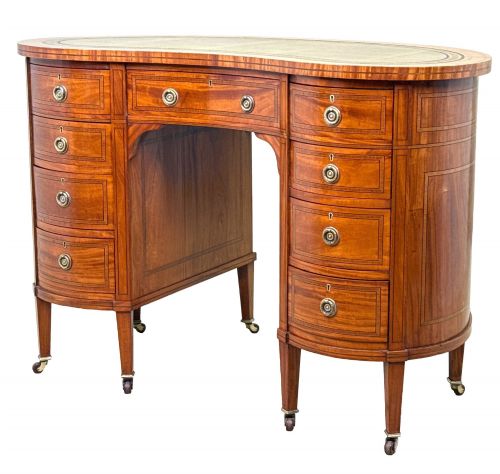
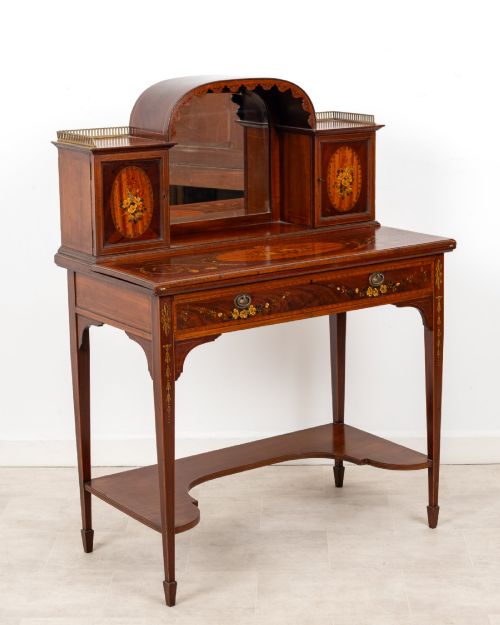
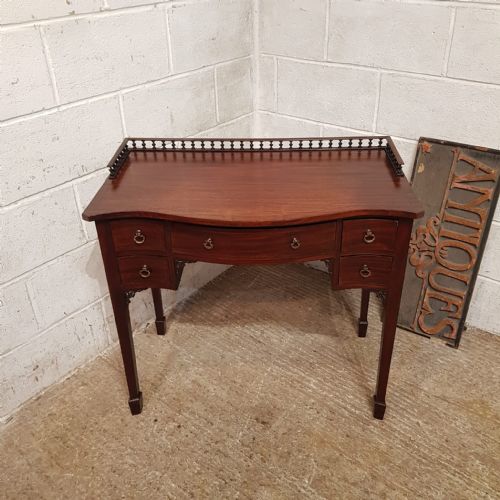
The most common examples on this page date from the Edwardian period and around nineteen hundred, taking the shape of writing tables, kidney-shaped desks, and dressing tables with drawers. Many incorporate satinwood inlay or painted decoration on mahogany and walnut carcasses.
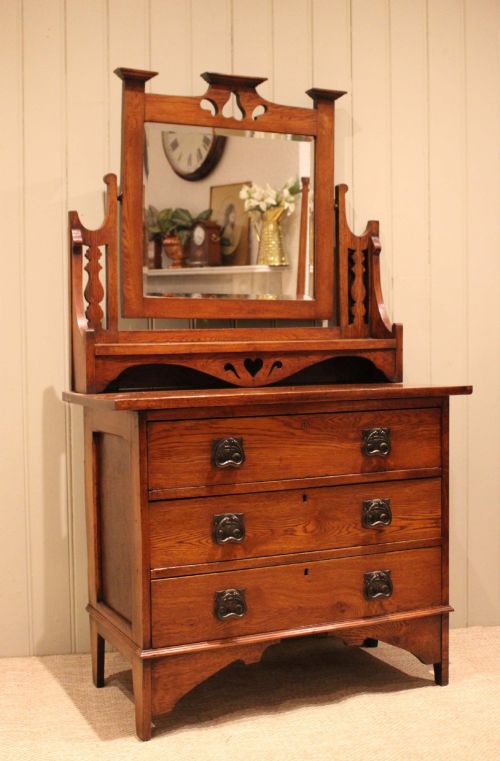
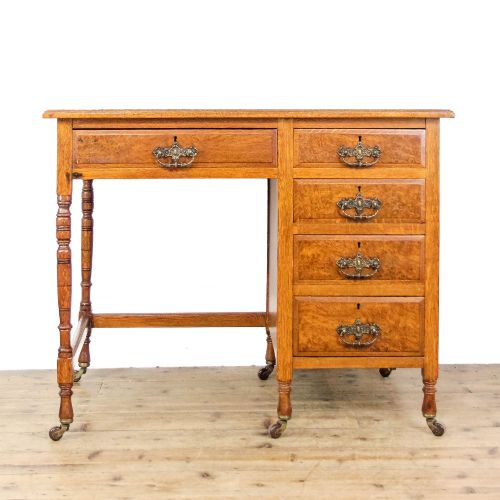
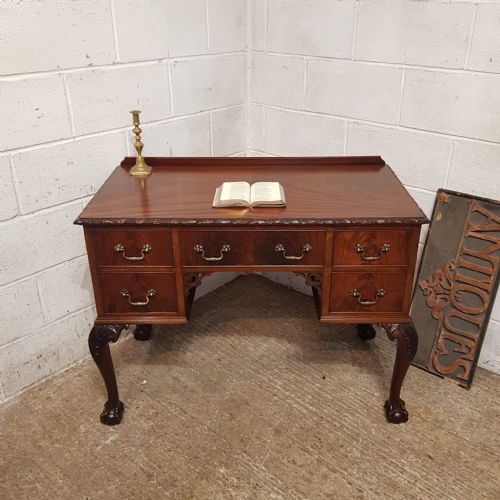
Makers of the era drew heavily on earlier historical vocabularies, producing pieces styled in the manner of Queen Anne, Sheraton, and Chippendale revivals alongside clean-lined oak designs.
Materials and construction
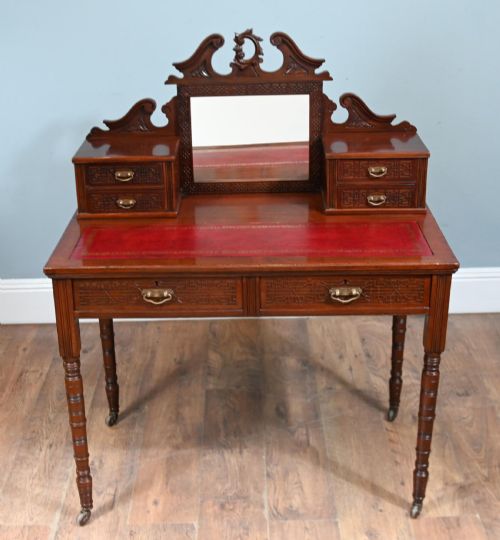
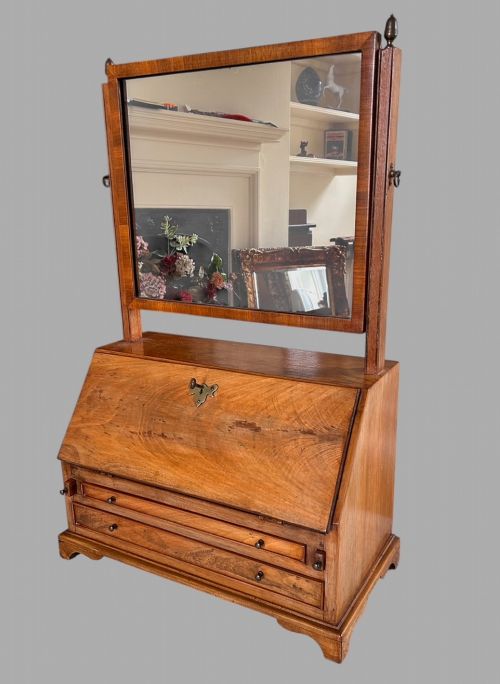
Cabinetmakers constructed these pieces primarily using solid mahogany, walnut, and oak, often applying fine veneers of satinwood or burr walnut to primary surfaces. Brass handles, leather writing inserts, and glass dressing mirrors complete the construction of finer examples.
Inlay work relied on contrasting timbers and satinwood stringing, frequently accompanied by hand-painted floral or classical motifs. Structural integrity depended on traditional dovetail joints in drawer construction and secure framing for mirrored superstructures.
Edwardian Dressing Bureau Retail Price Guide 2026
Typical asking prices for edwardian dressing bureau among the pieces listed under this phrase on Sellingantiques today, from the lower quarter to the upper quarter. They describe what is for sale here now, not the wider market.
Several desks hide leather-lined writing slides that pull out like shy tongues to double the available workspace.
Distinctions in quality
Quality rests upon the selection of timber veneers and the precision of the cabinetwork rather than sheer size. Finer pieces display carefully matched burr walnut or figured mahogany, whereas simpler versions rely on plain oak or standard painted finishes.
The refinement of decorative elements sets apart superior examples. Finely executed hand-painted details, crisp satinwood inlay, and branded maker marks elevate a piece above standard workshop production.
Edwards and Roberts·Wylie and Lochhead Glasgow·James Shoolbred of London·Shapland and Petter·Maple and Co·Harris Lebus of London
The Edwardian Dressing Bureau Glossary
- Superstructure
- An upper framework attached to a desk or table, commonly holding drawers, pigeonholes, or a dressing mirror. This addition provided elevated storage without increasing the footprint of the furniture.
- Bonheur du jour
- A light lady writing desk featuring a small cabinet or set of shelves upon the top surface. Originating in France, these dainty tables gained immense popularity during the late nineteenth and Edwardian eras.
- Satinwood inlay
- The technique of inserting contrasting strips of pale satinwood into recesses cut into a darker wood background. It created geometric borders and decorative motifs on drawer fronts and tabletops.
- Kneehole desk
- A compact desk featuring a central recessed space for the legs, flanked by pedestals of small drawers. This form allows the user to sit directly facing the piece while writing or grooming.
- Kidney-shaped
- A curved desktop form resembling the outline of a kidney bean, designed to wrap partially around the seated user. It appeared frequently in high-end Edwardian writing tables.
Edwardian Dressing Bureau: Frequently Asked Questions
What is an edwardian dressing bureau?
An edwardian dressing bureau is a dual-purpose piece of furniture that serves for both writing correspondence and personal grooming. These items typically feature integrated drawers, leather writing surfaces, and attached mirrors.
They reflect the domestic requirements of the early twentieth century, combining the functions of a writing desk and a dressing table into a single compact form.
How were these desks used daily?
Users sat at these tables to write letters, manage household accounts, and attend to morning toilet routines. The inclusion of small drawers and compartments kept stationery and cosmetics neatly organised.
Leather inserts provided a smooth, durable surface for writing, while adjustable mirrors assisted with grooming and hair arrangement.
How do I style one at home?
These versatile pieces suit bedrooms as dressing tables or studies as compact writing desks. Their polished timber surfaces and inlaid details work well alongside traditional or eclectic interior schemes.
Pairing a kidney-shaped desk with a small upholstered chair creates a functional workspace that maintains a domestic rather than institutional appearance.
How do I distinguish Edwardian from Victorian pieces?
Edwardian furniture generally exhibits lighter proportions, brighter satinwood finishes, and delicate painted neoclassical motifs. Victorian pieces tend to be heavier in mass and darker in tone, often featuring denser mahogany or walnut.
Revival styles overlap across both eras, but construction methods and hardware often point toward the turn of the twentieth century for Edwardian examples.