
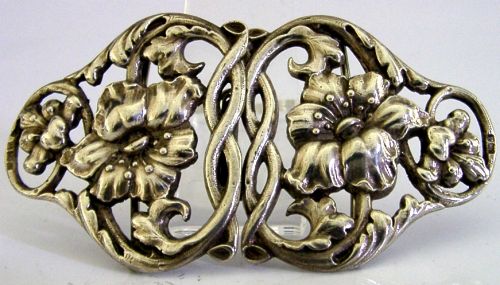


Edwardian Dress Clasp
These edwardian dress clasp pieces are functional and decorative fastening ornaments from the early twentieth century designed to secure garments and belts with distinctive style.
Edwardian Dress Clasp
The edwardian dress clasp category encompasses silver belt buckles and fastening hardware produced during the early twentieth century. These items appear alongside related accessories like button sets and nurses buckles, reflecting the period's focus on tailored dress.
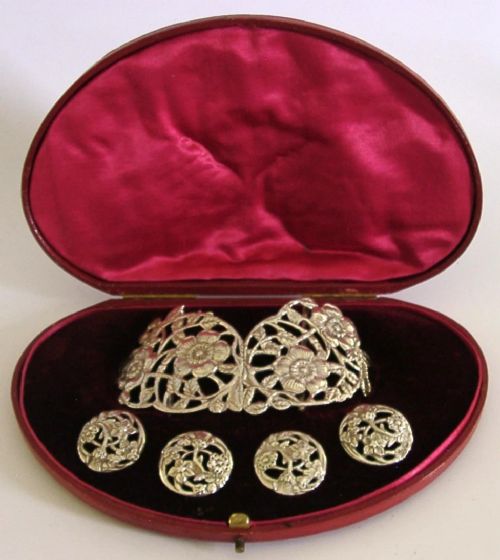
Most examples found on this page date from the Edwardian era around 1900 to 1910, incorporating prevailing aesthetic movements of the time. The forms range from simple cast silver pieces to intricate multi-component sets housed in original presentation cases.
Collectors encounter these accessories in various configurations, including standalone fastenings and matched sets designed for broader costume use. The designs bridge late Victorian traditions and the burgeoning tastes of the new century.
How they were made
Makers utilised sterling silver and solid silver as the primary foundation for these accessories, frequently employing casting techniques to achieve sculptural relief. The metalwork often displays characteristic hallmarks indicating assay offices and production dates.
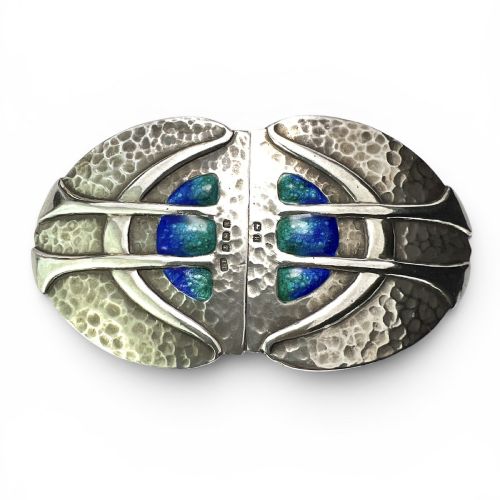
Vitreous enamel provides vibrant colour to many designs, fusing powdered glass onto the silver base under high heat. This decorative technique allows for intricate motifs such as the English rose and fluid organic patterns.
Presentation packaging incorporates materials like velvet, leatherette, and fabric to line fitted cases for sets containing buckles and matching buttons. These fitted boxes protect the delicate enamel and polished silver components.
Listings feature items primarily from the Edwardian era, spanning the years 1900 to 1930, executed in silver, enamel, and cast metal.
What varies in quality
The sophistication of the metal casting and the depth of the chased or pierced ornamentation separate standard pieces from superior work. Examples produced by notable silversmiths demonstrate a higher standard of finishing and design complexity.
The application and preservation of vitreous enamel significantly influence the character of decorated pieces. Intact, smooth enamel work with balanced colour gradation represents a superior level of craftsmanship compared to plain metal surfaces.
James Fenton·Liberty's·Henry Matthews
The Edwardian Dress Clasp Glossary
- Sterling silver
- A standard alloy of silver containing 925 parts per thousand by mass of silver and 75 parts per thousand of other metals. This material forms the primary metallic body for the majority of these buckles.
- Vitreous enamel
- A material made by fusing powdered glass to a metallic substrate by firing. This technique creates a glossy, coloured decorative surface resistant to wear.
- Art Nouveau
- An international style of art, architecture, and applied art popular around the turn of the twentieth century. It is characterised by organic motifs and sinuous, asymmetrical lines.
- Arts and Crafts
- A design movement championing traditional craftsmanship and simple forms. Pieces from this tradition often emphasise the hand of the maker and natural materials.
- Hallmark
- An official mark or series of marks stamped on items made of precious metals. These symbols indicate the metal purity, the maker, and the year of assay.
Edwardian Dress Clasp: Frequently Asked Questions
What materials are used?
The pieces are predominantly fashioned from sterling or solid silver, frequently combined with vitreous enamel for decorative colour. Fitted presentation cases utilise supplementary materials such as velvet, leatherette, and fabric.
Silver components often bear hallmarks indicating the specific year and assay office of manufacture, helping to verify the materials used in each individual buckle or button set.
How were they worn?
These items functioned primarily as decorative fasteners for belts, dresses, and specialised garments such as nurses uniforms. They secured fabric while adding a distinct stylistic flourish to the outfit.
Many examples were manufactured as part of larger matching sets that included buttons, allowing for a coordinated appearance across a complete ensemble.
How do I identify periods?
Dating relies heavily on official silver hallmarks, stylistic indicators, and accompanying documentation like original presentation boxes. Pieces from this era often display the distinct aesthetic traits of the Edwardian period.
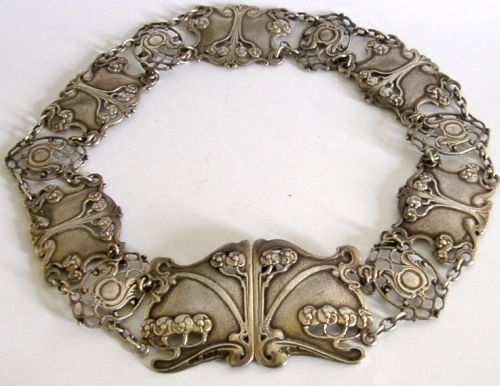
Design motifs also point towards specific movements, with flowing organic lines indicating Art Nouveau influence and simpler hand-wrought details pointing to the Arts and Crafts tradition.
How do I care for silver?
Preserving these objects requires gentle cleaning appropriate for antique metal and delicate enamel surfaces. Avoiding harsh chemical dips protects the vitreous enamel from irreversible damage.
Storing pieces in suitable conditions away from excessive moisture helps prevent tarnishing and preserves any original fabric or velvet lining within presentation cases.